Britain Faces the Iran War Dilemma as Starmer Calls for a Cool Head
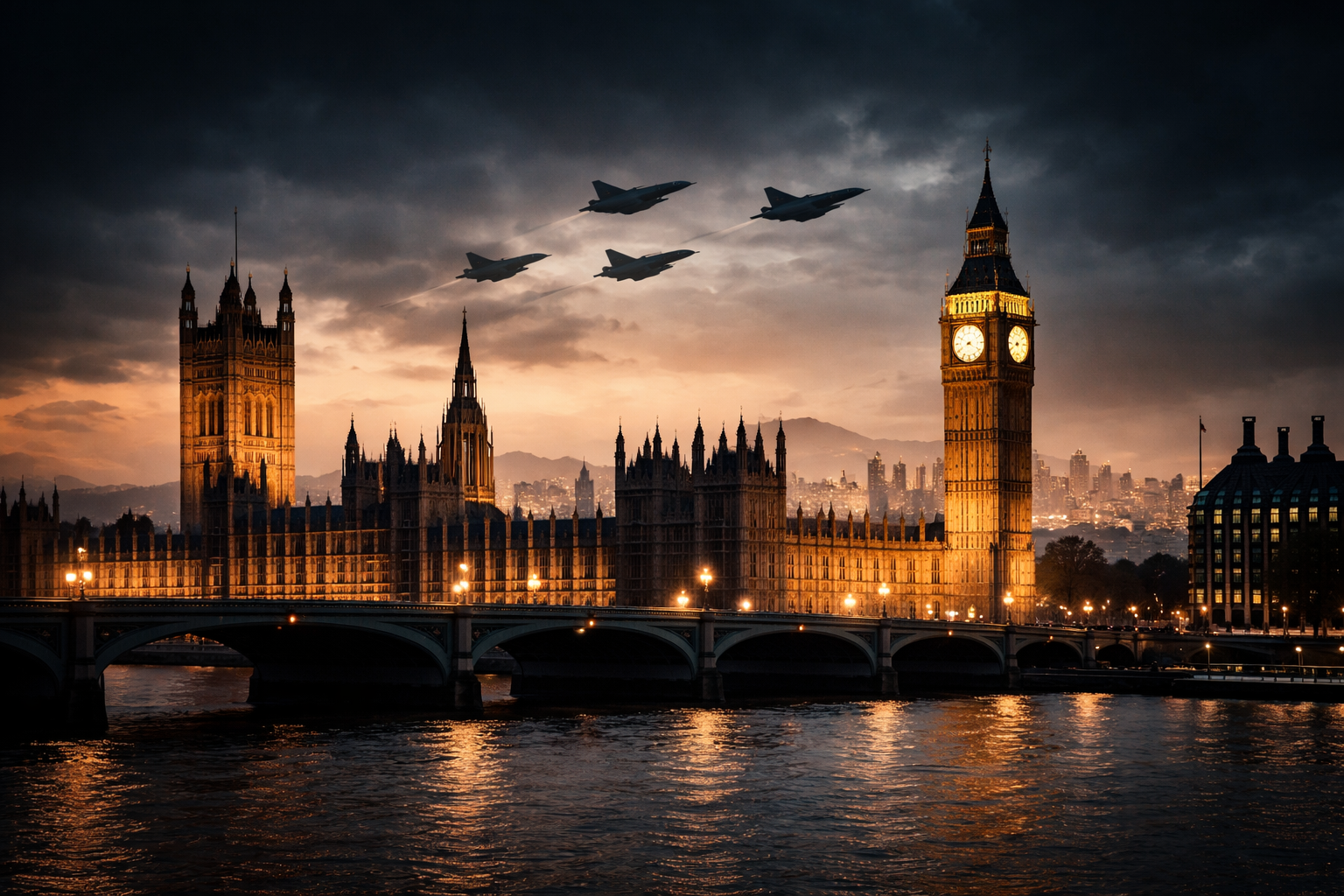
The Iran Conflict Is Escalating — and Britain Is in the Middle
Britain Caught Between Washington and War in the Middle East
Britain finds itself navigating one of the most dangerous geopolitical crises in years: the rapidly escalating conflict between Iran and a US-Israel military coalition. In Westminster, Prime Minister Keir Starmer has urged calm, telling Parliament that the United Kingdom must respond to the crisis with “clarity, purpose, and a cool head.”
His message reflects a delicate balancing act. The United States expects support from its closest allies, Iran has already retaliated across the region, and tens of thousands of British nationals live or work in the Middle East.
However, Starmer has made it clear that Britain will protect its interests and allies but will not automatically engage in a broader conflict without legal justification and a well-defined strategy.
There is, however, a deeper strategic hinge shaping the UK’s posture—one that goes beyond diplomacy or political messaging.
The story turns on whether Britain can support its allies without becoming a direct participant in a regional war.
Key Points
The UK Prime Minister told Parliament Britain must respond to the Middle East crisis with a “cool head” as fears grow of a wider regional conflict.
The comments came amid criticism from US President Donald Trump over Britain’s initially limited support for US strikes on Iran.
Britain has deployed military capabilities in the region, including fighter jets and air-defense systems, but says its role is defensive rather than offensive.
The government initially refused to allow US forces to use certain British bases for offensive strikes but later permitted limited use targeting Iranian missile threats.
British leaders say their priority is protecting UK nationals and preventing escalation into a broader regional war.
The current crisis traces back to escalating hostilities between Iran and Israel, followed by direct US involvement in strikes targeting Iranian military and nuclear infrastructure.
Those strikes triggered retaliation from Iran across the Middle East, including missile and drone attacks that heightened fears of a regional war. The conflict has already drawn in multiple actors and threatens vital global shipping routes and energy supplies.
Britain’s position sits between alliance commitments and political caution.
The UK is historically one of Washington’s closest military partners. British bases, intelligence networks, and logistical infrastructure often support American operations.
But the government has made clear that British forces did not participate directly in the initial strikes against Iran.
Instead, Britain’s role has focused on defensive operations—including intercepting drones, strengthening air defenses, and deploying aircraft to protect regional allies and British assets.
The government also faces a major logistical challenge. Hundreds of thousands of British citizens live or work in the Gulf region, and the UK has been preparing contingency plans in case evacuations become necessary.
This combination of alliance obligations, domestic politics, and citizen protection explains the cautious tone coming from Downing Street.
Political and Geopolitical Dimensions
At the center of the crisis is a tension within the Western alliance.
Washington has taken a far more aggressive stance toward Iran, while several European governments have emphasized de-escalation and diplomacy.
Britain is attempting to straddle these positions.
The government has supported the goal of preventing Iran from acquiring nuclear weapons while resisting pressure to fully join offensive operations.
This balancing act has produced friction.
US leaders have publicly criticized Britain’s hesitation, suggesting London is not providing the level of support expected from a close ally.
Inside the UK, opposition politicians have argued the government’s response is too cautious, particularly after Iranian-linked attacks targeted Western assets in the region.
Three scenarios now dominate diplomatic thinking:
The first is a contained conflict, where Iran and the US-Israel coalition limit their actions to military targets and avoid broader escalation.
The second is a regional war involving proxy forces across Lebanon, Iraq, and the Gulf.
The third is a diplomatic pause, where international pressure pushes all sides toward negotiations.
Each path would reshape Britain’s role.
The key signposts to watch include Iranian retaliation outside the region, attacks on shipping in the Strait of Hormuz, and whether Western allies expand military operations.
Economic and Market Impact
Even before direct disruption, the conflict is already affecting global markets.
Energy prices remain highly sensitive to the risk of supply disruptions in the Gulf.
The Strait of Hormuz—a narrow shipping corridor used by a significant share of the world’s oil exports—has become a focal point of concern.
For Britain, the economic exposure is indirect but real.
Higher energy costs affect inflation, transport, and manufacturing. Financial markets also react quickly to geopolitical shocks.
The UK government is therefore navigating a dual challenge: maintaining alliance solidarity while avoiding actions that could deepen global economic instability.
Technological and Security Implications
Modern warfare has introduced a new element into the crisis: drones and missile defense.
Recent attacks in the region have involved large numbers of drones and precision missiles, forcing Western militaries to deploy advanced interception systems.
British fighter jets and naval assets have already intercepted incoming threats.
These operations illustrate how warfare has shifted toward high-speed, high-technology engagements that can escalate quickly but remain geographically diffuse.
For Britain, the lesson is clear: even without joining offensive operations, the UK can become involved simply through defensive commitments to allies and bases in the region.
What Most Coverage Misses
Much of the discussion around Britain’s response focuses on politics—whether Starmer is too cautious or not supportive enough of the United States.
But the deeper constraint is structural.
Britain no longer has the military capacity to independently shape large regional conflicts in the way it once could.
Instead, its influence now flows through logistics, intelligence, and strategic basing.
British territory and military infrastructure remain central to Western operations. Air bases, intelligence sharing, and naval assets give London significant leverage—even without deploying large numbers of combat forces.
This situation situation means the real strategic question is not whether Britain “joins” the war.
It is whether Britain’s infrastructure becomes essential to the coalition fighting it.
That distinction matters because once a country’s bases and systems are integrated into military operations, its ability to remain politically distant from the conflict becomes much harder.
Why This Matters
The immediate stakes are high.
British citizens in the Middle East face rising security risks, and the government is preparing for possible evacuation operations.
Markets remain volatile as investors watch for signs the conflict could disrupt global energy supply.
Politically, the crisis tests the strength of the US-UK alliance.
In the longer term, the conflict may reshape Britain’s foreign policy posture.
The UK is attempting to define a modern version of its global role: supportive of allies, cautious about military intervention, and focused on strategic influence rather than large-scale deployments.
Upcoming decisions that could shift the trajectory include whether the US expands its campaign against Iran, whether NATO (North Atlantic Treaty Organization) becomes more directly involved, and whether regional actors escalate proxy warfare, which is a conflict where opposing powers use third parties to fight instead of engaging directly.
The Strategic Tightrope Britain Must Walk
Britain is now walking one of the narrowest diplomatic paths in modern foreign policy.
Move too far toward military involvement, and the UK risks being pulled into a war with unpredictable consequences.
The nation runs the risk of losing the trust of its allies if it takes the cautious route too far.
For now, the government’s answer is restraint combined with readiness.
Defensive deployments continue. Diplomatic pressure grows. Military escalation remains conditional.
But history shows that wars often expand through small steps rather than sudden decisions.
And in this crisis, Britain’s most important role may not be choosing sides but preventing the conflict from spiraling into something far larger.
