

Britain’s Most Explosive Grooming Gang Testimony Is Live — And the BBC Is Nowhere
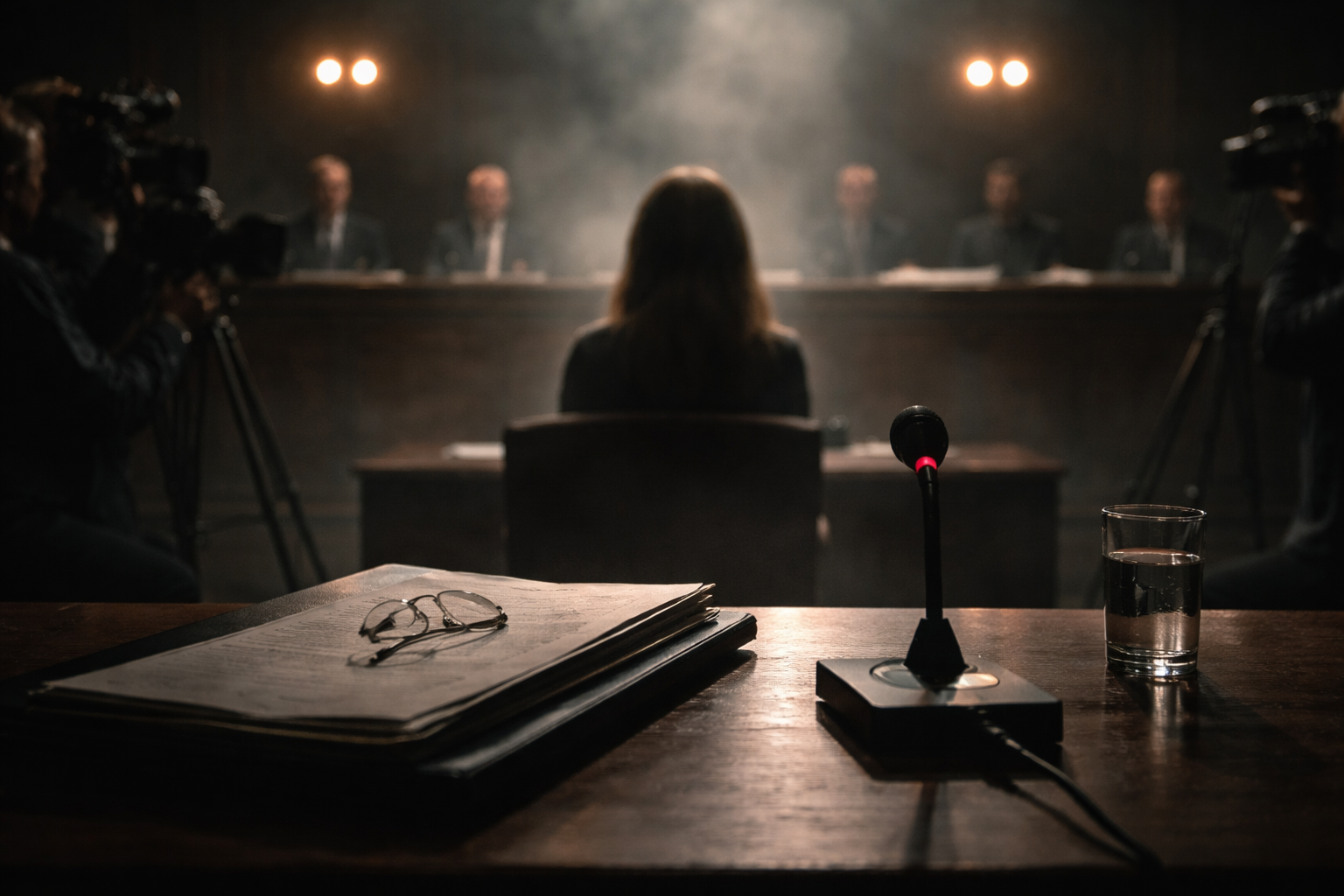
Rupert Lowe Rape Gang Inquiry Hearings: BBC Pressure Builds
Rupert Lowe’s Crowdfunded Rape Gang Inquiry Hearings Are Now a Test of Media Trust
A crowdfunded “Rape Gang Inquiry” linked to independent MP Rupert Lowe is underway in London—and the argument around it is rapidly becoming as significant as the hearings themselves.
Supporters say the BBC and other major outlets are ignoring live-streamed testimony that they believe should lead the national agenda. Critics respond that a non-statutory inquiry sits in a legally and editorially different category than a government-backed process, especially when allegations are live, emotionally charged, and often tied to institutions that cannot be compelled to appear.
One sentence matters more than the outrage: this inquiry is designed to be watched, shared, and used as pressure. That makes coverage a lever, not just a mirror.
The story turns on whether a crowdfunded inquiry can force accountability without the legal powers that usually make “inquiries” consequential.
Key Points
Rupert Lowe’s crowdfunded “Rape Gang Inquiry” has raised roughly £658,000 and is structured around public hearings, followed by a report and potential follow-up legal action.
The inquiry’s organizers say hearings are live-streamed but closed to the general public for safety and control, while still aiming for transparency through broadcasting.
The inquiry is described as “survivor-led,” with Sammy Woodhouse named as leading the inquiry’s work and a “barrister chair” referenced as supporting the hearings.
Daily themes listed by the inquiry include parents and carers, whistleblowers, policing and justice, social care, health, education and licensing, demographics and religion, media and online grooming mechanisms, and politics.
An online campaign amplified by Restore Britain and prominent social accounts is urging people to contact the BBC to cover the hearings, framing the lack of coverage as evidence of bias or institutional discomfort.
Separately, the UK government has moved forward with its own national inquiry framework on group-based child sexual exploitation and abuse—creating a parallel track that will shape public expectations of what “counts” as accountability.
Background
The inquiry is branded as an independent effort funded through crowdfunding, with a stated structure that includes a panel and legal advisory support, a multi-day hearing period, and a final report. The fundraising page indicates the project successfully funded in June 2025, and it continues to accept donations.
The inquiry’s own public description frames the work as a response to perceived delays and failures in official action, and says the hearings are planned as a ten working-day process in central London with a different theme each day. It also emphasizes safeguarding measures, including mental health support and risk assessments for participants.
The hearings land in a politically sensitive environment where the UK has faced repeated scandals involving child sexual exploitation, institutional failure, and long-running arguments about policing, social services, local governance, and the media’s role in shaping public attention.
Analysis
What This Inquiry Is—and What It Is Not
The inquiry is built to collect testimony, spotlight institutional failure, and produce a report. It is also built to create public pressure: livestreaming, daily themes, and a highly shareable structure are not accidental choices.
But there is a hard limit that changes everything: a non-statutory inquiry cannot compel witnesses in the way a statutory inquiry can. That means the inquiry’s impact will depend on voluntary participation, public legitimacy, and whether institutions feel reputational or political cost for refusing to engage.
There are a few plausible paths from here. One is that the inquiry becomes a highly organized public record of testimony that prompts formal action elsewhere—police reviews, renewed prosecutions, disciplinary consequences, or policy change. Another is that it becomes a polarizing media object, dismissed by critics as advocacy rather than adjudication. A third is that it becomes an agenda-setter: not the final authority, but the thing that forces the official process to move faster and wider than it otherwise would.
The signposts are simple. Watch whether major institutions participate voluntarily, whether the inquiry publishes a methodologically rigorous report that others can use, and whether official bodies publicly respond to its claims rather than ignoring them.
Why the “BBC Silence” Argument Has Become the Second Inquiry
The campaign against the BBC is not just about airtime. It is about legitimacy.
If the BBC covers the hearings seriously, it signals that the inquiry has crossed a threshold from online movement to national story. If the BBC does not, supporters can frame the absence as proof of institutional avoidance—fuel for further mobilization, donations, and political pressure.
This is why calls to email the BBC are proliferating. The ask is not subtle: treat these hearings as headline news, or explain why you won’t.
Several scenarios follow. The BBC could respond by covering the inquiry as a media story—focusing on what is verifiable, what is alleged, how hearings are structured, and what safeguards exist—without endorsing conclusions. Or it could stay largely silent, which risks turning the inquiry into a permanent grievance narrative about media bias. Or it could cover only secondary controversies, which may satisfy internal editorial caution while inflaming supporters who view that as selective attention.
The signposts here are also clear: any BBC explainer on the inquiry’s structure, any reporting tied to the report’s publication, or any public statement addressing why the hearings are or are not being covered.
The Stakeholders: Who Wants What, and Why
Lowe and aligned campaigners want momentum, visibility, and a clean narrative: victims were ignored, institutions failed, and the inquiry is the mechanism to force action.
Survivors and families want something more specific: to be heard, believed, and protected, and to see consequences that last longer than a news cycle. Their trust is the scarce resource. If the process feels performative, they lose again.
Public institutions—police forces, councils, regulators—want to avoid a trap where they are accused in a live forum without formal rules of evidence, while also avoiding the appearance of evasion. Their best outcome is a process that routes credible claims into official channels without creating new risk.
Mainstream media has a different incentive set: accuracy, verification, and legal exposure. In a live setting with intense allegations, the editorial bar rises, not falls.
The Legal and Safeguarding Reality of Live-Streamed Testimony
Livestreaming makes the inquiry powerful, but it also makes it fragile.
When allegations are made publicly, the risk of defamation claims rises. So does the risk of misidentifying individuals, contaminating future proceedings, or triggering harassment of participants. Safeguarding is not a side issue; it determines whether the inquiry can keep people safe while still being transparent.
This is one reason large outlets can hesitate: covering testimony responsibly often means slowing down, verifying details, and contextualizing what is proven versus what is alleged. That approach can feel “cold” to audiences who want moral clarity and immediate consequences.
The signposts are whether the inquiry maintains strict safeguarding protocols, whether it publishes clear standards for evidence handling, and whether it avoids naming practices that could expose victims or derail legal outcomes.
What Most Coverage Misses
The hinge is not whether the hearings are compelling—it is whether the inquiry can convert public testimony into consequences without statutory powers.
That changes incentives because the real enforcement mechanism becomes reputational pressure: institutions cooperate if they fear public cost for refusing, not because they are legally required to appear. In that world, media coverage is part of the machinery. It amplifies pressure, but it also increases legal risk and forces higher verification standards.
Two signposts will confirm whether this pressure mechanism is working. First, whether institutions that are criticized in testimony show up, respond, or offer documents voluntarily. Second, whether the government’s statutory inquiry process (and law enforcement) begins referencing, adopting, or explicitly rejecting the independent inquiry’s evidence base.
What Happens Next
In the next 24–72 hours, the most important shifts will be procedural, not emotional: who testifies, what the inquiry publishes about standards and safeguarding, and whether any public body responds directly to claims made in hearings.
Over the next two weeks, the inquiry’s theme-by-theme structure will likely produce a predictable cycle: viral clips, public anger, calls for resignations, and demands for action. The risk is that the story becomes pure spectacle. The opportunity is that it builds a coherent record that can be used by official bodies.
Longer term, the stakes center on institutional accountability and public trust. If the inquiry produces a disciplined report with clear claims and clear evidentiary boundaries, it can function like a forcing device—because it gives politicians and prosecutors something concrete to react to. If it produces a sprawling narrative without clear standards, it may deepen polarization and allow institutions to dismiss it.
The main consequence mechanism is simple: pressure produces action only when it is tied to verifiable claims and identifiable decision points.
Real-World Impact
A parent watches a livestream late at night, rewinds a section, and wonders whether to file yet another report—or whether it will simply vanish into the same institutional fog as before.
A safeguarding professional at a local authority quietly prepares for a wave of emails, FOI requests, and meetings, because even unverified public testimony can trigger reputational crisis and leadership scrutiny.
A newsroom editor debates a single question: can we confirm enough to report this responsibly today, or do we wait and risk being accused of silence tomorrow?
A survivor considers submitting evidence, weighing the value of being heard against the fear of being targeted once clips start circulating.
The Inquiry’s Hardest Problem Is Also Its Power
This inquiry sits in the space between two public demands that are difficult to reconcile: the demand for immediate recognition of harm, and the demand for due process that can withstand scrutiny.
That is why the media fight matters. Coverage is not just “attention.” It is validation, pressure, and, potentially, a route to consequences. But it is also a filter, a verification system, and a brake.
The next fork in the road is whether the inquiry can stay disciplined enough to build an evidentiary record that others are forced to engage with—because if it can, the hearings will not be remembered as content. They will be remembered as a turning point in how public accountability is forced when institutions stall.
