

Labour on the Brink: Rayner Power Play as Starmer Loses Control
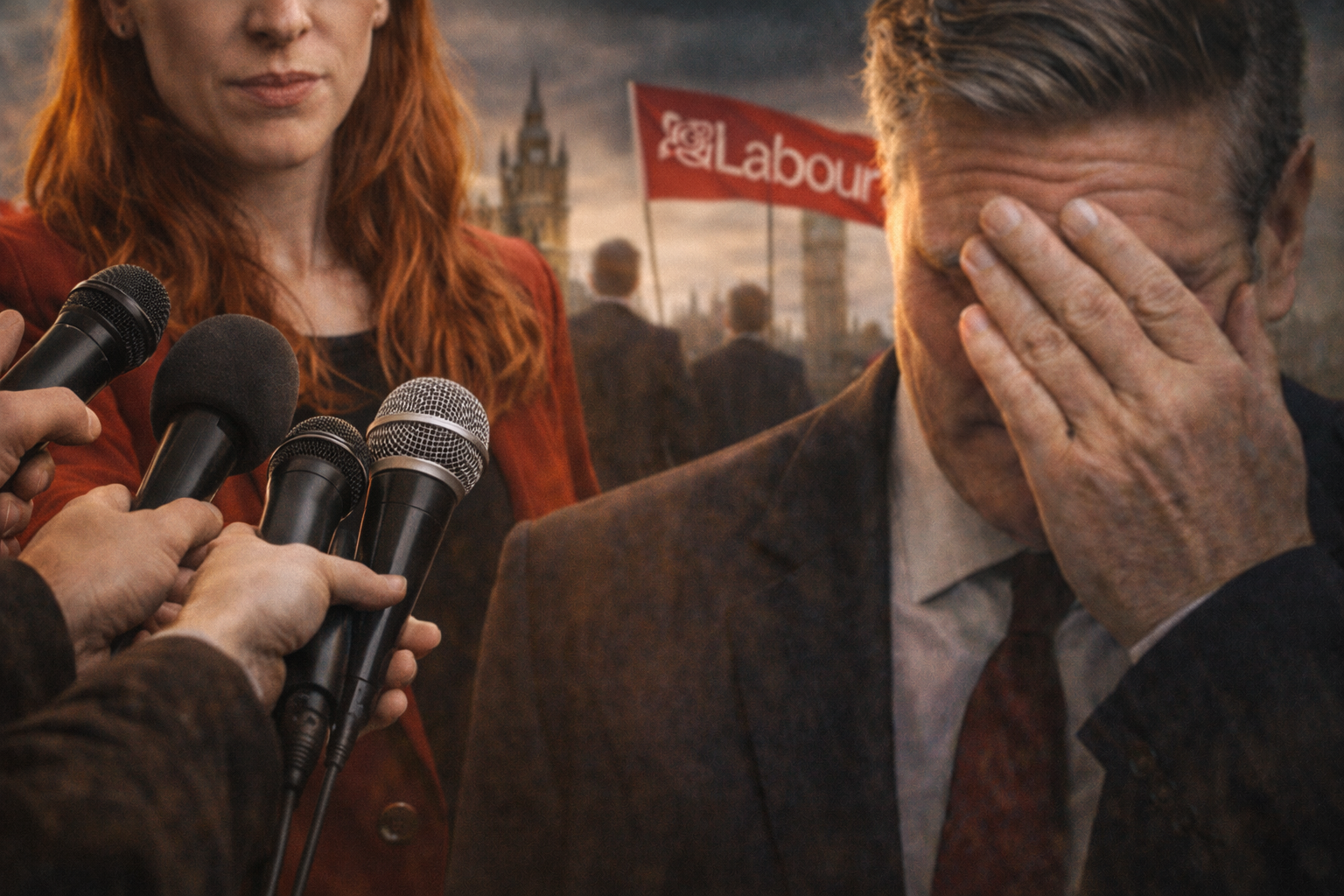
Angela Rayner Leadership Challenge? Starmer Under Pressure
Starmer’s Grip Slips as Rayner Rumors Swirl and Mandelson Files Explode
British politics is in a rare state: a governing party is fighting a legitimacy crisis in public while its leader tries to contain it with procedure, process, and time. The immediate spark is the growing scandal around Peter Mandelson’s appointment and the battle over who controls the release of the vetting documents.
Now a tabloid claim is adding gasoline: a Daily Mail front-page story says Angela Rayner is preparing to challenge Keir Starmer for the Labour leadership, backed by a large bloc of MPs and a significant fundraising “war chest.” Rayner’s team has denied the claims. The rumor still matters because it lands on top of an already-live rebellion: Rayner has publicly aligned with MPs pushing to hand oversight of the Mandelson files to Parliament’s Intelligence and Security Committee (ISC)—a move that forced Downing Street into a climbdown.
The deeper question is not whether one headline is “true.” It’s whether the internal mechanics of the Mandelson crisis have created a new incentive: replacing the leader may become the cleanest way for Labour MPs to stop the story from consuming the government.
The story turns on whether Labour’s internal threshold for a leadership contest is reached before the Mandelson document process drags the party into weeks of drip-fed damage.
Key Points
The latest confirmed development is that control of sensitive vetting disclosures has shifted toward the Intelligence and Security Committee (ISC) after a Commons showdown, limiting No. 10’s ability to manage the release schedule and redactions.
Police activity and an active investigation around Mandelson have intensified the political risk, because disclosures now intersect with legal constraints and potential evidential sensitivities.
Reports claim Angela Rayner has financial backing and MP support for a leadership bid; her team denies it, but the mere plausibility keeps MPs and donors in motion.
Rayner’s political relevance has risen because she has been visibly associated with the parliamentary push for independent-style oversight of the Mandelson files—positioning her as a focal point for internal discontent.
Rayner's previous resignation due to property tax and stamp duty issues continues to pose a potential vulnerability, as it could be interpreted as a sign that she is not completely detached from scandal politics.
The near-term risk for Starmer is not one dramatic vote; it’s cumulative authority loss, as MPs, committees, and investigators constrain his room to control narrative and timing.
What happens next depends on two timelines: how quickly the ISC receives and processes documents, and how quickly internal Labour numbers coalesce around a challenger.
Background
Keir Starmer is facing intense pressure following the controversy around Peter Mandelson’s appointment and the subsequent fight over the release of the appointment vetting materials. Downing Street sought to manage the disclosure process, but MPs pushed back, arguing that credibility required an independent, security-cleared body to decide what can be published without harming national security or investigations.
That is where the ISC becomes pivotal. It is a parliamentary committee with security clearance and an institutional role in scrutinizing sensitive material. Once the ISC is involved, No. 10 can no longer plausibly frame the process as “government disclosure on government terms.” It becomes parliamentary scrutiny on parliamentary terms.
Angela Rayner is central to the current leadership rumor cycle because she is already part of the story’s power map. She resigned from senior government and party roles in September 2025 following scrutiny over property tax matters, creating a record that can cut two ways: it can be framed as accountability or as baggage that limits her ability to claim a clean reset.
Analysis
Why the Mandelson files have become a leadership test, not just a scandal
Scandals become leadership threats when they do three things at once: drain attention, fracture internal discipline, and create uncertainty about what information will surface next. The Mandelson file dispute hits all three.
The government’s vulnerability is not only the content of any single document. It is the open-endedness of the disclosure pipeline: a large volume of communications, multiple institutions reviewing them, and a public waiting for “the next reveal.” Even if the eventual substance is politically survivable, the process can be fatal because it is slow, adversarial, and headline-driven.
A leader survives that kind of cycle when MPs believe the leader can regain control of time and message. Right now, many MPs appear to believe the opposite.
The Rayner factor: why denial doesn’t end the story
Leadership rumors are often less about the person allegedly plotting and more about the party’s need for an alternative. Rayner’s camp's denial of the claims reinforces the political signal, because the signal is coming from structural facts:
She has visibility in the current parliamentary revolt dynamic.
She has a distinct brand inside Labour—more combative and movement-linked than the leadership’s managerial style.
She has a narrative of having paid a personal cost over a tax error, which can be spun as either “she’s damaged” or “she takes responsibility.”
In short, the rumor persists because the party is searching for a plausible focal point, and Rayner fits the silhouette.
What Starmer can realistically do—and what he cannot do. t
Starmer’s toolkit is narrower than it looks. He can promise reform of vetting processes, sacrifice staff, and apologize. What he cannot easily do is force the story to end on a timeline that suits him if the ISC process and police activity dictate caution and delay.
That matters because politics rewards momentum. The longer the disclosure process runs, the more it invites internal briefings, donor anxiety, and opportunistic positioning. Starmer may calculate that time helps him by letting the news cycle move on. But time can also help challengers by allowing coordination—quiet conversations become numbers, and numbers become a trigger.
The hidden constraint: Labour’s internal rules and the “numbers game”
The most important variable is not one dramatic speech; it is arithmetic: whether enough MPs decide it is rational to start a formal process.
Most MPs are reluctant to move without two things: (1) a clear successor who can win an internal contest, and (2) confidence that the damage of staying is greater than the damage of switching leaders mid-crisis. That second condition is now becoming easier to argue, because the Mandelson disclosures create rolling uncertainty.
If the claim that “over 80 MPs” would back Rayner is exaggerated, it still shapes behavior: it can encourage fence-sitters to behave as if a challenge is viable, which makes it more viable.
What Most Coverage Misses
The hinge is that this is a procedural war over who controls credibility—and this is what determines whether MPs tolerate weeks of uncertainty.
The mechanism is simple: when oversight shifts to bodies like the ISC, No. 10 loses its ability to pace disclosures and frame omissions as prudence rather than concealment. That, in turn, makes internal MPs more sensitive to every delay, because delays look like weakness or hiding—even when they may be driven by legitimate investigative constraints.
Two signposts would confirm this dynamic in the next days and weeks:
First, public friction between No. 10 and the ISC over timelines, scope, or access. Second, a widening circle of MPs is moving from “reset the team” language to explicit talk of leadership process and thresholds.
What Happens Next
In the next 24–72 hours, the party will watch for concrete timetable signals: when the ISC receives the material, how it describes the volume, and whether police or legal considerations slow publication. Stopping the drip-feed dynamic is crucial for the survival of the leadership.
In the coming weeks, the decisive question is whether Labour MPs conclude that a leadership change is the quickest path to restore authority and end the perception of improvised crisis management—because the longer uncertainty persists, the more MPs will act to protect their seats, reputations, and local party relationships.
The main consequence is straightforward: if the Mandelson disclosure process stretches into a prolonged, contested timeline, leadership speculation becomes self-reinforcing, because MPs and donors will treat “the next reveal” as inevitable and plan accordingly.
Real-World Impact
A civil servant in a sensitive department watches the headlines and wonders whether leadership churn will reorder priorities overnight, delaying decisions on budgets and hiring.
A business leader considering UK investment hears constant talk of instability and delays a decision, not because of ideology, but because political time feels unreliable.
A local Labour organizer sees activist energy shift from campaigning to internal warfare, with volunteers wasting time on factional arguments rather than voters.
A voter who lacks political engagement perceives only "scandal," "cover-up," and "infighting," disregarding all other messages the government attempts to convey.
The Next Shock May Be Institutional, Not Personal
The most dangerous part of this story is not one personality clash. It’s that institutions—Parliament, committees, police processes—are now shaping the government’s rhythm. When that happens, leaders can look like passengers even when they are technically in control.
If Rayner does not move, someone else may. If no one moves, Starmer may limp through by sacrificing staff and reframing the scandal as a vetting failure rather than a leadership failure. Either way, the fork in the road is clear: Labour must decide whether it can survive weeks of rolling disclosure without a change at the top.
Watch for three things: ISC timeline clarity, any escalation in investigative steps, and whether senior MPs start speaking in numbers rather than sentiments—because that is when rumor becomes machinery.
