Crisis, Recovery, Repeat: The Pattern Defining Keir Starmer’s Leadership
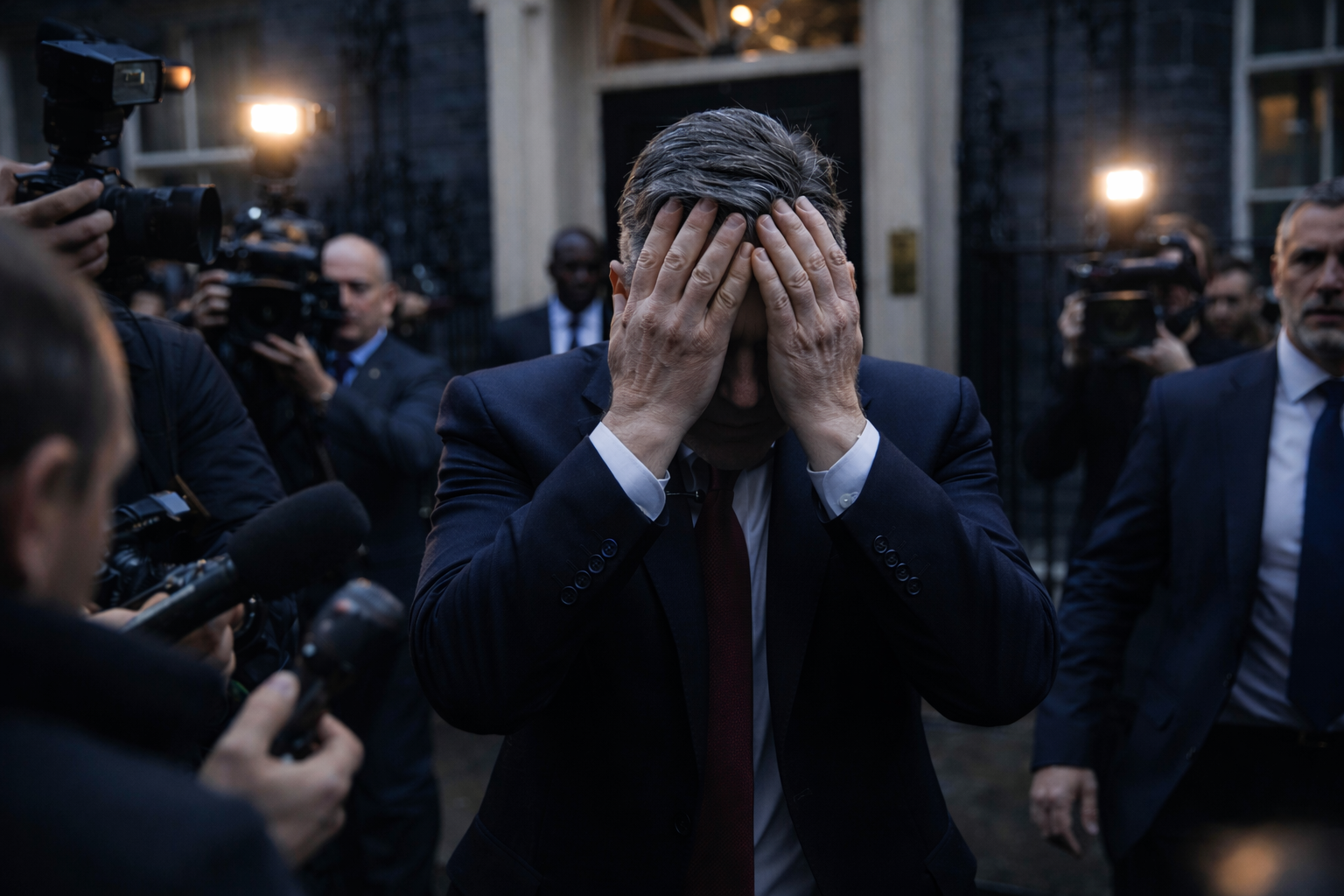
The Pressure Loop Around Starmer Is Back — And It’s Getting Harder to Break
Starmer’s Authority Tested Again: Why the Pressure Never Quite Disappears
A fresh scandal has reignited questions about judgment, control, and whether recurring crises are becoming the defining feature of this government
The latest wave of pressure on Keir Starmer is not just about one decision, one scandal, or one week in Westminster. It is about something more persistent — a pattern that keeps returning, each time slightly stronger, slightly harder to contain.
The current storm is primarily caused by the fallout from the appointment of a senior figure who, it was later revealed, had failed security vetting. Starmer insists he was not informed. Allies say he would have blocked the decision had he known. Critics disbelieve the explanation, or say it no longer matters.
That gap — between what the Prime Minister says he knew and what others think he should have known — is where the real pressure lives.
Because this is no longer being treated as an isolated failure. It is being interpreted as part of a broader question: who is actually in control?
The Incident That Reignited Everything
The controversy itself is severe. A senior appointment went ahead despite security concerns, reportedly overridden within government systems without the Prime Minister’s knowledge.
That alone would be enough to trigger scrutiny. But the political reaction has amplified it into something bigger:
Opposition figures have called for resignation
Multiple party leaders have publicly questioned competence
Senior officials have been forced out or blamed
Parliament is now expected to examine the decision-making chain
Even within government, the tone has shifted from routine defense to damage control. Starmer has expressed his "furious" feelings about the lack of communication, while his allies characterize the issue as a systems failure rather than a leadership one.
But politically, that distinction rarely holds.
The Pattern Behind the Pressure
This phase is where the story moves beyond a single scandal.
Starmer’s leadership has entered what can only be described as a pressure cycle:
Trigger event — A policy misstep, scandal, or external shock
Escalation — Media focus, opposition attacks, internal unease
Containment — Cabinet backing, procedural explanations, blame shifts
Stabilization—Pressure subsides without full resolution
Reset — then repeat
This cycle has appeared in different forms before:
Electoral setbacks that raised leadership questions
Internal party pressure for a “reset” of direction
Criticism from senior figures over defence and policy priorities
Each moment seemed survivable in isolation. Together, they create something more cumulative—a sense that instability is becoming normal.
What This Crisis Is Really About
The surface story is about a failed vetting process. The deeper story is about trust in leadership systems.
Three questions now dominate:
1. Control
If the prime minister was not informed of a critical security decision, what does that say about the chain of command?
2. Judgment
Even if the failure sits elsewhere, political accountability rarely stops at process. It lands at the top.
3. Credibility
Repeated explanations of “not being told” can begin to erode authority, even if they are factually accurate.
This is why pressure escalates quickly. Each new event doesn’t start from zero — it builds on the last.
Why Allies Are Holding the Line
Despite the noise, it is noteworthy that senior figures have largely united.
There are strategic reasons for that:
A leadership challenge risks destabilising government during global crises
No obvious successor has unified support
The parliamentary majority still provides structural protection
Even critics inside the party appear cautious. Public rebellion remains limited, suggesting that while confidence may be shaken, it has not yet collapsed.
That matters. In Westminster, leadership often ends not with opposition attacks but with internal fracture.
What Happens Next
The coming phase will be decisive, not dramatic.
Three potential paths are currently being explored:
Most Likely
The government endures the challenges. Starmer survives, supported by cabinet unity and lack of a clear alternative.
Most Dangerous
New information emerges—particularly through parliamentary scrutiny— that contradicts current explanations or expands the scope of failure.
Most Underestimated
The issue fades publicly but compounds politically, weakening authority incrementally rather than explosively.
With elections approaching and broader pressures—economic, geopolitical, and domestic—already mounting, the margin for error is narrow.
The Real Risk for Starmer
This is no longer about whether a prime minister can survive a crisis.
Most do.
It is about whether repeated crises change how leadership is perceived.
Because once pressure becomes cyclical rather than occasional, something shifts:
Every new issue is immediately framed as existential
Every explanation is judged against past explanations
Every defence sounds more familiar—and less convincing
That is the stage Starmer is entering now.
The Hard Landing
Power in politics is usually retained over time. It erodes through repetition.
Not one scandal. Not one mistake. Not one disastrous week.
However, there is a gradual build-up of uncertainty.
And once that cycle locks in, the question is no longer whether pressure will return —
It is a question of whether it ever truly leaves.
