Why Trump’s White House No Longer Sees Keir Starmer as a Serious Partner. Is The Special Relationship Dead?
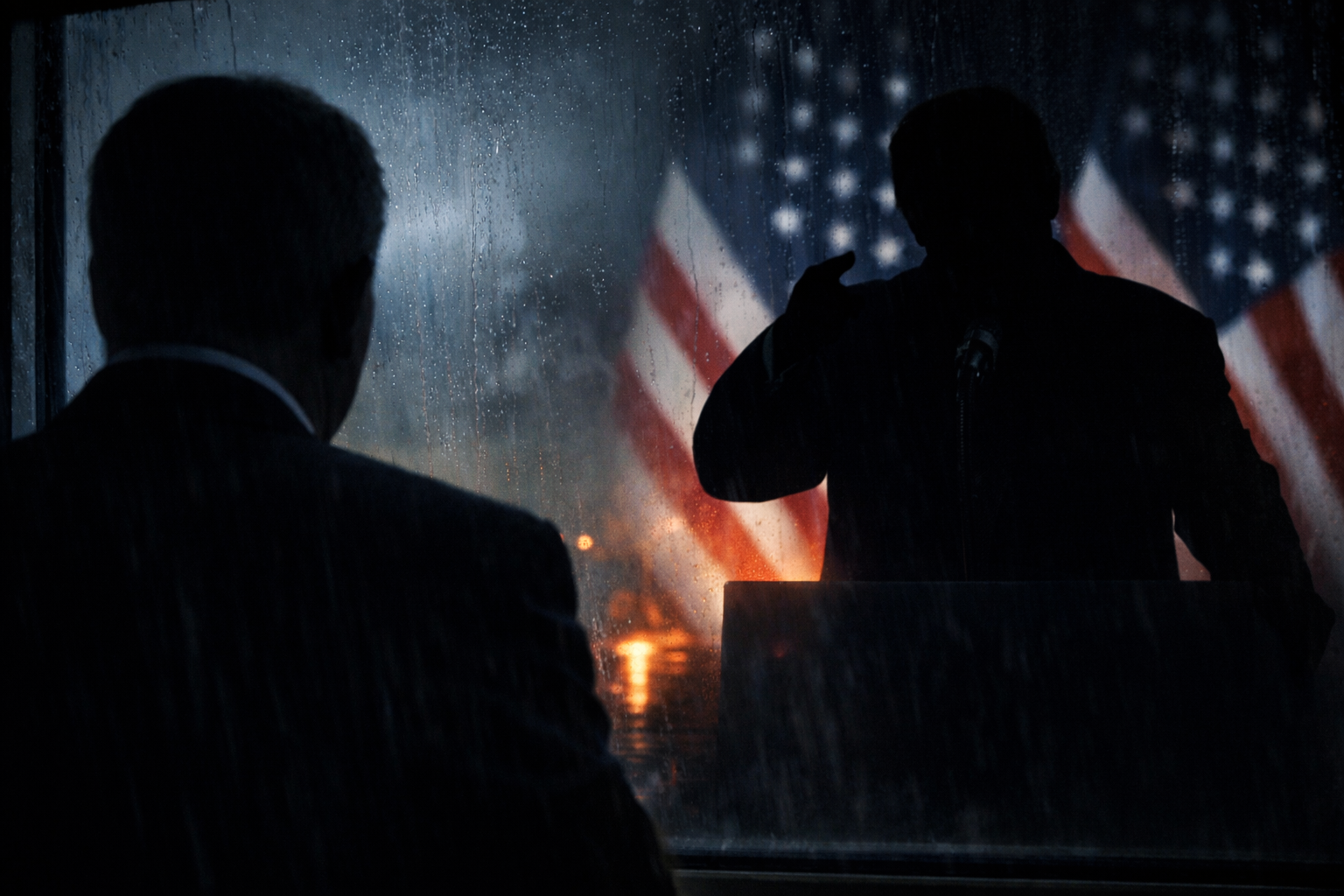
Keir Starmer’s America Problem Is Now Personal
How Keir Starmer Turned the Special Relationship Into a Test of American Patience
The problem is no longer simple policy disagreement: in Trump-world, Starmer increasingly looks like a cautious, procedural leadersignal, who hesitates under pressure, talks like a lawyer in moments that demand force, and has failed to match his rhetoric on Iran with decisive action.
When Keir Starmer first walked into the White House in February 2025, both London and Washington tried to sell the same picture: mature allies, shared security goals, trade talks, Ukraine coordination, and a still-functioning special relationship. The official readouts were warm. Both governments stressed prosperity, defense cooperation, and common purpose. A few months later, they even announced an economic deal. On paper, this was meant to look steady, serious, and productive.
But paper is not power. Optics matter. Tone matters. And in politics, especially around Donald Trump, personal judgments harden fast. By spring 2026, the mood around Starmer in Trump's orbit is completely uniquely different. Trump was openly mocking him as weak during a private Easter lunch, ridiculing Britain’s carriers, imitating Starmer’s voice, and framing him as a leader who hides behind “his team” instead of deciding. The U.S. defense secretary then piled on, publicly taking aim at Britain for not sending warships to the region. That is not routine alliance friction. That is contempt becoming audible.
That matters because Trump does not judge foreign leaders in the way diplomatic communiqués do. He judges them through instinct, dominance, speed, theatrical strength, and visible willingness to act. He can tolerate disagreement. What he hates is equivocation. So the real danger for Starmer is not simply that Trump disagrees with him on a particular crisis. It is that Trump appears to have settled on a much more damaging view: Starmer is the kind of leader who stalls, consults, hedges, and disappears into process when confronted with hard choices. That is an inference, but it is grounded by Trump’s own mockery and the wider criticism coming from his administration.
Why the relationship has become strained
The first crack was ideological as much as strategic. During the February 2025 White House meeting, JD Vance accused Britain of infringing free speech, saying such restrictions affected American tech companies and citizens. Starmer hit back, insisting Britain had protected free speech for a very long time and would continue to do so. That exchange mattered because it showed the real divide early: Trump’s camp did not just see Labour as center-left. It saw the British government as part of a Western governing class too comfortable with speech controls, overregulation, and managerial policing of public life.
That disagreement did not break the alliance on its own. States can absorb ideological friction. But it did shape the atmosphere. Trump-world was already primed to see Starmer not as a robust national leader with a different political philosophy, but as a symbol of the kind of bureaucratic, liberal, process-heavy politics it despises. Once that lens is in place, every later hesitation looks worse. Every delay reads as weakness. Every nuance becomes proof.
Then came the Middle East pressure. As Britain led diplomatic efforts around reopening the Strait of Hormuz, Trump used the moment not to praise a loyal ally but to humiliate its prime minister. He complained that the UK “should be our best” ally but was not, mocked the Royal Navy, and caricatured Starmer as someone who needed to ask his team before acting. This is the key point: Trump was not attacking a single policy detail. He was attacking Starmer’s character. In international politics, that is more corrosive than a policy row because it affects every future encounter.
The Iran problem Starmer still has not solved
Starmer’s defenders would say he is being prudent on Iran, not weak. They would point out that his government has toughened the UK’s state-threats architecture, backed stronger action against Iranian activity, and publicly described Iran as a fundamental menace that sponsors terrorism through proxies including Hezbollah, Hamas, the Houthis, and militia groups in Iraq and Syria. Ministers have also argued that the existing terrorism framework was built for non-state terror groups and is legally awkward when applied to a state organ like the Islamic Revolutionary Guard Corps.
That defense is real. But politically it is also weak. Because Labour, while in opposition, spent years sounding far more decisive. It pushed for proscribing the IRGC. Critics have repeatedly pointed out that the party’s rhetoric before power was much harder than its conduct in office. By early 2026, the government was still resisting a straight IRGC proscription under existing law and was instead promising to create a new state-threats proscription mechanism following Jonathan Hall KC’s review. The argument from ministers is that a bespoke legal tool may ultimately be stronger. The argument from critics is more brutal: if you said this organization should be banned, why are you still designing the toolkit instead of using it?
And that is where Starmer’s indecision starts to look politically fatal. In a calm seminar room, the distinction between “not yet under the old terror law” and “soon under a stronger new state-threat power” may sound sophisticated. In the real world, especially after Iranian-linked threats and amid maritime disruption, it sounds like a delay. It sounds like a government explaining why it cannot quite do the thing it previously demanded. It sounds like lawyers have replaced leadership.
This is precisely the kind of gap Trump notices and exploits. Not because he cares about British statutory architecture, but because he reads hesitation as weakness and delay as a lack of will. From that perspective, Starmer has handed him an effortless line: all the language, none of the force. Even if the legal case is more complicated than critics admit, politics is merciless to leaders who look slower in office than they sounded in opposition.
What Trump will likely think of Starmer
Trump’s own public and leaked remarks already tell most of the story. He appears to view Starmer as a man who speaks politely, consults constantly, and lacks the instinct to dominate events. Vance’s free-speech attack suggested broader ideological suspicion. Pete Hegseth’s criticism over warships suggested operational impatience. Trump’s imitation of Starmer’s voice did the rest: it turned doubt into ridicule.
So how will Trump view him? Probably as useful when Britain signs things, hosts things, or legitimizes things—but not as a naturally forceful partner. Probably as a prime minister who wants to preserve the alliance while also preserving legal cover, procedural distance, and domestic political room. Probably as someone who is safer than rebellious but weaker than serious. That is analysis, not a direct quote, but it is the clearest reading of the available evidence.
And that is the real damage. Trump does not need to break with Starmer to diminish him. He only needs to rank him low. Once a leader is filed mentally as soft, overmanaged, or overly careful, the relationship becomes asymmetrical. Britain starts working harder for respect than for influence. The public readouts can remain cordial. The private balance of esteem can still collapse.
What Media Misses
The biggest mistake is to frame the issue as a simple left-right disagreement. It is not. Trump has dealt perfectly well with leaders whose politics differ from his. What matters more to him is whether they project force, clarity, and independent command.
That is why Starmer’s problem is deeper than policy. He does not merely look different from Trump. In Trump’s eyes, he appears subordinate to process. And that is far more dangerous than ideological distance. A leader can be disliked and still respected. What is harder to recover from is being dismissed.
The criticism Starmer has brought on himself
Starmer’s critics now have a broad and increasingly coherent case.
They say he talks tough on national security but often governs like a barrister assembling caution rather than a prime minister imposing direction. They say he promised swift action on the IRGC but has still not delivered the direct proscription many expected. They say he wants the moral and strategic benefits of standing close to Washington without accepting the political risks of acting decisively in moments of crisis. And they say that when pressure rises, his instinct is not command but consultation.
Recent events have made those criticisms more potent, not less. The latest row over Peter Mandelson’s appointment as ambassador to Washington has reopened questions about Starmer’s judgment and the management of Britain’s most important bilateral relationship. Reports that Mandelson’s appointment proceeded despite failed security vetting have created fresh political damage at exactly the wrong moment. Whatever the internal explanation, the spectacle is awful: a prime minister already being mocked in Washington now faces a controversy tied directly to the UK’s representation there.
This is where the “indecisive” label becomes sticky. Not every delay is indecision. Not every legal review is drift. But when the pattern keeps repeating—harder rhetoric in opposition, caution in office, public emphasis on teams and processes, slow movement on flagship security demands, fresh questions over judgment—the label stops looking unfair and starts looking earned.
What happens next
The most likely next phase is a gradual transition. It is something subtler and, in some ways, worse: continued formal cooperation paired with reduced personal regard. Trade can continue. Intelligence ties can remain strong. The machinery of alliance can keep moving. But Starmer will have less room to shape events if the White House sees him as hesitant and easier to overawe.
The most dangerous next phase is a fresh Middle East escalation in which Britain again appears half in, half out: rhetorically alarmed, legally meticulous, diplomatically active, but operationally reluctant. If that happens, Trump will not treat it as careful statecraft. He will treat it as confirmation. And once a leader becomes confirmation of a pre-existing theory of weakness, every crisis becomes politically more expensive.
The most underestimated next phase is domestic. This issue extends beyond Trump alone. It is about how Starmer is starting to look to British voters as well: serious but slow, disciplined but bloodless, respectable but strangely unsure of when to hit hard. International humiliation tends to clarify domestic doubts. A prime minister does not have to lose an alliance to look diminished by it. He only has to look as though the other side no longer fears disappointing him.
Starmer wanted to present himself as the adult in the room: sober, steady, responsible, immune to theatrics. The problem is that power does not only reward adults. It rewards adults who can still decide, signal and strike. Currently, he risks looking like a man who understands the paperwork of force better than the use of it. And in Trump’s Washington, that is not a respectable difference in style. It is an invitation to be treated as weak.
