Kanye Blocked, Kneecap Free — The UK’s Free Speech Problem No One Wants To Admit
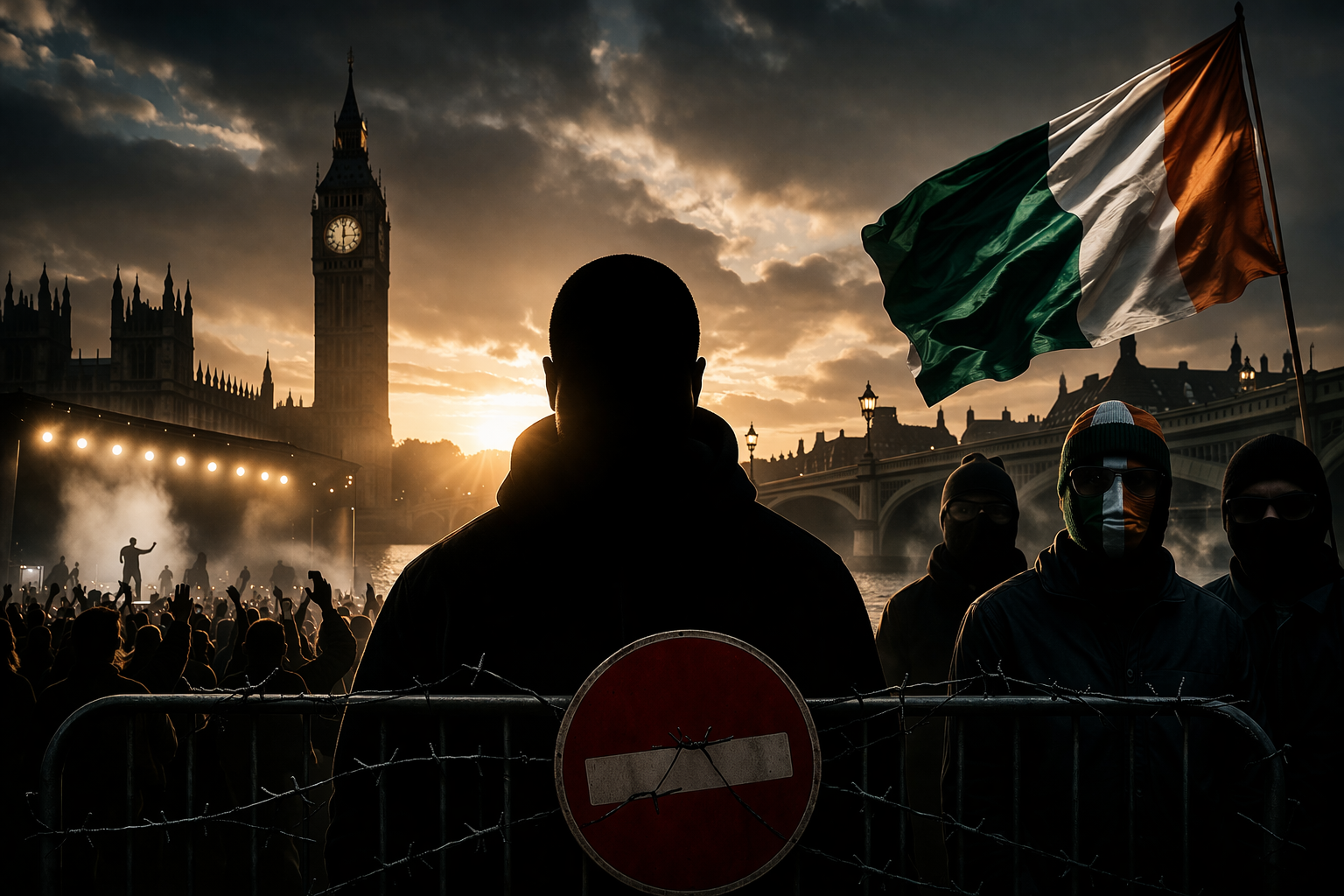
Kanye West UK entry ban controversy explained.
This wasn’t just a visa decision. It was a signal about power, risk, and how speech is actually controlled in modern Britain.
The Decision That Changed The Conversation
When the UK blocked Kanye West from entering the country, it didn’t just cancel a performance.
It collapsed an entire festival.
Wireless 2026 — one of the biggest music events in the country — was scrapped after the government withdrew his entry clearance, citing that his presence would not be “conducive to the public good.”
That phrase matters.
Because it’s not just about what was said.
It’s about what the state decides is too risky to allow.
And once that power is exercised, the question becomes unavoidable:
Where does it stop?
The Official Reason — And Why It’s Only Part Of The Story
The justification is clear.
Kanye’s history includes:
Antisemitic remarks
Public praise of Hitler
Controversial imagery and messaging
These triggered political pressure, sponsor withdrawals, and ultimately government action.
On paper, it looks like a straightforward case.
Harmful speech → consequences.
However, this explanation only provides a partial understanding.
Because it assumes the system applies that logic consistently.
It doesn’t.
Why Kneecap Doesn’t Face The Same Outcome
Kneecap operates in a space that is also provocative, confrontational, and politically charged.
They reference conflict.
They challenge the British state.
They provoke.
Yet they continue to perform.
That’s where the discomfort begins.
Because, to the public, both cases feel controversial.
But only one triggers state-level exclusion.
The Line Isn’t Just Legal — ’s interpretive.
The UK does not operate on absolute free speech.
It operates on conditional speech.
That means expression is allowed— until it is judged to cross into harm.
But here’s the critical issue:
That judgement is not purely objective.
It relies on:
Interpretation
Context
Political pressure
Public reaction
Institutional risk
Kanye’s speech was classified as harmful.
Kneecap’s speech is classified as political.
That distinction decides everything.
But it is not as fixed as it appears.
What Media Misses
This isn’t just about law.
It’s about discretion.
The system doesn’t simply enforce rules.
It chooses when and how to apply them.
And that creates a more profound problem:
Two forms of controversial speech can exist side by side —
But only one is treated as unacceptable.
This is not because one is objectively worse in all cases.
But because one crosses a line that is actively interpreted in the moment.
That’s where trust begins to erode.
The Real Risk Isn’t Kanye — ’s The Precedent
Most people see the situation as a one-off.
It isn’t.
This decision expands the visible boundary of what the state can do.
Not prosecute.
Not fine.
But prevent it.
Prevent entry.
Prevent performance.
Prevent platform.
That’s a different level of control.
And once that mechanism is normalized, it doesn’t stay limited to one case.
It becomes available for future ones.
The Free Speech Problem Nobody Wants To Say Out Loud
The UK doesn’t silence speech broadly.
But it does filter it selectively.
And that selectivity is where the tension lies.
Only when free speech is predictable does it feel stable.
Once it becomes:
Context-dependent
Pressure-sensitive
Reputation-driven
It stops feeling like a right.
It begins to feel more like permission.
What Happens Next
This won’t be the last case.
Three trajectories are already forming:
Most likely, more artists and public figures face entry scrutiny based on past statements
Most dangerous: The definition of “harmful speech” expands gradually over time
Most underestimated: Public perception shifts from trust to suspicion of selective enforcement
Once people perceive uneven application of speech rules, it undermines their legitimacy.
Even when the original decision was justified.
The Real Meaning Of This Moment
This story isn’t about defending Kanye.
It’s about understanding the system that stopped him.
Because that system doesn’t just respond to extreme cases.
It defines the boundaries of acceptable speech.
Quietly.
Case by case.
Decision by decision.
And the uncomfortable truth is this:
The UK didn’t just establish a boundary.
It showed how easily that line can move.
