

Ranked: Keir Starmer’s Biggest Mistakes, U-Turns And Public Outrage
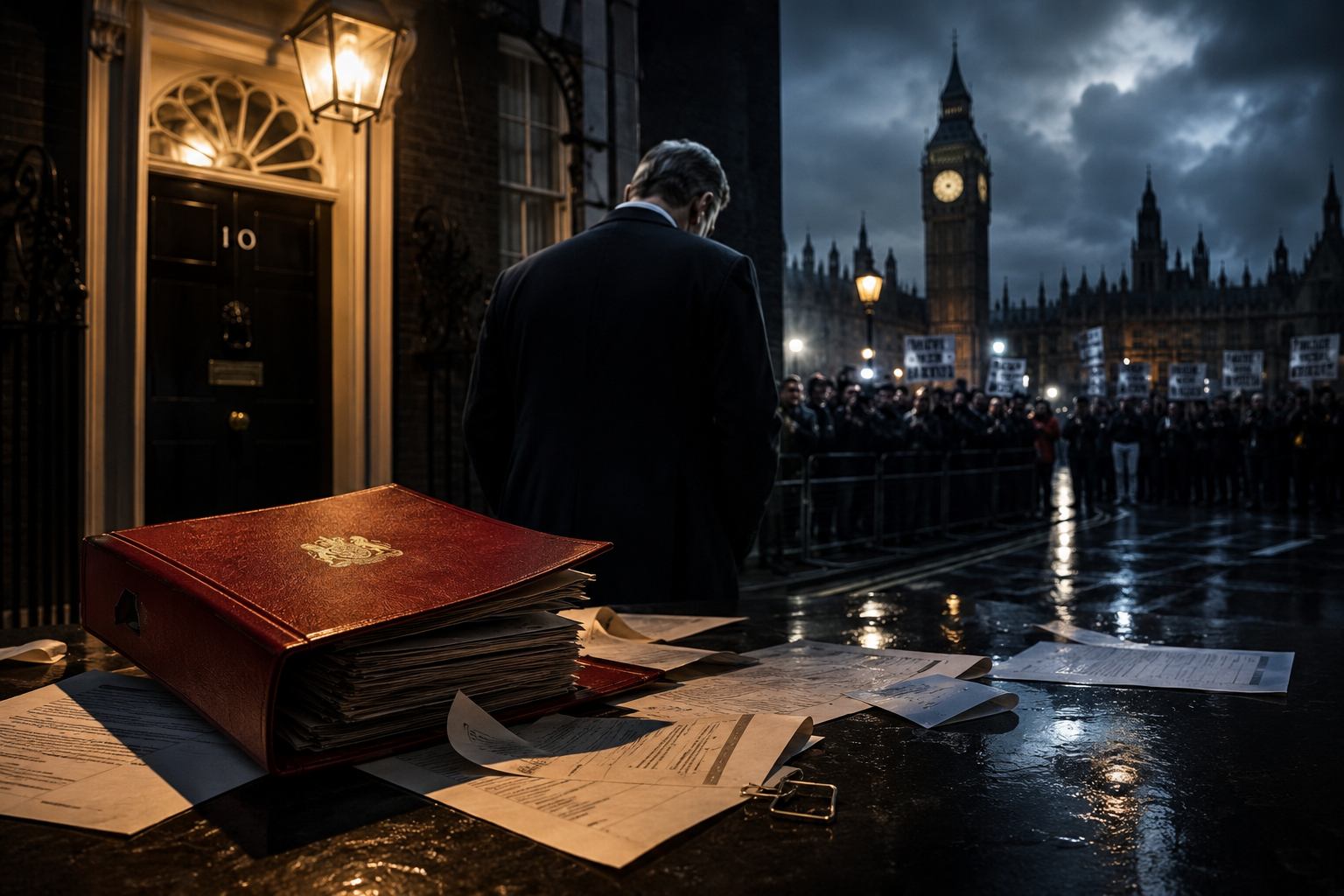
The Starmer Collapse: Every Major Mistake And U-Turn Ranked
Why Keir Starmer Is Polling Like One Of Britain’s Worst Prime Ministers Ever
Keir Starmer’s polling problem is not just that he is unpopular. It is that his unpopularity has become the story through which every decision is now interpreted. Once a prime minister reaches that point, even ordinary policy becomes evidence of drift, weakness or arrogance.
The cleanest version of the claim is this: some polling has placed Starmer at historic lows by specific measures, especially prime ministerial satisfaction. Full Fact’s assessment is more precise than the social media slogan: Ipsos polling showed Starmer with the lowest satisfaction level of any prime minister since its series began in the 1970s, while other polling measures still show Liz Truss performing worse on some approval or favourability comparisons. That is not quite “worst prime minister ever” in every possible dataset, but it is close enough to explain why the attack has stuck.
YouGov’s January 2026 favourability figures showed Starmer at minus 57, his lowest figure at that point and joint-lowest recorded by YouGov for any prime minister other than Liz Truss. The same polling found that 75% of Britons viewed him unfavourably and only 18% viewed him favourably. That is not normal mid-term grumbling. That is a collapse in political consent.
By early June 2026, YouGov’s Westminster voting intention polling put Reform UK on 27%, with Labour down at 18%, level with the Conservatives and only three points ahead of the Greens. For a Labour government elected with a huge parliamentary majority less than two years earlier, that is not a warning light. It is the dashboard flashing red.
Ranked Number One: The Winter Fuel Allowance Disaster
The winter fuel allowance row ranks first because it fused policy pain with political symbolism. Starmer’s government did not merely make a fiscal choice. It picked a fight with pensioners, then discovered that voters saw the decision as cold, unnecessary and politically tone-deaf.
The later U-turn made it worse. The government announced that more than 75% of pensioners in England and Wales would again be entitled to the winter fuel payment, after the original restriction had created a serious backlash. The Institute for Government’s assessment was blunt: the handling damaged trust, because the government tried to defend the first decision as right and then the reversal as right too.
That is why this mistake sits at the top. Voters can sometimes forgive a painful policy if the leader looks honest, consistent and prepared to defend it. They are far less forgiving when the same leader looks like he has punished the vulnerable, panicked under pressure, reversed course, and then pretended the logic had been coherent all along.
The deeper wound was not only the money. It was the signal. Starmer had sold himself as the serious adult after years of Conservative turbulence. The winter fuel debacle made him look like a politician capable of creating a moral controversy by accident, then retreating without restoring confidence.
Ranked Number Two: The Grooming Gangs Inquiry U-Turn
The grooming gangs inquiry U-turn ranks second because it touched something far more dangerous than party management: public belief that the state tells the truth about institutional failure. On this issue, hesitation was always going to look like avoidance.
The government has since established a statutory public inquiry into grooming gangs, with the inquiry beginning work on 13 April 2026. The House of Commons Library records the sequence clearly: Oldham Council requested an inquiry in July 2024, the request was refused in October 2024, the issue became a major political focus in January 2025, Baroness Casey was asked to conduct a rapid audit, and the government later accepted all of Casey’s recommendations, including a national inquiry.
The public outrage here was predictable. Grooming gangs are not a normal Westminster issue. They sit at the intersection of child protection, policing, race, local authority failure, political cowardice and public disgust. Any impression that the government was reluctant to confront the issue was politically lethal.
This is why the reversal mattered so much. It did not simply look like Starmer had changed his mind. It looked like he had to be forced into acknowledging what large parts of the public already believed: that institutions had failed victims, and that the political class had been far too slow to face the full ugliness of the story.
Ranked Number Three: Chagos And The Sovereignty Trap
The Chagos Islands decision ranks third because it created a rare combination of strategic anxiety and symbolic weakness. Under the 2025 agreement, the UK would cede sovereignty of the Chagos Archipelago to Mauritius while retaining rights over Diego Garcia, the crucial UK-US military base. The House of Commons Library records that the UK would pay Mauritius an annual average of £101 million for 99 years in 2025/26 prices, totalling around £3.4 billion.
The government’s defence is that the deal resolves a long-running sovereignty dispute and secures the base’s future. That argument is not absurd. The Chagos issue has a complicated legal and historical background, including the displacement of Chagossians and international pressure over sovereignty.
But politically, it lands badly for Starmer because it feeds the exact image his opponents want: a prime minister too comfortable managing decline, too eager to satisfy international legal opinion, and too poor at selling British strategic interest to the British public. When a leader is already seen as weak, ceding sovereignty becomes more than a treaty. It becomes a metaphor.
This is the Starmer problem in miniature. Even when there is a serious policy case, the politics often looks bloodless. He can explain the structure, but not command the emotion. He can describe the mechanism, but not dominate the argument.
Ranked Number Four: The Reform Surge And Labour’s Lost Coalition
The Reform surge ranks fourth because it reveals the scale of Labour’s political leakage. Starmer’s problem is not simply that Conservative voters dislike him. That was always baked in. The more dangerous problem is that Labour’s 2024 coalition has started to look shallow, transactional and easy to break apart.
The latest YouGov Westminster figures from 31 May to 1 June 2026 showed Reform UK leading on 27%, nine points ahead of Labour. Labour sat on 18%, level with the Conservatives. That is a devastating position for a sitting government, especially one that entered office promising competence, seriousness and national renewal.
This is where the “worst prime minister ever” framing gains emotional force. Voters do not usually need a spreadsheet to decide a prime minister has failed. They look at whether life feels better, whether the government feels competent, whether promises feel real, and whether the leader looks like he has authority.
Starmer’s problem is that he increasingly fails the authority test. He often looks like a man administering a system rather than leading a country. That technocratic style can work when things are stable. When voters are angry, it becomes poison.
Ranked Number Five: The Trust Gap Between Promise And Delivery
The fifth biggest mistake is not one policy. It is the gap between Starmer’s promise and his governing personality. He campaigned as the antidote to chaos. He offered stability, integrity and competence. The public did not expect fireworks. They expected grip.
That is why the U-turns have cut so deeply. The issue is not that governments should never change course. Good governments reverse bad decisions when the facts change. The problem is when reversals stop looking like judgment and start looking like survival.
Winter fuel, grooming gangs, Chagos, welfare arguments, tax pressure, internal Labour unrest and weak national polling all now feed into one larger narrative: Starmer is not setting the weather. He is being moved by it. That is a brutal perception for any prime minister, but especially one who built his entire brand on control.
The Taylor Tailored article engine brief for this piece demands a completed article, not a research note, and the strongest article angle is clear: Starmer’s crisis is not only about individual mistakes. It is about the public deciding those mistakes reveal the man.
Why The Public Outrage Feels So Personal
The outrage around Starmer feels personal because many voters believe they were sold restraint and received evasion. They were told the adults were back in charge. Instead, they see a government that often appears frightened of its own decisions.
That perception may be unfair in some cases. Government is harder than opposition. Fiscal constraints are real. Public services are strained. Britain’s economy, borders, health system, defence posture and welfare state all contain problems that no prime minister could solve quickly.
But politics is not marked only on difficulty. It is marked on trust, instinct and authority. Starmer’s instincts keep being questioned because his most controversial decisions often appear to move in the same direction: make a hard call, mishandle the politics, absorb public fury, then retreat or reframe.
That pattern is lethal because it teaches voters to push harder. If the public believes the government will fold, anger becomes a negotiating tool. If MPs believe the leader is vulnerable, discipline weakens. If opponents believe the prime minister can be trapped, every issue becomes a test of nerve.
The Real Reason He Is Polling So Badly
Starmer is polling so badly because he has lost the benefit of the doubt. That is the invisible asset every new prime minister receives and every failing prime minister burns through. Once it is gone, the public stops hearing explanations and starts seeing excuses.
The “worst prime minister ever” line works because it converts a complicated polling picture into a simple emotional verdict. Technically, the claim depends on which polling series and question you use. Politically, the damage is already done because the phrase captures what many voters feel: disappointment hardened into contempt.
That is the heart of the anti-Starmer case. He does not look dramatic enough to inspire, ruthless enough to dominate, warm enough to reassure, or clear enough to persuade. He looks trapped between managerial caution and political panic.
The tragedy for Starmer is that he won power by promising to end chaos. The danger now is that his premiership becomes remembered not for chaos in the theatrical sense, but for something colder: a slow collapse of trust, one U-turn at a time.
