London Tube Strike Chaos Begins: What’s Really Driving It—and How Long the Disruption Could Last
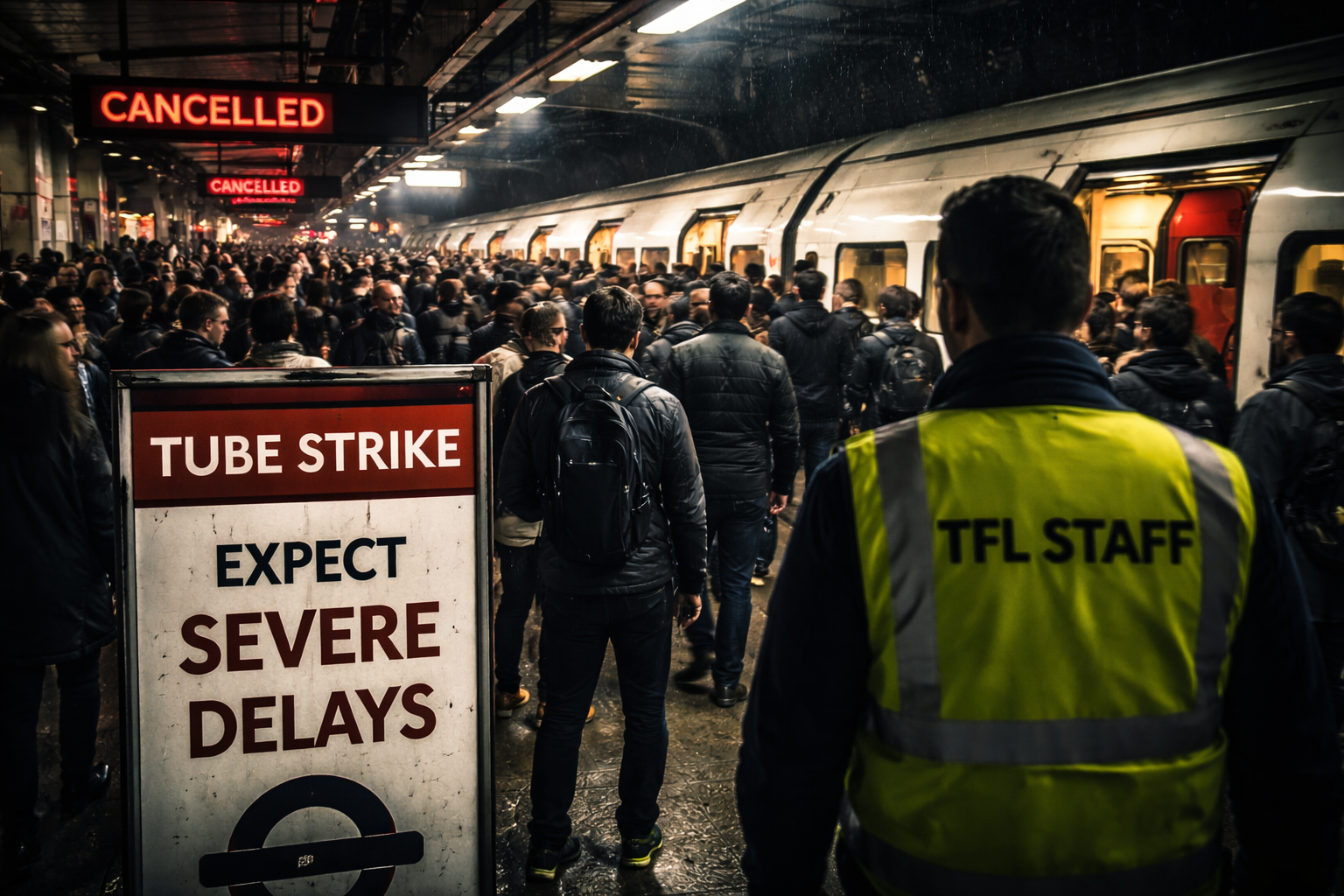
London Tube Strikes Explained: Dates, Disruption, and the Real Battle Behind It
A dispute over working patterns has triggered multiple 24-hour walkouts, with disruption stretching across days—and more strikes already lined up.
London’s transport network is entering another period of disruption as Tube drivers begin a series of coordinated strikes. The action starts midday on April 21 and is expected to ripple far beyond the official 24-hour windows, affecting commutes across multiple days.
At its core, the strike is not just another routine industrial dispute. It is a clash over how work itself is structured—one that could reshape driver schedules across the Underground and set the tone for future negotiations.
When the strikes are happening—and how long they last
The first wave of disruption runs
April 21 (midday) → April 22 (midday)
April 23 (midday) → April 24 (midday)
Each strike officially lasts 24 hours, but the real-world impact stretches longer. Services typically deteriorate before the start time and take hours—sometimes most of the day—to recover afterward.
This means commuters should expect disruption across four consecutive days, not just two isolated strike periods.
Why Tube drivers are striking
The dispute centers on a proposed shift to a compressed four-day working week.
Drivers would work fewer days, but longer shifts
Breaks would become paid
The change would be voluntary, with an option to stay on five days
Transport authorities argue the change improves flexibility and reduces overall weekly hours.
The union representing drivers disagrees sharply. Their concerns focus on:
Fatigue from longer shifts
Safety risks
Work-life balance impacts
A belief negotiations have not been handled properly
That clash—between operational efficiency and worker safety—has pushed talks into deadlock.
Which lines are affected
The disruption is expected to hit large parts of the London Underground, though not all lines equally.
Some routes may see:
Full suspension
Partial closures
Severe reductions in service
Key lines expected to be heavily impacted include:
Piccadilly
Circle
Parts of the Metropolitan
Sections of the Central line
Meanwhile, alternative services such as the Elizabeth Line, Overground, and DLR are expected to run—but will likely be significantly busier than usual.
The wider strike timeline: this is not a one-off
This week is only the beginning.
Planned strike dates already extend into the coming months, including:
May 19–20
May 21–22
Mid-June (multiple dates)
In total, the dispute could result in multiple weeks of repeated disruption, depending on whether negotiations break through.
What this means for London right now
The immediate effect is simple:
Fewer trains
Longer waits
More crowded alternatives
But the deeper impact is structural.
Every strike day shifts passenger behavior—toward buses, bikes, walking, and flexible working. Over time, repeated disruption doesn’t just delay journeys; it reshapes them.
What most people miss
The issue isn’t really about pay.
A pay deal had already been agreed upon previously.
The real battle is about control over working patterns—who decides how the job is done, and under what conditions.
That makes this dispute harder to resolve. Pay disputes can be settled with numbers. Structural changes affect daily life, fatigue, safety, and long-term expectations.
What happens next
Three scenarios are currently in play:
Most likely:
Continued strikes through May
Partial service each time
Ongoing negotiations alongside disruption
Best case:
A late-stage compromise on working patterns
Some strike dates cancelled at short notice
Worst case:
Escalation into longer or more frequent action
Severe, repeated disruption across the network
The bottom line
This week’s Tube strike is not an isolated disruption—it is the opening phase of a broader standoff over how London’s transport system operates.
And unless something shifts quickly, the stop-start rhythm of the Underground could become a defining feature of the months ahead.
