

The Andy Burnham Problem Labour Can No Longer Ignore
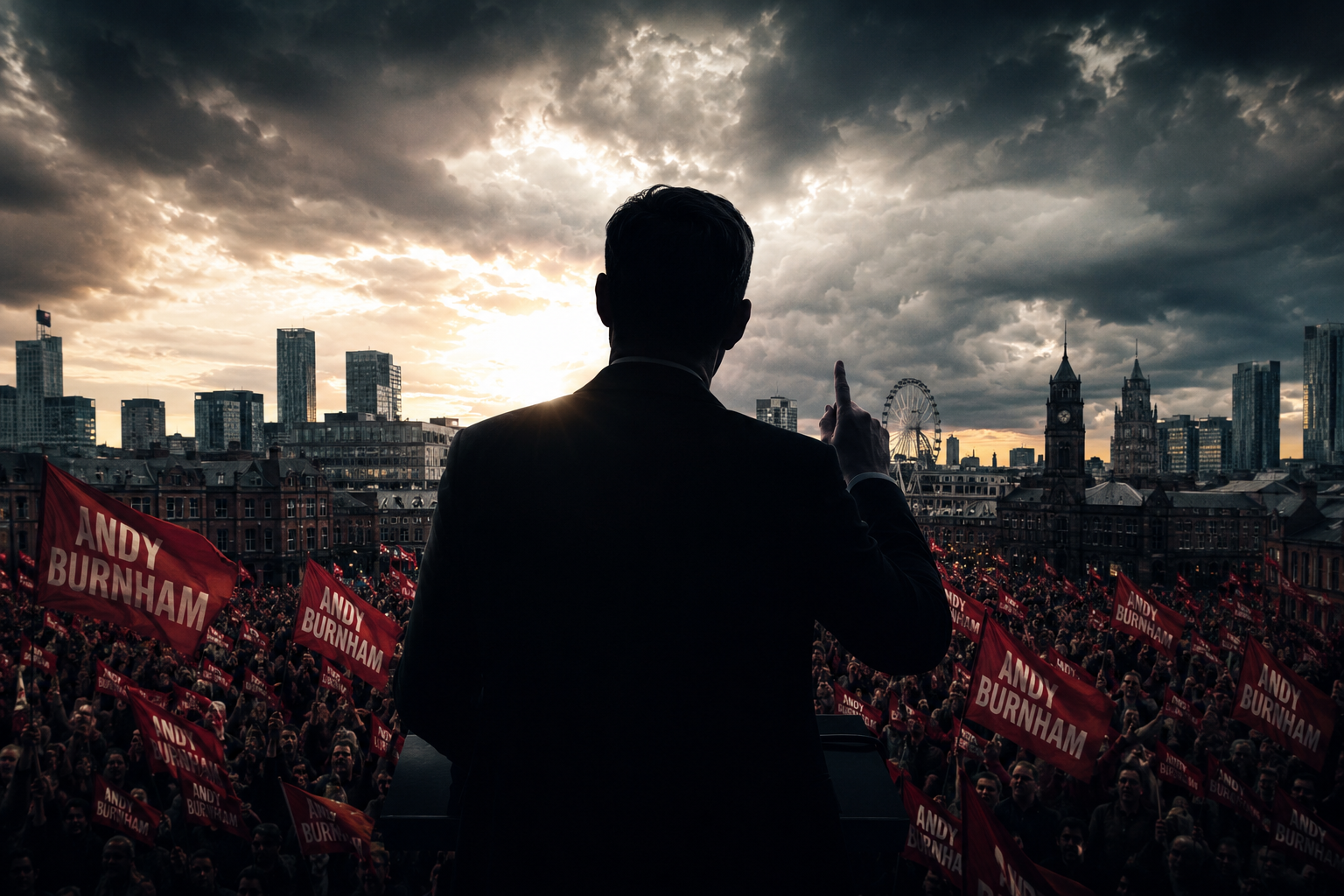
The Labour Revolt Growing Around Andy Burnham
Why Andy Burnham Is Suddenly At The Centre Of Labour’s Growing Panic
The Local Election Shock Has Turned Andy Burnham From Regional Powerhouse Into Labour’s Most Dangerous Question
Andy Burnham was supposed to remain outside Westminster. That now looks increasingly impossible.
After brutal local election losses for Labour across England, growing speculation around Keir Starmer’s future, and renewed pressure from Reform UK, Burnham’s name has suddenly moved from background noise to frontline political conversation. The question is no longer whether labour has internal nerves. The question is whether Burnham has become the unofficial answer to them.
The timing is impossible to ignore. Labou’s local election performance triggered widespread anxiety inside the party, with losses across traditional strongholds and rising fears about Reform UK’s momentum. Reports have now emerged suggesting Burnham allies are actively exploring routes for him to return to Parliament within weeks.
That changes the atmosphere entirely.
Because once a politician starts looking for a Westminster route back in, leadership speculation stops feeling theoretical.
The Detail That Suddenly Changed The Story
The pressure around Burnham intensified after reports that he pulled out of a keynote public appearance immediately after Labour’s election losses.
On its own, that might mean very little. Politicians cancel appearances all the time.
But the withdrawal landed in the middle of mounting reports that Burnham supporters are preparing for a potential post-Starmer future. The symbolism became unavoidable. A mayor, once blocked from returning to Westminster, was suddenly back at the centre of Labour’s leadership conversation.
The underlying frustration within parts of Labour has been building for months.
Earlier this year, Burnham attempted to stand in the Gorton and Denton by-election, a move widely considered a potential pathway back into parliament. Labou’s National Executive Committee blocked him in an 8–1 vote, with Starmer himself reportedly among those opposing the move.
That decision never fully settled the issue. If anything, it deepened.
Many Labour members and MPs reportedly viewed the move as political containment rather than party management. More than 50 Labour MPs objected publicly after Burnham's blocking, while union figures criticised what some described as internal "control-freakery".
Now, after Labou’s poor election results, that earlier decision looks politically explosive.
Why Burnham Feels Different From Other Labour Figures
Burnham occupies a strange position in modern labour politics.
He is neither fully aligned with Labou’s hard left nor entirely identified with the Starmer project. That ambiguity has become politically valuable.
At a moment when Labour faces pressure from multiple directions—Reform UK in former industrial areas, Greens in progressive urban seats, and public exhaustion with Westminster politics generally—Burnham increasingly looks to some Labour figures like someone capable of crossing factions.
That does not mean a leadership challenge is imminent. Labou’s internal rules make removing a sitting prime minister extraordinarily difficult. Any challenger would require significant MP backing and broader party support.
But politics changes when a name starts feeling "available".
Burnham’s allies reportedly believe he could secure sufficient parliamentary backing if circumstances deteriorate further.
That matters because leadership speculation feeds itself. Once MPs begin discussing succession privately, pressure on a leader typically continues.
The Reform UK Factor Is Making Labour Nervous
The deeper fear underneath all of this is not simply internal labour politics.
It is Reform UK.
The local elections exposed growing voter volatility across areas Labour expected to stabilise after the 2024 general election. Reform made major gains in parts of England traditionally considered politically reachable for Labour, while anti-establishment sentiment continued spreading across local contests.
That creates a serious strategic problem for Starmer.
His leadership model was built heavily around competence, moderation, and stability after years of political chaos. But if voters increasingly feel economically frustrated, culturally detached from Westminster, or simply exasperated at establishment politics in general, Labour’s cautious strategy starts looking vulnerable.
Burnham’s appeal is different.
He projects regional authority rather than Westminster managerialism. His Greater Manchester mayoralty has allowed him to build a political brand rooted in local identity, transport, public services, and anti-London centralisation. That gives him a kind of political insulation many Westminster figures lack.
For nervous Labour MPs watching Reform’s rise, Burnham increasingly looks like someone who can speak emotionally as well as administratively.
That distinction matters more than many people realise.
The Hidden Political Calculation Behind Burnham’s Return Plans
The most fascinating part of the story may be what Burnham’s allies are reportedly not trying to do.
Multiple reports suggest supporters are attempting to avoid an outright public leadership war. Instead, the preferred scenario appears closer to a managed transition if Starmer’s position becomes unsustainable.
That reflects how dangerous labour understands open civil war could become.
The party knows voters punished Conservative infighting for years. A brutal labour leadership battle while Reform UK gains momentum would carry enormous political risk.
So Burnham’s positioning feels unusually careful.
He has not launched a public campaign. He has not openly attacked Starmer. He has largely stayed disciplined in public messaging. Yet the infrastructure around him appears increasingly active.
That combination is precisely why speculation continues growing.
The Bigger Problem Labour May Be Facing
The Burnham story is ultimately about something much larger than one politician.
It is about whether Labou’s current political formula is emotionally connecting with voters strongly enough.
The local election results suggested growing frustration in multiple directions at once. Some voters appear to be drifting towards Reform UK. Others towards the Greens. Others towards disengagement entirely.
That creates a dangerous political landscape for any governing party.
Because once voters stop believing a government represents momentum, pressure builds rapidly.
Burnham’s rise inside the Labour conversation reflects that uncertainty. He has become a vessel for wider anxieties about identity, direction, and political energy inside the party.
That does not make him inevitable.
It does make him impossible to ignore.
And that may be the real reason Westminster suddenly feels nervous again.
For months, Andy Burnham looked like a politician trapped outside Parliament by Labour’s own internal machinery. Now, after one brutal election cycle and growing panic over the future, the same figure is being discussed as the man who could eventually redefine the entire party.
