The Cases Causing Outrage In Britain: Manchester Airport, Henry Nowak And The Growing Revolt Against The System
Why More People Believe Britain Has Entered A Dangerous Crisis Of Trust
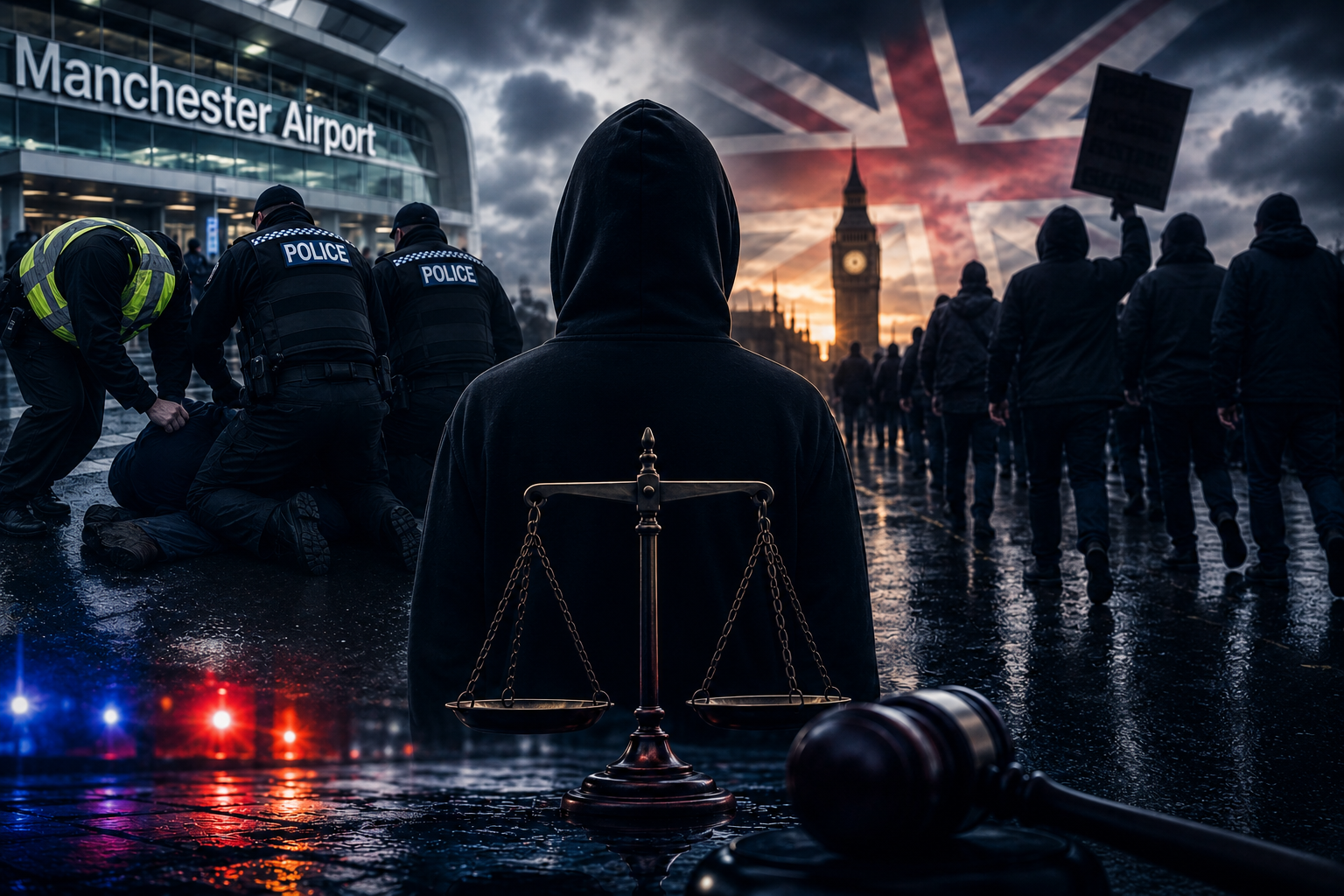
The Manchester Airport Deadlock Exposed A National Divide
The Manchester Airport case should have been straightforward in theory. A violent confrontation took place. Police officers were assaulted. Force was used. Multiple videos emerged. The legal system became involved.
Yet after two separate juries failed to reach verdicts on key allegations against two brothers accused of assaulting a police officer, prosecutors decided not to pursue a third trial.
What followed was something larger than a criminal case. Millions of people watched the footage and reached completely different conclusions. Some saw police officers facing violence. Others saw excessive force being used by authority figures. The same evidence produced radically different interpretations.
That is why the story never disappeared.
Henry Nowak Became Something Even Bigger
The killing of 18-year-old Southampton student Henry Nowak has triggered an even more explosive reaction. Henry Nowak
Nowak was fatally stabbed in Southampton after a confrontation in December 2025. Prosecutors argued he was stabbed multiple times with a large blade and that claims of racist abuse made by the defendant were false. A jury ultimately convicted Vickrum Digwa of murder and possession of a bladed article. Digwa's mother was also convicted of assisting an offender.
But public anger did not focus only on the killing itself.
It focused on what happened immediately afterward.
The Image That Shocked Britain
Evidence heard during the trial revealed that police initially handcuffed Henry Nowak after allegations were made that he had racially abused and attacked the suspect. Only later did officers realise he had suffered fatal stab wounds. Hampshire Police subsequently apologised for handcuffing him, while the police watchdog began examining the circumstances surrounding the response.
For many people, that image became the defining symbol of the entire case.
An 18-year-old student had been stabbed. Yet the victim was initially treated as a suspect.
Whether the officers acted reasonably based on information available at the time remains part of ongoing scrutiny. But politically and emotionally, the damage was immediate.
The image was powerful because it seemed to crystallise a fear many people already held: that institutions are no longer seeing situations clearly.
Why These Cases Became Connected
Legally, the Manchester Airport proceedings and the Henry Nowak murder trial have almost nothing in common.
Culturally, they are increasingly discussed together.
That is because both cases trigger the same underlying argument.
Who does the public trust?
The police?
The courts?
The institutions?
The people involved?
The footage?
Their own instincts?
The modern information environment means people increasingly build entirely different realities from the same evidence. The result is a growing fragmentation of public trust.
Against The System
The phrase appearing repeatedly online is simple.
Against the system.
For some people, Manchester Airport became evidence that authorities abuse power and then protect themselves.
For others, it became evidence that police officers face violence while large sections of society automatically distrust them.
For some people, Henry Nowak became evidence that institutions became so concerned about accusations of racism that they failed to recognise a dying victim. Others argue the case instead demonstrates how difficult fast-moving violent incidents can be for officers trying to establish facts in chaotic circumstances.
The important point is not which interpretation people choose.
The important point is how many people now instinctively assume institutional failure before institutional competence.
Britain’s Real Crisis May Be Legitimacy
Most societies survive disagreement.
What becomes dangerous is when people stop believing institutions are capable of reaching fair conclusions at all.
That is the thread connecting both cases.
The Manchester Airport proceedings produced two deadlocked juries and years of public division.
The Henry Nowak case produced a murder conviction, yet large parts of the public conversation shifted toward questions surrounding policing, race allegations, institutional judgement, and accountability rather than solely focusing on the killer.
Both stories therefore evolved into something larger than individual criminal cases.
They became legitimacy tests.
The Warning Sign Britain Should Not Ignore
The most revealing aspect of both cases is not the legal outcome.
It is the public reaction.
Large numbers of people now appear willing to believe institutions are incompetent, politically captured, dishonest, biased, or incapable of acting fairly. Whether that perception is justified in each individual case is almost secondary to the fact that the perception exists at all.
That may be the real warning emerging from Manchester Airport and Henry Nowak.
The deeper story is not simply about crime, policing, race, violence, or courtrooms.
It is about a country increasingly struggling to agree on who deserves its trust.
