The UK’s Teen Social Media Ban Could Create The Exact Problem It Claims To Solve
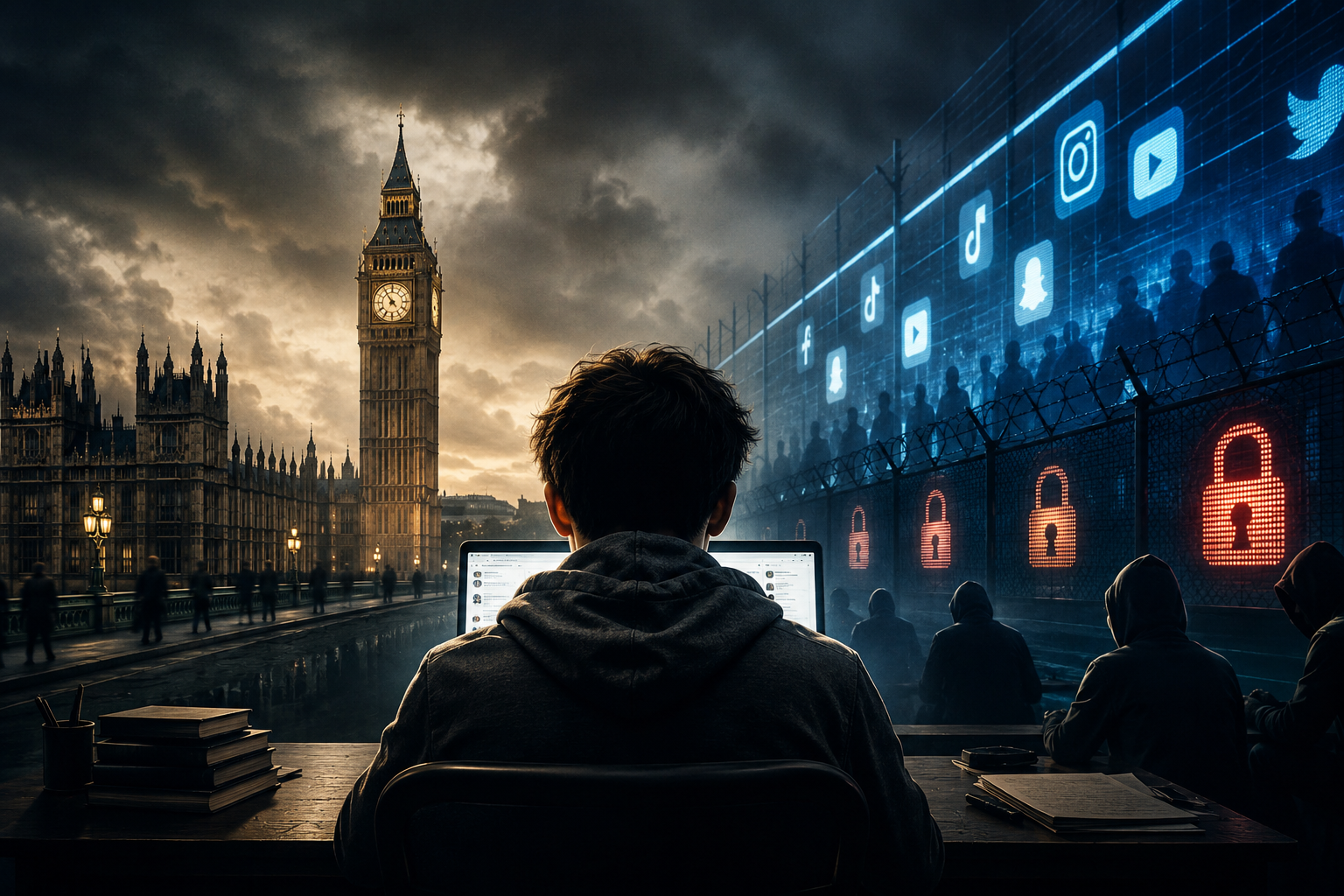
Why A Teen Social Media Ban Could Backfire Spectacularly
Britain Is About To Test A Social Media Ban — And Teenagers May Bypass It Within Hours
The UK government is now openly considering major restrictions on social media access for under-16s, with ministers signalling that some form of crackdown could arrive within weeks. The consultation process has attracted tens of thousands of responses, and policymakers are examining options ranging from age limits to restrictions on features such as infinite scrolling, autoplay, notifications, and algorithmic recommendations.
What makes this significant is the speed. Only a few years ago, a nationwide social media restriction would have been politically difficult to imagine. Today, it is being discussed as an increasingly realistic policy option, with Australia frequently cited as a model and UK ministers actively studying its approach.
The concern driving the push is understandable. Rising anxiety, online bullying, harmful content exposure, addictive platform design, and concerns about youth mental health have created enormous political pressure for action. Few serious observers argue that the current situation is ideal.
The real disagreement is whether banning access is actually the smartest solution.
The VPN Problem Is Impossible To Ignore
One of the biggest criticisms of social media bans is brutally simple: teenagers are often extremely good at finding ways around restrictions.
VPN technology already allows users to bypass geographical internet restrictions around the world. Age verification systems can be challenged, workarounds emerge quickly, and online communities often spread bypass methods within hours. Critics argue that attempting to ban access may simply push younger users toward harder-to-monitor platforms and technologies.
Australia's experience has become part of that debate. Reports suggest many under-16 users continued accessing social platforms despite restrictions, raising questions about how effective blanket bans are in practice.
That creates an uncomfortable possibility.
The teenagers who follow the rules may lose access. The teenagers most determined to bypass them may continue using the platforms anyway.
If that happens, the policy risks creating compliance theatre rather than genuine protection.
The Digital Skills Question Nobody Wants To Discuss
The debate is usually framed around safety.
Much less attention is being paid to capability.
Social media is not merely entertainment anymore. It is increasingly tied to communication, content creation, digital marketing, entrepreneurship, online communities, cultural awareness, personal branding, software literacy, and emerging AI ecosystems.
The next generation will likely enter a world where digital fluency is as important as traditional literacy. Many of today's most valuable skills are learned through participation in digital environments rather than isolation from them.
That does not mean unlimited access is wise.
It does mean policymakers must consider whether blanket restrictions could produce unintended consequences. A teenager growing up in a country with highly restricted access may develop very different digital instincts compared with peers in countries that focus more heavily on education, platform accountability, and supervised engagement.
The question is not simply whether social media causes harm.
The question is whether removing access creates new disadvantages.
Other Countries May Take A Different Path
A major concern among critics is competitive divergence.
While Britain debates restrictions, other countries are simultaneously investing heavily in artificial intelligence, digital education, creator economies, software development, and online entrepreneurship. The global race is increasingly technological rather than industrial.
A generation that grows up understanding digital systems, algorithms, online influence, and emerging technologies may possess advantages that extend far beyond social media itself.
This is particularly important because the government consultation is not limited to social media. Discussions have also included gaming platforms, AI chatbots, digital curfews, and broader online functionality restrictions.
The more expansive the restrictions become, the more important this competitiveness question becomes.
Technology leadership rarely comes from populations that are disconnected from technology.
The Strongest Argument For Restrictions Still Matters
Supporters of intervention are not arguing from nowhere.
There is genuine evidence of harm, particularly around addictive design features, harmful content exposure, grooming risks, algorithmic reinforcement, and mental health concerns. Medical bodies, child-safety organisations, and bereaved families have played a major role in pushing the issue onto the political agenda.
That is why many experts increasingly favour a middle-ground approach.
Rather than banning access outright, some proposals focus on restricting the most addictive platform mechanics: infinite scrolling, autoplay, excessive notifications, anonymous stranger contact, disappearing messages, and algorithmic recommendation systems.
This approach attempts to target the mechanisms believed to cause harm without removing access to the wider digital ecosystem entirely.
Whether it works remains uncertain.
But it arguably addresses the root design problem more directly than a simple age-based ban.
Britain Is Really Debating Something Bigger
The deeper issue is not Instagram, TikTok, Snapchat, or any individual platform.
The deeper issue is whether governments can successfully regulate digital behaviour without creating unintended consequences.
Every generation faces a technology panic.
Television caused panic.
Video games caused panic.
The internet itself caused panic.
Social media may genuinely represent a more serious challenge than those earlier technologies. But history suggests that outright restriction often struggles against technological reality.
Britain is now approaching a decision point.
If restrictions arrive within weeks, as ministers have suggested, the outcome may shape not only online safety policy but also the country's broader relationship with technology, regulation, and digital freedom for years to come.
The ultimate irony is that a policy designed to protect children from the internet could end up producing a generation that becomes exceptionally skilled at bypassing it.
