

The “El Money” Mystery: Inside The Arson Trial That Suddenly Touches The Prime Minister
Who Is “El Money”? The Courtroom Mystery At The Heart Of A UK Arson Case
The Starmer-Linked Arson Trial And The Shadow Figure Paying For Fire
Three fires in five days might be dismissed as coincidence.
Three fires are tied to the same person, but they cannot be linked.
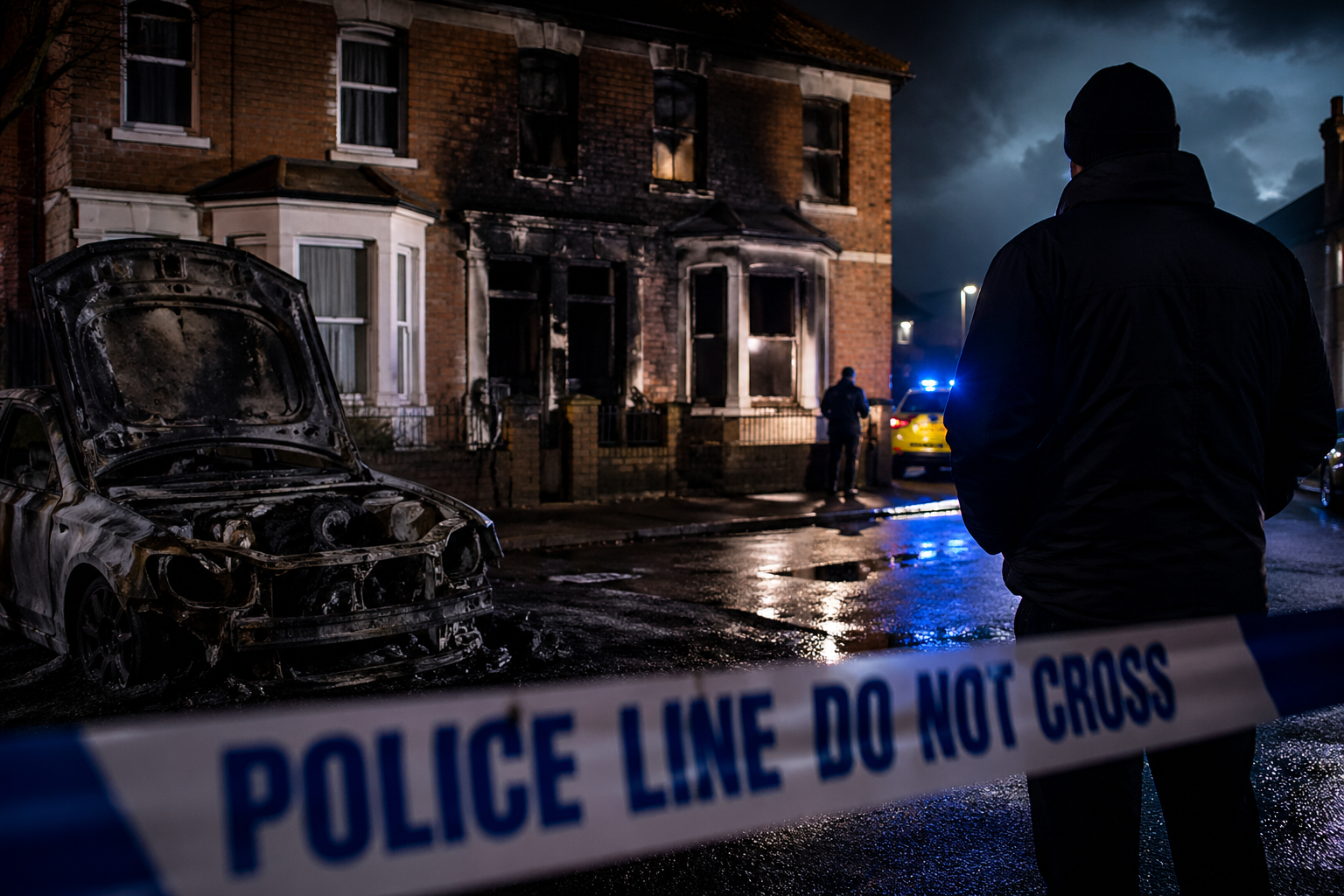
That is the central claim now being tested in a London courtroom, where prosecutors have opened a case alleging that a series of arson attacks targeted properties linked to Keir Starmer—and that those attacks were not random but directed.
At the center of that claim sits a name that sounds more like a digital alias than a real identity: “El Money.”
No one in court is being asked to prove who that person is. But everything in the case points back to them.
What Actually Happened
According to prosecutors, three separate incidents took place over a short period in May the previous year.
A vehicle once owned by the Prime Minister was set on fire
A property he had previously lived in was targeted
A home still linked to him, occupied by a relative, was also attacked
The locations were geographically close. The timing was tight. The connection was consistent.
Prosecutors told the jury that such a pattern is “beyond coincidence.”
Three men now stand trial at the Old Bailey:
Roman Lavrynovych (22)
Petro Pochynok (35)
Stanislav Carpiuc (27)
They deny all charges, including conspiracy to commit arson and, in one case, arson with intent to endanger life.
The case, at its most basic level, is about whether these individuals carried out those acts.
But the real intrigue lies in why it matters.
The “El Money” Claim
Prosecutors allege that the attacks were not ideologically driven but financially motivated.
The court heard that a contact using the name “El Money” allegedly offered the defendants payment via messaging platforms.
That contact is described as:
Using Russian language
Operating remotely
Offering money for specific acts
Messages shown in court reportedly suggest an ongoing working relationship, not a one-off instruction.
Crucially, the jury has been told something unusual:
They are not required to determine who “El Money” is.
That leaves a strange legal reality—one where the alleged organizer may never be formally identified within the trial itself.
Why The Case Is So Sensitive
This scenario is where the story shifts from crime to something more delicate.
The targets were not random homes. They were linked—directly or indirectly—to the sitting prime minister.
That does not automatically make the case political. But it changes the context.
Because once a high-profile political figure is involved, three questions immediately emerge:
Was the targeting intentional?
Was it coordinated from outside the UK?
Does it suggest a broader pattern?
At present, the prosecution's case centers on financial motivation, not ideology.
At this stage, we have no confirmed evidence that the alleged acts were politically directed.
But the combination of:
targeted properties
external communication
and a pseudonymous coordinator
is enough to raise those questions in the background.
The Pattern That Matters
The strongest part of the prosecution’s case is not the individual fires.
It is the pattern.
Three events tied to:
the same individual
the same area
the same timeframe
This is the detail that prosecutors emphasized to the jury: that the clustering of events is statistically and practically unlikely to be accidental.
That does not prove coordination.
But it makes coincidence harder to defend.
What We Know — And What We Don’t
This is where careful distinction matters.
Confirmed in court:
Three fires occurred at properties linked to the Prime Minister
Three men are on trial accused of involvement
A figure called “El Money” is alleged to have offered payment
The defendants deny all charges
Strongly suggested by prosecution:
The attacks were coordinated rather than random
Communication took place via messaging platforms
Financial incentive was central
Unknown or unresolved:
The real identity of “El Money”
Whether the alias represents one person or multiple actors
Any wider network or structure
Any political or geopolitical motivation
That final category is where most speculation will gather—but also where the least confirmed information exists.
The Wider Context
The trial is not happening in isolation.
Recently, UK officials have expressed concern about the use of intermediaries or “proxies” to carry out disruptive acts domestically—sometimes with unclear origins.
That context matters, but it should not be overstated.
There is no confirmed link between this case and any broader campaign or foreign directive.
Still, the structure described in court—a remote coordinator, financial incentives, local actors—fits a pattern that security officials have increasingly warned about.
That does not make it the same thing.
But it explains why people are watching the case closely.
What Most People Will Miss
The most important detail is not the fires.
It is the distance between action and instruction.
If the prosecution's case is accepted, it describes a model where:
the person planning the act is not physically present
the people carrying it out may not fully understand the wider context
and the connection between them is transactional
That creates a kind of fragmentation.
Responsibility becomes harder to trace.
Intent becomes harder to prove.
And the figure at the centre—”El Money”—can remain undefined, even as the case proceeds.
Why This Matters Now
On the surface, the case is a criminal trial.
But its structure touches on something broader: how modern acts of disruption can be organized, outsourced, and obscured.
Even if the case ultimately resolves as a straightforward conspiracy for financial gain, it highlights a model that is
low-cost
hard to trace
and difficult to fully attribute
That is what gives the story its weight.
Not what has been proven.
But what is being suggested?
The Bottom Line
Three fires. Three defendants. One unidentified name.
The trial will determine whether those events were coordinated—and who is legally responsible.
But one question may remain unanswered even after the verdict:
Who, exactly, is “El Money”?
