

The Gaza Independents Are No Longer A Protest Vote — They Are A Warning Shot At British Politics
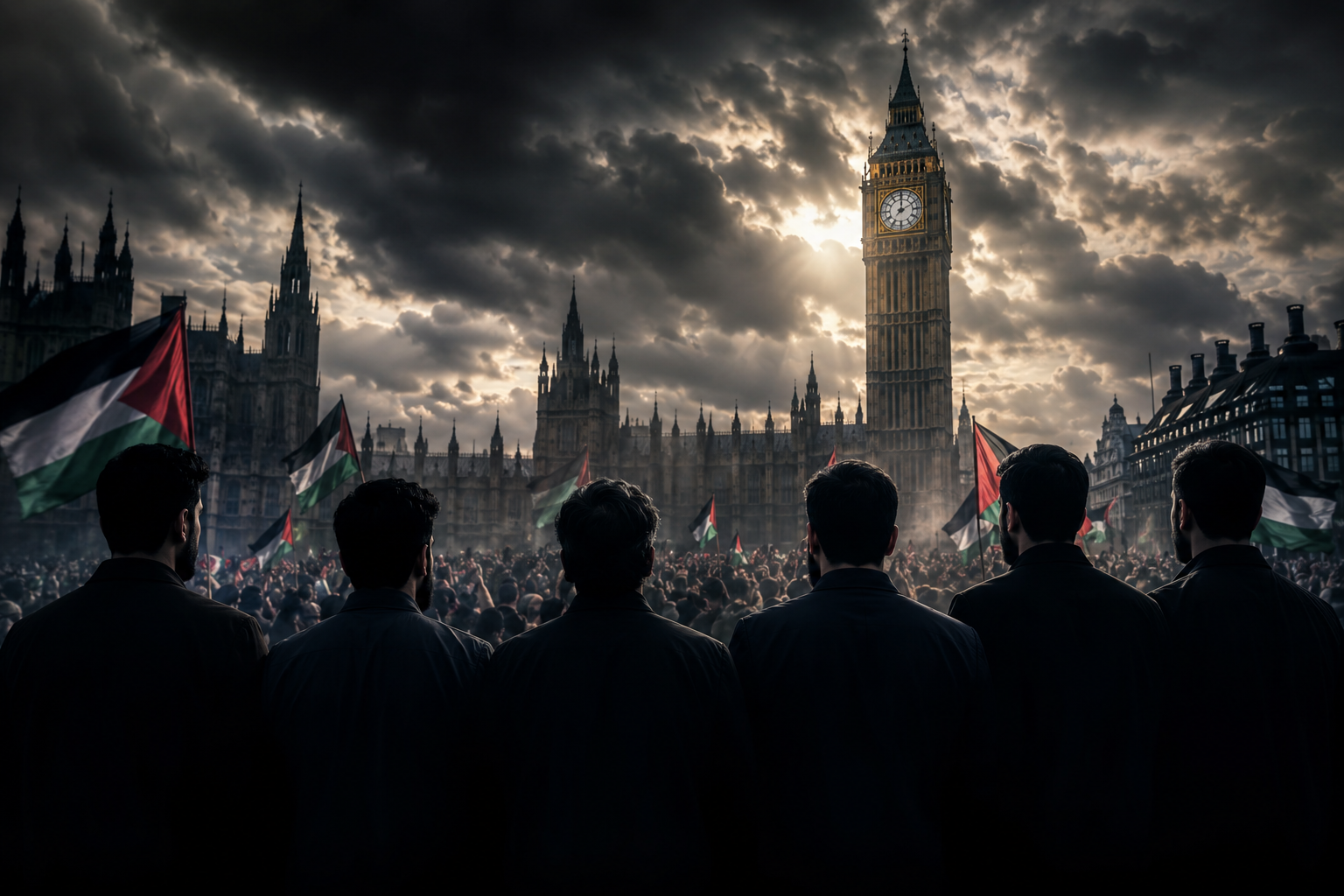
The Rise Of The Gaza Independents — And The Backlash They Cannot Escape
Why Britain’s Pro-Gaza Independents Are Suddenly Impossible To Ignore
The Protest Vote That Became A Political Machine
The most dangerous political movements are not always the biggest. Sometimes they begin as a local shock, a protest vote, a handful of furious constituencies, and a warning that the old party machines have stopped hearing parts of the country.
That is what makes the rise of Britain’s pro-Gaza independents and the wider Your Party project so politically significant. They are not close to power in Westminster. They are not about to replace Labour, Reform, the Conservatives, the Greens or the Liberal Democrats. But they have already exposed something volatile: in some communities, international affairs no longer feel “foreign” at all. They feel personal, moral and domestic.
That is also where the backlash begins.
The elections taking place now are overwhelmingly focused on councils, local services, housing, roads, planning, social care, bins, libraries, schools, community safety, and the everyday machinery of local government. Across England, voters have been electing thousands of councillors, while other contests across Great Britain have made this the biggest set of elections since the 2024 general election. The Electoral Commission confirmed voting took place at more than 17,000 polling places, with more than 25,000 candidates standing.
So when parties and independents put Gaza, Palestine, arms sales, foreign policy and global justice at the emotional centre of their pitch, the obvious question lands hard: why are local elections being fought through international rage?
The answer is uncomfortable. For their supporters, Gaza is not a distant issue. It is a test of moral seriousness, British foreign policy, Muslim political belonging, and whether mainstream parties listen when voters feel appalled. For critics, it risks turning domestic elections into symbolic referendums on conflicts councils cannot control.
That tension is now one of the sharpest fault lines in British politics.
The Names Behind The New Political Pressure
The key figures sit across two overlapping worlds: the Independent Alliance of MPs and the broader Your Party movement associated with Jeremy Corbyn and Zarah Sultana.
Ayoub Khan, MP for Birmingham Perry Barr, is one of the most important figures because of his Birmingham base, local government background and connection to community organising. Parliament records list him as the independent MP for Birmingham Perry Barr, first elected in 2024.
Shockat Adam, MP for Leicester South, became one of the highest-profile independent shocks of the 2024 general election, defeating a major Labour figure and turning Leicester South into a symbol of Labour’s vulnerability over Gaza, Muslim voters and local disillusionment. Parliament records list him as the independent MP for Leicester South, also elected in 2024.
Adnan Hussain, MP for Blackburn, and Iqbal Mohamed, MP for Dewsbury and Batley, sit in the same broad political story: independent MPs elected from northern seats where grassroots Muslim-community support, anger at Labour, and distrust of the national political class converged. Parliament records list Mohamed as the independent MP for Dewsbury and Batley, while Hussain’s parliamentary voting page records his activity as MP for Blackburn.
Zarah Sultana is different. She is not simply a local independent insurgent. She is the biggest younger activist figure in this orbit: social-media fluent, left-wing, anti-austerity, pro-union, pro-Palestinian, and central to Your Party’s national identity. Parliament-tracking records list her as Your Party MP for Coventry South, first elected in 2019.
Together, these figures represent a new kind of left-wing pressure: part anti-war politics, part Muslim voter mobilisation, part anti-Labour punishment campaign, part anti-austerity challenge, and part generational activist brand.
For readers following wider British political disruption, this connects directly to the broader story of Britain’s collapsing old party loyalties, where Reform, the Greens, independents and local campaigns are all feeding off dissatisfaction with the two-party settlement.
What They Actually Stand For
The lazy version of the story says these politicians are only about Gaza. That is too simple.
The more accurate version is that Gaza gave them their emotional ignition point, but their stated politics are broader: anti-austerity, anti-war, pro-welfare, pro-public services, pro-Palestinian recognition, and hostile to what they see as a Westminster consensus on foreign policy and economic restraint.
Your Party’s own public pitch describes itself as a new kind of party rooted in communities, trade unions and social movements, aiming to build power across regions and nations.
The Independent Alliance has also been associated with opposition to austerity, the two-child benefit cap, restrictions on disability benefits, winter fuel allowance changes, and arms sales to Israel. The group was formed after the 2024 general election as a parliamentary bloc of independent MPs, partly to improve their ability to speak and intervene in Parliament.
That matters because their appeal is not just religious or ethnic. It is also anti-establishment. It says labour took your vote for granted, the Conservatives ignored you, Westminster failed morally abroad and economically at home, and local communities need representatives who are not trapped inside party discipline.
That message can be powerful. It can also be dangerous for them.
Because once a protest movement becomes a political machine, it stops being judged only on what it opposes. It starts being judged on what it can run.
The Local Election Problem They Cannot Escape
Local elections are not foreign-policy contests. Councils do not control arms exports. Councillors do not recognise states. Local authorities cannot impose national sanctions, decide Middle East policy or rewrite Britain’s diplomatic position.
They deal with local services.
That is why the backlash is real. Voters can reasonably ask whether a candidate campaigning heavily on Palestine is ready to make serious decisions on adult social care, children’s services, planning applications, council tax, potholes, housing supply, homelessness, local transport, waste collection and community safety.
The Institute for Government noted that voters across England were due to elect more than 4,850 councillors on May 7, 2026. The Electoral Commission’s guidance explains that English local elections use first-past-the-post, with voters choosing candidates for vacancies in their area.
That is the core tension: the ballot may be local, but the emotional campaign can be global.
For supporters, this situation is not a contradiction. They argue that voters are whole people, not council-service robots. A voter angry about Gaza may also be angry about poverty, poor housing, local neglect, Islamophobia, weak representation and the feeling that mainstream parties only appear during election season.
For critics, the problem is focus. A council seat should not become a platform for symbolic foreign-policy messaging if the candidate cannot demonstrate competence on local delivery.
That criticism is not anti-Palestinian. It is a basic democratic test: if you want local power, show local seriousness.
Why Muslim Voters Became Central To The Story
The rise of these candidates is inseparable from Muslim political alienation after 2024.
The House of Commons Library found that independent candidates were more numerous and more successful in the 2024 general election than in 2019, with six independent MPs elected compared with none in 2019.
That change was not random. In several constituencies with large Muslim populations, anger over Gaza collided with long-running frustration over Labour selection, local representation, economic inequality and the feeling that Muslim voters were being treated as safe, automatic Labour votes.
This is why the “Muslim vote” framing is both important and risky.
It is important because community networks, mosque-adjacent organising, family links, local WhatsApp ecosystems and moral outrage over Palestine clearly helped mobilise voters in some places. Ignoring that would be dishonest.
But it is risky because reducing these campaigns to “Muslim parties” or “sectarian politics” flattens the picture. These MPs and candidates also talk about poverty, welfare, public services, civil liberties and anti-austerity politics. Some supporters are Muslim; some are not. Some are motivated by Palestine; others by class, local neglect or hostility to labour.
The more precise phrase is not “Muslim party". It is community-rooted, pro-Palestinian, left-populist independent politics with especially strong traction in some Muslim-heavy constituencies.
That distinction matters.
The backlash is the price of their own strategy.
The backlash comes from several directions at once.
First, there is the domestic-focus backlash: voters asking why local contests are being pulled toward Gaza rather than council services.
Second, there is the sectarianism backlash: critics worry that politics organised heavily around religious or ethnic community blocs can harden divisions and encourage candidates to speak to one group first rather than the whole constituency.
Third, there is the competence backlash: protest candidates can win attention, but councils require boring, grinding administrative work. Anger can win a seat. It cannot fix a budget.
Fourth, there is the Labour backlash: these independents threaten Labour most where Labour has relied for years on loyalty from urban working-class and minority communities. Their rise tells Labour that moral issues abroad can become electoral problems at home.
Finally, there is the internal-fracture backlash. Your party has already faced public tension over structure, leadership and who speaks for the movement. Adnan Hussain and Iqbal Mohamed have both been described as stepping away from Your Party, which complicates any neat story of one unified bloc.
That does not make the movement irrelevant. It makes it unstable.
And unstable movements can still matter enormously.
Why Their Rise Still Matters
The significance of these politicians is not that they are about to take over Britain. They are not.
Their significance is that they expose weaknesses in everyone else.
They expose Labour’s vulnerability among voters who feel morally betrayed over Gaza and economically underwhelmed at home. They expose the Conservatives’ limited reach in urban minority-heavy seats. They expose the Greens’ competition for left-wing protest energy. They expose the Liberal Democrats’ difficulty becoming the default anti-Labour option in some inner-city and northern constituencies. They expose Reform’s limits too: anti-establishment anger does not only move right.
That is the hidden story. Britain is not just seeing a right-wing revolt. It is seeing multiple revolts at once.
Reform channels anger over immigration, national identity, tax, public services and distrust of Westminster. The Greens channel frustration over climate, housing, public ownership and younger urban politics. The pro-Gaza independents and the Your Party orbit channel anger over Gaza, austerity, Labour discipline and the feeling that Westminster’s moral language collapses when foreign policy becomes uncomfortable.
The wider political realignment is part of the same pressure system as the rise of Reform UK and the collapse of old Conservative-Labour assumptions.
The old party map is cracking in different directions at the same time.
The Question Voters Are Really Being Asked
The central question is not whether these politicians care about Palestine. They clearly do.
The sharper question is whether they can turn moral protest into practical representation.
If they can connect Gaza to a broader argument about justice, poverty, services, housing, civil rights and ignored communities, they may become a durable force on the left. If they cannot, they risk becoming a loud but narrow protest brand: powerful in moments of outrage, weaker when voters demand delivery.
That is why the backlash should not be dismissed as prejudice, and the rise should not be dismissed as a fad.
Both are real.
The voters attracted to these movements are saying something important: foreign policy can become domestic politics when communities feel personally implicated, morally ignored or politically taken for granted.
The voters skeptical of these movements are also saying something important: local elections should still be about local competence, not just global symbolism.
The future of this insurgent bloc depends on whether it can survive that test.
Because winning as a protest is one thing.
Governing as a serious political force is something else entirely.
