The Grenfell Criminal Case Is Now Moving Faster — And Some Of Britain’s Biggest Institutions Could Be Pulled Into Court
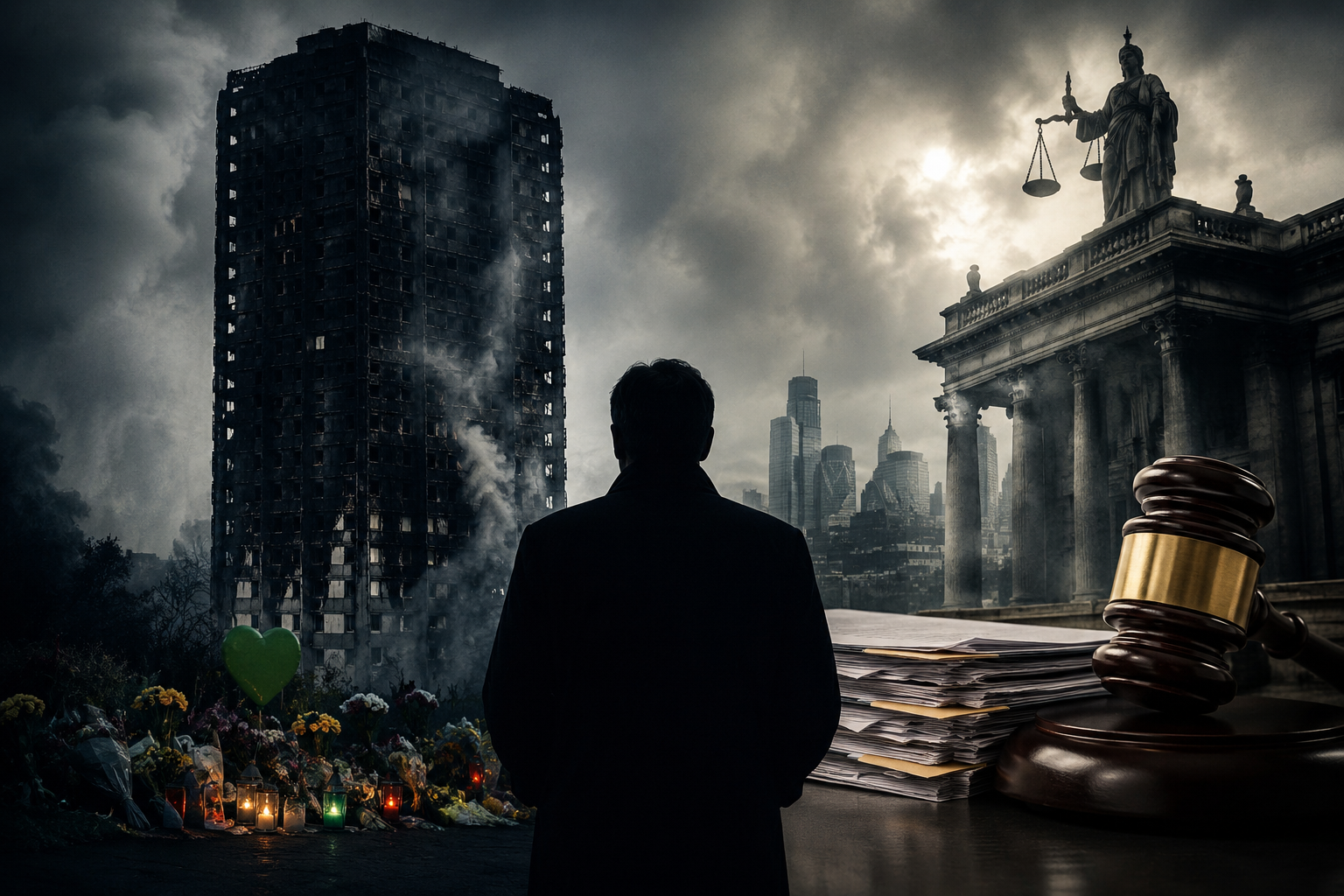
Grenfell’s Long-Awaited Reckoning May Finally Be Entering Its Most Dangerous Phase
Nearly a decade after 72 people died, the pressure for criminal accountability around Grenfell is no longer dragging on.
The Investigation Has Suddenly Moved Into A More Serious Phase
For years, one of the biggest criticisms surrounding Grenfell was not simply what happened in June 2017, but how slowly the machinery of justice appeared to move afterward. Survivors, bereaved families, and campaigners repeatedly warned that the longer the process dragged on, the greater the danger that public anger would fade before meaningful accountability arrived.
That atmosphere has now shifted sharply.
The Metropolitan Police has confirmed that up to 57 individuals and 20 organisations are currently under investigation for possible criminal offences connected to the Grenfell Tower disaster. Potential charges include corporate manslaughter, gross negligence manslaughter, fraud, misconduct in public office, and serious health and safety breaches.
The scale alone is extraordinary. This is no longer being framed as a narrow technical failure or isolated safety lapse. The known trajectory of the investigation now points toward a sprawling accountability battle that could stretch across construction firms, contractors, public bodies, regulators, local government structures, and individuals involved in decisions made before the fire.
The Clock Is Now Ticking Toward Charging Decisions
One of the most important developments is not just the number of possible suspects but the emergence of a visible timeline.
Police have confirmed that evidence files are expected to be submitted to prosecutors by late 2026, with charging decisions targeted before June 2027 — the tenth anniversary of the disaster.
That matters politically, legally, and psychologically.
For years, the Grenfell story carried a dangerous sense of permanent delay. Every update seemed to push accountability further into the future. Now, for the first time in a long time, the process is beginning to look more concrete. Campaigners are still furious about the pace, but the public language from investigators has become noticeably firmer.
The investigation itself has become one of the largest and most complex in British history. Police say they have examined millions of documents, reviewed thousands of witness statements, and investigated the actions of hundreds of organisations and thousands of individuals connected to the tower refurbishment, regulation system, and emergency response environment.
That scale is partly why the case has taken so long. But it also explains why the eventual prosecutions — if they happen — could become one of the most consequential corporate and institutional criminal cases Britain has seen in decades.
The Inquiry Already Changed The Moral Landscape
Even before criminal charges arrive, the Grenfell Inquiry fundamentally altered how the disaster is viewed.
The inquiry concluded that the fire was the result of decades of institutional failure, regulatory weakness, incompetence, and what it described as “systematic dishonesty” linked to parts of the construction and materials environment surrounding the refurbishment.
That language matters because it transformed Grenfell from a story about a tragic fire into something much more politically explosive.
The deeper implication was devastating: this was not presented as an unforeseeable accident. The emerging public record increasingly pointed toward warnings ignored, risks minimised, safety systems weakened, and commercial incentives overriding basic protections.
That distinction changes everything.
When a disaster is seen as unavoidable, public grief dominates. When a disaster begins to look preventable, pressure for punishment becomes far more intense.
The Real Fear Inside Westminster And The Construction Sector
The Grenfell prosecution push now carries risks far beyond the courtroom itself.
There is growing concern across parts of the construction, housing, and regulatory landscape that the eventual criminal process could expose uncomfortable truths about how Britain handled safety regulation for years. The consequences may not stop with individual convictions or fines.
The reputational danger is potentially enormous.
Questions around cladding, fire safety oversight, procurement culture, outsourcing structures, building regulations, and regulatory enforcement have already reshaped the housing sector since 2017. Massive remediation programmes, new building safety reforms, and wider reviews of dangerous materials have followed.
But criminal trials would move the story into an entirely different emotional category.
Civil failures can be politically survivable. Criminal proceedings create villains, evidence battles, courtroom testimony, and institutional exposure under public scrutiny. That is why the next stage of Grenfell could become far more destabilising than the inquiry itself.
The Public Anger Never Really Disappeared
One of the biggest misreadings after Grenfell was the assumption that public emotion would eventually fade into symbolic remembrance alone.
It did not.
Groups including Grenfell United and Justice4Grenfell have spent years maintaining pressure for prosecutions, safety reform, and accountability. Survivors and bereaved families have repeatedly argued that justice delayed risks becoming justice denied.
That pressure has now collided with a broader national anxiety around institutional trust.
Grenfell increasingly sits inside a larger British story about whether major institutions — corporate, political, regulatory, or governmental — are ever truly held accountable after catastrophic failure. That is part of why the case still feels emotionally radioactive almost ten years later.
The danger for the state is no longer just the original disaster itself. It is the perception that powerful systems can absorb mass failure without meaningful consequences.
The Most Important Part Of The Story Is What Happens Next
The critical detail now is not whether public outrage exists. It clearly does.
The real question is whether prosecutors ultimately believe the available evidence crosses the threshold needed for criminal convictions in a case this vast and politically sensitive. That is where the story becomes extremely difficult.
Complex corporate disasters are notoriously hard to prosecute successfully. Responsibility becomes fragmented across contractors, consultants, manufacturers, officials, procurement systems, regulators, and overlapping decision chains. Establishing criminal liability at scale is far harder than establishing moral blame.
But expectations are now dangerously high.
The police announcement that dozens of people and organisations remain under active investigation has dramatically raised public anticipation. If the eventual charging decisions are seen as too narrow, too weak, or too limited, the backlash could be severe.
And if major prosecutions do proceed, Britain could be heading toward one of the most explosive public accountability trials of the modern era.
