The UK Is Facing A Dangerous New NATO Reality And The Pressure Is Coming From America And Europe
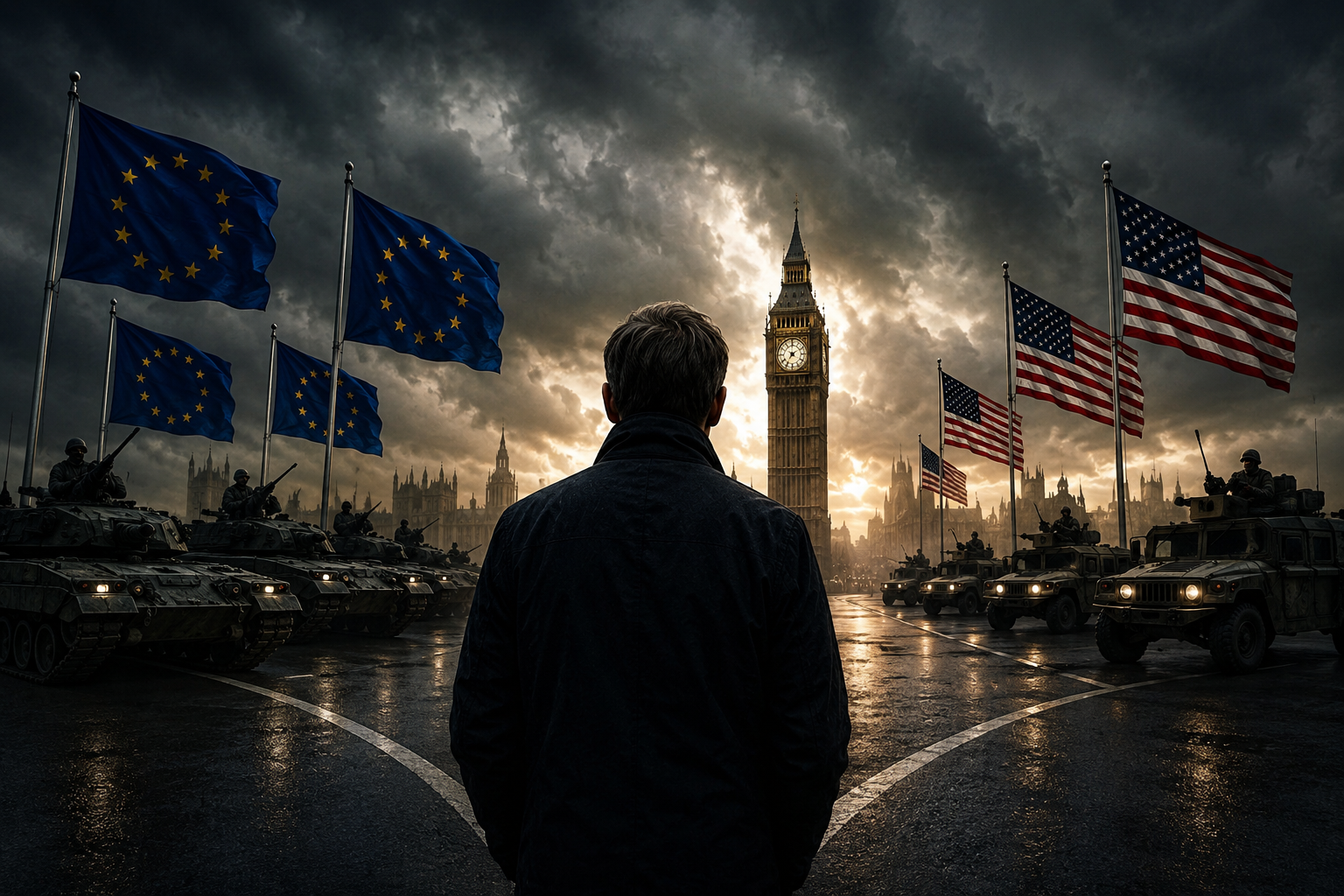
Britain Is Being Squeezed From Both Sides As NATO’s New Pressure Era Begins
Britain is entering a new geopolitical era where both Washington and Europe are demanding the same thing at the same time: spend more, move faster, and prepare for a far more dangerous world.
For years, Britain sat comfortably near the top tier of NATO powers, protected by its nuclear arsenal, intelligence network, historic military reputation, and close relationship with the United States. That comfortable position is beginning to erode. Pressure is now arriving simultaneously from two directions: an increasingly impatient America demanding greater burden-sharing, and a rapidly militarising Europe terrified that the continent may no longer be able to rely entirely on Washington.
That combination is creating something Britain has not faced in reality for decades — strategic pressure from allies who believe the current pace of British military investment may no longer match the scale of the threat.
The NATO Spending Race Is Accelerating Faster Than Britain Expected
The speed of the shift is extraordinary. NATO allies agreed last year to move toward a new defence spending benchmark of 5% of GDP, a dramatic leap from the old 2% target that once dominated alliance politics.
European defence spending is now rising at its fastest pace since the Cold War. SIPRI data shows European NATO members collectively spent $559 billion in 2025, with military expenditure surging across the continent as governments scramble to prepare for a more unstable security environment.
Germany — once criticised for military caution — is now preparing to push defence spending beyond 4% of GDP in 2026 while openly discussing movement toward 5%. Poland has already transformed itself into one of NATO’s fastest-growing military powers. Even historically cautious states are accelerating procurement, ammunition production, and military industrial expansion.
The political atmosphere inside NATO has changed. The alliance no longer behaves like a loose coalition debating whether higher spending is necessary. Increasingly, it behaves like an organisation preparing for a prolonged geopolitical confrontation.
Britain suddenly finds itself in an uncomfortable middle position: still respected, still militarily significant, but no longer clearly ahead of the European pack.
America’s Patience With Europe Is Running Thin
The second layer of pressure comes from Washington.
For years, American administrations complained that European allies relied too heavily on US military power while underinvesting themselves. Under Donald Trump, that frustration became public and aggressive. But even beyond Trump himself, a wider strategic shift is now visible across the American security establishment.
NATO Secretary General Mark Rutte recently confirmed that planned US troop reductions in Europe would happen gradually but were part of a broader rebalancing inside the alliance. The implication was unmistakable: Europe increasingly faces expectations to carry more responsibility for its own defence.
That creates a direct problem for Britain.
The UK has traditionally positioned itself as Washington’s closest European military partner. But if America is reducing its direct European footprint while simultaneously demanding higher spending and stronger capabilities from allies, Britain becomes exposed to scrutiny from both sides at once.
A parliamentary committee recently warned that Britain’s dependency on US defence support has become a strategic vulnerability rather than a strength. The committee argued that the UK needed a “clear and costed pathway” toward dramatically higher defence spending and greater military independence.
Former NATO chief Lord Robertson went even further, warning that Britain’s high military dependence on America was now “no longer tenable".
That is a remarkable statement from one of the most senior figures in modern British defence history.
Europe Is No Longer Waiting For Britain To Lead
There is another dangerous shift underneath the headlines: Europe is increasingly reorganising its defence strategy without automatically assuming Britain will lead it.
For decades, Britain held a unique role inside European security architecture. It combined nuclear capability, global military reach, elite intelligence assets, diplomatic weight, and close US access. Brexit complicated that position politically, but the deeper issue now is military scale.
NATO estimates suggest Britain’s defence spending has slipped below the alliance average relative to GDP. At the same time, Britain’s conventional military capabilities have been repeatedly questioned amid concerns over troop numbers, ammunition stockpiles, industrial capacity, and readiness.
Meanwhile, Europe is beginning to build new defence mechanisms at speed. Prime Minister Keir Starmer has already signalled urgency around rebuilding closer European defence ties, especially around procurement and industrial coordination.
The political mood across Europe increasingly assumes that Russia represents a long-term structural threat rather than a temporary crisis. That changes everything.
The conversation is no longer simply about supporting Ukraine. It is about preparing Europe itself for an era where large-scale deterrence becomes permanently necessary again.
Britain’s Economic Problem Is Becoming Harder To Ignore
This is where the real pressure begins.
Britain is already carrying high debt levels, stretched public services, weak growth, and political exhaustion after years of economic strain. Raising defence spending toward even 3% of GDP would require tens of billions in additional expenditure. Moving anywhere near NATO’s emerging 5% atmosphere would represent one of the biggest structural economic shifts in modern British history.
The government insists higher defence investment could boost economic growth, manufacturing, technology, and industrial capacity. There is truth in that argument. Defence spending can stimulate advanced manufacturing, AI systems, aerospace, cybersecurity, shipbuilding, and domestic industrial production.
But the political trade-offs are brutal.
Every additional billion directed toward defence intensifies pressure elsewhere: taxation, borrowing, infrastructure, healthcare, welfare, or public sector spending. Britain may soon face a political reality not seen since the Cold War — a society forced to openly debate what level of militarisation it is willing to financially sustain.
That debate becomes even harder because many European governments now view rapid defence expansion as unavoidable rather than optional.
The Real Fear Beneath NATO’s New Pressure Campaign
Underneath all of this sits one central fear.
Western governments increasingly believe the post-Cold War security environment is over.
Russia’s war in Ukraine shattered assumptions about long-term peace in Europe. Concerns about American unpredictability have weakened confidence in automatic US intervention. NATO planners are openly discussing ammunition production, industrial resilience, drone warfare, cyber conflict, and long-duration confrontation in ways that would have seemed alarmist a decade ago.
That changes the psychological atmosphere inside the alliance.
Britain is no longer simply being asked whether it supports NATO. Britain is being asked whether it is genuinely prepared for a much harsher geopolitical era.
That distinction matters enormously.
Because once allies begin doubting another member’s long-term military seriousness, pressure intensifies quickly.
The Question Britain Cannot Avoid Forever
The UK still possesses major advantages: nuclear weapons, elite intelligence capabilities, global diplomatic reach, advanced aerospace industries, cyber strength, and one of the world’s most experienced military cultures.
But the geopolitical environment around Britain is changing faster than the political system may fully appreciate.
America wants Europe to spend more.
Europe wants Britain to commit more.
NATO wants everybody to move faster.
And Britain is discovering that the old position — respected, influential, strategically important, but spending carefully — may no longer satisfy the alliance it helped build.
The deeper problem is that this pressure may not fade even if current crises cool down.
Because NATO’s internal psychology has shifted.
The alliance increasingly behaves like an organisation preparing for a dangerous decade rather than managing a temporary emergency.
Britain now faces a decision that could shape its economy, military, foreign policy, and political identity for years to come: whether to fully embrace that new reality or risk slowly losing influence inside the very alliance it once helped define.
