

The London Stabbing That Triggered A National Security Reset
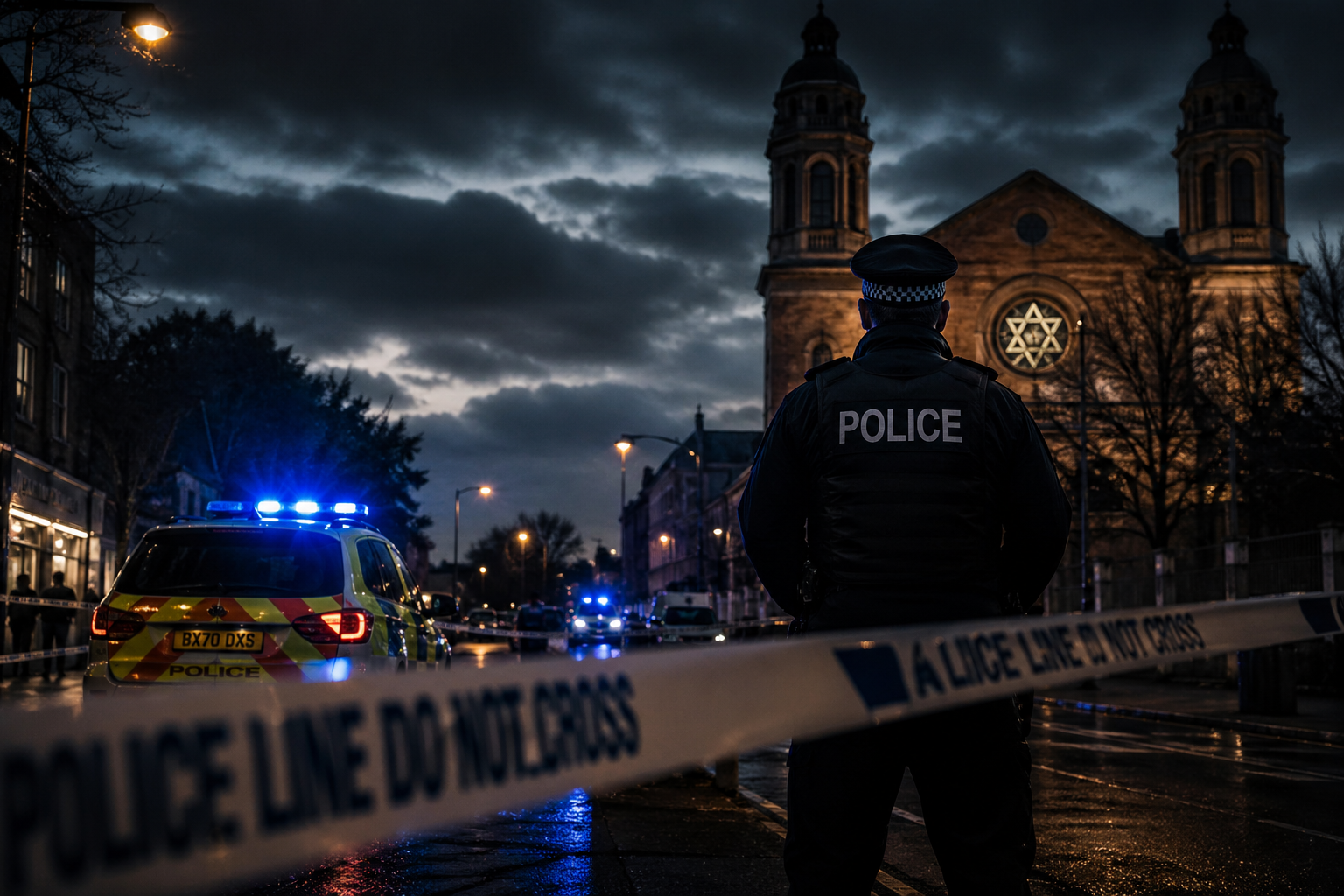
The Golders Green Attack And The Laws Britain Is Rushing Through
Why One Antisemitic Attack Forced Britain To Fast-Track Terror Laws
It took minutes for the attack to unfold. It may take years to understand what it triggered.
On a late April morning in north London, a man armed with a knife moved through Golders Green targeting individuals who appeared visibly Jewish. Two men—aged 34 and 76—were stabbed in quick succession. Both survived. The attacker was subdued and arrested.
But what followed moved far faster than a typical criminal response.
Within hours, the incident was declared terrorism. Within a day, the UK government was preparing to fast-track legislation, increase policing, and inject £25 million into community protection.
The incident was not treated as a one-off act of violence. It was treated as a signal.
What Actually Happened
The attack took place on 29 April 2026 in Golders Green, an area with a significant Jewish population.
Witness accounts and early investigation indicate the suspect deliberately targeted people identifiable as Jewish.
Police used a Taser to stop him. Community volunteers also intervened. The victims were hospitalized but reported stable.
Authorities quickly escalated the classification to terrorism. That decision matters. It reframes the event from individual violence to an ideological or coordinated threat.
Early intelligence has focused on a possible link—still under investigation—to a group known as Harakat Ashab al-Yamin al-Islamia, which has claimed responsibility for multiple recent attacks across Europe targeting Jewish communities.
No definitive attribution has been confirmed. But the pattern is already shaping the response.
Why The Government Reacted So Fast
Governments do not fast-track legislation lightly. When they do, it signals one of two things:
A clear systemic gap in current law
A perception that threat velocity has increased
Here, both appear to be in play.
Prime Minister Keir Starmer acknowledged that Jewish communities feel unsafe identifying openly in public spaces and promised stronger laws targeting extremism and foreign-linked threats.
The response includes:
Fast-tracked counter-terror legislation
Expanded policing in vulnerable communities
£25 million in additional security funding
New focus on proxy actors and foreign state influence
This effort is not just about one attacker. It is about the system behind the attacker.
The Pattern Most People Will Miss
The stabbing did not happen in isolation.
Since March 2026, London has seen a cluster of antisemitic incidents:
Arson attacks on Jewish community vehicles
Attempted firebombings of synagogues
Vandalism and intimidation incidents
Surveillance-linked plots under investigation
At least 25 arrests have already been made across these cases.
Taken individually, each event might appear manageable. Together, they form a pattern:
Targeted, repeated, psychologically disruptive.
This is what security analysts call a hybrid threat environment—where violence, intimidation, and symbolic attacks combine to create sustained fear rather than mass casualties.
That distinction is critical.
The goal is not necessarily maximum destruction.
The goal is pressure.
The Foreign State Question
One of the most sensitive aspects of this escalation is the question of external involvement.
Officials are investigating whether some of the attacks may link—directly or indirectly—to actors connected to Iran, potentially using proxies or loosely affiliated individuals.
This does not mean centralized command. It does not require formal coordination.
Modern hybrid threats often operate through:
Online radicalisation
Informal networks
Opportunistic actors
Plausible deniability structures
If proven, that shifts the issue from domestic extremism to national security.
And that is precisely why legislation is being accelerated.
Why Language And Law Are Now Colliding
Part of the government’s response is not just about physical security. It is about speech, signaling, and legal thresholds.
Officials have indicated a willingness to prosecute individuals promoting slogans or rhetoric deemed to incite terrorism.
This is a politically and legally complex move.
On one side:
Communities feel targeted and unsafe
Authorities want deterrence
On the other hand:
Questions around free expression
Risks of overreach
Challenges in defining incitement clearly
The fast-tracked legislation will likely sit directly at this fault line.
The Cultural Impact Already Underway
The most immediate effect is executive. It is behavioral.
Community leaders report a growing sense of vulnerability among British Jews—particularly around visible identity markers such as religious clothing.
That shift matters.
When people begin altering daily behavior for safety, the impact has already extended beyond the incident itself.
This is how low-frequency attacks produce high-impact outcomes:
Fear spreads faster than facts
Visibility decreases
Social trust erodes
And once that happens, restoring normality becomes far harder than preventing the next attack.
What This Means For UK Security Going Forward
This moment represents a transition.
Not from safety to danger—but from reactive security to anticipatory control.
Expect to see:
Expanded surveillance powers tied to foreign influence
Faster intervention thresholds for suspected radicalisation
Greater coordination between intelligence and policing
More visible armed presence in targeted communities
And critically:
A shift in how Britain defines terrorism—not just by scale, but by intent and pattern.
The Real Shift Beneath The Headlines
The stabbing itself was violent.
The response was strategic.
What changed is not just the law. It is the interpretation of risk.
Britain is no longer treating these incidents as disconnected acts. It is treating them as part of a broader pressure campaign—whether centrally coordinated or not.
That changes everything:
How threats are identified
How quickly powers are used
How communities are protected
And how far the state is willing to go to prevent escalation
The attack in Golders Green may not be remembered for its immediate damage.
It will be remembered for what it forced the country to confront.
