UK Faces Pressure to Ban Kanye West — But This Is About More Than One Artist
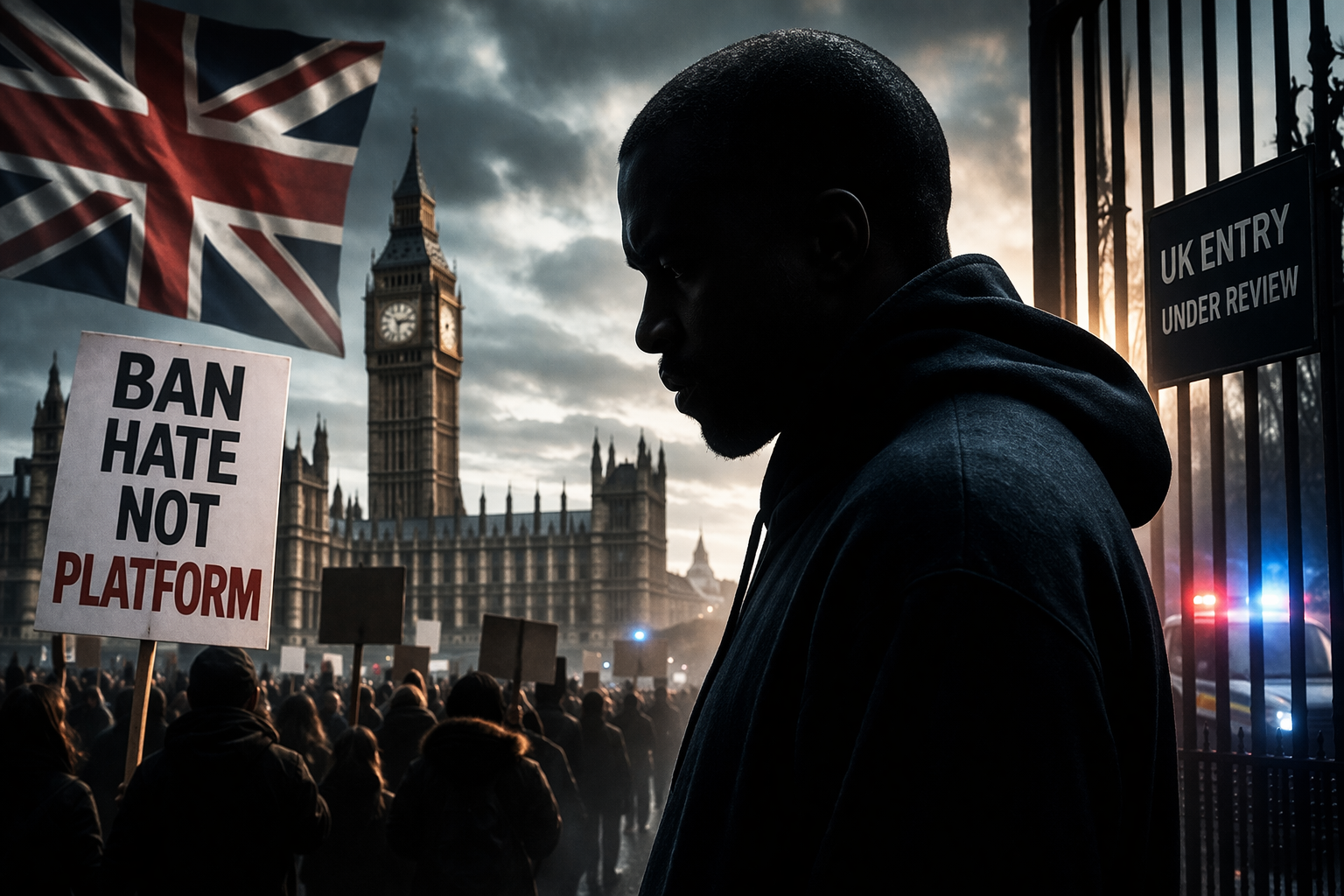
Can the UK government ban Kanye West from entering?
Should Kanye West Be Banned From the UK? The Real Battle Behind the Wireless Festival Row
A festival booking has triggered a national debate over free expression, public safety, and who gets a platform—revealing a deeper clash inside modern Britain.
The UK is not just debating whether Kanye West should headline a summer festival.
It ‘s deciding what kind of country it wants to be.
Because what began as a controversial booking for London’s Wireless Festival has escalated into something far more serious: a live test of how Britain handles extremism, celebrity power, and the boundaries of public tolerance — all at once.
What Actually Happened
Kanye West, now known as Ye, is scheduled to headline all three nights of the Wireless Festival in London this July.
That alone would normally be a major cultural event. Instead, it has triggered a political storm.
Senior politicians have called the booking “deeply concerning””
Advocacy groups have demanded action
Major sponsors have withdrawn support
The UK government is now reviewing whether he should even be allowed into the country
Under UK law, the Home Secretary is empowered to deny entry to individuals whose presence is deemed “not conducive to the public good.”
That power is now at the center of the debate.
Why This Is Happening Now
This backlash had a clear origin.
Controversy has defined West's recent years as much as his music. His public record includes:
repeated antisemitic remarks
praise for Adolf Hitler
Nazi imagery and symbolism in his work
major commercial fallout, including lost partnerships and bans
He issued an apology earlier in 2026, attributing his behavior to mental health struggles. But for many critics, the pattern matters more than the apology.
And that’s the key shift: the focus is no longer about a single statement.
It’s about whether repeated behavior crosses a threshold that disqualifies someone from a public platform.
The Pressure on Government Is Real—and Rising
This is not fringe outrage.
Pressure is coming from multiple directions at once:
politicians across parties
Jewish community organisations
corporate sponsors pulling funding
public concern over rising antisemitism in the UK
Even the Prime Minister has publicly expressed concern about the booking, framing it in terms of national values and safety.
That matters.
Because once a controversy reaches that level, it stops being cultural—and becomes political.
What This Is Really About
On the surface, the issue looks like a question about one artist.
It isn’t.
It’s a clash between three competing ideas:
1. Free Expression vs Public Harm
Should offensive speech disqualify someone from performing?
Or does banning them set a dangerous precedent?
2. Celebrity Power vs Accountability
Does cultural influence protect you — or make you more responsible?
3. Symbolism vs Intent
Do apologies and explanations outweigh the impact of what was said and done?
These tensions are not new. But they are now colliding in a very visible way.
What media misses
Most coverage treats this as a moral argument: Kanye West said unacceptable things; therefore, he should or shouldn’t be allowed in.
That’s too simple.
The real issue is that the UK already has a mechanism to exclude individuals based on perceived harm — and it has used it before.
So the question is not about whether such power should exist.
It’s about whether the government is willing to apply it to someone who is
globally famous
commercially valuable
culturally influential
That’s a much harder decision.
Because banning a fringe extremist is easy.
Banning one of the most renowned artists in the world is a statement.
The Festival Is Now Secondary
Wireless Festival is almost incidental at this point.
Yes, it triggered the controversy.
Yes, sponsors have pulled out.
But the real story has moved beyond the event.
The question now is
Who decides who gets a platform in modern Britain?
The market (fans and sponsors)?
The state (government and law)?
Or culture itself (public opinion and backlash)?
This situation is forcing all three to collide.
What Happens Next
Three realistic paths forward exist:
1. He is allowed in and performs
The government avoids setting a precedent
Backlash continues
The issue shifts to security and protests
2. He is denied entry
The government draws a clear line
Sparks debate about censorship and precedent
Signals a harder stance on extremist rhetoric
3. The festival changes course
Organisers remove or replace him
Commercial pressure wins
Government avoids direct involvement
Each outcome carries consequences beyond this single case.
Why the Stakes Are Bigger Than They Look
This is not just about music. This issue extends beyond the realm of music or even Kanye West.
It’s about how liberal societies handle figures who operate at the edge of what is acceptable — especially when they are powerful, popular, and impossible to ignore.
Because once you establish the line…
You have to enforce it consistently.
And that is where things get difficult.
What's next?
The question is no longer whether Kanye West should headline a festival.
It is whether Britain believes influence comes with limits—and whether it is willing to enforce them when it matters most.
The decision made here will have far-reaching consequences.
It will echo into every future case where culture, power, and controversy collide.
