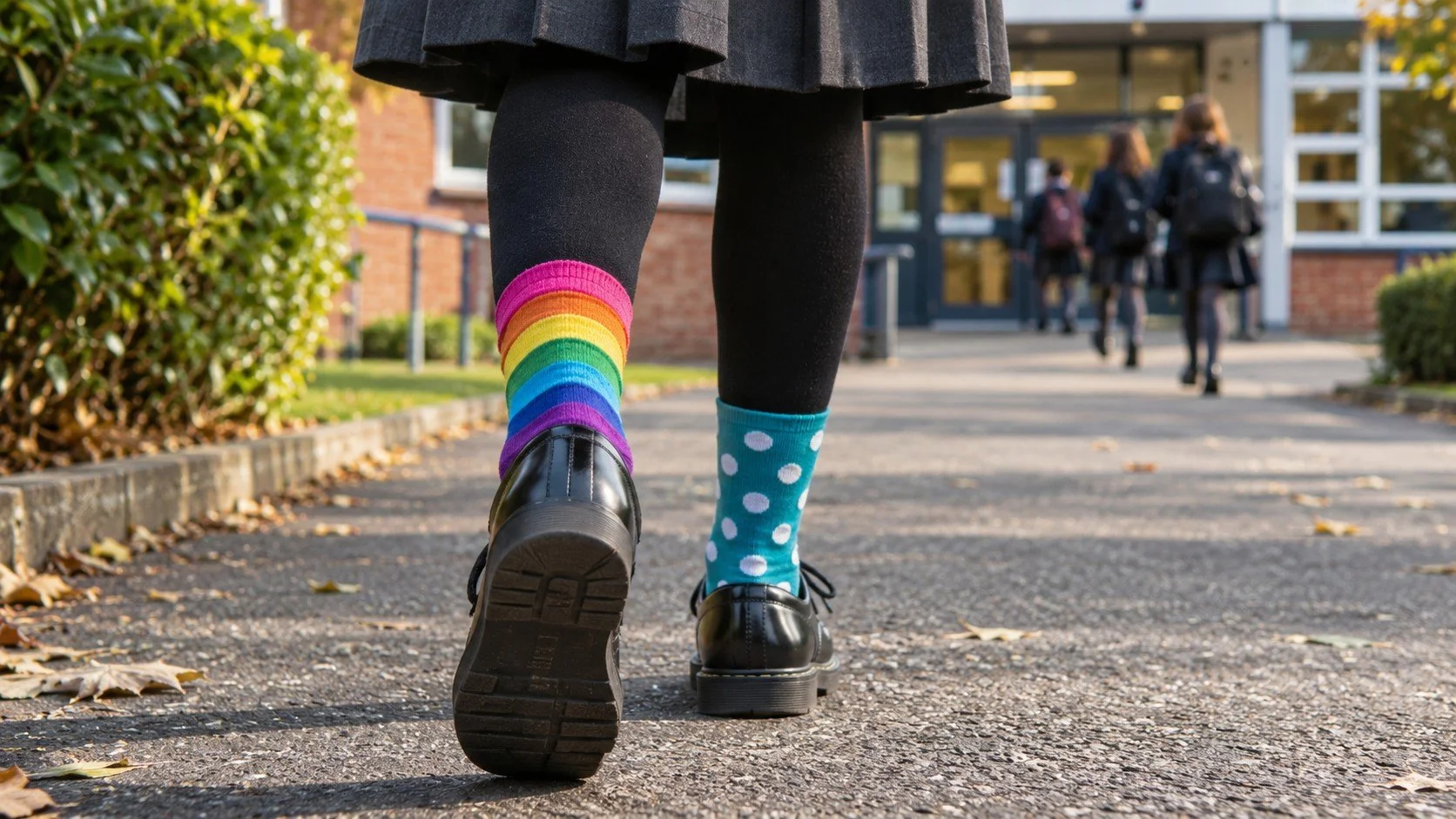
Odd Socks Day falls on 16 November 2026. Here is how to join in, why schools take part and what the campaign asks of adults.
Why One Sock of Each Colour Goes to School
Odd Socks Day falls on Monday 16 November 2026, the first day of Anti-Bullying Week. A child who wants to take part can pull two different socks out of a drawer and wear them together. A striped sock and a plain one do the job just as well as a carefully coordinated clash. The simplicity was part of the idea from the beginning.
The Anti-Bullying Alliance developed the event with children’s presenter Andy Day and his band, Andy and the Odd Socks, in 2017. It gives a class a visible way to talk about difference. For one morning, the detail that might ordinarily draw a teasing remark becomes something pupils have deliberately chosen to share.
Does My Child Need to Buy Anything?
Two socks the child already owns are enough. Families can check the school’s own notice for arrangements around uniform or a separate fundraising appeal. The campaign is open to people at home, at work and in community groups too. A school can take part without asking a family to assemble a costume.
Keeping it optional matters. A pupil may find the feel of different fabrics uncomfortable. Another might prefer that nobody looks at their clothing. Both can join the discussion. Turning the loudest outfit into a prize would give the children with the most choice at home the biggest say in an activity about belonging.
What Does “Break the Silence” Mean?
The 2026 Anti-Bullying Week theme invites people to speak about bullying. To a child watching repeated name-calling, speaking up can sound like a demand to confront a whole group in the playground. There are quieter ways to help. They can sit beside the pupil who was left out, tell a trusted adult privately what they saw, or accompany a friend who wants to ask for help.
Adults can make that conversation easier by asking for particulars. “What happened after lunch?” gives a child a smaller task than “Tell me everything.” Listening away from the group gives them time to explain what has happened on previous days and what they are worried might happen next.
What Happens on Tuesday?
A school can make the campaign more meaningful with a simple test. If something happens tomorrow, can pupils identify an adult they could approach, where to find that person and what to do if the first conversation leaves the problem unresolved?
A pair of unusual socks can start a conversation between children who might never have raised the subject. The most valuable part may happen after everyone is back in uniform, when a pupil recognises what is happening to a friend and remembers exactly who said they would listen.
