

Why Churchill Is Being Removed From the £5 Note?
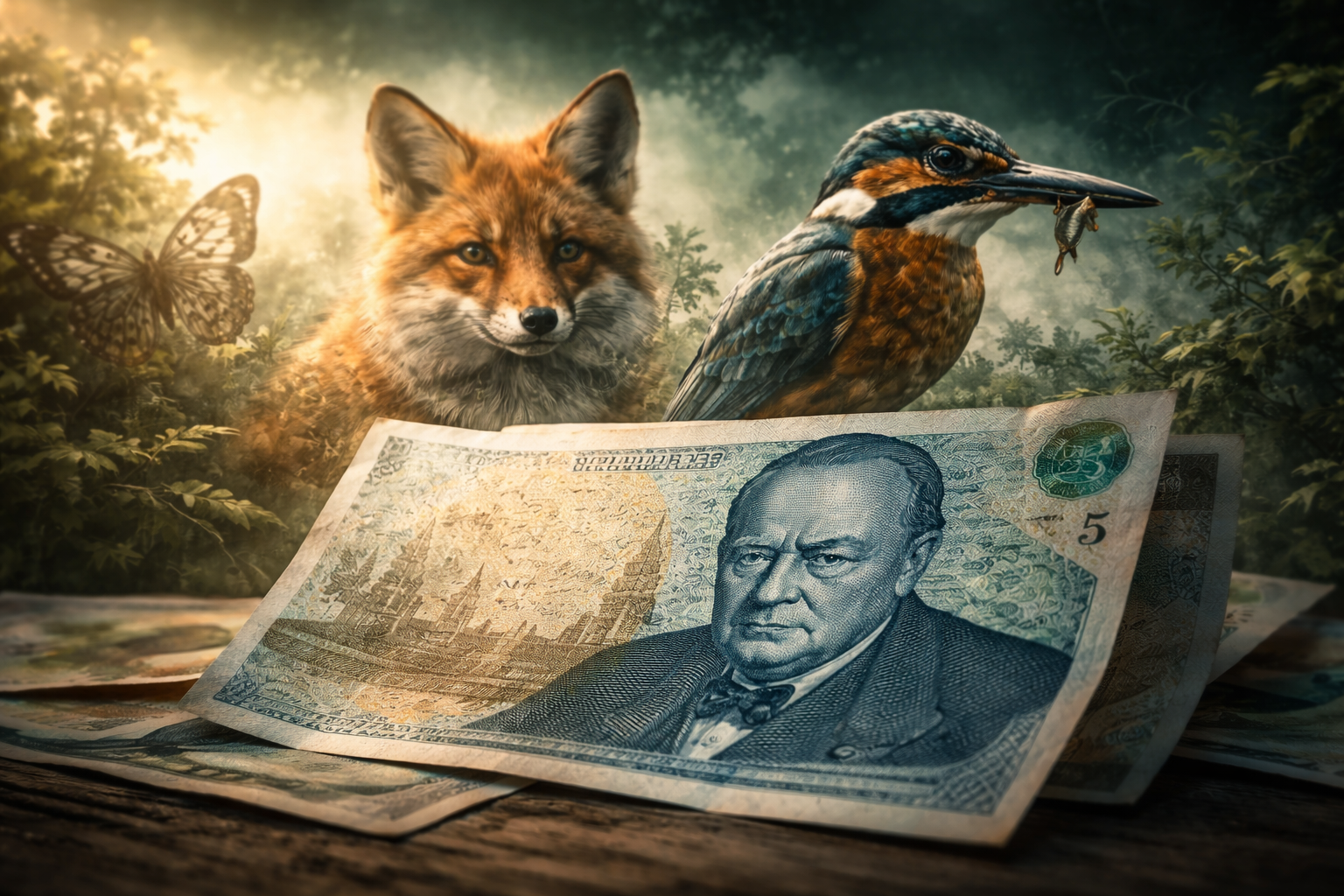
Britain Drops Churchill From £5 Note for Wildlife — Fury Erupts
Bank of England Sparks Fury With Plan to Remove Churchill From £5 Note for Wildlife
The Bank of England has triggered a heated cultural debate after announcing that future £5, £10, £20, and £50 banknotes will feature British wildlife instead of famous historical figures.
The plan, unveiled, follows a public consultation where nature emerged as the most popular theme for the next generation of notes. But the decision means figures like Winston Churchill, Jane Austen, J. M. W. Turner, and Alan Turing will eventually disappear from the currency many Britons carry every day.
For some critics, the move feels symbolic—replacing national heroes with animals. For supporters, it’s simply the next evolution in banknote design.
The story turns on whether the redesign is a routine security upgrade—or a deeper cultural shift about how Britain chooses to represent itself.
Key Points
The Bank of England plans to replace historical figures on banknotes with British wildlife in the next series of notes.
The change follows a 2025 consultation with more than 44,000 responses, where nature received about 60% support as the preferred theme.
Winston Churchill currently appears on the £5 polymer note introduced in 2016.
Critics argue the move erases historic symbolism and weakens national identity.
The bank says the primary driver is improving anti-counterfeiting technology while showcasing another aspect of the UK, such as its historical figures and contributions to global events.
The monarch’s portrait—now King Charles III—will remain on the front of the notes.
Where the Current £5 Note Comes From
The modern £5 note featuring Winston Churchill entered circulation in September 2016, when the Bank of England switched the denomination to polymer for durability and security.
The note shows the famous 1941 portrait of Churchill alongside his wartime line:
“I have nothing to offer but blood, toil, tears, and sweat.”
The design replaced the previous £5 note featuring prison reformer Elizabeth Fry.
That means Churchill has effectively been on Britain’s smallest banknote for about a decade—relatively short compared with some historical figures who remained on notes for multiple series.
Why the Bank of England Wants the Change
From the Bank’s perspective, the redesign is less ideological than technical.
Banknotes are periodically redesigned to stay ahead of counterfeiters. Officials say nature-themed imagery works well with advanced security features, which often rely on detailed patterns, holograms, and complex visual elements that wildlife scenes can incorporate easily.
The central bank also argues that wildlife reflects another part of British identity—landscapes, ecosystems, and national biodiversity.
The new series will still take years to design and introduce, meaning the current notes will remain in circulation for some time.
Why It’s Causing Backlash
The backlash is largely cultural and symbolic.
For decades, British banknotes have celebrated national figures who shaped history—scientists, writers, and political leaders. The modern tradition dates to 1970, when the bank began placing historical figures on the reverse side of notes.
Critics say removing them weakens that tradition.
Some commentators argue that figures like Churchill carry emotional weight that animals simply cannot replicate. The concern is less about wildlife itself and more about what critics see as a gradual retreat from celebrating national achievements, which they believe undermines the cultural heritage and historical narratives that figures like Churchill represent, particularly in the context of national identity and pride that are often invoked during discussions of historical figures.
The reaction has been particularly strong around Churchill because of his role in Britain’s wartime history, which many view as a defining moment that shaped national identity and pride during a time of crisis.
The Churchill Factor
Churchill occupies a unique place in British national memory.
As prime minister during the Second World War, he became synonymous with Britain’s resistance against Nazi Germany. For many people, his presence on the £5 note symbolizes resilience during the country’s darkest moment.
That symbolic power is why the removal has sparked outsized reactions compared with the other figures set to disappear, as many view Churchill's legacy as uniquely tied to national identity and historical significance during the war.
Even people who support the wildlife theme sometimes argue that Churchill should have remained an exception.
What Most Coverage Misses
The true narrative might not revolve around Churchill and animals.
The deeper shift is that cash itself is fading.
In the UK, cash accounted for roughly 9% of transactions in 2024, down from nearly half a decade earlier.
As digital payments take over, physical banknotes increasingly function as cultural symbols rather than everyday tools.
That creates a dilemma for central banks. If fewer people use cash, the images on banknotes matter less economically—but more symbolically.
In that sense, the redesign reflects a broader transition: banknotes becoming a kind of national storytelling device, not just a payment instrument.
What Happens Next
The Bank of England will hold another consultation to choose the specific animals that appear on the new notes.
Wildlife experts will first create a shortlist of species, and the public will vote on their favorites. The final decision will rest with the Bank’s governor.
The redesign will likely take several years before the new notes enter circulation.
Until then, Churchill will remain on the £5 note—and the debate about what should represent Britain on its money will continue.
The real question now is whether the public ultimately sees the change as a celebration of British nature—or a quiet rewriting of how the nation honors its past.
