

Why The Met Police And Zack Polanski Row Could Become Bigger Than It Looks
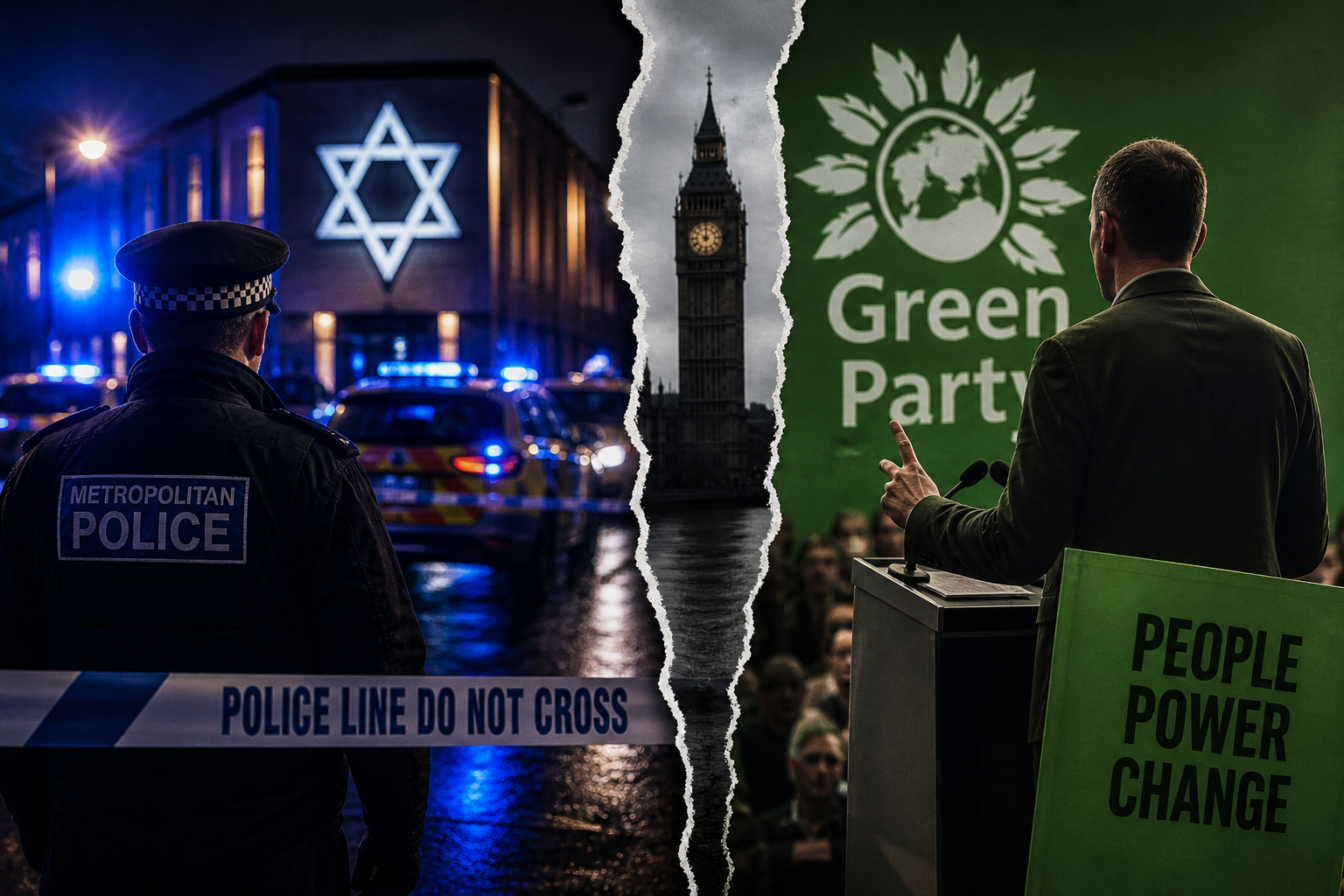
The Golders Green Attack Has Opened A Dangerous New Policing Row
The Policing Row Behind Britain’s Golders Green Terror-Anxiety Moment
A knife attack in Golders Green was always going to be significant nationally. Two Jewish men suffered stab wounds in North London; counter-terrorism officers became involved, and police said the suspect also attempted to stab officers during the response. In a country already tense over antisemitism, protest politics, and public safety, that alone would have made the story combustible.
But the second story now matters almost as much as the first. The Metropolitan Police and Green Party leader Zack Polanski have collided over the policing of the arrest, after Polanski reshared criticism of officers’ conduct. Sir Mark Rowley, the Met Commissioner, responded publicly and sharply, calling the criticism inaccurate and warning that it could undermine officer confidence at the very moment police say they are being asked to protect frightened communities.
That is why this row is not a small Westminster-side drama. It sits directly underneath Britain’s terror-anxiety moment: the fear of antisemitic violence, the pressure on police to act quickly, the right to scrutinize force, and the political danger of public figures amplifying claims before the full operational picture is clear.
What Happened In Golders Green
The confirmed core of the story is stark. Police said officers were called to Highfield Avenue in Golders Green at 11:16am on Wednesday, 29 April, after reports of people being stabbed. Local and armed officers attended alongside the ambulance service. The Metropolitan Police later described the incident as a terrorist incident in which two men were stabbed and said the suspect had attempted to stab police officers.
The attack landed in a highly sensitive location and moment. Golders Green has a large Jewish community, and the incident came against a wider backdrop of heightened anxiety over antisemitism in Britain. That wider context is why the argument over the arrest has become so politically charged. The debate is no longer just about one suspect, one street, or one police intervention. It is about whether Britain’s institutions can respond to terror-linked violence without losing public confidence from either direction.
On one side, many people want reassurance that police can act decisively when armed violence threatens civilians and officers. On the other hand, there is a legitimate public interest in how force is used, especially when video clips spread online and questions are raised about vulnerability, mental health, or restraint. The challenging part is that both instincts can exist at once. A democratic society should scrutinize state force. It should also avoid turning partial footage into instant certainty.
That tension is the oxygen of this story.
Why The Zack Polanski Row Matters
The political flashpoint came after Zack Polanski reshared a post criticizing the police response to the arrest. The post accused officers of using excessive force against a suspect who had already received a taser. Sir Mark Rowley pushed back in unusually direct terms, saying the commentary was inaccurate and misinformed and arguing that it risked damaging confidence among officers who need to make split-second decisions in dangerous circumstances.
The Met’s argument is clear: officers responding to a suspected terror attack cannot be judged casually from fragments of online video without the full context of threat, weapon, resistance, public danger, and officer risk. Rowley also framed the issue around the safety of London’s Jewish communities, saying the force needed officer confidence and public support to protect people at a time of rising fear.
The Green Party response has been more cautious than the original social media storm. A party spokesperson said Polanski had seen the video, like others; did not know the full picture; and recognized that it was a very difficult situation for the authorities but still believed more needed to be understood about the response. That distinction matters. It moves the argument from outright condemnation toward a demand for clarity. But the damage, politically, may already have occurred.
The row exposes a brutal modern problem: political actors can become part of an operational policing crisis within minutes. A retweet, repost, or quote-post is no longer just commentary. It can shape public emotion before investigators, lawyers, watchdogs, or community leaders have had time to establish the facts.
The Protest Question Is Now Attached To The Attack
The row has also merged with the argument over pro-Palestine demonstrations. Authorities are reviewing events across the country after they raised the UK terror threat level to severe, meaning an attack is considered highly likely. Police have also been assessing whether future demonstrations can go ahead in the current climate, including planned protests connected to Nakba Day in London.
That is where this story becomes especially combustible. Linking a specific attack, public fear, protest rights, and antisemitism creates one of the hardest balancing acts in British policing. Ban too much, and the state appears to be restricting lawful protest because of political pressure. Allow everything without adjustment, and frightened communities may feel abandoned if marches produce intimidation, extremist language, or disorder.
The government’s public line is trying to walk that narrow path. Ministers have defended the right to protest while warning that some people have hijacked demonstrations to spread division and hate. Meanwhile, police face pressure to maintain public order, protect vulnerable communities, and avoid being dragged into partisan combat.
This is why the Polanski row has legs. It is not only about whether one political leader should have reshared one post. It is about the wider question of who gets trusted when the country is scared: the police, politicians, protesters, online footage, community leaders, or the loudest social media interpretation.
What Most People May Miss
The obvious version of this story is simple: a terror-linked attack happened, police arrested a suspect, a politician criticized the arrest, and the Met hit back. The deeper version is more serious. Britain is entering a phase in which security events instantly turn into identity conflicts.
For Jewish communities, the Golders Green attack is not abstract. It lands as a direct reminder that visible Jewish life can become a target. For police officers, the row reinforces their fear that online judgments will occur before the full facts are known about dangerous interventions. For civil liberties campaigners, the possibility of protest restrictions raises concern that a security crisis could become a pretext for limiting lawful dissent. For politicians, every sentence now carries risk: say too little and appear evasive, or say too much and inflame the moment.
The key point is not that scrutiny should stop. It should not. Police use of force must remain accountable, especially in high-stakes incidents. The key points are timing, framing, and certainty. There is a difference between saying “the case needs proper review” and amplifying a definitive allegation before the facts are established.
That difference can decide whether a public intervention calms a situation or accelerates it.
The Met’s Bigger Problem
The Met is not only defending one arrest. It is defending its ability to act with authority in a city where policing has become politically fragile. Rowley has said the force needs officers to feel confident tackling dangerous individuals and has argued that public criticism from influential people can undermine that confidence. He has also said the force requires extra resources to strengthen visible neighborhood policing around Jewish communities, reportedly asking the government for funding connected to hundreds more officers.
That creates a second layer of pressure. If the Met appears too forceful, it risks backlash over civil liberties and police conduct. If it appears hesitant, it risks facing accusations that it cannot protect communities under threat. If it speaks publicly against politicians, it risks claims of political interference. If it stays silent, it risks allowing a damaging narrative to harden.
There is no clean lane here. Every option carries institutional risk.
That is why Rowley’s intervention is so notable. Police chiefs usually try to avoid becoming characters in political arguments. This time, he stepped directly into the public arena and insisted the issue was operational, not political. Whether that distinction holds in public perception is another matter. Once a police chief and a party leader are visibly clashing, the argument is political whether either side wants it to be or not.
Why This Could Escalate
This story will grow if three things happen. First, if there is a new official statement from the Met, government, counter-terrorism policing, or the Green Party. Second, if any protest restriction decision is announced, especially around major London demonstrations. Third, if further verified footage or watchdog scrutiny changes the understanding of the arrest, then it may lead to a different conclusion.
The most dangerous escalation would be a protest decision framed by one side as necessary community protection and by another as political suppression. That would turn the Golders Green attack from a security incident into a national argument over the limits of protest during a terror-alert period.
The second danger is community trust. Jewish communities need visible protection and clear solidarity. Muslim and pro-Palestinian communities also need confidence that authorities will not collectively punish them for the actions of violent individuals or extremists. Police must hold both lines at once. That is easy to say and extremely challenging to deliver.
The third danger is online certainty. Video clips, political outrage, and selective framing can move faster than evidence. In the hours after a violent incident, that speed can distort everything: the suspect, the officers, the victims, the community impact, and the policy response.
The Real Test
The Golders Green attack has exposed something bigger than one police operation. It has shown how close the relationship now is between public safety, political speech, and social trust.
The public deserves facts about the attack. It deserves accountability for any use of force. It deserves police who can act decisively when lives are at risk. It also deserves political leaders who understand that a public platform is not just a microphone; in a volatile moment, it is a force multiplier.
The Met Police and Zack Polanski row matters because it is not happening beside the crisis. It is part of the crisis. It shows how Britain’s institutions are tested not only by violence but also by the argument that follows: who is believed, who is protected, who is blamed, and who defines what the public saw.
That is the story underneath Golders Green. Not just an attack. Not just an arrest. A country trying to police fear without letting fear police it.
