

Britain Moves To “Severe” Threat Level After London Stabbing — The Shift Behind The Decision
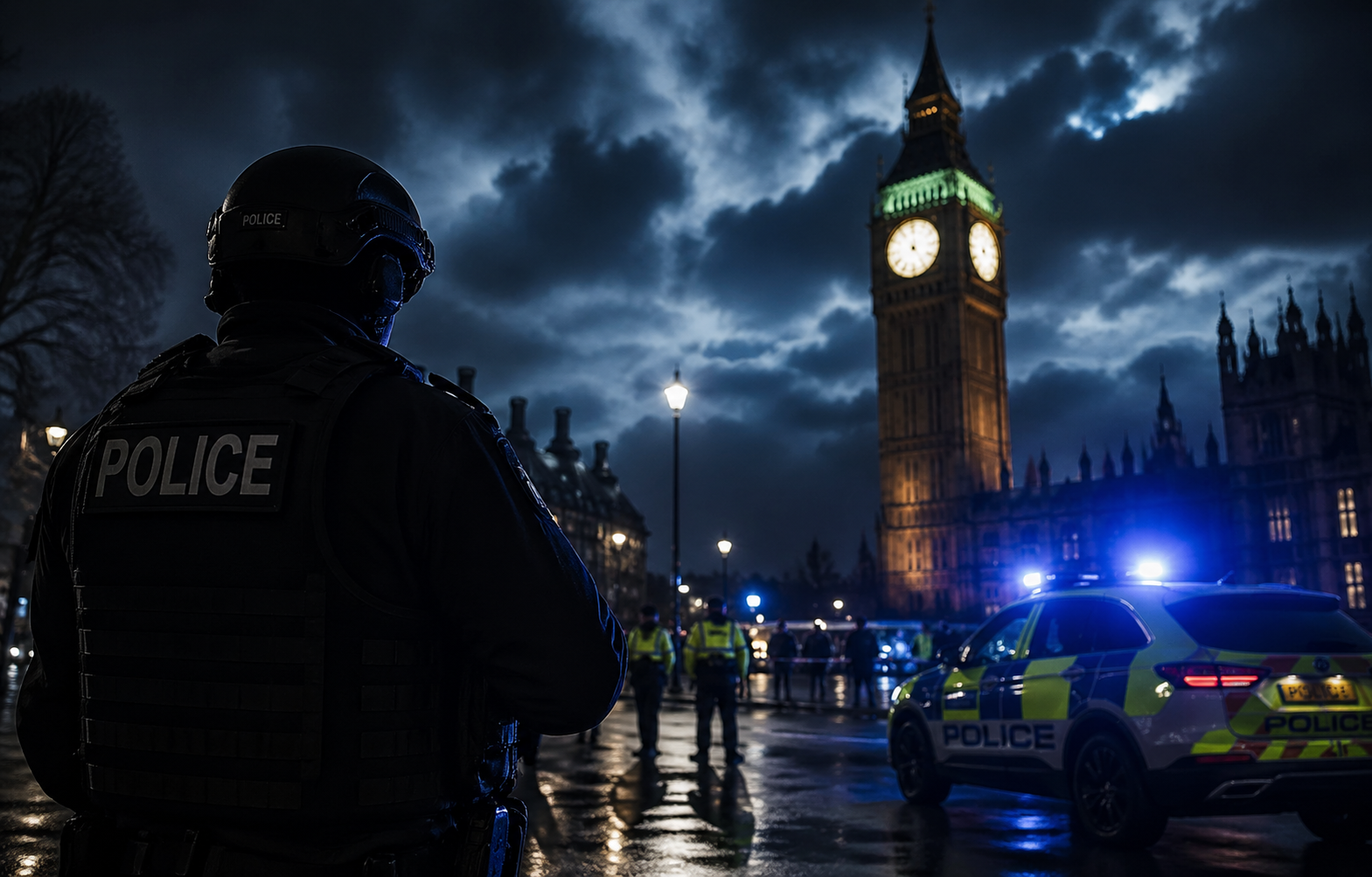
The UK Just Entered A Higher Terror Risk Phase — And It Was Building For Months
The UK Has Moved To A “Highly Likely” Terror Risk—And The Golders Green Attack Was The Moment It Became Visible
The UK has crossed a threshold it had been edging toward for months. The national terrorism threat level has been raised from “substantial” to “severe,” meaning an attack is now considered highly likely.
The immediate trigger was the stabbing attack in Golders Green, north London, where two Jewish men were targeted in what police have formally treated as a terrorist incident. But the decision itself goes further than a single act of violence. It reflects a broader shift in how UK intelligence agencies are reading the current risk environment.
What Actually Happened In Golders Green
On 29 April 2026, a man armed with a knife attacked multiple people in Golders Green, an area with a large Jewish community. Two men, aged 34 and 76, were injured after being deliberately targeted.
Police quickly declared the incident terrorism, citing the attacker’s apparent intent to target individuals who were visibly Jewish. The suspect was arrested at the scene after being subdued by police using a Taser.
What elevated this incident beyond a serious crime were not just the violence but also the intent and context. Authorities linked it to a wider pattern of antisemitic threats and attacks that have been increasing in frequency and visibility across the UK.
Why The Threat Level Was Raised
The Joint Terrorism Analysis Centre (JTAC) sets the UK’s threat level independently, based on intelligence rather than political reaction. The move to “severe” signals that agencies believe an attack is not just possible, but likely within the near term.
Critically, officials have been clear: the change was not caused solely by the Golders Green attack. It was the tipping point.
Behind the scenes, intelligence agencies have been tracking a steady rise in risk driven by multiple sources:
Islamist extremism
Extreme right-wing activity
Lone actors influenced by online narratives
State-linked influence encouraging violence
This convergence of threats has created what officials describe as a more volatile environment, where smaller-scale but unpredictable attacks become harder to prevent.
What “Severe” Actually Means In Practice
“Severe” is the second-highest level on the UK’s five-tier system. It does not mean an attack is imminent tomorrow. It means intelligence agencies judge that an attack is highly likely within the coming months.
For the public, the shift is subtle but important. There is no immediate lockdown, no curfews, and no visible emergency measures imposed overnight. But behind the scenes, several changes happen quickly:
Increased police and counter-terror presence
Enhanced protection at high-risk locations, especially Jewish institutions
More aggressive monitoring of potential threats
Review of public events and large gatherings
Authorities have already indicated that they will reassess events across the country in light of the new threat level.
Why This Moment Feels Different
The UK has been at “severe” before, but the context matters. This escalation is happening during a period of heightened global tension, rising antisemitism, and increasingly fragmented domestic threat sources.
The Golders Green attack fits a pattern that security officials find particularly concerning:
Targeted violence against a specific community
A lone attacker with prior warning signals
A blend of ideological influence and personal instability
This combination makes prevention significantly harder. Traditional counter-terror strategies are designed to disrupt organized networks. Lone actors, especially those operating with minimal planning or external coordination, can slip through gaps more easily.
The Deeper Shift Most People Miss
The headline is the threat level. The real story is how the nature of the threat is evolving.
The UK is no longer dealing primarily with large, coordinated terror plots. Instead, it faces a landscape of decentralized risk: individuals radicalized online, influenced by global conflicts, or motivated by hybrid ideologies that do not fit neatly into one category.
That creates a different kind of danger. Not necessarily more dramatic—but more constant, more unpredictable, and more difficult to fully neutralise.
The Golders Green attack did not create that reality. It exposed it.
Political And Social Pressure Is Now Rising
The response has already moved beyond policing. Political leaders have framed the moment as part of a wider crisis around antisemitism and community safety.
There are also early signals of tougher action ahead:
Greater scrutiny of protests and public demonstrations
Stronger enforcement against extremist rhetoric
Increased funding for community protection
At the same time, such action creates tension. The UK is trying to balance civil liberties with a more aggressive security posture. That balance becomes harder as the perceived risk rises.
What Happens Next
The “severe” level does not have a fixed end date. It remains in place until intelligence agencies judge that the risk has reduced.
In practical terms, the coming weeks will likely involve:
Continued high-visibility policing
Increased public messaging around vigilance
Further arrests or disruptions if intelligence leads develop
Ongoing reassessment of threat patterns
The most important variable is whether further attacks occur. A second incident in close proximity would reinforce the current assessment. A sustained period without incidents could gradually lower it again.
The Bottom Line
The UK has not suddenly become unsafe overnight. But the margin for complacency has narrowed.
The shift to “severe” is not just a reaction to one attack. It is a recognition that the underlying risk has changed — and that the system is now operating in a higher-threat environment where incidents like Golders Green are more likely to happen again.
That is the real meaning behind the headline.neutralize.
