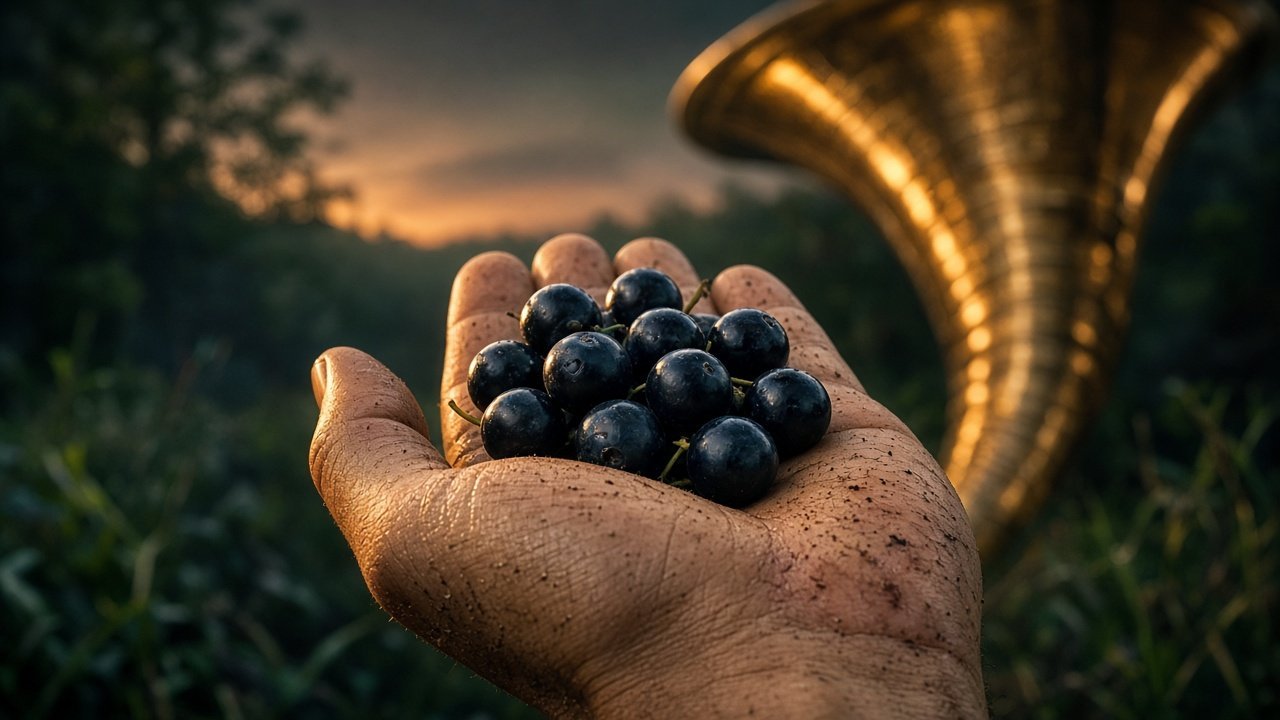
A girl takes her sister's place in a game built to kill children, then finds the one move the Capitol never planned for. We explain The Hunger Games before Sunrise on the Reaping.
One Girl Volunteers. Only One Child Is Meant to Come Home
Katniss Everdeen has spent five years keeping her mother and little sister alive by hunting illegally in the woods beyond District 12's fence. Then the yearly lottery calls her sister's name, and Katniss does the one thing that cannot be undone: she takes Prim's place in a televised fight to the death. The Hunger Games, Suzanne Collins's 2008 novel, is the book that began one of the biggest young adult series ever written, and it is the story Sunrise on the Reaping looks back from. This guide sets out what you need before reading, then gives a clear spoiler warning and tells the story in the order Katniss discovers it, before explaining the berries, Peeta and why President Snow wants her dead. It finishes with what to remember before the new film.
Where Is The Hunger Games Set?
The story takes place in Panem, a nation built on the ruins of North America. A rich Capitol rules twelve poorer districts, each tied to one industry. District 12, Katniss's home, mines coal and sits at the bottom of the pile, poor enough that children regularly die of hunger. A thirteenth district was destroyed after a failed rebellion that the Capitol still calls the Dark Days.
What Are the Hunger Games?
As punishment for that rebellion, every district must send one girl and one boy between the ages of 12 and 18 to the Capitol each year. These children, called tributes, are dropped into an outdoor arena and made to fight until only one is left alive. The whole country is required to watch. The winner, known as a victor, returns home rich, and their district receives extra food for a year.
Names are drawn at a public ceremony called the reaping. Every child's name goes in once at 12, twice at 13 and so on, but poor children can add their name extra times in exchange for tesserae, a meagre ration of grain and oil. The site's explainer on why Katniss's name was in the reaping 20 times walks through that arithmetic. The system makes the hungriest children the likeliest to die, and it sets poor families against slightly less poor ones.
Is The Hunger Games Book Different From the Film?
The 2012 film, directed by Gary Ross and starring Jennifer Lawrence, follows the book's events closely. The biggest difference is access to Katniss's mind. The film cuts away to the Gamemakers' control room, while the book never leaves Katniss's head, so readers spend much longer doubting what Peeta wants, what Haymitch is planning and how much of her own behaviour is performance. The book is also harsher about the cost of the arena, and some injuries in the final chapters are more serious on the page than on screen.
Spoiler warning: the following summary discusses the plot, major twists and ending.
Content note: the novel and this summary discuss children being killed, starvation and a threatened double suicide.
Reaping Day in District 12
The book opens on the morning of the reaping for the 74th Hunger Games. Katniss is 16. Her father died in a mine explosion when she was 11, and her mother sank so deeply into grief that Katniss became the family's provider, hunting game and gathering plants beyond the electrified fence with her best friend, Gale Hawthorne. She trades in the Hob, District 12's black market, and she has put her name into the reaping extra times in exchange for tesserae so that her family can eat.
Her sister, Primrose, is 12 and her name is in the draw just once. It is called anyway. Katniss volunteers in Prim's place before anyone can stop her, an almost unheard-of act in District 12, and the crowd answers not with applause but with a silent gesture of respect that the cameras cannot easily read.
The boy chosen is Peeta Mellark, the baker's son. Katniss has a debt to him that she has never repaid. Years earlier, when her family was starving after her father's death, Peeta took a beating from his mother for burning two loaves and then threw the bread to Katniss in the rain. That bread kept the family alive and gave her the idea of hunting again. Now one of them has to die for the other to go home.
Goodbyes and the Mockingjay Pin
In the brief goodbyes that follow, Madge, the mayor's daughter, gives Katniss a gold pin showing a mockingjay, a bird that exists only because Capitol genetic experiments went wrong. Katniss agrees to wear it in the arena as her district token. In this book it is simply a gift from a quiet friend, and it will become the most famous symbol in Panem.
The Capitol and the Performance
On the train, Katniss and Peeta meet their mentor, Haymitch Abernathy, District 12's only living victor and a drunk who falls off the stage at the reaping. The chaperone, Effie Trinket, is a bright Capitol woman obsessed with manners and schedules. Katniss and Peeta force Haymitch to take them seriously, and he agrees to help if they do what he says.
In the Capitol, Katniss's stylist, Cinna, dresses her and Peeta in black costumes set alight with synthetic flames for the opening parade. The crowd loves it, and she becomes the girl who was on fire. During training she meets the Careers, tributes from the richer districts who are trained for the Games from childhood and volunteer for glory. She also notices Rue, a tiny 12-year-old from District 11, the farming district, who follows her around the training centre.
In her private session with the Gamemakers, who design and run the arena, Katniss shows her archery to an audience that is more interested in a roast pig. Furious, she shoots an arrow through the apple in its mouth. Rather than being punished, she receives a training score of 11 out of 12, the highest of the year, which makes her a target in the arena and an attractive bet for sponsors, the wealthy viewers who can pay to send gifts in.
Peeta's Confession
The night before the Games, each tribute gives a televised interview to the host, Caesar Flickerman. Peeta says he has been in love with a girl back home for years, and then that she came to the Capitol with him. Katniss attacks him afterwards, sure that he has made her look weak. Haymitch explains the opposite: Peeta has made her desirable. Two star-crossed lovers from the poorest district are a story the audience will pay for.
This is the first time the book asks the question it will keep asking until its final page: is Peeta telling the truth, and does Katniss love him back? Because the reader is inside Katniss's head, every kind act from Peeta arrives wrapped in her suspicion.
Inside the Arena
The arena is a forest with a lake and a giant golden horn, the Cornucopia, piled with supplies. Haymitch has told Katniss to run, but she grabs a backpack near the edge before escaping into the trees. Around half the tributes die in the opening bloodbath.
Thirst nearly kills her before she finds water. Then the Gamemakers, unhappy that she has drifted too far from the action, send a wall of fire and fireballs to herd her back towards the others, and one burns her calf. The Careers chase her up a tree. To her shock, Peeta is with them, apparently hunting her.
Tracker Jackers and a Second Betrayal That Is Not One
Rue, hiding in a nearby tree, silently points out a nest of tracker jackers, engineered wasps whose venom causes agony, hallucinations and sometimes death. Katniss saws through the branch and drops it on the sleeping Careers. Two die. Katniss is stung, but she takes the bow and arrows from one of the dead girls before Peeta reaches her. He screams at her to run, and he fights Cato, the strongest Career, from District 2, to give her time.
Delirious from the venom, Katniss does not fully understand what Peeta has done. The reader, sharing her confusion, is left in the same position: was he hunting her, or protecting her from inside the group most likely to kill her? The book gives the answer only later.
Rue
Katniss and Rue become allies, and the friendship is the gentlest part of the novel. Rue reminds Katniss of Prim, and the two share food and knowledge. Together they plan to destroy the Careers' supplies. Rue lights decoy fires while Katniss shoots open a sack of apples on top of the stockpile, which sets off the mines planted around it and blows the supplies apart. The blast damages Katniss's hearing in one ear.
When Katniss goes to find Rue, she arrives as the boy from District 1 spears her. Katniss kills him with an arrow. She sings to Rue as she dies, then covers her body in flowers, a small act of grief and defiance aimed at the Capitol audience. In thanks, District 11 sends her a loaf of its bread, a gift from people who have very little to give. It is the first time Katniss has seen another district thank someone from District 12.
The Rule Change and the Cave
An announcement changes everything. This year, two tributes from the same district may win together. Katniss, who had been trying not to think about Peeta, immediately goes to find him.
She finds him camouflaged in the mud of a riverbank, badly wounded in the leg by Cato. The truth behind his alliance with the Careers now emerges: he had joined them to keep watch over her. Katniss drags him to a cave, cleans his wounds and nurses him as best she can, but his leg becomes infected.
Playing the Lovers
When Katniss kisses Peeta on impulse, a pot of broth arrives by parachute. She understands at once that it is a message from Haymitch: the audience wants romance, and romance brings gifts. From then on, she plays the girl in love, telling stories and sharing kisses for the cameras, while never quite admitting to herself how much of it she means.
The Gamemakers then announce a feast at the Cornucopia, where each tribute will find something they desperately need. For Katniss it will be medicine for Peeta. He begs her not to go, so she drugs him with sleep syrup sent by Haymitch and goes anyway. At the feast, Clove, the girl from District 2, pins her down and taunts her about Rue. Thresh, the boy from District 11, kills Clove and lets Katniss go because of what she did for Rue. Katniss reaches the cave, injects Peeta and passes out.
Berries, Foxface and the Final Three
The pair stay in the cave through days of rain as the romance deepens, at least on the outside. Once the rain stops, they forage. Peeta, a town boy, gathers berries he does not recognise. Before Katniss can explain that they are nightlock, which kills almost instantly, the clever girl Katniss calls Foxface steals some from their supplies and dies. Katniss keeps a pouch of them, thinking they might be useful as a trap. Cato kills Thresh off the page, leaving three tributes alive.
How The Hunger Games Ends
The Gamemakers dry up every stream to force the survivors to the lake. Cato comes running towards Katniss and Peeta but straight past them, chased by a pack of wolf-like mutations, called muttations, engineered by the Capitol. All three climb the Cornucopia. Katniss is horrified to see that the creatures appear to carry features of the dead tributes, including their eyes. The book never fully explains how, and the uncertainty makes them worse.
Cato grabs Peeta and holds him as a shield. Katniss shoots Cato's hand, Peeta pushes him off the horn, and the muttations fall on him. His armour keeps him alive through the night. At dawn, Katniss kills him with an arrow out of pity.
The Rule Is Revoked
Katniss and Peeta are the only ones left. The victory trumpets should sound. Instead, the announcer revokes the rule change: there can be only one winner. Peeta, bleeding badly, offers to die so she can live, and she refuses.
Katniss realises that the Gamemakers need a victor. A Games that ends with nobody left would be a failure on national television. She pours nightlock into Peeta's hand and her own. They agree to eat the berries together on the count of three. As the berries reach their mouths, the announcer frantically shouts for them to stop and declares them both victors of the 74th Hunger Games.
The Victor
Katniss and Peeta are taken to the Capitol for treatment. Peeta loses part of his leg and is given a prosthetic. Katniss's hearing is restored. Before their final interview, Haymitch warns her that she is in serious danger. The Capitol is furious that she outsmarted the Gamemakers, and the only safe explanation for the berries is that she was a girl so madly in love that she could not bear to lose him. Cinna dresses her to look young and innocent.
In the interview, she plays the part, and President Snow, Panem's ruler, crowns them both. On the train home, when Haymitch tells Katniss she did well, Peeta asks what he means. Katniss admits that much of the romance was strategy. Peeta is devastated. Still, when they arrive in District 12, they take each other's hand for the cameras, and Katniss dreads the moment she will have to let go.
The Hunger Games Ending Explained
Why Did Katniss Pull Out the Berries?
Katniss uses the berries because they are the one weapon the Capitol cannot take away: the choice to deny it a winner. Her reasoning is practical. The Games exist to show the districts that the Capitol controls life and death, and that message only works if somebody wins. If both tributes die, the Gamemakers' grand finale ends in a public failure.
The berries also come from inside the story. Peeta picked them by mistake, Foxface's death proved how deadly they are, and Katniss pocketed them for a different trap. Collins plants every piece before it is needed, so the climax feels earned rather than convenient.
Was It an Act of Love or Rebellion?
It is both, and the book is careful not to settle the question too neatly. At the moment she acts, Katniss is not making a political statement. She is refusing to kill Peeta and refusing to let him die for her. Yet the act has a political shape whether she intends it or not. Two children from the poorest district have just told the Capitol, on live television, that they would rather die than play by its rules.
That is why the cover story matters. To the Capitol audience, the berries can be sold as tragic romance. To the districts, they look like defiance. Haymitch's warning, and Katniss's performance in the final interview, are attempts to make the first reading drown out the second.
Why Does President Snow Want Katniss Dead?
By the end of the book, Katniss has made the Capitol look powerless, and Snow cannot tolerate that. The Games are a lesson in obedience, and she has made the Gamemakers change their own rules twice and then back down on camera. If a girl from District 12 can do that, other people may wonder what else is possible.
The danger has been building since before the finale. Rue's flowers and the bread from District 11 show the districts reaching across the lines the Capitol drew between them. The berries complete the picture. Snow cannot simply have her killed, because she is now a beloved victor and the audience adores the lovers' story. Her protection is the romance itself. The next book opens by making that threat personal, but in this novel the warning comes through Haymitch, and through the way the whole Capitol suddenly needs her to be a lovesick girl rather than a rebel.
Does Katniss Love Peeta?
At the end of book one, Katniss genuinely does not know, and that uncertainty is the point. She has spent the Games performing affection to stay alive, and she has also felt real fear, gratitude and tenderness for the boy who once saved her family with bread. In an arena where every emotion is televised, she cannot separate the two.
Peeta has never been confused. His love was real before the reaping. That is what makes the train scene so painful: he discovers that the moments he treasured were partly a strategy, while she discovers that she cannot simply switch the feelings off. Gale, waiting at home, adds a further complication that the sequels develop.
What Does the Mockingjay Mean?
A mockingjay is a creature the Capitol never meant to exist. Its parents were jabberjays, birds engineered to spy on rebels by repeating their conversations. When the rebels learned to feed them lies, the Capitol abandoned them, and they bred with wild mockingbirds. The result is a bird that survives outside the Capitol's control.
Katniss is the same. She is a product of the system, raised by its hunger and trained in its arena, but she ends the book as something the Capitol did not design and cannot easily destroy. Wearing the pin into the Games turns her into its living version before she understands what that means.
The Characters Who Matter Most
Peeta Mellark
Peeta's weapons are words, kindness and an instinct for what an audience wants. Katniss consistently underestimates him because his gifts are not the ones she values. His fear before the Games is not of dying but of being turned into someone he is not, and he spends the whole book trying to stay himself.
Haymitch Abernathy
Haymitch looks like a joke in the opening chapters and turns out to be the smartest player in the book. His parachutes guide Katniss without a single spoken word, and his warning at the end shows that he understands the Capitol better than anyone. Readers going into Sunrise on the Reaping should keep that contrast in mind: the drunk on the stage is also a man who knows exactly how this machine works.
Rue
Rue's death is the book's emotional centre. She is the reason Katniss's anger at the Capitol becomes personal, and her district's thanks show that the people the Games are meant to divide can recognise each other.
Cinna
Katniss's stylist is quietly the most radical figure in the Capitol. He uses costume to shape how she is seen, from the girl on fire to the innocent girl of the final interview, and he treats her with a respect that almost nobody else in the Capitol does.
What to Remember Before Sunrise on the Reaping
The Hunger Games: Sunrise on the Reaping opens in cinemas in both the UK and the US on Friday 20 November 2026. Francis Lawrence directs, and the film adapts Collins's 2025 novel about the 50th Hunger Games, the Second Quarter Quell, 24 years before Katniss's Games. A Quarter Quell is the anniversary Games held every 25 years with a special twist, explained in the site's guide to all three Quarter Quells.
Here is what to carry from the first book into the cinema, without spoiling the new story.
Haymitch Is the Only Living Victor From District 12
When Katniss meets him, Haymitch is the district's sole surviving victor, a drunk who has mentored two children every year and watched them all die. Sunrise shows him at 16, before any of that. Remember the man on the reaping stage, and the warning he gives at the end of this book, and you will feel the distance the prequel has to travel.
The Capitol's Faces Are Familiar
Several characters return younger. Ralph Fiennes plays President Snow, the ruler who crowns Katniss at the end of the first book. Elle Fanning plays Effie Trinket, and Kieran Culkin plays the presenter Caesar Flickerman, whose interviews shape how each tribute is seen. Jesse Plemons plays Plutarch Heavensbee, who does not appear in the first book at all. Joseph Zada plays young Haymitch.
Watch the Gold Pin and the Mayor's Family
The pin Madge gives Katniss is never explained in the first book. Later books connect it to people from Haymitch's past, so it is worth remembering who gave it to her and where it came from before you watch.
The Games Are a Television Show
Remember Peeta's interview, Haymitch's parachutes and the cover story Katniss has to tell at the end. The Hunger Games teaches the reader that winning depends on the audience as much as the arena. The site's existing primer, Sunrise on the Reaping: What to Remember Before Watching, develops that idea for the prequel without spoilers, while the full Sunrise on the Reaping book explainer covers the novel's ending in detail.
Do You Need to Reread the First Book?
No. Sunrise is a separate story set a generation earlier, with a new tribute at its centre, so its premise does not depend on Katniss's. But the first book's ending changes how its final scenes land, because you already know what the Capitol does to children who defy it, and what Haymitch becomes.
Themes and Meaning
Hunger as Control
The title is literal before it is symbolic. The Capitol controls the districts through food, from the tesserae that buy grain with children's names to the bread that keeps Katniss's family alive and the bread District 11 sends her. Starvation makes people desperate enough to accept the reaping, and every gift of food in the book carries a political meaning.
Entertainment as Violence
The Games are a punishment staged as a show, complete with costumes, interviews, sponsors and a host. Collins has said the idea came from flicking between reality television and footage of the Iraq war, and the book keeps the two side by side. Katniss survives not only by fighting but by giving the audience a story, which implicates everyone watching, including the reader.
Performance and Identity
Almost everything Katniss does in public is a performance, and the book's tension comes from her uncertainty about where the act ends. Peeta's fear of being changed by the Games, and Katniss's confusion about her own feelings, are two versions of the same problem.
Final Thoughts
The Hunger Games ends not with a celebration but with a girl holding a boy's hand on a train platform, unsure whether she means it, and certain that the most powerful man in Panem is now watching her. Katniss wins by refusing the Capitol's one rule, and the price of that victory is that she can never stop performing. That is why the first book still matters as Sunrise arrives. It shows what winning costs, before the prequel shows how Haymitch first paid it.
Study Notes
Structure and Narration
The novel has 27 chapters in three parts: The Tributes, The Games and The Victor. Katniss narrates in the first person and the present tense, which keeps the reader as uncertain as she is about Peeta, the Gamemakers and Haymitch's plans.
Key Themes to Revise
Power and control: how the Capitol uses hunger, the reaping and television to keep the districts divided.
Spectacle: the Games as punishment disguised as entertainment.
Identity and performance: the gap between the Katniss the audience sees and the Katniss who narrates.
Sacrifice: Katniss volunteering for Prim, and Peeta's willingness to die for Katniss.
Important Symbols
The mockingjay pin: survival outside Capitol control.
Bread: Peeta's gift, District 11's thanks, and the hunger behind the whole system.
The nightlock berries: the one choice the Capitol cannot take away.
Fire: Cinna's costumes and the Gamemakers' weapon, linking Katniss to both performance and danger.
Essay Questions
How does Suzanne Collins use food and hunger to show the Capitol's power?
Is Katniss's decision to use the berries an act of love, survival or rebellion?
How does first-person, present-tense narration shape the way we understand Peeta?
Why is Rue's death a turning point for Katniss?
How does the novel criticise entertainment and the audience who watches it?
Sources
The Hunger Games (novel), Wikipedia (publication on 14 September 2008, Scholastic; plot and Collins's account of her inspiration)
The Hunger Games Full Book Summary, SparkNotes (plot and ending corroboration)
The Hunger Games Summary, LitCharts (plot and ending corroboration)
The Hunger Games: Sunrise on the Reaping, Official UK Website, Lionsgate UK (UK release 20 November 2026; cast; director)
The Hunger Games: Sunrise on the Reaping, Wikipedia (US release 20 November 2026; cast roles)
'Sunrise on the Reaping' Movie Casting, Explained by Film's Director, USA Today, 15 October 2026 (US cinema date; setting 24 years before The Hunger Games)
The Hunger Games #1: The Hunger Games, Scholastic UK (current UK paperback)
When Is The Hunger Games: Sunrise on the Reaping Being Released in the UK?, Flicks (UK cinema date corroboration)
