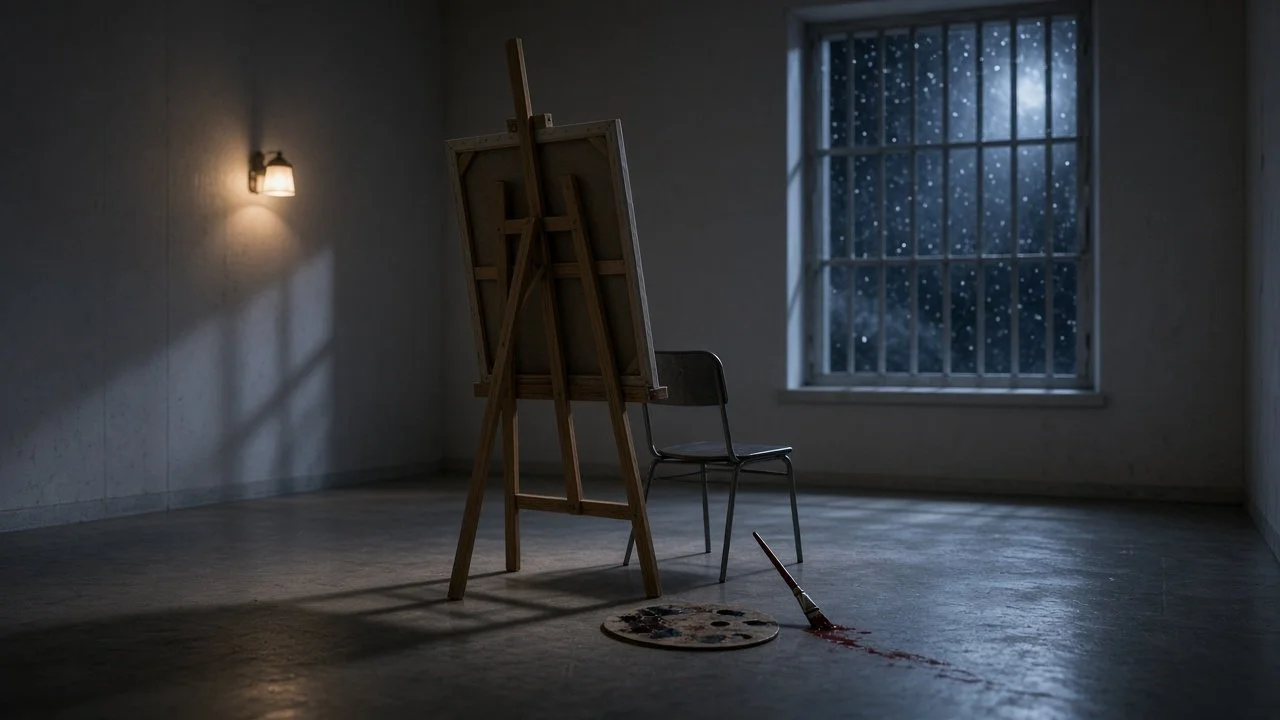
The therapist determined to make her speak is the one man she can never forgive. We explain The Silent Patient, its famous twist and what that last scene in the snow really means.
She Shot Her Husband Five Times and Never Spoke Again. Her Therapist Knows Why
The Silent Patient is the debut thriller that made Alex Michaelides a household name: a celebrated London painter shoots her husband, then refuses to say another word, and the psychotherapist who becomes obsessed with her case sets out to discover why. It is famous for one of the most talked-about twists in modern crime fiction, a reveal that makes readers go straight back to page one. This guide begins with what you need to know before reading, then gives a full spoiler warning and tells the story in the order the book reveals it, through Theo's investigation, Alicia's diary and the final revelation, before explaining the ending, the timeline trick and what that last scene in the snow means.
The Book at a Glance
The Silent Patient was published in the United States by Celadon Books, an imprint of Macmillan, on 5 February 2019 (ISBN 9781250301697). In the United Kingdom it was published by Orion. The UK e-book went on sale on 5 February 2019, and the 352-page UK hardback followed on 7 February 2019 (ISBN 9781409181613). The UK paperback appeared on 12 December 2019 (ISBN 9781409181637).
The audiobook, released the same day, is narrated by Louise Brealey and Jack Hawkins. It was a hit from day one. The novel entered the New York Times bestseller list at number one and went on to win the 2019 Goodreads Choice Award for Mystery and Thriller, the readers' prize run by the book site Goodreads. Even before publication, Orion's catalogue described it as bought in a hotly contested auction and sold in 35 territories.
Who Is Alex Michaelides?
Michaelides is a British-Cypriot writer who lives in London, where the novel is set. Before becoming a novelist he worked as a screenwriter: he wrote the film The Devil You Know and co-wrote The Brits Are Coming. He has said that frustration with seeing his scripts changed in production pushed him to write a novel instead, and that he revised the draft about 50 times before it was finished.
He also brought real experience to the setting. Michaelides studied psychotherapy at postgraduate level and, while training, worked in a secure psychiatric unit for teenagers, which shaped his portrait of the Grove. He has named two inspirations: Agatha Christie, whose sleight of hand influenced the structure, and the ancient Greek tragedy Alcestis by Euripides.
What Kind of Book Is It?
The Silent Patient is a psychological thriller, a crime story more interested in why someone did something than in a police investigation. It is mostly narrated in the first person by Theo Faber, a forensic psychotherapist, meaning a therapist who works with people who have committed crimes. His chapters alternate with entries from a diary Alicia kept in the weeks before the killing.
A few terms help. The Grove is a secure psychiatric unit in north London, a hospital where patients are detained for treatment rather than sent to prison. Alcestis is a Greek tragedy in which a wife dies in place of her husband, who is all too willing to let her. And Michaelides plays heavily on the idea of the unreliable narrator, a storyteller whose account the reader cannot fully trust.
Who Are Alicia and Theo?
Alicia Berenson is a gifted painter married to Gabriel, a well-known fashion photographer. They had been married for seven years. Their marriage looked perfect. Then, late one summer night, Alicia shot Gabriel five times and never spoke again. Her only statement was a self-portrait she called Alcestis.
Six years later, Theo Faber is a therapist with a damaged past and an intense interest in Alicia's case. He believes that he, unlike everyone before him, can make her talk.
Spoiler warning: the following summary discusses the plot, the major twist and the ending of The Silent Patient.
Content note: the novel includes murder, gun violence, suicide and suicide attempts, self-harm, childhood emotional abuse and neglect, sexual harassment and assault, stalking, drug overdose and coercive behaviour in a psychiatric setting. The summary describes these events without graphic detail.
The Murder and the Painting
Theo opens by laying out the case. Alicia was found at the scene of her husband's death; she had shot Gabriel five times and then cut her wrists. She survived, but she did not explain herself, deny anything or speak at all. While awaiting trial, she painted the self-portrait she titled Alcestis, which drew crowds to her gallery. After the trial she was sent to the Grove, where she has remained silent ever since, and the press nicknamed her the silent patient.
Theo Comes to the Grove
Theo leaves his job to take a post at the Grove so that he can work with Alicia. There he meets Professor Lazarus Diomedes, the clinical director; Indira, a warm fellow therapist; Yuri, an easy-going nurse; Stephanie Clarke, the unit's stern manager; and Christian, a colleague Theo dislikes who favours medication over talking.
His first session with Alicia is discouraging. She is so heavily medicated that she can barely respond. Theo persuades the staff to lower her dose. At their next session she is more alert, and she attacks him. The sessions are nearly stopped, but Theo is allowed to continue, convinced that the attack is a sign she is starting to feel again.
Theo's Past
Interwoven with the case is Theo's own story. He grew up with a violent father and a mother too frightened to protect him. His only happy childhood memory is of playing alone in the snow. As a young man he tried to kill himself, and he credits his therapist, Ruth, with saving his life. Her warmth inspired him to train as a therapist.
Theo is married to Kathy, a lively American actor who lives with him in London. She is the first real happiness he has known. But one night Kathy leaves her laptop open, and Theo reads messages that reveal she is having an affair. He does not confront her or leave her. Instead he starts to read Kathy's emails and follow her, hoping to catch her with the other man.
Alicia's Diary
Alicia's diary entries, from the summer of the murder, show a woman deeply, almost frighteningly in love with Gabriel. She also writes about her mother's death in a car crash when Alicia was a child, which she believes was deliberate. And she reveals that Gabriel kept a gun in the house, a subject they argued about.
Max, Paul and Lydia
With Alicia unable or unwilling to speak, Theo plays detective. He visits Gabriel's brother, Max Berenson, and Max's wife, Tanya. Max hints that Alicia had a history of mental illness and that she had secretly been seeing a therapist. Alicia's diary tells another story about Max: he was obsessed with her and had kissed and groped her against her will, sometimes while Gabriel was in the next room. After Theo calls Max again, Max complains to Diomedes, and Theo is warned that he is crossing professional boundaries.
Theo also travels to Alicia's childhood home, where he meets her cousin Paul and her bitter aunt, Lydia, who has always resented Alicia. The visit gives him a glimpse of a cold, unloving childhood.
Alcestis
Theo visits Jean-Felix Martin, Alicia's gallerist and old friend, who studies her work with him and urges him to read Euripides' Alcestis. In the play, Admetus is offered a way to escape death if someone dies in his place, and his wife, Alcestis, volunteers. She is later brought back from the dead, but she never speaks again. Jean-Felix also suggests that Theo let Alicia paint again. Theo arranges for her to have materials and a space at the Grove, and Alicia begins a new painting that shows the Grove with herself and Theo in it.
The Diary in Theo's Hands
Alicia's treatment is then thrown into crisis. She stabs another patient, Elif, with whom she has clashed before, and is sedated and isolated. Before Theo is cut off from her, Alicia gives him her diary.
What he reads changes the case. In the weeks before the murder, Alicia believed she was being stalked by a man watching her house. Gabriel dismissed her fears. Her neighbour, Barbie Hellmann, confirms the stalker story. Gabriel had insisted that Alicia see a psychiatrist friend of his, a Dr West, who prescribed medication that Alicia secretly refused to take. Theo realises that Dr West is Christian, who had been treating Alicia privately and off the books. He confronts Christian with this.
Kathy's Lover
At the same time, Theo's private life reaches its own crisis. He follows Kathy and sees her with her lover. He follows the man home, intending to kill him, then decides he is not a murderer and that he will find another way to hurt him. Watching the man's house, he notices that the lover has a wife who adores him and has no idea about the affair.
What Alicia's Father Said
Theo returns to Alicia's childhood home and learns the story that unlocks Alicia. After her mother's death, her father, Vernon, said that he wished Alicia had died instead. Theo believes he now understands her identification with Alcestis: at the moment of the murder, someone must have shown Alicia again that her life was worth less than his own.
He puts this to Alicia, and she speaks. She tells Theo her life story and then her account of the murder night: a masked stranger broke in, tied her up, killed Gabriel and left. Theo is sure she is lying, because her version does not match the police evidence.
The Overdose
The next morning Alicia is found in a coma after an overdose of morphine. The staff assume she did it herself, but Theo insists that someone deliberately gave her a fatal dose. When the police arrive, he points them towards Christian.
The Twist
Theo returns to the house of Kathy's lover, breaks in and confronts the wife. She turns around, and she is Alicia Berenson.
This is the book's great reveal. Theo has been telling two stories as though they were happening at the same time. They were not. Kathy's affair happened six years earlier, and her lover was Gabriel. Theo was the man who stalked Alicia in the weeks before the murder, and he came to the Grove years later knowing exactly who she was.
The Final Diary Entry
Alicia's final diary entry, written before the morphine took hold and hidden from Theo, tells the truth. On the night of the murder, Theo, wearing a mask, broke into the house, tied up both Alicia and Gabriel, and gave Gabriel a choice: his own life or Alicia's. Gabriel chose to live. Theo left without killing anyone. But Gabriel's choice reopened the oldest wound in Alicia's life, her father's wish that she had died instead, and she picked up the gun and shot her husband.
Alicia recognised Theo when he arrived at the Grove. She stayed silent while she made sure, then told him a false version of the murder night to show him that she knew. It was Theo, not Christian, who gave her the overdose to keep her quiet.
The Snow
In the closing chapter, Theo and Kathy have left London. Kathy is depressed and they barely speak; neither has admitted the affair. Alicia remains in a coma with little hope of recovery, and Theo believes he has got away with it. Then Chief Inspector Allen arrives at his door with Alicia's final diary entry and begins to read it aloud. As he listens, Theo notices that it is snowing and catches a snowflake on his tongue.
The Silent Patient Ending Explained
The Murder Night in Order
With the twist revealed, the real sequence is simple. Years before the story opens, Theo discovers Kathy's affair, follows her lover home and finds he is Gabriel Berenson, a married man. Theo watches the house for weeks, and Alicia, sensing a stranger outside, starts to fear she is being stalked. Nobody believes her. On the night of the murder, Theo breaks in wearing a mask, takes Gabriel's gun, ties up the couple and forces Gabriel to choose between his life and Alicia's. Gabriel chooses himself. Theo leaves. Alicia then picks up the gun, shoots Gabriel five times and tries to end her own life. Years later, Theo joins the Grove, Alicia recognises him, and when she speaks in a way that shows she knows, he gives her the overdose.
Who Killed Gabriel?
Alicia did. She fired the gun, and the novel never suggests otherwise. But the book's real question is who is responsible, and the answer is Theo. He broke into the house, tied up the couple and forced Gabriel into a choice designed to expose him. Theo has always insisted that he never meant for anyone to die, and in a narrow sense that is true. Yet his revenge on the man who slept with his wife destroyed three lives.
Why Did Alicia Stop Speaking?
Her silence is Alcestis made real. In the play, the wife who died for her husband comes back and never speaks. Alicia, betrayed by the man she loved in the same way her father betrayed her, kills him and then withdraws into silence, partly from shock and partly, it seems, from guilt. Michaelides gives no single clinical explanation, but the novel links her silence to the feeling of having been made worthless twice.
How Did the Timeline Trick Work?
The twist depends on what is left out rather than on any outright lie. Theo tells his marriage story and his work story side by side, with no dates, so the reader assumes they are happening at the same time. Clues are there for anyone who looks: Theo's intense interest in Alicia long before he joined the Grove, and the fact that the stalker in her diary behaves exactly like Theo watching Kathy's lover. On a second reading, many chapters look completely different.
Why Did Theo Go to the Grove?
The book suggests a tangle of motives: guilt, curiosity, fear of what Alicia knew and a need to control the story. Theo tells himself he wanted to help her, and part of him may even believe it. But when Alicia's silence ends and she reveals that she recognises him, he silences her the only way he can. The therapist who prides himself on understanding other people never truly faces himself.
What Does the Snowflake Mean?
The snow takes Theo back to the one happy memory of his childhood, playing alone in the snow, the moment before the damage. As Allen reads Alicia's words aloud, Theo retreats into that memory. It suggests acceptance, or perhaps the same escape into silence that Alicia chose. The patient who would not speak has the last word, and the man who controlled the story loses it.
Does Theo Feel Guilty?
Not in the way the reader might expect. Theo insists to himself that he never imagined Alicia would kill Gabriel, and he frames his time at the Grove as an attempt to help her. Even after the overdose, he tells himself he did the right thing. That self-justification is the most chilling part of the ending: a man trained to recognise denial in others is fully in its grip. His calm in the snow, as the inspector reads, can be read either as surrender or as one last refusal to feel what he has done.
Christian, the Red Herring
For most of the book, Christian looks like the obvious villain. He keeps Alicia heavily sedated, he dislikes Theo, and the diary reveals that he secretly treated her for cash before the murder and refused to believe her about the stalker. When Alicia is found in a coma, Theo's accusation seems plausible, and the police take it seriously. That is the point. Michaelides gives the reader a suspect with real faults so that nobody looks too closely at the narrator. Christian is guilty of bad practice, not of attempted murder.
What Happens to Kathy?
Kathy is the quiet casualty of the ending. Her affair with Gabriel ended with his death, and she never learns, or never admits, what her husband did. By the final chapter she is depressed and the couple barely speak, trapped in a marriage held together by two secrets. Theo stayed with her and punished someone else. The novel leaves it unclear how much she suspects.
Will Theo Be Convicted?
The novel does not say. It ends as the inspector begins to read, so there is no trial and no verdict. Alicia's diary is evidence, not a confession, and Theo's fate is left open. What the book makes clear is that his version of events is no longer the only one.
Why Alcestis?
Michaelides took the title of Alicia's painting, and the key to the whole novel, from Euripides' play, first performed in ancient Athens. In the myth, King Admetus is allowed to escape death if someone will die in his place, and only his wife agrees. When she is rescued from the underworld, she returns silent. The parallels are exact: Gabriel, like Admetus, chose his own life over his wife's, and Alicia, like Alcestis, came back from the brink and would not speak. By naming her self-portrait after the play, Alicia told the world the truth in the only way she could, and nobody understood it.
Who Failed Alicia?
Almost everyone around her. Gabriel dismissed her fear of the stalker. Christian treated her secretly, for cash, and medicated rather than listened. Max harassed her and later used her history against her. At the Grove she was sedated for years, and the therapist who finally broke through was the man who had caused her breakdown. The novel's portrait of psychiatric care is deliberately uneasy: the institution meant to help Alicia keeps her quiet, and her own diary is what finally speaks for her.
Silence as a Story
Every major character uses silence or omission. Alicia refuses to speak; Theo refuses to tell the reader what matters; Kathy never admits the affair; Christian keeps his private treatment of Alicia secret. Michaelides makes the act of not telling the engine of the plot.
Childhood Wounds
Theo and Alicia are mirror images, both shaped by fathers who made them feel unwanted. The difference is what they do with it. Alicia turns her pain into art until one betrayal too many; Theo turns his into control. The novel argues that unhealed childhood trauma does not stay in the past.
The Therapist as Unreliable Narrator
Making the narrator a therapist is the book's boldest choice. Readers instinctively trust someone whose job is to listen and heal, and Theo uses that trust against them. The Grove's own failures, from over-medication to a doctor treating a patient privately, underline the point that the people charged with care are not always safe.
Love and Sacrifice
Like Alcestis, the novel asks what we would give up for the people we love, and what it means when they will not do the same for us. Gabriel's choice is the emotional centre of the book: a single sentence in which a husband chooses himself.
Was the Twist Fair?
Readers and critics have argued about that since 2019. The Irish Independent praised its "scalpel-sharp" writing, and The Guardian admired its tight prose and steady build towards a shocking denouement. Others were less impressed: The Washington Post praised the plot as fresh but criticised its horror clichés and shifty red herrings, and Kirkus Reviews dismissed it as contrived, with a twist savvy readers would see coming. Whichever side you take, the twist plays fair in one important way, and that is why so many readers turn straight back to the first chapter. Theo never states a false date; he simply lets the reader assume that his two stories are happening at the same time. It is a trick in the tradition of Agatha Christie, whose influence Michaelides has acknowledged, and it rewards a second reading.
Is The Silent Patient Based on a True Story?
No. The characters and the murder are invented. The novel draws instead on a Greek tragedy and on Michaelides' own training in psychotherapy, including his time working in a secure unit for young people, which is why the Grove's routines, staff tensions and debates about medication feel so specific.
What to Read Next by Michaelides
Michaelides has since published two more thrillers, The Maidens (2021) and The Fury (2024), so readers who loved his debut have more of his work to explore.
Is There a Silent Patient Film?
A film is in development, but it has not yet been made. Annapurna Pictures and Plan B Entertainment, the company led by Brad Pitt, Dede Gardner and Jeremy Kleiner, first acquired the rights in 2019. In July 2026 Deadline reported that Sony Pictures had joined the project, with Annapurna and Plan B producing. Deadline said the film was being fast-tracked and that the producers hoped to attach a director in the coming months. As of 12 November 2026, no director, screenwriter, cast or release date had been announced.
The Silent Patient endures because its twist is earned. It is built from a single structural decision and a narrator whose profession makes him easy to trust, and it lands on a theme as old as Greek tragedy: what happens when the person who should protect you chooses himself. If you enjoy thrillers that turn on a narrator you should never have believed, Taylor Tailored's guide to Gone Girl explained unpicks another marriage told by two unreliable voices, and our guide to Verity explores a manuscript that may or may not be the truth.
Study Notes
Key characters
Alicia Berenson: a painter who shoots her husband and then stops speaking. Her diary tells the other half of the story.
Theo Faber: a forensic psychotherapist at the Grove who narrates most of the novel and is revealed to be the masked intruder.
Gabriel Berenson: Alicia's husband, a fashion photographer, and Kathy's secret lover.
Kathy Faber: Theo's wife, an actor whose affair sets the plot in motion.
Professor Lazarus Diomedes: the clinical director of the Grove.
Christian: a psychiatrist at the Grove who secretly treated Alicia before the murder.
Max Berenson: Gabriel's brother.
Paul Rose: Alicia's cousin.
Jean-Felix: the gallerist who represented Alicia.
Key themes
Silence as both protest and protection.
How childhood trauma repeats in adult life.
The unreliable narrator, and why we trust professionals.
Sacrifice and betrayal, mirrored in Euripides' Alcestis.
Discussion questions
At what point did you first suspect Theo, and which details now look like clues?
Why does Alicia choose a painting, rather than words, as her only statement?
How does the Alcestis myth change the way you read Gabriel's choice?
Is Alicia a murderer, a victim or both?
What does the novel suggest about the power therapists hold over their patients?
Did the timeline twist feel fair to you or like a trick?
Sources
The Silent Patient, Macmillan US / Celadon Books
The Silent Patient, Orion Publishing Group
The Silent Patient UK hardback, Amazon UK (Orion, 7 February 2019)
The Silent Patient UK paperback, Waterstones (Orion, 12 December 2019)
Goodreads Choice Awards 2019 (Mystery & Thriller winner)
The Silent Patient, Wikipedia
Alex Michaelides, Wikipedia
Sony, Annapurna And Plan B Team on Feature Adaptation Of Alex Michaelides Best-Seller 'The Silent Patient', Justin Kroll, Deadline, 21 July 2026
Annapurna & Plan B Developing New York Times Bestseller 'The Silent Patient' For Big Screen, Anthony D'Alessandro, Deadline, 5 March 2019
The Silent Patient: High-octane debut lives up to its hype, Claire Coughlan, Irish Independent, 23 February 2019
The Silent Patient ends with a major twist. Should a savvy reader have seen it coming?, Rachel Rosenblit, The Washington Post, 16 June 2020
The Silent Patient, Kirkus Reviews
Plot and ending corroboration: SparkNotes, LitCharts, SuperSummary and Wikipedia (all read 12 November 2026; details found in only one were omitted)
Next Reads
My Husband's Wife Summary and Ending Explained: Alice Feeney's Twisted Marriage Thriller
None of This Is True Explained: Lisa Jewell's Twists, Ending and Unreliable Stories
Rebecca Explained: Manderley, the Second Mrs de Winter and the Ending
The Housemaid Summary: What Really Happens Inside the Winchester House
