How a Borrowed Friendship Becomes an Obsession
The Man Following Tom Wants a Favour
Tom Ripley notices a man following him through New York and tries to remember which of his recent activities might interest the police. It scarcely occurs to him that somebody might have a good opinion of him. Yet the stranger turns out to be a wealthy father who considers Tom just the person to talk some sense into his son. Patricia Highsmith begins The Talented Mr Ripley with a mistake that almost anyone in Tom’s position would be tempted to leave uncorrected. He could explain how little he knows Dickie Greenleaf. It seems a shame to do that when Mr Greenleaf is buying the drinks and the conversation is turning towards Italy.
The Friend Herbert Greenleaf Needs
Herbert Greenleaf wants his son to come home. Dickie lives in the Italian coastal village of Mongibello, where he paints, swims and spends money that comes from America. His father has a boatbuilding business. His mother is seriously ill. Neither family obligation has so far induced Dickie to leave. Herbert thinks a young man of Dickie’s own generation might succeed where his parents have failed, especially if the visit can begin as one friend calling on another.
Tom’s acquaintance with Dickie is slight. Herbert supplies much of the intimacy himself by asking questions to which it would be embarrassing to give an entirely truthful answer. Tom accepts the importance the older man assigns him, then begins to earn it. He listens sympathetically. He shows an interest in Mrs Greenleaf. By the time the family offers to pay for his passage and expenses, Tom really has become someone the Greenleafs would like their son to know. His good manners are effective partly because he enjoys using them. People seldom give him the opportunity to be quite this agreeable.
In New York, Tom has been posing as a tax official and frightening people into sending cheques. The curious detail is how little use the cheques are to him. Collecting the money would expose him to risks he has avoided. He gets a substantial part of his pleasure when a stranger takes him seriously enough to write one. Herbert’s invitation produces a better version of that feeling. Here is a respectable man willing to spend real money on the strength of characteristics Tom has barely had to pretend to possess.
There is a private history behind his appetite for a favourable audience. Orphaned young, Tom grew up dependent on Aunt Dottie, whose humiliating remarks still come back to him. Her money could keep him going while her opinion of him made dependence intolerable. Herbert offers travel money too, but he gives it to Tom as an expression of confidence. The distinction matters to a young man who would like to be generous, well dressed and self-possessed, and has usually had to ask somebody else to lend him the price of admission.
The Atlantic crossing gives Tom a stretch of time in which nobody knows enough about him to be surprised by any improvement. He can choose how much company he wants, dress with care and look towards Europe as someone with a purpose there. It is an early taste of a pleasure he will pursue throughout the book. A fresh acquaintance gives him a chance to make a first impression. A sufficiently fresh setting gives him a chance to experience that impression himself.
What Tom Finds in Mongibello
Dickie is on the beach with Marge Sherwood when Tom finds him. The reunion that sounded so promising in New York suffers from a difficulty Herbert could have discovered before buying the ticket. Dickie scarcely remembers Tom. Marge already has a place in his daily life and would like a closer one. For a painful interval Tom is an American stranger trying to attach himself to two people who were getting on perfectly well before he arrived.
What improves matters is Tom’s decision to tell Dickie why he has come. The commission from Herbert might have embarrassed them both. Instead it gives them a joke they can share at the older man’s expense. Dickie can enjoy the idea that his father has paid to send him a companion, and Tom can present himself as the companion who is sufficiently on his side to disclose the arrangement. It is one of his shrewdest social decisions, and almost everything he says in making it is true.
Dickie welcomes him into his home. They spend time together, talk, travel and acquire the sort of shared references that Herbert originally assumed they possessed. For a while, Tom gets what he wanted in circumstances that require very little deceit. Dickie genuinely enjoys him. One reason the novel becomes painful well before anybody is in physical danger is that Tom cannot leave this modest success alone. He wants a kind of security that even a much older friendship would strain to provide.
Consider what impresses him about Dickie’s painting. The work itself gives Tom little reason to think he has met a great artist. What is enviable is that Dickie can arrange a life around painting without having to establish that he is good enough to earn a living at it. A morning can pass at the easel and no employer wants an account of the hours. Herbert may disapprove on another continent, but the money still arrives. Tom would like the beautiful objects in Dickie’s house. He would also like a Tuesday morning that belongs to him as completely as Dickie’s does.
Marge has a sharper sense of how this household works because her own place in it is uncertain. She cares for Dickie and has good reason to notice when a guest begins absorbing the available hours. Tom interprets her objections through his contempt for her looks, manners and hopes of romance. Highsmith keeps us close enough to his perceptions for the ugliness of those judgements to sound briefly like social observation. Yet the facts remain available to anyone who steps back from his vocabulary. Marge has known Dickie longer, treats him as someone capable of disappointing her and takes an interest in what he wants. Tom already finds the last of these surprisingly difficult.
There is a similar discomfort in The Secret History, where an outsider’s longing to join an attractive circle colours what he can see once he gets inside. Highsmith gives that problem an intimate scale. An afternoon Dickie spends with Marge can feel to Tom like an afternoon stolen from him. It was Dickie’s afternoon to give.
What Dickie Sees in the Mirror
Alone in Dickie’s room, Tom puts on his clothes and performs an imaginary scene in front of the mirror. He speaks as Dickie. In the scene he invents, Dickie is dealing violently with Marge. The fantasy grants Tom several things that the household has withheld. He gets to wear what he admires, decide how Dickie feels about him and furnish an emphatic answer to the question of what to do about the woman who keeps getting between them. Then Dickie comes in and sees him.
The embarrassment hurts because it is so exact. Borrowing a jacket might have passed as a compliment. What Dickie has witnessed is another man occupying his most private space and rehearsing a version of him over which he has no say. Tom, meanwhile, sees at once how he must look. For a character so alert to other people’s impressions, he can be astonishingly slow to imagine another person entering a room before he has finished arranging it.
Sexual suspicion enters their conversations. Marge wonders about Tom’s desire for Dickie, and Dickie wants to distance himself from the intimacy others might attribute to them. Tom’s attachment certainly has a bodily dimension. He studies Dickie closely, wants his company and responds to rejection with a force quite disproportionate to the inconvenience of losing a place to stay. He also wants things that sleeping with Dickie could never give him, including Dickie’s history, income and effortless right to his own surname. Those desires get more tangled each time he tries to insist that one of them explains all the others.
The scene at the mirror exposes a limitation in Tom’s celebrated talent. He can reproduce gestures with remarkable precision. He is much less successful at recognising the point where another person’s sympathy runs out. Dickie begins to cool towards him. Hospitality becomes an obligation with an approaching end. The difference registers in small social judgements that Tom, to his credit and his great distress, often reads correctly. He knows what it feels like when somebody is still being courteous and has ceased to hope you will stay.
Highsmith leaves room for an unflattering judgement of Dickie too. He has enjoyed the novelty of being admired. Money makes it easy for him to be expansive when he likes somebody and to envisage different arrangements when the liking wears thin. He has little grasp of the drop awaiting his guest. Yet Dickie’s capacity to be shallow is part of his right to be an ordinary human being. A few happy weeks with a man give that man no claim on the rest of your life. Tom’s response to this commonplace fact takes them to San Remo.
Why Tom Kills Dickie
On their trip to San Remo, Tom understands that the friendship he pictured continuing indefinitely is approaching its end. He could return to America, seek work or remain in Europe on much less comfortable terms. Every possibility requires him to become the young man he thought he had left behind on the dock. A different possibility takes hold. People who know Richard Greenleaf as an account holder, a name on a passport or an American travelling abroad need never have met the person who answers to it.
Tom and Dickie take a small boat out together. Away from shore, Tom kills him. The opportunity arises from exactly the degree of trust that is left between them. Dickie may want his guest out of his house. He still considers him someone with whom it is safe to spend an afternoon on the water. There is a particular cruelty in Tom’s conversion of that residual friendliness into a final advantage.
Why does he do it? Fear of poverty helps explain why the threat of dismissal feels so large. Wounded desire helps explain why the anger fixes on Dickie. Money gives Tom something durable to gain. But the timing also belongs to his imagination. He has begun to picture a future in which Dickie’s absence will allow him to enjoy the parts of their intimacy he likes best. He can travel with Dickie’s possessions, think in his voice and continue to care what Dickie would wear. The one inconvenience he removes is Dickie’s ability to change his mind about Tom.
There is a dreadful imbalance in what follows. We have known the victim well enough to see the ordinariness of the life that has just ended, but our access to the afternoon continues entirely through the man who ended it. Tom has things to attend to. Time is passing. Somebody may have seen them. The reader begins anticipating difficulties simply by following a sequence of actions. Highsmith has found a way to make us attentive to a murderer’s immediate welfare without requiring us to revise our opinion of the murder.
That effect is more uncomfortable than straightforward sympathy. You might welcome Tom’s arrest in principle and still feel a jolt when an unexpected visitor approaches his door. Reading has placed you in possession of a secret. The nervous response comes from knowing precisely why the visitor is dangerous, and that knowledge happens to be something you share with Tom. Throughout the rest of the novel, perfectly decent people will produce an unpleasant feeling merely by asking how Dickie is.
The Trouble with Living as Dickie Greenleaf
Tom begins travelling as Dickie. Away from Mongibello, the resemblance he needs is largely a matter of expectation. A stranger encountering a well-dressed American with the right belongings has little reason to begin by challenging his name. Tom takes genuine pleasure in the performance. His attention to clothes, speech and posture gives daily life a concentration it seldom had when he lived under his own name. He has acquired the demanding role for which his earlier existence can now seem like a rehearsal.
His success has a geographical limit. People who know Dickie personally cannot be allowed the easy familiarity of calling in. Through letters, Tom gives Herbert and Marge reasons to believe that Dickie wants some distance. These messages have emotional force because a portion of their implied meaning is perfectly plausible. Dickie did want greater freedom from his father. His feelings for Marge had left her uncertain for some time. Tom takes unresolved matters from Dickie’s life and supplies the side of the correspondence that their surviving participants have been waiting to receive.
Letters give a peculiar power to someone willing to misuse them. Marge can read one repeatedly, search for signs of affection and discuss it with a friend. Every act of attention she gives the letter deepens her engagement with something Tom produced. From her end, the effect resembles the way an absent person persists through possessions and domestic habits in Rebecca. The vicious extra turn here is that the absent man appears capable of answering back.
In Rome, Freddie Miles comes looking for his friend Dickie and finds Tom in the apartment associated with him. Freddie has precisely the qualification that makes Tom’s new life difficult. He knows both men. Things that seem perfectly consistent to someone meeting Dickie for the first time look thoroughly odd to someone who remembers how Dickie lives and can recognise Tom standing among his belongings. Freddie grows suspicious. Tom kills him too.
Freddie’s death alters the book’s moral temperature. With Dickie, Tom had a history of affection, envy, disappointment and anger that could occupy the mind for chapters. Freddie presents a much simpler difficulty. He has happened to arrive with enough knowledge to draw an unwelcome conclusion. His personality gives Tom plenty to sneer at, and Highsmith allows that sneering to become wearisome in a revealing way. We begin to hear the labour Tom puts into making someone sound sufficiently objectionable to justify what he has already decided to do.
The second death also changes the practical value of being Dickie. Once the police investigate Freddie’s movements, the young man whose apartment he visited becomes a person of considerable interest. Tom has acquired a distinction he never wanted. His borrowed name is now more dangerous than his own. Meanwhile, appearances by Tom Ripley and Richard Greenleaf have become difficult to reconcile. He cannot remain available to answer every question put to one man without raising questions about where the other has gone.
Why Tom Becomes Himself Again
Tom abandons the sustained impersonation and resumes life under his own name. The change is more disorientating than taking off a costume. Dickie had given him a manner, a standard of taste and a ready answer to questions about money. Becoming Tom again might once have meant going back to New York in defeat. Instead he discovers in Venice that he can rent an attractive house, entertain acquaintances and receive people as a man of independent taste. Enough of the performance has travelled back with him to make the name Ripley bearable.
It is one of Highsmith’s driest observations about social advancement. Tom had assumed that he wanted to belong to the class of people who can choose their furniture with care. Once he has had the money and time to practise choosing furniture, other people find the results genuinely pleasing. His taste is real. So is the pleasure guests can take in his company. Neither fact offers the slightest reassurance about what he did to acquire the opportunity. The book is especially sharp about the ease with which cultivation can be mistaken for character.
As Tom, he can now help people search for Dickie. Herbert comes to Italy, and a private investigator pursues the family’s enquiries. Marge wants an explanation for a withdrawal that has injured her. Each arrives with questions to which the former guest seems a natural source of answers. Being questioned in his own identity gives Tom one crucial advantage. He can admit that Dickie disappointed him, that their friendship had difficulties and that he cannot account for another man’s behaviour. For once, modesty about how well he knew someone serves him as effectively as exaggeration did in New York.
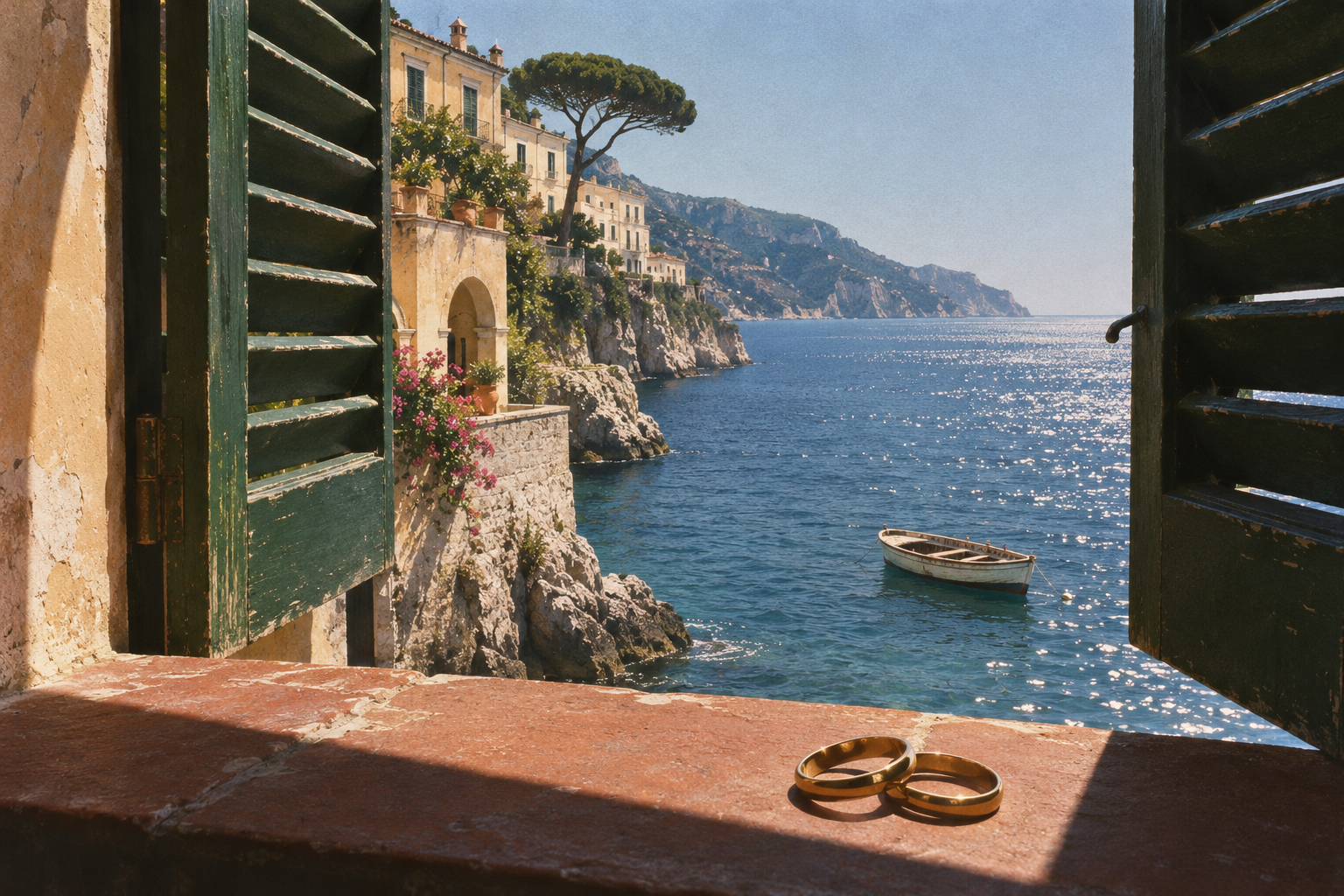
Marge comes particularly close to the truth when she finds Dickie’s rings among Tom’s possessions. The rings are an intimate kind of evidence. A stranger might identify them as valuable objects. Marge knows who wore them and how unlikely he was to part with them. She is standing in front of a man who has something the absent person ought still to have. Tom recognises the peril at once and considers killing her.
What saves Marge is her own interpretation of the discovery. If Dickie gave away things he habitually wore, perhaps he expected to have no future use for them. The possibility of suicide makes emotional sense to someone trying to understand his prolonged absence. Tom’s account of having received the rings fits inside it. Marge sees the essential physical fact quite clearly. What she lacks is the reader’s knowledge of who took the rings and of the circumstances in which Dickie parted with them.
It would be easy to call her gullible, especially after spending so much time listening to Tom belittle her. Try the scene from her side. One explanation asks her to believe that a troubled friend entrusted his possessions to somebody close to him. The other asks her to discover, in the company of an outwardly obliging host, that this man murdered somebody they both knew and has since been available to discuss how sad his absence is. Her mistake comes from bringing an ordinary understanding of human behaviour to an extraordinary man. For a few frightening moments, that ordinary understanding is also what keeps her alive.
What Happens at the End of the Novel?
Tom makes a final claim on Dickie’s future by producing a forged will that names him as beneficiary. He presents the document to Herbert as something Dickie left in his care to be opened later. This goes beyond passing himself off as a rich man. He now asks Dickie’s own father to accept that his son freely chose to make Tom rich. If Herbert agrees, Tom can enjoy the income under his own name. He will be able to buy what he wants without having to perform the dead man across a hotel counter ever again.
It is an extraordinary risk, undertaken just as Tom has found a tolerable way to live. Highsmith has earned it through an aspect of his character visible in the very first tax cheques. Money gives him pleasure, but somebody else’s signature on his importance gives him something money alone cannot supply. The will would turn a frightened guest facing dismissal into the person Dickie supposedly valued above everybody else. After writing Dickie’s letters and wearing his clothes, Tom has composed his last opinion.
As Tom travels to Greece, the discovery of belongings associated with Dickie threatens to undo him. Fingerprints could connect their supposed owner to a particular place and identity. At Piraeus, Tom sees policemen and expects the encounter towards which his imagination has been racing. They let him pass. A newspaper report then supplies the explanation for what the investigators have found. Prints on the belongings match prints from the Roman apartment occupied under Dickie’s name. Both sets are Tom’s. The match is accurate. The assumption about whose fingerprints were in the apartment gives it entirely the wrong meaning.
Nor does the investigation reach some grand solution in which all the authorities agree on Dickie’s fate. Uncertainty survives. What settles Tom’s immediate future is a more personal communication. In Athens he collects a letter from Herbert, who accepts the will and gives his blessing to Tom receiving Dickie’s estate. The imagined generosity of the son has secured the real generosity of the father. Tom can keep his name, the money and the freedom to decide where he will go next.
He directs a taxi driver to take him to the best hotel. The request is a small triumph of characterisation. Tom does not need to know the hotel’s name, inspect the rooms or establish the price. He can simply ask for the best and assume that the person providing it will recognise his right to be there. For a young man who began the book worrying about the bill for being himself, that ordinary sentence contains much of what two people have died for.
Fear has survived the acquisition. Tom can already imagine police waiting at other ports. Highsmith gives that fear its proper proportions. It may spoil an arrival, but it has scarcely diminished his delight in being rich. An ending that treated anxiety as a punishment equivalent to Dickie’s death would flatter both Tom’s conscience and the fairness of the world he inhabits. His nerves were active before Herbert bought him a drink. Now they travel with him in considerably greater comfort.
Herbert’s two acts of trust give the ending its particular sting. In New York he puts his money behind a young man because he believes Tom is Dickie’s friend. In Athens, Tom learns that Herbert is prepared to honour what he believes was his son’s final wish. Both gestures have a decency that survives the father’s considerable errors of judgement. Tom could imitate Dickie’s voice and choose Dickie’s clothes for himself. To become the man who can ask for the best hotel, he still needed somebody capable of acting in good faith.
Sources
The Talented Mr. Ripley — W. W. Norton. Publisher’s account of Tom’s background, Herbert’s commission and the novel’s position as the first of five Ripley books. W. W. Norton & Company Ltd.
The Talented Mr. Ripley — Encyclopedia.com. Detailed literary reference covering the investigation, the fingerprints, Herbert’s letter and the arrival in Greece. Encyclopedia.com
The Talented Mr. Ripley: Plot Summary — LitCharts. Additional account of the relationship in Mongibello, Marge’s discovery and the forged inheritance. LitCharts
Next Reads
The Secret History Explained: Summary, Themes and Ending — Donna Tartt puts another socially ambitious outsider close enough to a crime that the reader begins to share his uncomfortable loyalties.
Rebecca Explained: Manderley, the Second Mrs de Winter and the Ending — An absent person’s possessions shape what newcomers believe about a household, a marriage and a death.
Jane Eyre Explained: Love, Independence and the Secrets of Thornfield — For a different answer to Tom’s predicament, follow a protagonist who knows the humiliation of dependence and must decide what price she is prepared to pay for independence.
