The Witch Summary and Ending Explained: The Family Secret More Frightening Than the Ghosts
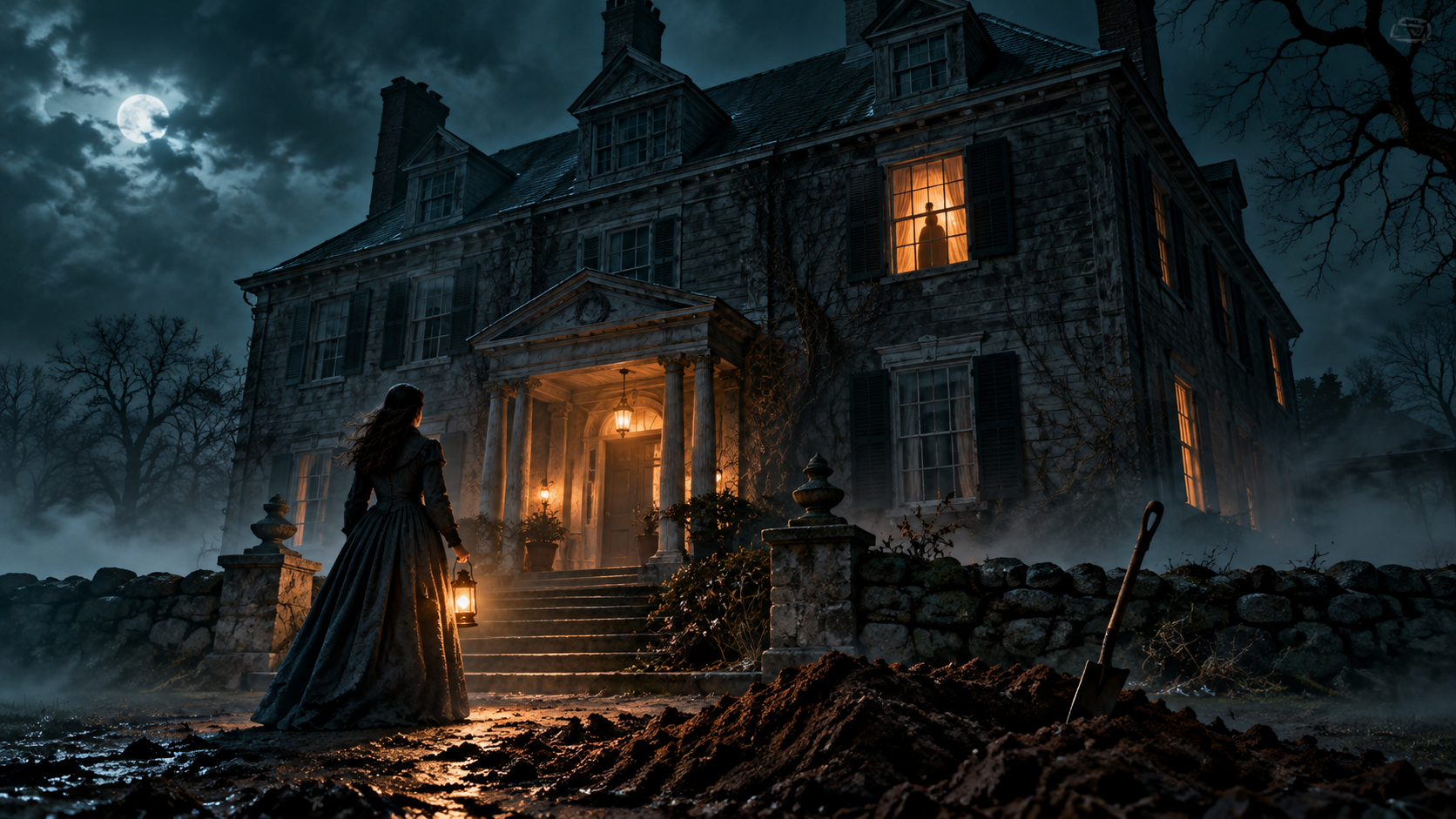
Two Timelines, Stolen Identities and a Buried Truth
The most dangerous presence in this house knows exactly what Julia is afraid to believe.
A house can frighten you without containing a ghost. It only needs someone who understands your fears, controls the evidence and knows which family story you are least willing to question.
That is the pressure beneath Freida McFadden’s The Witch. Its supernatural atmosphere invites one explanation while its human relationships keep producing another.
The Big Idea
The novel connects two forms of captivity: being accused of something you cannot disprove, and being raised inside a history you cannot independently verify. Both depend on other people having more authority over your identity than you do.
Its central question is therefore larger than whether Pemberton is haunted. It asks what happens when the person explaining the danger is also helping create it.
The Witch Summary
Julia Barlow returns to her family’s old Massachusetts estate after losing the stability of her job and home. Pemberton offers somewhere to recover, but living with her grandmother Letitia, the woman she knows as great-aunt Ethel, and caretaker Mick places her inside an increasingly unsettling domestic world.
The disturbances feel organised around the house’s past. A grandfather clock, sounds in the night and suggestions of an unseen presence encourage Julia to interpret ordinary space as hostile territory. Meanwhile, the possibility of selling the estate creates a practical conflict beneath the gothic fear: different people have different reasons to want its history left undisturbed.
The historical narrative follows Caroline Eldridge in 1692. Her marriage to Archibald appears to offer security, but her position depends on satisfying a husband and community whose expectations leave little room for her own vulnerability.
Caroline’s deception about pregnancy, the involvement of servant Molly Howe and accusations of witchcraft become part of a struggle over whose version of events will be believed. Jonas Reeve, accused of violent crimes, is similarly trapped by a public identity imposed on him.
The historical resolution reverses the accepted account. Archibald is the killer, and Molly becomes another of his victims. Jonas saves Caroline from him; Caroline and Jonas survive by taking the identities of the dead rather than preserving the names under which they were condemned.
Julia’s contemporary investigation reveals a different theft of identity. The woman presented as Ethel is Celia Caine. The real Ethel was Julia’s biological grandmother, and Letitia raised Ethel’s child as her own after Ethel’s death.
Celia and Mick have helped manufacture the frightening atmosphere to protect that concealed history. When the arrangement collapses, Celia kills Mick and threatens Julia. Letitia intervenes with a shovel, saving her granddaughter, while Henry Ziegler’s involvement helps bring the police into the situation.
The house is eventually sold for use as a museum. Julia gains a future beyond the family’s closed system, but an important distinction remains: the reader understands more of Caroline’s historical fate than Julia does.
That gap is deliberate. Discovering one lie does not mean possessing the complete truth.
Character Arcs: Who Changes, and Who Refuses To?
Julia moves from dependence towards investigation. At first, she needs the family home to be safe because she has few alternatives. Her development begins when needing reassurance stops being enough reason to accept it.
Caroline’s arc is more severe. She starts within a social order that makes her value conditional, then survives by escaping the identity that order has assigned to her. Her reinvention is morally different from Celia’s because it protects life rather than concealing predatory violence.
Letitia’s role also changes under pressure. The apparently vulnerable older woman becomes the person capable of acting when Julia’s options disappear. Protection arrives through decisive behaviour, not through a comforting explanation.
Celia, by contrast, treats other people as obstacles to the survival of her manufactured self. She does not learn from exposure; she escalates.
The Story Anchor
The strongest anchor is the resemblance between two stolen identities that mean completely different things.
Caroline and Jonas assume other names because the truth would leave them vulnerable to a corrupt account of events. Celia assumes another woman’s identity to hide wrongdoing and preserve access to a family.
The mechanism is similar. The moral purpose is not.
The Plot In One Flow
Julia returns to Pemberton needing stability, encounters disturbances that seem to confirm the house’s sinister history, and begins investigating what lies beneath them. The historical narrative reveals how Caroline and Jonas were misrepresented, while Julia’s discoveries expose an impostor hiding inside her own family.
Once secrecy can no longer be maintained through suggestion, it becomes direct violence. Julia survives because Letitia acts, outside help arrives, and the house’s future is separated from the people who used its past to control her.
If You Only Remember Three Ideas
A frightening explanation can conceal a practical motive
The atmosphere draws attention towards ghosts while the living have secrets, incentives and access. The useful question is not simply what feels plausible, but who benefits when a particular explanation becomes accepted.
Identity can protect someone—or erase someone else
Changing a name is not automatically liberation or deception. The consequences matter: whose safety improves, whose story disappears, and who pays for the new identity?
Solving a mystery does not create complete knowledge
Julia resolves the danger facing her without acquiring everything the reader knows. The ending resists the reassuring assumption that one revelation makes an entire history transparent.
The Sentence That Explains The Entire Book
The past becomes most dangerous when someone is allowed to explain it without being questioned.
Why The Ending Matters
The resolution exposes substantial human manipulation without making every strange experience mechanically simple. The remaining supernatural ambiguity preserves unease after the criminal explanation arrives.
Emotionally, Julia’s freedom matters more than proving a final theory about ghosts. She can leave the family’s interpretive prison even if the house still contains unanswered questions.
The historical ending also changes how the reader understands the old legend. Names recorded as evidence of guilt or innocence turn out to be unreliable containers for what actually happened.
Why This Book Still Matters
Although newly published, the novel addresses an enduring problem: inherited accounts often survive because challenging them threatens relationships, reputations or property.
Its relevance extends beyond gothic fiction. A family can repeat an inaccurate story until familiarity starts to feel like corroboration. The same process can occur in organisations where one influential person becomes the unofficial keeper of institutional memory.
Where The Book Is Weakest
The density of revelations can ask readers to accept a considerable amount of coordination and concealment. Those who prefer understated psychological realism may find the accumulation of twists more noticeable than the characters’ everyday complexity.
The historical thread also needs to be read as fiction. Its persecution narrative should not be mistaken for a reliable account of how actual New England witch trials were conducted.
Who Should Ignore This Book
Readers seeking restrained literary horror, rigorous historical fiction or a wholly unambiguous supernatural explanation may prefer something else. This is strongest for people who enjoy domestic suspicion, changing identities and a final reconstruction that rearranges earlier assumptions.
How This Compares To The Housemaid’s Secret
Both novels use an apparently clear account of danger to direct the protagonist towards a mistaken conclusion. However, The Housemaid’s Secret exploits Millie’s urge to rescue, while The Witch exploits Julia’s need to understand her inheritance.
Their emotional engines differ. One makes compassion vulnerable to manipulation; the other makes belonging vulnerable to a false history.
The Common Themes and Hidden Pattern
The recurring themes are credibility, inheritance, identity and control. Underneath them sits a less obvious pattern: the person with the most information is not necessarily the person telling the most truth.
That distinction explains why secrecy can survive inside intimacy. Knowing someone well may mean knowing the version of themselves they have maintained for you.
Where These Stories Quietly Disagree
Caroline’s survival complicates any simple rule that deception is always destructive. Celia’s behaviour shows how the same technique becomes abusive when it depends on another person’s erasure.
The novel therefore demands judgement rather than a slogan. Truth, safety and survival do not always align neatly.
What Most People Misunderstand—and What The Internet Gets Wrong
Reducing the story to “the haunting was fake” misses both the remaining ambiguity and the historical moral contrast. Reducing it to “never trust your family” is equally blunt.
The sharper reading concerns verification. Trust can remain valuable while specific claims, especially consequential ones, are checked.
The Taylor Tailored Framework: The Story And Evidence Test
Start by separating the explanation from the evidence supporting it. “This house is haunted” is an explanation; a repeated sound is an observation that could have several causes.
Next, ask who controls access to the evidence and who benefits from the explanation. Finally, seek confirmation that does not depend entirely on the same person repeating the same account.
This is a framework for thinking, not for confronting dangerous people alone.
The Real-Life Test
At work, the test applies when a colleague claims that a decision has always been company policy. In a family, it applies when one person insists that a dispute has only one acceptable history.
The practical shift is modest but powerful: replace “I have heard this often” with “I understand how this was established.”
How To Apply The Lesson Without Creating Another Self-Help Fantasy
Choose one consequential assumption, not your entire life. Identify what you know directly, what someone told you, and what remains uncertain.
Then take one proportionate step towards clarification. The goal is better judgement, not permanent suspicion.
Which Book Should You Read First?
Choose The Witch for a gothic setting and intertwined histories. Choose The Housemaid’s Secret for a faster domestic thriller built around rescue, impersonation and revenge.
Five Questions To Test Your Understanding
Which explanation did you accept because it was emotionally convenient?
Who controlled what Julia could see or verify?
Why are Caroline’s and Celia’s identity changes morally different?
What does Julia still not know when the immediate danger ends?
Which inherited story in your own life deserves a careful question?
The Final Lesson
The house does not become safe because every shadow receives a name. It becomes survivable when Julia stops allowing other people to decide what she is permitted to question.
Fear can make you look towards the darkness. Sometimes the more important task is to look carefully at the person holding the lamp.
