How Jesse Pinkman Survived Six Months of Torture in Breaking Bad
Jesse Pinkman Spent Nearly Six Months Chained Up, Tortured And Forced To Make Meth For The Men Who Destroyed His Life.
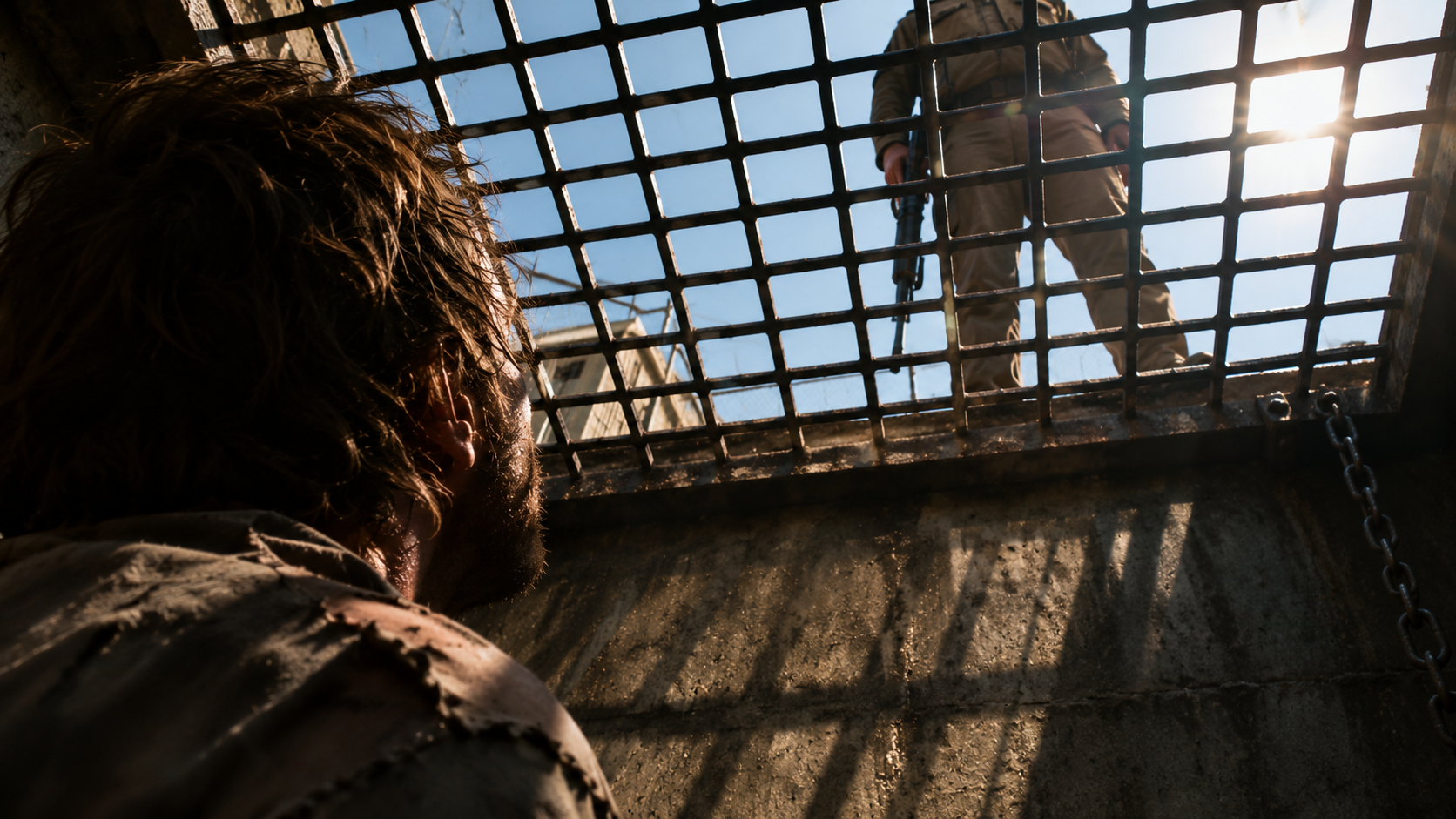
By the time Walter White returns to Jack Welker's compound in the final episode of Breaking Bad, Jesse Pinkman barely resembles the man audiences knew. His hair has grown long, his face is covered in a thick beard, and his body carries the visible consequences of prolonged captivity.
For approximately six months, Jesse has been held prisoner by a neo-Nazi gang, forced to manufacture extraordinarily pure methamphetamine while living in an underground cage.
He has been beaten, threatened, humiliated and made to watch the murder of someone he loves. His captors have turned his greatest professional skill into the instrument of his imprisonment.
Yet much of this ordeal happens off-screen.
The penultimate episode, Granite State, advances through months of Walter White's exile while Jesse remains trapped in New Mexico. The sequel film, El Camino, later reveals additional details about his captivity, including the disturbing relationship between Jesse and Todd Alquist.
Together, these stories raise a series of unsettling questions. How did Jesse survive? What did an ordinary day look like? Why didn't he overpower his captors? Could he have escaped sooner? And what would have happened if Walter White had never returned?
Major spoilers follow for Breaking Bad and El Camino.
How Long Was Jesse Pinkman Held Prisoner?
Jesse was imprisoned for roughly six months, beginning in March 2010 and ending in September 2010, according to the generally accepted chronology of Breaking Bad.
His captivity begins in the aftermath of the catastrophic desert confrontation in Ozymandias, Season 5, Episode 14.
Walter White, Hank Schrader, Steve Gomez and Jesse find themselves caught in the consequences of Walt's criminal empire.
Jack Welker's armed gang arrives at the desert location, where Hank and Gomez are killed.
Jesse, who has been cooperating with Hank to expose Walter, attempts to hide beneath a vehicle. Walt reveals his location to Jack's men.
At this moment, Jesse has effectively lost everything. His relationship with Walt has collapsed, the law enforcement officers who could have protected him are dead, and the gang responsible for the killings has captured him.
Walter initially wants Jesse killed. However, Todd Alquist persuades Jack to keep him alive, ostensibly to find out what Jesse has told the authorities.
Todd also understands something that makes Jesse exceptionally valuable: he knows how to manufacture Walter White's blue methamphetamine.
What begins as an interrogation becomes an extended period of forced labour.
The chronology matters because the audience does not experience those months alongside Jesse. We witness the beginning of his imprisonment, several important moments during it, and his eventual release.
We do not see every day, every punishment or every night he spends underground.
The six-month duration is therefore a reconstruction supported by the series' wider timeline, rather than a precisely stated number of days.
Why Did Jack Welker Keep Jesse Alive?
The gang initially had little reason to spare Jesse.
He had cooperated with the DEA, potentially exposed its members to prosecution and become a liability to their criminal operation.
Jack is prepared to kill him.
Todd, however, recognises Jesse's commercial value.
Walter White's methamphetamine has an exceptional reputation for purity. Producing anything approaching the same standard could generate enormous income.
Todd has experience working alongside Walt but cannot reliably reproduce his results.
Jesse can.
Although Walter regularly belittles his former student, Jesse has developed into a highly competent chemist within the specialised, illicit manufacturing process.
He previously demonstrated this ability in Mexico, where he successfully prepared high-purity methamphetamine in a cartel laboratory despite being treated with contempt by the resident chemist.
By the final season, Jesse is no longer simply an assistant following Walt's instructions. He understands the procedure well enough to operate without him.
This makes him extraordinarily valuable to Todd.
Todd also wants to maintain his business relationship with Lydia Rodarte-Quayle, who facilitates distribution to overseas markets. Better product quality gives him a way to impress her and strengthen their arrangement.
Jesse's imprisonment consequently serves two purposes: it preserves the gang's access to a skilled manufacturer and supports Todd's ambitions.
In Granite State, Todd reports methamphetamine purity figures exceeding 90%. Jesse later produces a batch measuring approximately 96%, demonstrating just how valuable his expertise has become.
The gang has effectively replaced Walter White with a captive specialist who receives none of the money, freedom or authority previously associated with the operation.
What Was Jesse's Underground Prison Like?
Jesse's accommodation is one of the most disturbing settings in the final season.
He is held in a confined underground enclosure at Jack's compound, covered by a heavy metal grate and frequently concealed beneath a tarpaulin.
It resembles a pit more than a conventional prison cell.
There is no proper bedroom, no meaningful privacy and no freedom to leave. The space contains only basic provisions for confinement, including bedding and a bucket.
The surrounding compound is controlled by armed men.
Even if Jesse could escape the enclosure itself, he would still need to cross the property without being detected.
The physical arrangement also makes him dependent on his captors for almost everything.
Todd can decide when Jesse receives food, whether the covering is removed, and when he is brought out to work.
One particularly revealing moment occurs when Jesse asks Todd to leave the tarpaulin off so he can look at the stars.
The request sounds insignificant until the audience considers what it means.
Jesse has been deprived of something as ordinary as looking at the night sky.
He cannot choose when to go outside, walk into another room or even see what is happening above him.
His environment has been reduced to the dimensions permitted by his captors.
How Did Jesse Cook Meth While Chained Up?
Jesse was restrained in the laboratory using a tethering arrangement that allowed him to move around the required equipment without leaving the controlled working area.
The system did not keep his hands permanently bound.
Instead, it restricted his overall movement while permitting the physical actions needed to manufacture methamphetamine.
He could handle laboratory equipment, work with the necessary materials and perform the demanding procedures that Todd could not complete to the same standard.
The arrangement is important because it shows how deliberately his captors balanced productivity against control.
Restraining his hands throughout the cooking process would have made him unable to work. Allowing unrestricted movement would have increased the risk of escape.
The gang therefore created a compromise that served its interests, not Jesse's safety.
El Camino reveals another disturbing detail: Neil Kandy, a welder connected to the gang, helped construct the restraint apparatus.
During a flashback, Neil treats Jesse's suffering as an opportunity for entertainment, participating in a cruel test involving the restraint system.
This establishes that the equipment was not merely an improvised chain.
Outside specialists had been involved in making Jesse's imprisonment more effective, and at least one of them was willing to participate in his humiliation.
The laboratory also presents an apparent contradiction.
Jesse works among industrial equipment and dangerous substances, yet remains unable to secure his freedom.
The reason is that access to equipment does not eliminate the surrounding threats.
He is isolated, physically controlled and surrounded by people who have demonstrated their willingness to murder innocent civilians.
By the later stages of his captivity, any act of resistance also carries consequences for Brock Cantillo.
His technical knowledge makes him financially useful, but it does not protect him from abuse.
What Happened During A Typical Day Of Captivity?
Breaking Bad never provides a complete daily schedule for Jesse's imprisonment.
There is no confirmed timetable showing exactly when he woke, how many hours he worked or how frequently he was allowed to wash.
Nevertheless, the scenes that are shown establish the basic structure of his existence.
Jesse is confined in his underground cage when he is not required for work. Todd or another gang member retrieves him when the operation needs him.
He is then taken to the laboratory, placed under restraint and made to manufacture methamphetamine.
Once the required work is complete, he can be returned to confinement.
There is no evidence of payment, agreed working hours or any genuine opportunity to refuse.
His daily routine is determined by the gang's production requirements.
Food is also used as part of Todd's control.
In Granite State, Todd gives Jesse ice cream as a reward after a particularly successful batch.
The scene appears almost absurd because Todd behaves as though he is rewarding an obedient employee rather than feeding a captive who has been denied ordinary human freedom.
That contrast is deliberate.
Todd presents small concessions as acts of kindness while refusing to acknowledge the fundamental cruelty of the arrangement.
For Jesse, even a minor privilege depends on satisfying the people who control him.
We cannot know how many hours he spent in the laboratory each day. Nor can we reliably reconstruct his sleeping arrangements beyond what the episodes show.
But the overall pattern is clear: confinement, compulsory work, surveillance and dependence.
Why Didn't Jesse Simply Attack Todd?
This is one of the most frequently raised questions about Jesse's captivity, particularly after the release of El Camino.
Todd sometimes appears physically vulnerable around Jesse.
He is not always surrounded by armed guards, and he occasionally interacts with his prisoner in an almost casual manner.
Why doesn't Jesse seize an opportunity to overpower him?
The strongest answer comes from the film itself.
During one flashback, Todd takes Jesse outside the compound to help dispose of the body of his murdered housekeeper, Sonia.
At one point, Jesse obtains access to Todd's gun.
For a brief moment, the balance of immediate physical power changes.
Todd is no longer simply the armed captor controlling an unarmed prisoner.
Yet Jesse does not shoot him.
Instead, Todd reminds Jesse of the consequences his actions could have for Brock.
Jesse eventually breaks down and relinquishes the weapon.
This scene demonstrates that the barrier to resistance is not simply physical weakness.
Jesse is being controlled through threats against another person.
Even if he could kill Todd, he cannot know whether Jack's remaining associates would retaliate against Brock.
Nor can he guarantee that he could escape the wider criminal organisation afterwards.
The scene is also revealing because Todd barely appears frightened.
His confidence suggests that he understands the strength of the psychological control he has established.
For Jesse, a seemingly straightforward opportunity to escape has become a decision involving the life of an innocent child.
Jesse's Failed Escape Changed Everything
In Granite State, Jesse manages to escape from his underground cage.
He uses a paperclip to free himself from his restraints, creates enough height to reach the overhead grating and eventually climbs out.
It is an extraordinary effort given his confinement and physical condition.
For a short period, he appears to have achieved the impossible.
He runs across the compound and reaches the perimeter fence.
Then the gang catches him.
Jesse has overlooked the surveillance cameras monitoring the property.
His escape attempt ends before he can leave the grounds.
At this point, Jesse openly defies Jack's men. He makes it clear that he will no longer cook for them, even if they kill him.
It is a significant moment because it demonstrates that Jesse has not surrendered every part of his will.
He is prepared to challenge his captors despite knowing their capacity for violence.
Jack's gang, however, responds in a manner calculated to destroy any possibility of future resistance.
Rather than killing Jesse, they take him to Andrea Cantillo's home.
Todd approaches Andrea while Jesse is restrained inside a nearby vehicle.
Andrea believes Todd may have information about Jesse.
Todd then shoots her.
Jesse is forced to watch.
Jack subsequently threatens Brock, making it clear that the child could be their next victim if Jesse refuses to cooperate.
The murder changes the nature of Jesse's imprisonment.
Before this point, Jesse knows the gang is dangerous and capable of killing him.
Afterwards, he has direct proof that they will murder someone he loves simply to control his behaviour.
The threat is no longer hypothetical.
It has already been demonstrated.
Why Andrea's Murder Was So Devastating
Andrea represents something different from almost every other relationship in Jesse's criminal life.
His relationship with her and his affection for Brock suggest the possibility of a more stable existence outside the methamphetamine business.
Although the relationship is complicated by Jesse's criminal history, he genuinely cares about them.
By murdering Andrea, Todd destroys another person Jesse has tried to protect.
The emotional impact is particularly severe because Jesse has already experienced the death of Jane Margolis, whose loss contributes heavily to his guilt and despair.
He has also witnessed the murder of Drew Sharp, the young boy killed by Todd during the train robbery.
Jesse's involvement in the drug trade repeatedly exposes him to violence against people who have done little or nothing to deserve it.
Andrea's death is different because it is explicitly used to punish him.
Todd does not murder her as part of a transaction, during a confrontation or to defend himself.
He kills her to demonstrate control over Jesse.
The gang also makes Jesse witness the killing, ensuring that the punishment is psychological as well as personal.
From that point, every decision Jesse makes is shaped by the knowledge that Brock remains vulnerable.
He is not simply trying to survive.
He is attempting to avoid becoming the reason another innocent person is killed.
Did Jesse Want To Die During His Captivity?
The series provides evidence of extreme despair but does not establish that Jesse spent his imprisonment actively planning suicide.
During his failed escape, Jesse challenges the gang to kill him rather than continue forcing him to cook.
That is evidence of desperation and a refusal to submit, but it does not necessarily mean he wants to end his own life.
There is an important distinction between wishing suffering would stop, accepting the possibility of death and actively seeking suicide.
Jesse's behaviour demonstrates conflicting pressures.
He attempts to escape, indicating that freedom still matters to him.
He also experiences such severe distress that he openly confronts men he knows could kill him.
After Andrea's murder, Brock's safety becomes a powerful reason to avoid further resistance.
His later compliance can be understood as an attempt to protect Brock rather than evidence that he has accepted his circumstances.
The show leaves much of Jesse's private mental experience unexplored.
We do not hear an extended account of his thoughts during the months he is confined underground.
It would therefore be misleading to claim certainty about whether he contemplated suicide.
What is clear is that his captors subjected him to circumstances capable of producing profound fear, helplessness and psychological trauma.
His eventual survival should not be mistaken for evidence that the abuse was manageable.
Why Was Todd So Disturbingly Friendly To Jesse?
Todd Alquist's treatment of Jesse is among the most unsettling aspects of the final season and El Camino.
He repeatedly behaves as though the two men share an ordinary working relationship.
He makes small talk, offers food and occasionally appears eager for Jesse's approval.
Yet Todd is also directly responsible for acts of extreme cruelty.
He murders Andrea without hesitation.
He participates in Jesse's enslavement.
In El Camino, he casually discusses killing his housekeeper after she discovers his hidden money.
This combination of politeness and violence makes Todd especially disturbing.
He appears capable of treating murder as a practical inconvenience rather than a moral catastrophe.
His conversations with Jesse frequently ignore the reality that Jesse is being held against his will.
When Todd takes Jesse to his apartment, he behaves almost as though he is inviting a colleague to help with an errand.
In reality, Jesse has been coerced into accompanying the man who murdered someone he loved.
Todd's friendliness is not evidence of compassion.
It exists alongside his willingness to control, terrorise and exploit Jesse.
One interpretation is that Todd wants to imagine himself as a reasonable person despite his actions.
Another is that he simply does not appreciate the emotional reality of his victim's suffering.
The series does not provide a clinical diagnosis, and neither interpretation can fully establish his internal motives.
What it does show is his repeated indifference to Jesse's autonomy and distress.
What El Camino Revealed About The Months We Never Saw
When Breaking Bad ended in September 2013, audiences knew Jesse had survived captivity, but many details remained unanswered.
El Camino: A Breaking Bad Movie, released in October 2019, returns to that period through flashbacks.
These scenes expand the story in several important ways.
First, they show that Jesse was sometimes taken outside the compound.
His imprisonment was not limited to the laboratory and underground cage.
However, his occasional movement beyond the property did not mean he was free.
Todd maintained control through intimidation and the threat against Brock.
Second, the film establishes that Jesse's forced labour involved people beyond Jack's immediate gang.
Neil Kandy's involvement in constructing his restraints shows how the captivity drew upon the skills of outsiders.
Third, the film reveals the extent of Todd's casual cruelty.
The episode involving Sonia's body is particularly important because it shows Todd exploiting Jesse for an entirely separate purpose.
Jesse is not only forced to manufacture drugs.
He is also compelled to participate in concealing evidence of another killing.
Finally, El Camino shows how Jesse's experiences continue to affect him after his escape.
He is physically free, but memories of his imprisonment remain powerful.
He has to evade the authorities, find money, confront people connected with his captivity and decide whether he can build a new life.
The film therefore changes how the audience understands the final moments of Breaking Bad.
Escaping the compound was the end of Jesse's imprisonment.
It was not the end of his ordeal.
What Would Have Happened If Walt Never Returned?
Without Walter White's intervention, Jesse's prospects were bleak.
Jack's gang had a profitable criminal operation, access to a highly skilled methamphetamine manufacturer and an established method of controlling him.
They also had very little incentive to release him.
Jesse knew too much about the organisation, including its involvement in serious crimes. Releasing him would create a substantial risk of exposure.
His captivity could therefore have continued for considerably longer.
The precise outcome would have depended on changes within the gang.
If production remained profitable, keeping Jesse alive would have made financial sense.
If the business collapsed or the organisation faced pressure from law enforcement, his value might have changed.
Jack had already demonstrated that he was willing to kill people who threatened his interests.
It is therefore difficult to imagine a peaceful arrangement in which the gang simply thanked Jesse for his work and allowed him to leave.
There is one particularly disturbing possibility.
As Todd became more experienced in the laboratory, Jesse's specialist knowledge might have become less indispensable.
The better Todd became at reproducing the manufacturing process, the weaker Jesse's bargaining position could have become.
However, Breaking Bad does not establish that Todd ever became capable of matching Jesse's results independently.
It would be speculation to claim that Jesse was certain to be executed once his captors no longer needed him.
What the story establishes is that he possessed no enforceable agreement, no protection and no reliable means of negotiating his release.
His future depended on the decisions of violent criminals.
How Walter White Finally Freed Jesse
The climax of Breaking Bad, in Felina, brings Walt back to New Mexico for one final confrontation.
He arrives at Jack's compound carrying a carefully concealed weapon system inside his car.
Walt initially appears to be confronting the gang over unfinished business involving his stolen money and criminal legacy.
However, when he learns that Jesse is still alive and has been cooking meth for the organisation, the situation changes.
Jesse is brought into the clubhouse in restraints.
Walt sees the condition of his former partner.
He then tackles Jesse to the floor as his automated gun fires into the building.
Most of Jack's gang is killed or incapacitated.
Todd survives the initial shooting, but Jesse attacks him and strangles him using his own restraints.
It is the first time in months that Jesse is able to confront one of his principal captors without being restrained by the threat of immediate retaliation from the surrounding gang.
Walt subsequently offers Jesse a gun and invites him to shoot him.
Jesse refuses to become the instrument of Walt's final wish.
Instead, he leaves Walt behind.
Jesse drives away in Todd's Chevrolet El Camino, overwhelmed by emotion.
His screams and tears are among the most memorable moments in the entire series.
The scene is powerful because Jesse's freedom has been achieved after months in which practically every aspect of his existence was controlled by other people.
For the first time, he can choose where to go.
Why Jesse's Freedom Did Not Immediately End His Suffering
El Camino explores the immediate consequences of his escape.
Jesse is no longer physically imprisoned, but he remains in danger.
The authorities are searching for him. He has limited resources, lacks a secure identity and must navigate a world in which his previous criminal connections make ordinary life difficult.
His traumatic experiences also affect his behaviour.
He is alert to potential threats, struggles with reminders of his captivity and remains emotionally affected by the people he has lost.
Yet the film also demonstrates his resourcefulness.
With help from Skinny Pete and Badger, Jesse begins the process of escaping Albuquerque.
He later secures the money needed to arrange a new identity and relocation through Ed Galbraith.
His destination is Alaska.
The choice has significance because Alaska offers the possibility of distance, anonymity and a life separated from the criminal world that has consumed his adulthood.
The film ends with Jesse driving through the Alaskan landscape under a new identity.
His future is deliberately left open.
There is no suggestion that six months of suffering can simply be erased.
Nor is there a guarantee that he will live without guilt, grief or traumatic memories.
What he finally possesses is the possibility of making decisions for himself.
Why Jesse's Captivity Is One Of Breaking Bad's Cruellest Storylines
The horror of Jesse's imprisonment comes partly from the contrast between his earlier life and what he becomes.
At the beginning of Breaking Bad, Jesse is immature, impulsive and frequently reckless.
He makes serious mistakes and contributes to the suffering of other people.
But he also demonstrates empathy, particularly towards children and people who have been exploited or abandoned.
As the series progresses, his ability to recognise the human consequences of the drug trade becomes increasingly important.
Walter White moves further towards the pursuit of power and control.
Jesse, by contrast, becomes increasingly troubled by the violence surrounding their business.
His captivity is the extreme endpoint of that contrast.
He once helped manufacture methamphetamine in pursuit of money, independence and approval.
By the final season, he is manufacturing the same substance without money, independence or dignity.
The expertise that once made him valuable as a business partner now makes him valuable as a prisoner.
There is also a bitter irony in Walter White's role.
Walt spent years treating Jesse as an inferior partner who could be manipulated, insulted or replaced.
Yet Jesse eventually becomes skilled enough to reproduce the product that established Walt's criminal reputation.
That accomplishment does not bring him recognition.
It helps condemn him to months of forced labour.
The final episodes also refuse to make Jesse's suffering purely abstract.
His captivity has physical details: the underground cage, the covered grate, the restraints in the laboratory and the small reward of ice cream.
Each detail demonstrates a different way in which his captors control his life.
And through Todd, the story explores a particularly disturbing form of cruelty: violence committed by someone who behaves as though nothing unusual is happening.
Jesse's eventual escape is therefore more than the defeat of Jack's gang.
It is the moment when a character who has been manipulated, exploited and controlled throughout much of the series finally acquires the possibility of choosing his own future.
Breaking Bad never shows every hour of Jesse Pinkman's six months in captivity. It does not need to.
The moments it chooses to reveal establish the essential reality of his imprisonment: he was kept alive because he was useful, punished when he resisted and threatened through the people he loved.
El Camino gives him something the original finale could only begin to offer.
Not a guaranteed happy ending, but a life that might finally belong to him.
Sources
AMC — Breaking Bad Movie Release Date Revealed — Confirms Jesse's months of captivity, forced meth production and escape following Walter White's return.
Netflix — El Camino: A Breaking Bad Movie — Official film synopsis establishing Jesse's post-captivity journey and Vince Gilligan's continuation of the story.
TV Guide — Why El Camino Spent So Much Time Exploring Jesse's Captivity — Examination of the sequel's flashbacks, Todd's treatment of Jesse and the narrative importance of his imprisonment.
