Nine Love Stories, Five Weeks, and One Arrivals Gate at Heathrow
Love Actually is the Christmas film Britain argues about most, and the reason is built into its structure. Richard Curtis, making his debut as a director after writing Four Weddings and a Funeral and Notting Hill, crammed roughly nine love stories into one film, counted down the five weeks before Christmas, and then tied everything together at the arrivals gate at Heathrow. Some of those stories end in a kiss, some end in a proposal, one ends in quiet heartbreak, and at least one ends in a hug between two middle-aged men. If you have ever lost track of who is related to whom, which couple actually ends up together, or what the ending is trying to say, this guide takes every storyline in turn.
Spoiler warning: the following summary discusses the plot, major twists and ending.
What Is Love Actually About?
Love Actually was written and directed by Richard Curtis and released in the United States on 14 November 2003 and in the UK a week later, on 21 November. It opens with a voice-over: whenever the narrator gets gloomy about the state of the world, he thinks of the arrivals gate at Heathrow Airport, where families, friends and lovers greet one another. Love, the narrator says, is actually all around.
From there the film follows a loose web of Londoners (plus a few people abroad) over the five weeks before Christmas, with on-screen captions counting down the weeks. The characters are linked through work, family and friendship. Karen is the sister of the Prime Minister and the wife of Harry, whose design agency employs Sarah and Karl. Daniel is Karen's close friend. Jamie, Juliet, Peter, Mark and Sarah all attend the same wedding. Those links matter, because the film's big set pieces, a wedding, an office party and a school Christmas concert, are the places where the stories collide.
How many storylines there are depends on how you count. Wikipedia's plot summary splits the film into nine strands; Entertainment Weekly and IndieWire have both described it as ten interlocking stories, usually because they treat the film-set stand-ins or the Billy Mack thread differently. Curtis has said he began with far more ideas than survived: two of the strands he filmed were cut altogether, including a storyline about a headmistress and her partner, played by Anne Reid and Frances de la Tour, which he later said he regretted losing.
Billy Mack and Joe: The Christmas Number One
The film's comic spine belongs to Billy Mack (Bill Nighy), an ageing rock and roll star who records a festive cover of the Troggs' "Love Is All Around", retitled "Christmas Is All Around". Billy knows the record is terrible and says so, cheerfully, on radio and television. That honesty is the joke, and it is also his promotional strategy. His long-suffering manager Joe (Gregor Fisher) winces through every interview.
The record becomes the Christmas number one. Billy is invited to a victory party hosted by Elton John, but he turns up instead at Joe's flat and admits that the person he loves, and has always taken for granted, is Joe. The two spend Christmas together. It is the only storyline in the film that resolves without romance, and many viewers argue it is the most honest one.
Juliet, Peter and Mark: The Cue Cards
Juliet (Keira Knightley) marries Peter (Chiwetel Ejiofor), and Peter's best friend Mark (Andrew Lincoln) films the wedding. Juliet believes Mark dislikes her because he is always cold and distant. When she visits his flat to ask for the wedding video, she discovers that almost every shot is a close-up of her face. The coldness, Mark admits, has been self-preservation: he is in love with his best friend's wife.
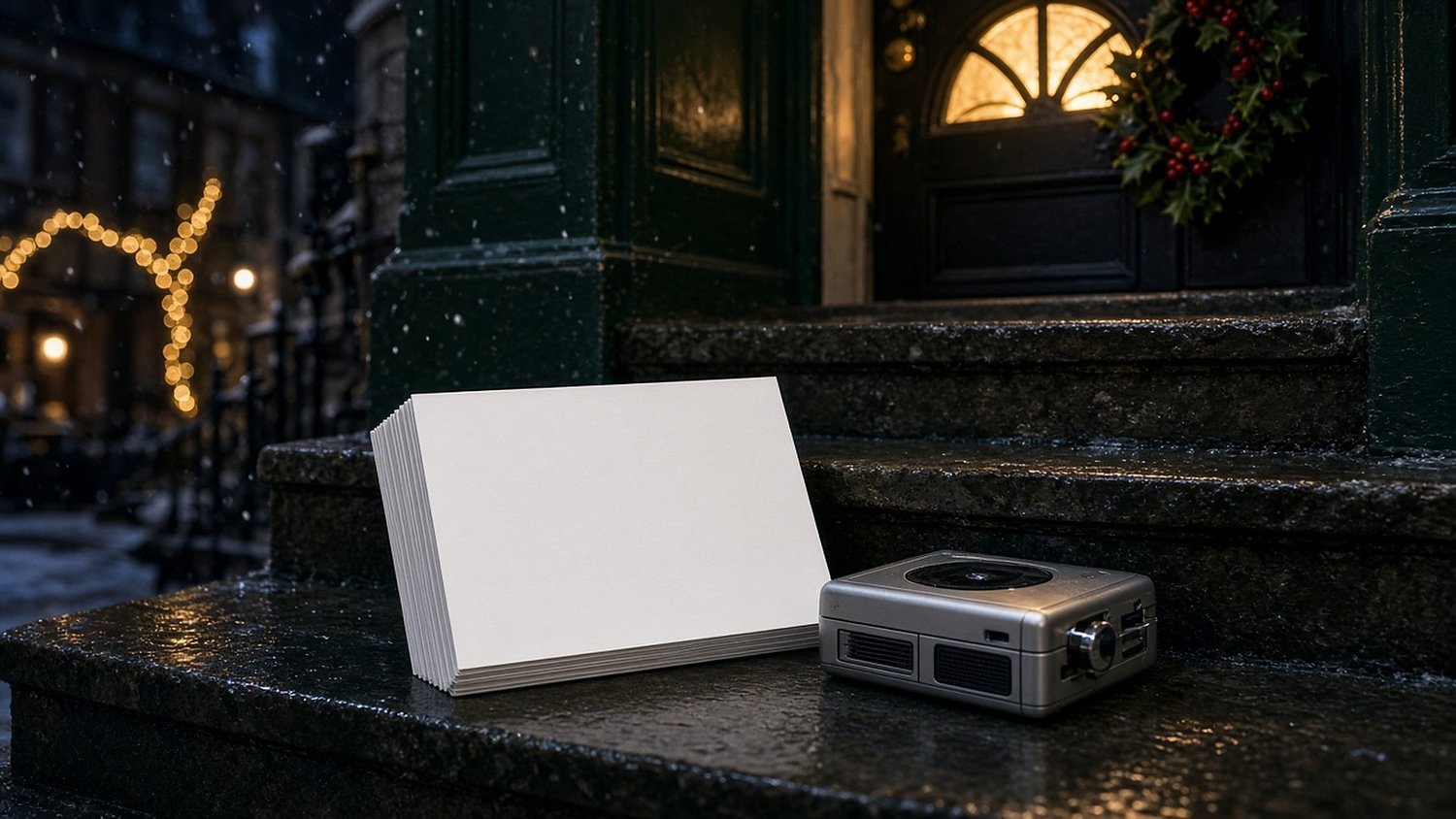
On Christmas Eve, Mark rings Juliet's doorbell with a portable stereo playing carols and a stack of large cue cards. Peter is watching television inside. Card by card, Mark tells Juliet that he loves her and expects nothing, and that "to me, you are perfect". Juliet follows him down the street and gives him a quick kiss. Mark walks away and says "Enough", meaning that he has said what he needed to say and can now move on.
The cue cards scene is the film's most quoted and most disputed moment. To fans it is a gentle, selfless confession; to critics it is a man declaring love to a newly married woman on her own doorstep. Either way, the story ends with the marriage intact and Mark choosing friendship.
Jamie and Aurélia: Love Without a Shared Language
Jamie (Colin Firth) is a writer who leaves Juliet's wedding early to check on his girlfriend, who claimed to be too ill to come, and finds her in bed with his brother. Heartbroken, he retreats to his cottage in France to write. There he meets Aurélia (Lúcia Moniz), the Portuguese woman who keeps house for him. She speaks no English and he speaks no Portuguese, yet over a series of quiet scenes they fall for each other, each saying in their own language exactly what the other cannot understand.
Back in London, Jamie realises he is in love and starts learning Portuguese. At Christmas he flies back to France, collects Aurélia's father and sister, and walks through town to the restaurant where she works, gathering a growing crowd along the way. In halting, grammatically shaky Portuguese he proposes. Aurélia replies in English, which she has been learning "just in cases", and says yes. It is the film's most straightforwardly romantic ending, and the crowd applauds accordingly.
Harry, Karen and Mia: The Necklace and the Joni Mitchell CD
Harry (Alan Rickman) runs a design agency and is married to Karen (Emma Thompson), who looks after their two children. His new secretary, Mia (Heike Makatsch), flirts with him openly, dances closely with him at the office Christmas party and asks him for a Christmas present.
Harry buys an expensive gold heart necklace while out shopping with Karen, in a scene played for comedy as a jewellery assistant (Rowan Atkinson) takes an excruciatingly long time to gift-wrap it. Karen later finds the necklace in Harry's coat pocket and assumes it is for her. On Christmas Eve she opens a box of a similar shape and finds a Joni Mitchell CD instead. She goes upstairs, plays "Both Sides Now" and cries alone in the bedroom, then straightens herself up and goes back down to her family.
Later she confronts Harry, asking what he would do in her position. She tells him he has made a fool of her and of the life they built. Harry admits he has been a fool. Nothing more is resolved on screen. In the epilogue, Karen greets Harry at Heathrow with a hug that is warm but visibly strained. Script editor Emma Freud, Curtis's partner, later said on social media that the couple stayed together, but that the marriage was not as happy as before, as reported by the Radio Times. It is the storyline most people now say is the best in the film, largely on the strength of Thompson's performance.
David and Natalie: The Prime Minister and the Tea Lady
Karen's brother David (Hugh Grant) is the newly elected Prime Minister, and he is single. At 10 Downing Street he is clearly smitten with Natalie (Martine McCutcheon), a junior member of the household staff who brings tea and biscuits to his meetings.
During a visit by the US president (Billy Bob Thornton), David walks into a room to find the president making a pass at Natalie. At the joint press conference that follows, David makes a speech asserting Britain's independence from America, a scene that delighted British audiences in 2003. Unsettled by his feelings, he has Natalie moved to other duties.
On Christmas Eve he finds a Christmas card from Natalie in his red box, saying that she is his. He goes door to door down her street to find her, then offers to drive her family to her siblings' school Christmas concert, the same concert attended by Karen, Daniel and Sam. Hiding backstage, David and Natalie finally kiss, just as the curtain rises and the whole audience sees them. The Prime Minister's romance becomes public, and in the epilogue Natalie greets him at Heathrow in front of the press.
Daniel and Sam: The Drummer at the Airport
Daniel (Liam Neeson) is Karen's friend and has recently lost his wife. He is left to care for his stepson, Sam (Thomas Sangster), who withdraws into his room. Daniel assumes the boy is grieving. In fact Sam is in love with Joanna (Olivia Olson), an American classmate who is the star of the school concert.
Daniel encourages him, and the pair bond as Sam learns the drums so he can accompany Joanna's performance of "All I Want for Christmas Is You". Sam plays, but Joanna does not seem to notice. When Daniel learns she is flying home to America that night, they race to Heathrow, and Sam slips past airport security to catch her before she boards. She knows his name, and before leaving she turns back and kisses him on the cheek.
Daniel, meanwhile, has joked throughout that he would only date someone as beautiful as Claudia Schiffer. At the school concert he meets Carol, the mother of one of Sam's classmates, played by Claudia Schiffer herself. By the epilogue Daniel and Carol are together at the airport, and Sam greets Joanna on her return.
Sarah, Karl and Michael: The Story Without a Happy Ending
Sarah (Laura Linney), an American who works at Harry's agency, has been quietly in love with her colleague Karl (Rodrigo Santoro) for a long time. Harry gently tells her to do something about it. At the office party Karl finally asks her to dance, drives her home, and the two start kissing in her flat. Then her phone rings. It is her brother Michael, who lives in a psychiatric hospital and calls her constantly. Sarah answers every time, and the moment is lost.
On Christmas Eve, Sarah and Karl are both working late. He wishes her a merry Christmas and leaves. Sarah, in tears, rings Michael and then visits him at the hospital with a Christmas present. Her story ends with family loyalty winning over romance, and it is one reason the film is sadder than its reputation suggests.
Colin in America, and John and Judy on the Film Set
Two lighter strands complete the picture. Colin Frissell (Kris Marshall) is a young man from Basildon who has no luck with British women and decides that his accent will make him irresistible in America. His friend Tony (Abdul Salis) thinks he is mad. Colin flies to Milwaukee, Wisconsin, walks into the first bar he can find, and is immediately charmed by Stacey, Jeannie and Carol-Anne, who invite him to stay at their home and introduce him to their flatmate Harriet. It is a sex-comedy fantasy, played as one.
John (Martin Freeman) and Judy (Joanna Page) are professional body doubles for a film's sex scenes. They are entirely at ease naked on set and painfully shy off it. Over several awkward conversations, John works up the courage to ask Judy out. By the end of the film they are engaged and heading off on honeymoon.
The Ending Explained: Why Everything Ends at Heathrow
The final scene takes place one month after Christmas at the Heathrow arrivals gate described in the opening voice-over. The film checks in with almost every character. Billy Mack is enjoying a career revival. Juliet, Peter and Mark greet Jamie and Aurélia, now engaged. Karen greets Harry, without much warmth. Sam welcomes Joanna back from America, with Daniel and Carol beside him. John and Judy set off on their honeymoon. Colin returns from Wisconsin with Harriet and her sister. Natalie greets David in front of photographers. Then the screen splits into a mosaic of real-looking airport reunions that forms a heart, set to the Beach Boys' "God Only Knows".
The ending is the film's thesis. The opening voice-over promises that love is all around if you look for it, and the airport finale shows love in every shape the film has explored: romantic, parental, platonic, damaged and hopeful. The point is not that every story ends happily, because Karen's and Sarah's do not. It is that love, actually, is the thing people come back to. The same airport where Sam ran past security to say goodbye becomes the place where everyone says hello.
Seen that way, the strongest storylines are often the ones without a kiss: Billy and Joe, Daniel and Sam, Sarah and Michael, Karen holding her family together. That balance is why viewers who find the romantic strands dated still return to the film every December.
Has Love Actually Aged Well?
Two decades on, Love Actually has picked up a sharp critical reassessment. Common complaints include the power imbalances in several stories, the way some of the women are written, and the lack of diversity in a film set in modern London. Curtis himself has acknowledged some of this. In an ABC television special in November 2022, reported by Entertainment Weekly, he said that "the lack of diversity makes me feel uncomfortable and a bit stupid", and he noted that there are "sort of three plots that have sort of bosses and people who work for them".
Critics have always been split. On Rotten Tomatoes the film sits at 65 per cent from more than 230 reviews, a middling score for something so widely loved. Audiences have been kinder. The film made about $252.6 million worldwide on a budget of roughly $40 to $45 million, including $62.7 million in the UK, and it has become one of Britain's most-watched Christmas films. In the Taylor Tailored ranking of the best Christmas films ever, it makes the top 15 as Britain's favourite, flaws and all, while Die Hard, starring Alan Rickman as a very different kind of villain, sits higher.
There are also differences between versions. The UK and US releases use some different songs on the soundtrack: Sugababes' "Too Lost in You" in the UK cut, for example, where the US version uses Kelly Clarkson. Some scenes were filmed at real London locations, including Grosvenor Chapel near Hyde Park, Somerset House, Trafalgar Square and Elliott School in Putney, while the Downing Street interiors were built at Shepperton Studios.
Is There a Love Actually Sequel?
There is no full sequel, but there is a short one. Red Nose Day Actually, a short follow-up made for Comic Relief, aired on BBC One on 24 March 2017. Set 13 years after the original, it revisits a dozen characters: Mark turns up on Juliet's doorstep with a fresh set of cue cards and introduces his wife, played by Kate Moss; David is Prime Minister again and married to Natalie; Billy Mack is promoting a charity cover of ZZ Top's "Gimme All Your Lovin'" and reveals that Joe has died; Jamie and Aurélia have three children and a fourth on the way; and Joanna asks Daniel for Sam's hand in marriage. Emma Thompson did not return, following Alan Rickman's death in 2016. A slightly different American version aired on NBC on 25 May 2017, adding a scene in which Laura Linney's Sarah finally gets a happy ending with a husband played by Patrick Dempsey.
Curtis has not announced any further sequel, and the short is best treated as a charity sketch rather than a canonical continuation.
Where to Watch Love Actually This Christmas
Love Actually returns to UK cinemas this December as part of Cineworld's Christmas Film Season, which runs from 2 to 15 December 2026 with tickets from £5.99 per film online. The line-up also includes The Nightmare Before Christmas and The Holiday. Streaming availability changes every year, so check your usual services or a streaming guide before you settle in.
If you want a tighter, warmer festive film after this one, Elf and Home Alone both reward a rewatch, and both have aged better.
The Short Answer
Love Actually follows about nine linked love stories over the five weeks before Christmas and ends a month later at Heathrow. Jamie marries Aurélia, David and Natalie go public, Sam gets his kiss on the cheek, Billy chooses Joe, John and Judy marry, and Colin comes home with Harriet. Mark lets Juliet go, Sarah chooses her brother over Karl, and Karen and Harry stay together, damaged but intact. Whatever you think of the cue cards, the ending's argument is simple: love comes in more forms than romance, and it is what people come home to.
Sources
- Love Actually – Wikipedia — Release dates, cast, plot, production history, cut storylines, locations, soundtrack differences, box office and reception.
- Red Nose Day Actually – Wikipedia — Broadcast dates (BBC One, 24 March 2017; NBC, 25 May 2017) and what happens to the characters.
- Love Actually director says he feels 'a bit stupid' about movie's lack of diversity – Entertainment Weekly — Richard Curtis's November 2022 comments.
- What happened to Emma Thompson and Alan Rickman at the end of Love Actually? – Radio Times — Emma Freud on Harry and Karen's marriage after the film.
- Christmas Film Season – Cineworld — Dates (2–15 December 2026), ticket price and line-up.
