More Than 70 Strip Searches, One Voice on the Phone and a Jury That Said Not Guilty
Yes, Compliance is a true story, and the real one is in some ways harder to watch than the film. Craig Zobel's 2012 thriller, which Netflix added in the US on 26 November 2026, is closely based on what happened at a McDonald's in Mount Washington, Kentucky, on 9 April 2004. A man who said he was a police officer phoned the restaurant, accused an 18-year-old employee of theft and talked an assistant manager into holding her in a back office for more than three hours. Over the phone he directed a strip search, then the abuse that followed. It was not a one-off. Investigators later linked the pattern to around 70 strip searches carried out at restaurants and shops across the United States over roughly a decade. A former prison guard from Florida was arrested and tried, and a jury acquitted him of every charge.
This guide explains what really happened that evening, how detectives traced the call, what the courts decided and where the film changes the record. It describes sexual abuse in non-graphic terms. Spoiler warning: it also discusses how the film ends.
The Film in Brief
Compliance was written and directed by Craig Zobel and premiered at the Sundance Film Festival on 21 January 2012. Magnolia Pictures released it in the US that August, and Soda Pictures released it in the UK and Ireland on 22 March 2013, where it carried a 15 certificate. It runs about 90 minutes and takes place almost entirely inside one fast-food restaurant over a single shift.
Ann Dowd plays Sandra, the manager of a branch of the fictional ChickWich chicken chain, during a busy shift. Dreama Walker plays Becky, the young counter worker accused of stealing money from a customer's purse. Pat Healy plays the caller who introduces himself as "Officer Daniels", and Bill Camp plays Van, Sandra's fiancé. Dowd's performance won the National Board of Review award for best supporting actress, and critics from Roger Ebert to Sight and Sound's Hannah McGill reviewed the film as a study of obedience rather than a crime thriller.
The names are invented and the restaurant is fictional, but the structure of the story follows the Mount Washington case step by step. Many of the film's most disturbing moments match details later documented in depositions, police records and court reporting on the real case.
What Happened in Mount Washington on 9 April 2004
The Call
The call came in to the McDonald's on the afternoon of Friday 9 April 2004. The assistant manager on duty, Donna Summers, later said the man identified himself as a police officer, "Officer Scott". He said a customer had reported that a female employee had stolen her purse, and he gave a vague description of a slight young woman with dark hair. Summers believed he meant an 18-year-old who was working that shift.
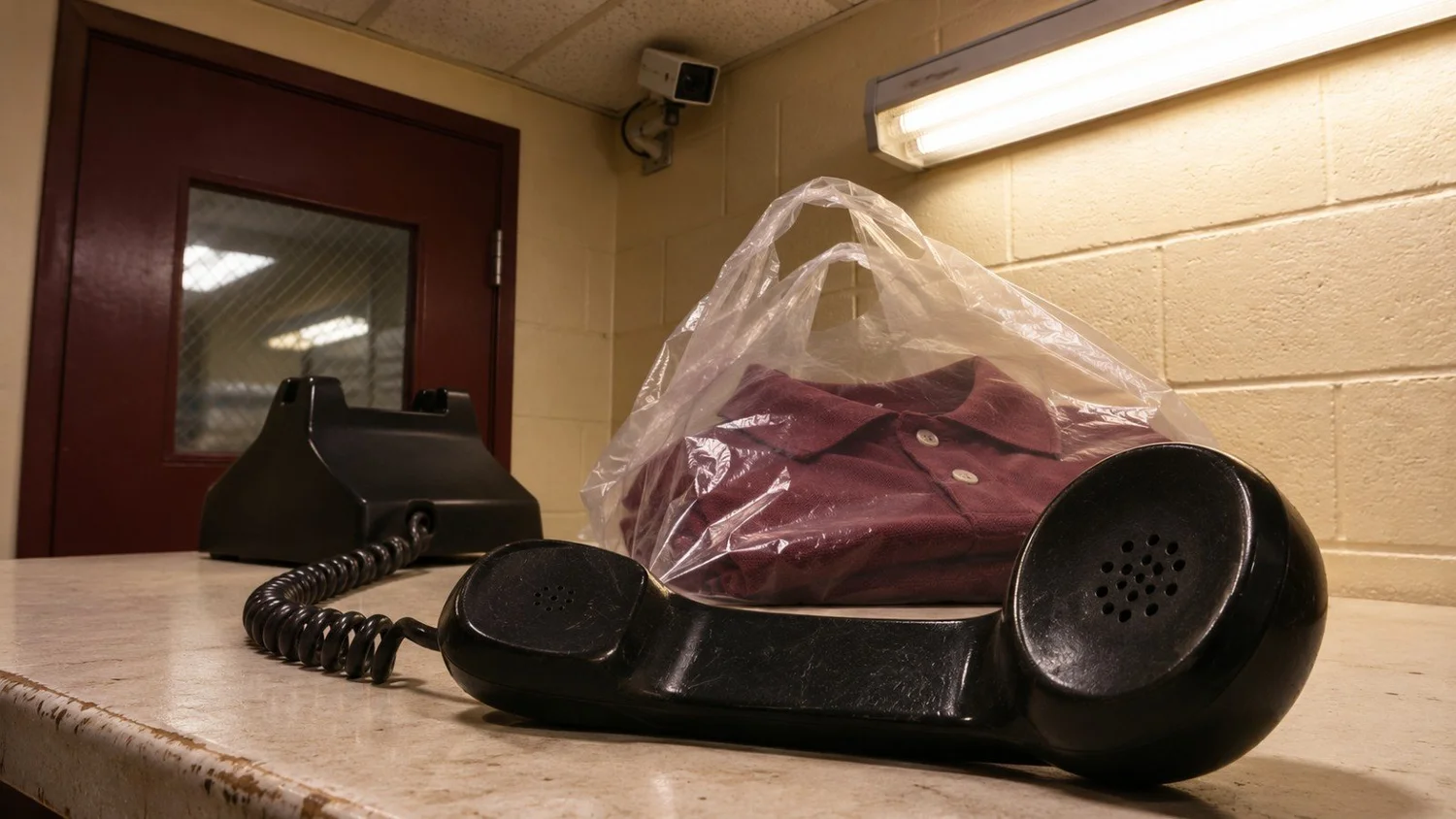
The caller said no officers were free to come to the restaurant for such a minor matter and that the employee would have to be searched at the restaurant. According to the account Louisville's Courier-Journal later reconstructed from depositions and court documents, Summers took the young woman into the office and, following his instructions, had her remove her clothes. Just after 5pm the clothes were bagged and taken out to Summers's car. The employee was left with an apron to cover herself. Another assistant manager, Kim Dockery, was present for part of the time and believed she was there as a witness to a police search.
The Hand-Over
Summers could not stay in the office. It was a Friday evening, the restaurant was busy and she was needed on the counter. The caller told her to find someone she trusted to watch the employee. She first asked a cook, Jason Bradley. When the caller told him to take away the apron and describe the young woman, he refused and left the room. He did not, however, raise the alarm.
At about 6pm, Summers called her fiancé, Walter Nix Jr., and asked him to come to the restaurant. Nix took over in the office and spent roughly two hours there following the voice on the phone. The caller had him make the employee perform humiliating exercises while naked, spank her and then sexually abuse her. Throughout, the caller also spoke to the employee directly and told her she would face worse punishment if she did not do as she was told. She later said she was scared for her life.
The Man Who Said No
When Nix finally left, the caller told Summers to find a replacement. She asked Thomas Simms, a 58-year-old maintenance worker who had come in for a snack. Simms refused to go along with any of it. That refusal broke the spell. Summers rang the restaurant's store manager, who the caller had claimed was on another line backing him up. The store manager had been asleep at home and had spoken to no police officer.
The caller hung up. By then the young woman had been held in the office for well over three hours. Reports put the total at three and a half hours. Summers watched the office's surveillance tape later that night, and her lawyer said she broke off her engagement to Nix. Police arrested Nix soon after the call ended.
How the Film Recreates the Night
Zobel compresses the timeline and changes every name, but the shape of the evening is almost identical. Sandra receives a call from Officer Daniels, accuses Becky, carries out the first search with a colleague present and takes the clothes to her car. A young male worker, Kevin, is told to watch Becky and refuses. Van arrives and goes along with almost everything he is told. The film's maintenance man, Harold, is the person who finally says it is not right, and his refusal is what prompts Sandra to call her regional manager.
The film also keeps the caller's methods. Officer Daniels speaks with calm authority, claims colleagues are searching Becky's home and uses Van's admission that he had a few beers before driving as leverage. In the real case, the Courier-Journal's reconstruction describes a caller who sometimes rang as many as ten stores before finding a manager who would co-operate.
There are differences. The film adds the subplot about Becky's brother and drugs to explain why the caller says her home is being searched. It moves the story to a chicken chain, reportedly in Ohio, rather than a McDonald's in Kentucky. It also lets the audience see the caller at home with a phone and a calling card while the abuse is happening, which removes any doubt about who he is. The real case never produced that certainty in court.
The Pattern Behind the Call
Mount Washington police quickly found that their case was the latest in a long series. Reports of similar calls went back at least to the mid-1990s. The Courier-Journal's 2005 investigation counted supervisors duped in at least 68 stores in 32 states by April 2004, and around 70 confirmed locations where a call had led to a strip search. Most were fast-food restaurants. Others were sit-down restaurants, supermarkets and video shops.
The calls followed a recognisable script. A man claimed to be a police officer or a senior company figure, reported a theft and described a suspect the manager could pick out, usually a young female employee. He then talked the manager into a search, and the demands grew more invasive from there. Most incidents ended when someone walked in or refused to go along with it. Mount Washington stood out because of how long it lasted, how many people were involved and how serious the abuse became.
McDonald's itself had been a frequent target. According to the Courier-Journal, managers at at least 17 McDonald's restaurants had been conned by April 2004, and the company already faced at least four lawsuits over earlier incidents. A 2003 memo from the company's global security director warned that information about the hoax was not reaching restaurant staff. Summers, Dockery, the store manager and the area manager all said in depositions that they had never heard of the scam.
How Detectives Traced the Calling Card
The breakthrough came from the phone call itself. Accounts differ on the exact first step: ABC News reported that an employee dialled the call-return code to retrieve the number, while the Courier-Journal described a number listed to a non-existent phone and a call made on a prepaid calling card. Both agree on where it led. The call had come from a pay phone in Panama City, Florida, hundreds of miles from Kentucky.
Mount Washington detectives learned that a detective in Massachusetts was already investigating a string of similar calls to restaurants near Boston, also traced to Panama City. Using the calling card's records, Kentucky police found the Wal-Mart where it had been bought, the till and the time of purchase: 3.02pm on 9 April 2004, shortly before the call to Mount Washington. Store surveillance footage showed the buyer wearing a correctional officer's uniform.
The warden of a nearby private prison identified the man in the images as David R. Stewart, a 38-year-old guard and father of five. He was arrested on 30 June 2004. Police said a calling card found at his home had been used to ring nine restaurants in the previous year, including a Burger King in Idaho Falls on the day a manager there was duped. They also reported finding police-style uniforms and equipment and applications for police jobs. Stewart denied making the calls.
The Trial: Why Stewart Was Acquitted
Stewart was extradited to Kentucky and tried in Bullitt County on charges that included impersonating a police officer and soliciting sodomy and sexual abuse. He faced up to 15 years in prison if convicted. The prosecution's case was circumstantial. Jurors heard the timeline, saw surveillance stills of a man buying calling cards and heard about similar calls in Oklahoma and Idaho linked to cards found in his home.
What they did not have was a recording of the caller's voice or a witness who saw Stewart at the pay phone. In October 2006 the jury acquitted him of all charges after deliberating for under two hours. His lawyer, Steve Romines, said the verdict showed how weak the case had been. The prosecutor, Mike Mann, said he did not think the evidence pointed to anyone else. The lawyers on both sides speculated afterwards that the lack of a voice recording was decisive.
The verdict stands. Nobody has been convicted of making the Mount Washington call. Police told ABC News in 2006 that there had been no reported hoax calls to fast-food restaurants since the June 2004 arrest. That observation is often repeated, but it is not a finding of guilt, and a jury heard the evidence and rejected the charges.
What Happened to the People in the Office
Walter Nix Jr. pleaded guilty to sexual abuse, sexual misconduct and unlawful imprisonment in 2006 and was sentenced to five years in prison. His plea deal required him to testify against Stewart, and he told the court he believed he was following a police officer's orders.
Donna Summers was fired by McDonald's for breaking company policies, including the ban on strip searches and the rule against letting a non-employee into the office. She entered an Alford plea, which accepts that the evidence would likely convict without admitting guilt, to a misdemeanour charge of unlawful imprisonment and was sentenced to a year's probation. Kim Dockery was moved to another restaurant.
The young woman who was held in the office received treatment for post-traumatic stress and depression. Reports said she gave up her plans to go to university, and she told ABC News she found it hard to let anyone get close to her.
The Lawsuit Against McDonald's
In 2007 the former employee sued McDonald's for $200 million, arguing that the company knew about the hoax calls from earlier incidents and lawsuits and had failed to warn or train its staff. Summers brought her own claim. McDonald's argued that Summers had broken its own rules, that neither the caller nor Nix was an employee and that the company should not be held responsible for what happened.
The jury disagreed. In October 2007, a Bullitt County jury awarded the former employee $5 million in punitive damages and $1.1 million in compensatory damages and expenses, a total of $6.1 million. Summers was awarded $1 million in punitive damages and $100,000 in compensatory damages. In November 2009 the Kentucky Court of Appeals upheld the verdict. It noted that McDonald's restaurants had received more than 30 hoax calls between 1994 and 2004 and found that what happened in the office was a foreseeable result of the company's failure to warn, train or supervise. The court reduced Summers's punitive award to $400,000. The former employee later settled with McDonald's while a further appeal was pending, and the company revised its manager training to cover scam calls.
Compliance Ending Explained
The film ends after the call is exposed. Police trace the call, find a similar incident elsewhere and identify Officer Daniels from closed-circuit recordings. He is shown as an ordinary family man who works as a telemarketer, and he is arrested. Becky meets a lawyer to discuss suing. In the final scenes Sandra is out of work and no longer with Van, and in a television interview she insists she was a blameless victim who did what she was told.
The ending matters because of what it changes and what it keeps. Hannah McGill noted in Sight and Sound that the film offers a comforting inference that its caller will be brought to justice, while the real trial ended in acquittal. Zobel's version gives the audience a face and an arrest. The real case gave Kentucky an identified suspect, a circumstantial trial and a not-guilty verdict, and the question of who made the call was never settled in court.
What the ending keeps is Sandra's refusal to see herself as responsible. That is the film's real subject. Zobel is less interested in the caller's motives than in the people who obeyed him, and the final interview leaves the audience with the uncomfortable gap between Sandra's sense of herself as a victim and what the viewer has just watched her do. In the real case, Summers sued McDonald's for failing to warn her, and a jury agreed that the company bore part of the blame. Both things can be true: she was deceived, and the employee in the office paid the price.
Why People Obeyed
Critics and psychologists have compared the case with Stanley Milgram's obedience experiments of the 1960s, in which volunteers were told by a man in a lab coat to give what they believed were dangerous electric shocks, and many did. Roger Ebert made the same comparison in his review, and Sight and Sound placed the film alongside Milgram and the Stanford prison experiment.
The real case shows some of the mechanisms at work. The caller claimed police authority, said the store's own management supported him and told the manager that no officers were free, so the search had to happen at the restaurant. He escalated gradually, and he threatened the employee with worse punishment if she did not co-operate. Each person who stepped in was told that a police officer was on the line, and only one of them, Simms, refused outright and acted on that refusal.
The Sundance premiere showed how hard that is to accept. The Daily Beast reported shouting in the screening room when the lights went up, and the film became known for walkouts. Many viewers' first reaction is that they would never go along with it. The Mount Washington records, and the dozens of similar calls before it, suggest that confidence is misplaced.
How Accurate Is Compliance?
On the events in the office, the film is very close to the record. The sequence of searches, the hand-over to a fiancé, the refusals by a young male colleague and a maintenance worker, the call to a manager who knew nothing and the surveillance tape all come from the real case. The main changes are the invented names and restaurant, the added drugs subplot, the compressed timeline and the decision to show the caller on screen.
The biggest difference is the ending. The film implies justice for the caller. The real legal outcome was a civil verdict against McDonald's, guilty pleas from Nix and Summers and an acquittal for the only person charged with making the call. Anyone who finishes Compliance and wants to know what happened next will find that the true story stops short of the certainty the film provides.
Netflix also covered the wider hoax in its 2022 documentary series Don't Pick Up the Phone, which follows the investigation in more detail.
Sources
- What's on Netflix: What's Coming to Netflix This Week, 23 to 29 November 2026
- Andrew Wolfson, Louisville Courier-Journal: A hoax most cruel (originally published 9 October 2005)
- NBC News / Associated Press: Acquittal in hoax call that led to sex assault
- ABC News: Strip-Search Case Closed? (November 2006)
- ABC News: Strip-Search Case Victim Awarded $6.1 Million (October 2007)
- FindLaw: Kentucky Upholds on Appeal McDonald's Strip Search Verdict (November 2009)
- WHAS11: The Vault, the Mount Washington strip-search hoax
- Wikipedia: Compliance (film)
- Wikipedia: Strip search phone call scam
- Roger Ebert: Compliance review
- Hannah McGill, Sight and Sound: Film of the week: Compliance
- Marlow Stern, The Daily Beast: Compliance, the year's most controversial film
Next Reads
- The Trials of Karen Read: What Netflix's Docuseries Shows and Where the Case Stands Now
- Toos: The Van der Valk Kidnapping True Story: What Really Happened to Toos van der Valk in 1982
- The Unthinkable Daughter True Story: Suzane von Richthofen, Her Parents' Murder and Where She Is Now
- The Law of Beasts True Story: Were Anna and Agnieszka Real People?
- The Silent Twins Ending Explained: What Happened to June and Jennifer Gibbons in Real Life?
