Both Mysteries, the Last Word and the Ending
The Night That Split the Quinn Sisters, and the Truth Their Father Kept Hidden
More than twenty years after masked men walked into their kitchen, Sam and Charlie Quinn are dragged back to the same small Georgia town by a second act of violence. The Good Daughter, the six-part thriller starring Rose Byrne and Meghann Fahy, asks two questions at once: who really pulled the trigger at the local school, and who was the second man in the mask all those years ago?
Karin Slaughter, who wrote the 2017 novel, also wrote every episode, so the adaptation is unusually close to its source, but not identical. Below we explain how the finale answers both mysteries, why the sisters choose what they do, and the changes that make the screen ending warmer than the book's.
Who Is Who in The Good Daughter
Rose Byrne plays Samantha "Sam" Quinn, the older sister, who left for a career as a patent lawyer in New York. Meghann Fahy plays Charlotte "Charlie" Quinn, who stayed and became a defence lawyer like their father, Rusty (Brendan Gleeson), the man who takes the cases nobody else in Pikeville will touch. Olivia Williams plays their mother, Gamma, in flashback. Michael Dorman is Ben, Charlie's estranged husband and a former prosecutor; Jake McDorman is Mason "Huck" Huckabee, a teacher; Shayna Benardo is Kelly Wilson, the intellectually disabled teenager found holding the gun; and Paula Malcomson is Judith Pinkman, a teacher married to the school principal. Steph Green directed all six episodes.
The Attack That Broke the Family
Two masked men come to the Quinn farmhouse looking for Rusty. He is not there. They find Gamma and the girls instead. Gamma offers them all the cash in the house. It does not work. The men kill her, take the sisters into the woods and shoot Sam in the head, leaving her for dead. She survives with lasting injuries. Charlie runs when Sam tells her to, but not before Zach Culpepper sexually assaults her, a fact she keeps from almost everyone for the rest of her life.
Police arrest Zach, who goes to prison, and shoot dead his brother, Daniel, whom they name as the second attacker. The Culpeppers have always insisted Daniel was innocent.
Sam's injuries are visible. Charlie's are not, and she has never told her sister the whole story. Years later, after a fight in New York, the two stop speaking.
The School Shooting That Brings Them Home
In the present day, Charlie is at Pikeville's school when shots kill the principal, Doug Pinkman, and a young student named Emma. Kelly Wilson is found with the gun in her hand. To the town, the case looks closed. Charlie, the first witness on the scene, is assaulted in the hallway by the sheriff's deputy chief, and Huck, a teacher she had spent a night with shortly before, talks Kelly into handing over the revolver.
Rusty takes Kelly's case, to the town's fury, and is then stabbed. His injuries bring Sam back from New York. When Rusty dies quietly in the fourth episode, Sam takes over Kelly's defence, working alongside the sister she has not spoken to in years.
Rusty leaves one last request: that his daughters search the old house together for a particular photograph of their mother, taken on their first date. He tells Sam that Charlie will know where to find it.
Who Was the Second Masked Man in The Good Daughter?
The second masked man was Mason "Huck" Huckabee. The finale, titled What Really Happened, opens with him on the farmhouse lawn, asking to speak to both sisters.
Sam has already worked out part of it. Shortly before the attack, the Quinns' first home burned down. Huck's sister, Annalie, had testified that a man raped her, and Rusty was that man's lawyer. By Huck's account, Rusty tore her apart on the stand. That same week, Huck threw a petrol bomb at the Quinn house as a warning. Annalie later took her own life, and Huck, then seventeen, found her body. He blamed Rusty.
Ben has found the rest upstairs: a confession in Huck's handwriting. At seventeen, Huck paid Zach Culpepper $5,000 to kill Rusty. The girls, he says, were meant to be at track practice. He claims he turned his gun on Zach in the woods, and that the shot that hit Sam went off in that struggle, and that his parents would not let him turn himself in.
Neither sister accepts his version. Charlie tells him Zach was "the weapon that you loaded". Slaughter told TIME that Huck's backstory is "not a justification; it's an explanation".
Charlie remembers one of the masked men calling the other "brother", which pointed police towards Zach's real brother. Huck says he called everyone brother. A single word helped get an innocent man killed. The sisters come to suspect that the officer who shot Daniel was a member of the Coin family, which still runs law enforcement in Pikeville, and that the old sheriff planted a gun.
What Rusty Knew and Why He Kept It Quiet
The most painful revelation is about their father. For years Rusty has been paying Zach's son $2,000 a month. The payments buy Zach's silence about his accomplice. Huck's parents set up the arrangement after the attack, in a deal brokered by the old sheriff. Huck only learned of it about ten years ago, from his dying mother. After her death, he came to the farmhouse and confessed to Rusty.
Rusty did not call the police. He made Huck hand over the money, took on the payments himself, and had him write out a confession, which he kept in his safe.
Two reasons emerge. Rusty did not want to blow his daughters' lives apart again with trials and lawsuits. And Charlie had begged him on the night of the attack never to tell anyone what Zach did to her. He kept that promise, even from Sam, telling only Ben shortly before he died. Charlie's response is that it was never his decision: it was a promise, and her secret.
One day, Rusty told Huck, his daughters would have to decide whether to keep paying for Zach's silence or hand the confession to the police. He quoted an Emily Dickinson poem he and Gamma loved: the truth "must dazzle gradually". The search for the photograph, Charlie suspects, was his way of making them find it together.
What Really Happened at the School?
The school shooting is solved by a single frame of security footage. Sam has Ben enlarge the image of the gun until they can see two arms around it, both in dark sleeves, one showing a sliver of light-coloured shirt. A conversation about "transferred intent", the legal idea that someone who means to kill one person can be guilty of murdering another, sets Sam thinking.
Charlie remembers seeing Judith Pinkman at the dry cleaner two days after the shooting, collecting the pale shirt she had worn. Nobody had taken it as evidence. Judith was also Kelly's tutor.
Charlie visits Judith after dark with her phone recording, while Sam and Ben listen from a car. Judith is the woman who took Charlie in on the night of the attack. Now she asks Charlie to help glue her grandmother's broken plate and, while it sets, explains everything.
Judith had walked in on her husband with Kelly in her classroom. Charlie names it: statutory rape, the US legal term for sex with someone below the age of consent. When Kelly fell pregnant, Doug declared it God's will and told his wife they would raise the baby and she would give up teaching.
So she "trickled poison" into Kelly's ear, convincing her that Doug would force her to end the pregnancy. On the day, Kelly brought her father's revolver to school and froze. Judith stood behind her, wrapped her finger around Kelly's and pulled the trigger. Emma was killed as the two of them struggled over the gun. Judith had planned to kill Kelly as well and step forward as the grieving widow who stopped a school shooter. She ran out of bullets.
Judith knows she is being recorded. She dictates a final statement that she killed Doug and Emma and that Kelly is innocent, orders Charlie out of the house and shuts the door. Charlie hears a single shot. Judith has killed herself.
1:37 PMTaylor Tailored
What Happens to Kelly Wilson?
Kelly gets five years. Sam goes to the courthouse to face District Attorney Ken Coin and the current sheriff, also a Coin. With Judith's recorded confession, the death penalty is off the table, but the district attorney treats anything more as a favour.
Sam lists the authorities' failures: nobody tested Judith's hands for gunshot residue or took her shirt, Huck walked out with the weapon, the deputy chief assaulted her sister, and the school's police officer missed a principal abusing a disabled student. Then she hints at what she might find about the night Daniel Culpepper died. The Coins sign off on five years.
Sam tells Kelly she could be out before her baby starts school, and insists the choice is Kelly's. Byrne told TIME she does not think Sam is as certain as she sounds. Kelly was used by two adults and is still the one going to prison.
What Happens to the Second Man?
Huck is arrested, but only on a lesser charge: taking the revolver from the school. Peacock's own explainer says he takes a six-year plea deal, while his part in hiring Zach is never made public.
He may not escape for good. On the porch steps, Charlie wants to leave the past alone, and Sam points out that leaving it alone is enough: once their father's cheques stop, Zach has no reason to keep quiet. The series ends before that happens, but the truth is set to dazzle gradually, as Rusty planned.
How The Good Daughter Ends
The last scenes belong to the family. Charlie has finally told Ben about a miscarriage she passed off as an infection, and he tells her it makes no difference to him whether they have children. Sam has lined up job interviews for him at Atlanta law firms, and he asks Charlie whether she is still his wife. She is.
At the farmhouse, the sisters and Rusty's secretary, Lenore (Harper Steele), sort through his letters. Charlie announces she is moving to Atlanta, and offers to hear about Sam's late partner, Anton, whenever Sam is ready.
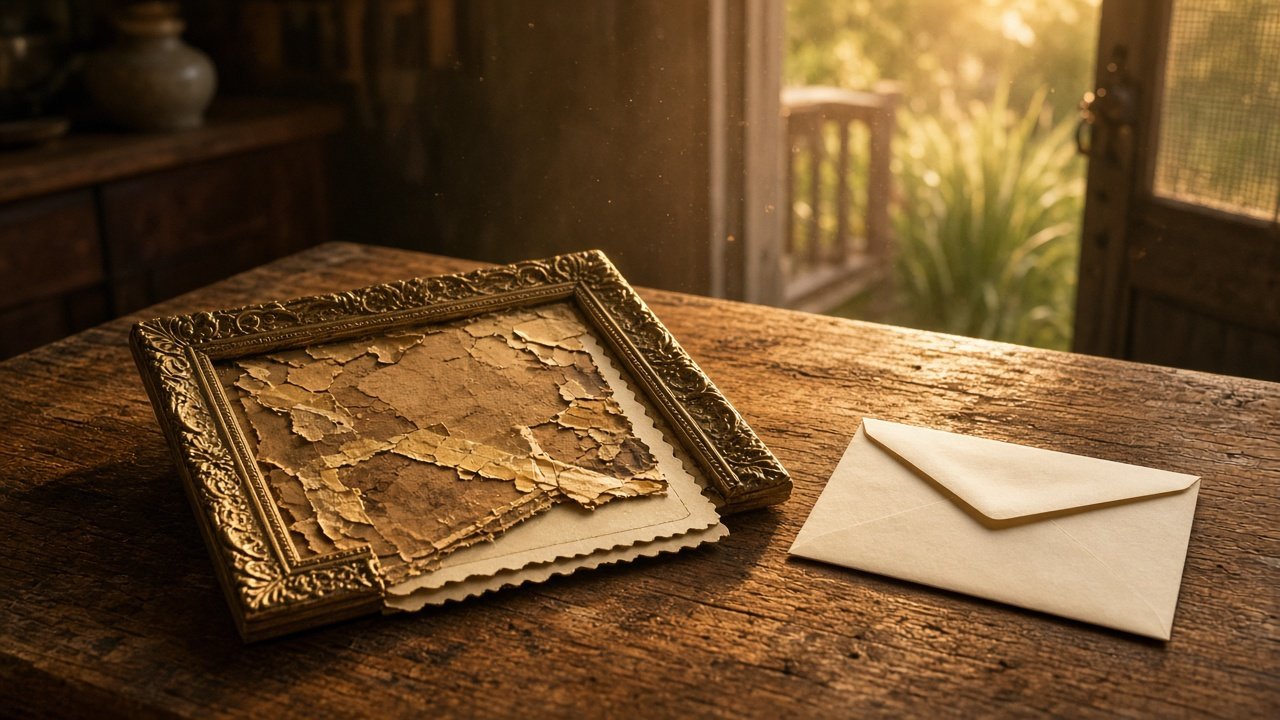
Charlie decides the photograph was a ruse, then asks why Sam has been carrying a framed picture of their mother in her bag, the one Rusty asked her to bring to the hospital. Sam peels the back off the frame, and behind the first picture is the one they have been looking for: Gamma on her first date with Rusty. With it is an envelope marked "Last word", the sisters' childhood way of claiming the end of an argument. Their father, they laugh, finally used it properly.
The series closes on a memory the sisters share, two girls lying in tall grass beside their mother, before dissolving to the grown women talking at the table as the camera pulls away.
What Does the Ending Mean?
The criminal truth is settled within the finale's first forty minutes. The harder truth is the one the sisters owe each other.
For most of the series, Sam and Charlie hold different accounts of the same night. Rusty could not make them talk while he was alive, so he arranged things so they had to search and decide together. The photograph is the final step: a happy day that nobody in a mask ever touched.
Judith mirrors them in a darker key: she keeps her secret and decides alone. The sisters survive by doing the opposite.
Slaughter told Peacock's blog she always knew the ending and felt a responsibility to leave viewers in a place of hope. Fahy said she imagines Charlie and Ben happy in Atlanta, with Sam visiting all the time.
What Does the Series Change From the Book?
The killers are the same. In both versions Huck was Zach's accomplice, Judith manipulated Kelly and fired the gun, and Judith takes her own life. The biggest changes come afterwards.
Kelly's sentence is halved. In the novel she accepts a ten-year plea deal. Slaughter told TIME that seeing the character on screen changed her view: ten years seemed too much, five seemed fair. Kelly is loosely based on Jessie Misskelley Jr, one of the West Memphis Three, the Arkansas teenagers convicted of murdering three boys and freed in 2011 under plea deals, who gave police a confession he quickly withdrew.
The photograph scene is new. In the book, Charlie finds the picture after Sam has gone back to New York, and emails it to her. Slaughter said it mattered that they find it together, because the story's emotional arc is two separated sisters coming back together.
The child who dies is renamed. In the novel, the girl killed in the school shooting is eight-year-old Lucy Alexander. On screen she is Emma.
The timeline is tighter. The book opens in 1989 and jumps twenty-eight years. The series puts the present day a little over twenty years after the attack.
Huck's ending is broadly the same: six years over the weapon, short of a reckoning for the attack. The series adds the porch-steps hint that one is coming.
For the novel on its own terms, read our Good Daughter book summary and ending explained.
Is the Ending Satisfying?
British critics were split. The Telegraph's Ed Power called it over-the-top potboiler fun; the Guardian's Stuart Heritage found it so full of calamity that it bordered on farce. The plotting does lean on coincidence: the man Charlie happened to sleep with is the man from her worst night.
The emotional ending is stronger. Rusty's silence is not presented as simply right, and Sam's deal for Kelly is fair rather than just. The final image is earned because the sisters tell each other the truth first. Like the twist-driven family stories in Verity, the reveals matter less than what the survivors decide to do with them.
Will There Be a Season 2?
No second season has been announced. Sky bills it as a limited series, and the finale resolves both of the novel's mysteries.
Final Thoughts
The Good Daughter answers its whodunits early in the final hour, then turns to a quieter question: can two sisters who survived the same night ever agree on what happened? Rusty's answer was to hide his happiest memory where it would take both of them to find it. The most important evidence in the series is not a confession or a frame of footage. It is a photograph of a first date.
If you have been affected by the issues in this article, in the UK you can contact Rape Crisis England and Wales on 0808 500 2222 or Samaritans on 116 123. In the US, call or text 988 for the Suicide and Crisis Lifeline, or contact RAINN on 800-656-4673.
Sources
Breaking Down the Hard-Won Ending of The Good Daughter (TIME, 12 November 2026): finale scene breakdown, Slaughter, Byrne and Fahy interviews, book changes.
The Ending of The Good Daughter Explained by Creator Karin Slaughter (Peacock, 12 November 2026): official recap, Huck's plea, Slaughter and Fahy quotes.
The Good Daughter ending explained (Radio Times, 13 November 2026): independent finale recap for UK viewers.
Official trailer released for The Good Daughter (Sky Group, 6 October 2026): UK release on Sky and NOW, cast and creative team.
Watch The Good Daughter on Sky (Sky): cast list, box set availability, limited-series status.
The Good Daughter, Sky Atlantic review (The Telegraph, 12 November 2026): UK review and Sky Atlantic broadcast time.
The Good Daughter: Rose Byrne's legal thriller (The Guardian, 7 November 2026): UK review.
The Good Daughter show and book, compared (TV Insider, 10 November 2026): Slaughter on what changed.
