China Releases Pastor After Trump Pressure — But The Bigger Test Is Just Beginning
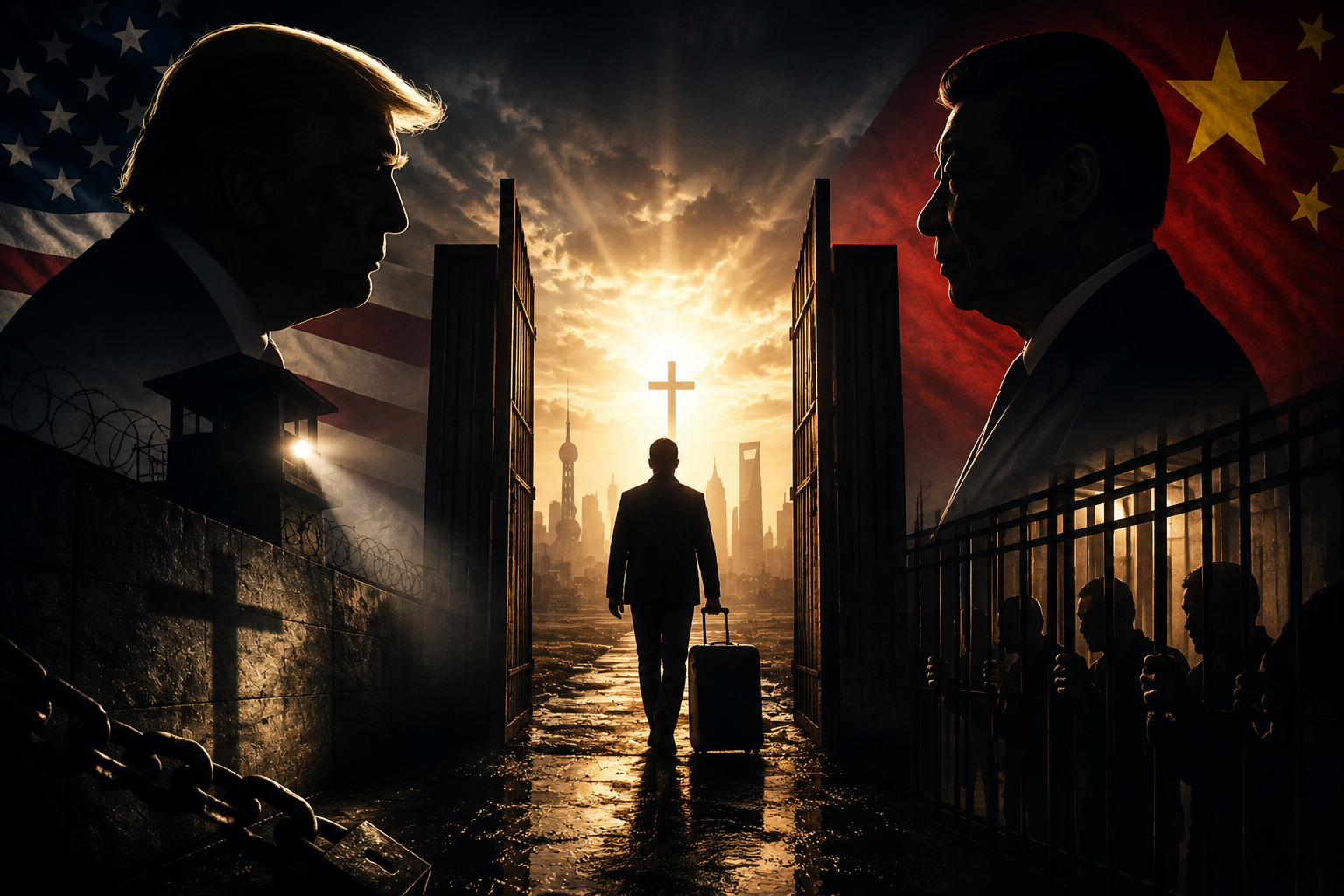
Why China Freed Pastor Ezra Jin After Trump’s Intervention
China’s Pastor Release Is A Diplomatic Win With A Warning Attached
China’s release of Pastor Ezra Jin Mingri is a diplomatic victory for Donald Trump, but it is not the end of the story. It is a warning shot about religious freedom, Chinese state control and the price Beijing may be willing to pay when individual prisoners become international pressure points.
Jin, also known as Ezra Jin, is the founder and pastor of Zion Church, one of China’s best-known independent Christian house churches. His arrival in Los Angeles on July 4 turned one detained pastor into a symbol of something much larger: whether China is making a narrow concession to Washington or signalling a softer line under pressure.
Who Is Pastor Ezra Jin Mingri?
Pastor Ezra Jin Mingri founded Zion Church in Beijing in 2007. The church became one of the most prominent independent Christian communities in China, operating outside the state-approved religious system and attracting worshippers who wanted a church beyond direct government control.
Chinese authorities shut Zion Church’s physical premises in 2018, but the church continued to operate through smaller gatherings and online ministry. That mattered because China’s control of religion is not only about buildings. It is about registration, surveillance, leadership, communication and whether faith communities can exist without state approval.
Jin was detained in October 2025 alongside other Zion Church leaders during a major crackdown on the church. Rights advocates and U.S. religious freedom bodies framed the case as part of a wider campaign against independent Christian communities, not an isolated local dispute.
Why Trump Wanted His Release
Trump wanted Jin released because the case offered a direct, human and politically powerful test of U.S. pressure on China. It gave Washington a named prisoner, a clear religious freedom argument and a measurable outcome that could be raised directly with Xi Jinping.
The case also mattered because Jin had family links to the United States and had become a focus for bipartisan pressure in Washington. U.S. lawmakers urged Trump to raise his detention with China and to seek permission for Jin to leave the country, placing the pastor’s case inside a wider argument about Christians, Tibetans, Uyghurs and other groups facing repression.
For Trump, the politics are obvious. A pastor detained by China speaks directly to religious conservatives, human-rights advocates and China hawks at the same time. Securing his release lets Trump present himself as a leader who can force concessions from Beijing through direct personal pressure rather than slow diplomatic process.
Why This Release Is Significant
The significance is that China appears to have moved on a high-profile religious freedom case after direct U.S. pressure. Beijing rarely wants to look as if it is bending to Washington, so the timing of Jin’s release makes the move politically important even if China does not publicly frame it as a concession.
It also shows how prisoner diplomacy can work when a case becomes too visible to ignore. Jin was not an anonymous detainee. He was a recognisable church leader, attached to a prominent underground Christian network, with a family campaign and support from U.S. officials, lawmakers and religious freedom advocates.
But the release should not be mistaken for a broad opening. Other Zion Church members are still reported to be detained, and China’s system of religious control remains intact. The state still expects religious groups to operate inside approved structures, while independent churches remain exposed to raids, charges, surveillance and pressure.
The Bigger China Message
This release sends two messages at once. To Washington, it suggests Beijing may trade narrow humanitarian gestures for diplomatic breathing room. To churches inside China, it does not clearly promise safety, because the machinery that detained Jin has not been dismantled.
That contradiction is the heart of the story. One pastor is free, but the church network he helped build remains under pressure. A single release can be celebrated as a real victory while still exposing the deeper problem: China can free one person without changing the system that made him vulnerable in the first place.
The timing also matters. By allowing Jin to arrive in America on July 4, China gave Trump a release that carries obvious symbolic weight in the United States. Whether that symbolism was deliberate or merely convenient, it strengthens the political value of the outcome for Trump and his supporters.
What Happens Next?
The next test is whether the remaining Zion Church detainees are released, charged, tried or kept under pressure. If more releases follow, Jin’s freedom may look like the start of a broader de-escalation. If not, it will look more like a one-person diplomatic exception.
The second test is whether Trump uses this win to push harder on China’s wider religious freedom record. That could mean naming more prisoners, threatening sanctions, linking human rights to future negotiations or keeping the issue alive in public rather than treating Jin’s release as the end of the matter.
For Beijing, the risk is that one concession encourages more international campaigns around named prisoners. For Washington, the risk is that celebrating one release too loudly lets China claim goodwill while leaving the wider crackdown untouched. Jin is free, but the real measure of this moment will be what happens to the people and churches still inside China’s system.
