Trump’s NATO Summit Gamble: Zelenskyy, Syria And The War Deals That Could Reshape Two Fronts
Trump’s NATO Week Could Decide More Than Ukraine
Trump Heads To NATO With Zelenskyy, Syria And Putin In The Background
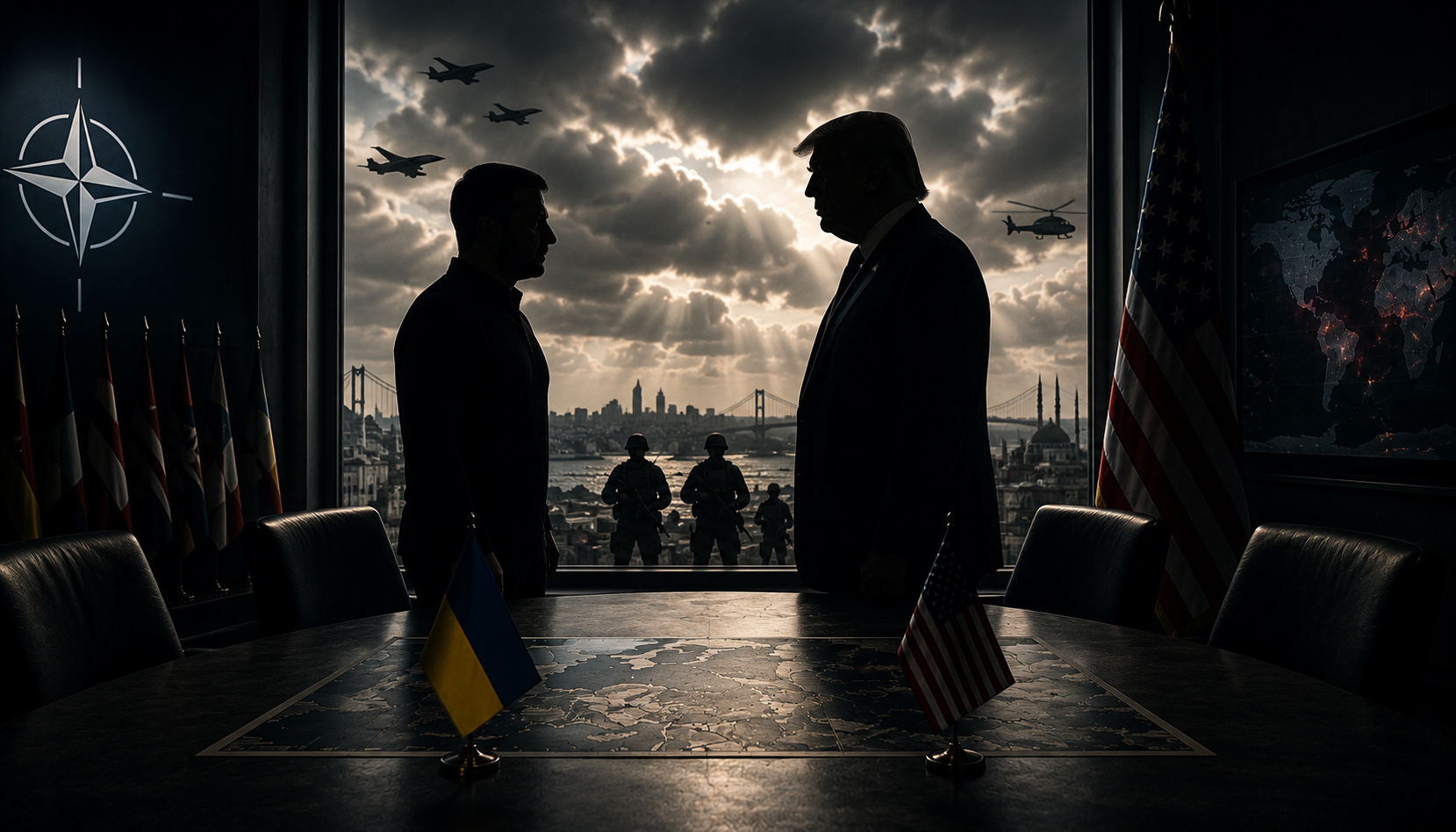
Donald Trump’s planned meetings with Volodymyr Zelenskyy and Syria’s Ahmad al-Sharaa at the NATO summit in Ankara are not routine side events. They place two unresolved wars, two fragile diplomatic tracks and two very different tests of American power inside the same summit week.
The White House has said Trump plans to meet both leaders on Wednesday while attending the NATO summit in Turkey, with Ukraine trying to pull Washington’s attention back to Russia’s war and Syria emerging as a surprise part of Trump’s Middle East strategy. Trump is also due to meet Turkish President Recep Tayyip Erdogan on Tuesday and hold a news conference before returning to the United States.
What Will Be Discussed
The Zelenskyy meeting is expected to focus on how Trump believes the Ukraine war can be brought toward an end. That does not mean a settlement is ready, or even close, but it does mean the summit is becoming a pressure point for Kyiv, Moscow and NATO allies.
Trump spoke separately with Zelenskyy and Vladimir Putin on Saturday, shortly before the summit week. Zelenskyy said the conversation covered the front line and described a real prospect of ending the war, while a Kremlin adviser said Trump had restated his readiness to help seek a quick cessation of hostilities.
The core issues are likely to be battlefield realities, air defence, sanctions pressure, possible ceasefire language, security guarantees and whether Washington will push Kyiv toward compromise or increase pressure on Moscow. Ukraine’s immediate demand is not abstract diplomacy; it wants stronger air defence, interceptor missiles and continued Western backing after another major Russian strike on Kyiv killed civilians and injured more than 100 people.
The Syria meeting is less clearly defined. U.S. officials have not provided detailed goals for Trump’s meeting with al-Sharaa, which makes the encounter more intriguing and more risky. The likely agenda includes Syria’s post-Assad reconstruction, sanctions relief, counterterrorism, border stability, Lebanon, Israel, Hezbollah and whether Damascus can become a useful American partner without dragging the region into another military gamble.
Why Zelenskyy Needs More Than Symbolism
For Zelenskyy, the Ankara meeting is about keeping Ukraine central to Trump’s foreign-policy agenda. The danger for Kyiv is that Trump treats the war as a deal to be closed rather than a long strategic struggle over European security.
Ukraine enters the summit after Russia’s war has stretched into its fifth year. The battlefield has hardened, Ukraine has shown greater ability to strike deeper into Russia, and Moscow has continued missile and drone attacks designed to exhaust Ukrainian air defences and Western patience.
That creates a brutal diplomatic equation. If Trump believes the battlefield is stuck, he may push harder for talks. If Zelenskyy believes time can still strengthen Ukraine’s position, he will want weapons, sanctions and air defence before any ceasefire formula is discussed.
The risk is that both men enter the same room wanting different versions of urgency. Trump may want visible movement toward an endgame. Zelenskyy may want proof that peace will not mean rewarding Russia for holding territory by force.
Why Syria Is Now In The NATO Conversation
The al-Sharaa meeting is the more unusual development because Syria is not the obvious centre of a NATO summit. Its presence in the week’s diplomacy shows how the Middle East has been folded into Trump’s wider security agenda.
Trump has repeatedly suggested Syria could play a role against Hezbollah, a position that has unsettled many in the region. Al-Sharaa has said he has no interest in sending Syria into that fight and has pushed back against the idea that Damascus should intervene militarily in Lebanon.
That matters because Syria’s new leadership wants reconstruction money, diplomatic recognition and sanctions relief, not a new war across the Lebanese border. Al-Sharaa’s calculation is obvious: Syria can gain from being seen as stable, useful and independent, but it could lose badly if it becomes a proxy tool in a wider anti-Hezbollah strategy.
For Trump, however, Syria offers a possible opening. If Damascus can be moved closer to Washington, distanced from old regional alignments and positioned as a stabilising actor, it would be a major diplomatic reversal after years of Syrian isolation.
Who Else Is Involved
Erdogan is central because Turkey is hosting the summit and remains one of NATO’s most strategically awkward but important members. Ankara has influence in Syria, relationships across the Black Sea, channels to Moscow and leverage inside NATO that other allies do not possess.
NATO Secretary General Mark Rutte is also important because the formal summit agenda is about alliance direction, defence spending, Ukraine support and defence-industrial capacity. NATO says summits are used to address strategic issues, launch major initiatives and reinforce partnerships, while the Ankara summit is scheduled for 7–8 July 2026.
Rutte has already framed Ankara around defence investment, defence-industry transformation and continued support for Ukraine. After meeting Trump in Washington in June, he said Europe and Canada were moving toward equalising their spending with the United States and that Ankara would show delivery on commitments made at the previous summit.
Putin is not in the room, but he is in the conversation. Trump is expected to follow up with him after meeting Zelenskyy, which means the Ankara meeting could become part of a three-sided sequence: Trump hears Kyiv, then returns to Moscow with a clearer sense of what Ukraine may or may not accept.
The Geopolitical Meaning
The biggest meaning is that Trump is trying to turn NATO from a defensive alliance meeting into a personal diplomacy platform. Ukraine, Syria, Turkey, Russia, Hezbollah, Israel, European defence spending and American arms sales all sit around the same table even when they are not formally on the same agenda.
For Europe, this is uncomfortable. NATO allies want American power locked into European defence, but Trump is likely to demand more spending, more defence purchases and clearer burden-sharing. The alliance’s support for Ukraine may remain intact, but the price of American leadership is rising.
For Ukraine, the summit could be a lifeline or a warning. A strong outcome would mean air-defence pledges, sanctions momentum and no pressure to accept a bad ceasefire. A weak outcome would be diplomatic warmth without battlefield substance.
For Syria, the summit is a test of whether al-Sharaa can gain legitimacy without becoming trapped by Trump’s Hezbollah idea. If he can discuss reconstruction, sanctions and regional stability while avoiding a Lebanese military role, Damascus gains room. If the meeting is framed around Hezbollah, Syria risks being pulled into a conflict it says it does not want.
What Could Come Next
The most immediate outcome may be a Trump statement after the meetings rather than a formal agreement. Expect language about ending the Ukraine war, NATO allies paying more, Syria having a possible stabilising role and Turkey being central to regional diplomacy.
The stronger outcome would be a visible Ukraine package: more air-defence support, firmer sanctions language and a Trump-Putin follow-up that does not undercut Kyiv. The weaker outcome would be a vague peace push that creates pressure on Ukraine without increasing pressure on Russia.
On Syria, the best-case outcome is careful diplomatic normalisation: reconstruction talks, sanctions discussions, border security and a refusal to push Damascus into Lebanon. The worst-case outcome is a public expectation that Syria should confront Hezbollah, which could inflame Lebanon, worry Israel, alarm Iran and destabilise a government still trying to consolidate power.
The summit therefore matters because it is not just about who Trump meets. It is about whether America uses NATO week to strengthen allies, pressure adversaries and stabilise fragile regions, or whether it turns two unresolved wars into one high-risk diplomatic performance.
