The Most Powerful People in the World Today Ranked
Who Really Runs the World?
The Twenty People Who Shape the World Right Now
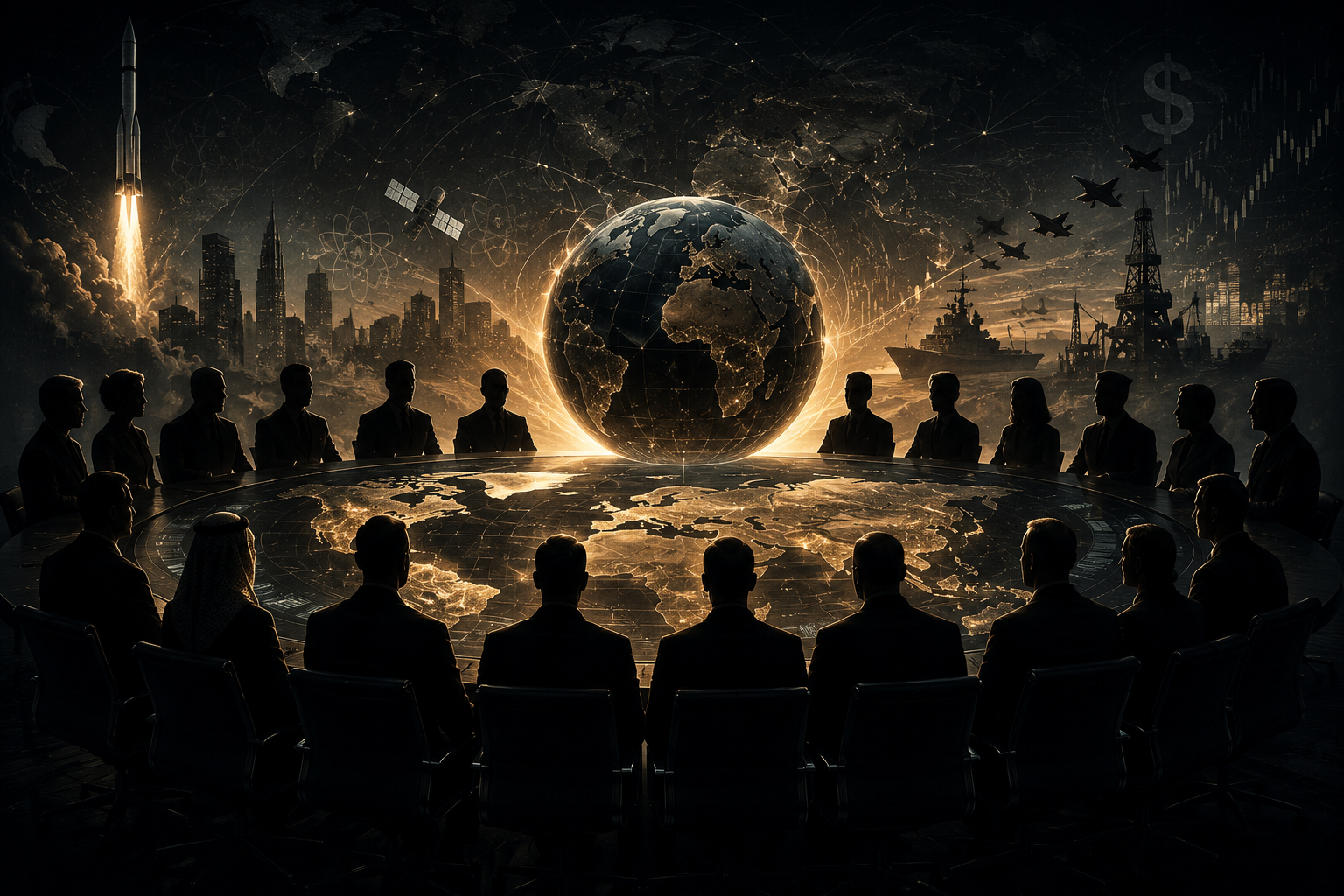
Power today is no longer held only by kings, presidents and generals. It is held by anyone who can move money, code, satellites, armies, markets, borders, narratives or artificial intelligence at global scale.
That is why this list ranks Donald Trump beside Xi Jinping, Elon Musk beside Vladimir Putin, and Jensen Huang beside Mohammed bin Salman. The modern world is being shaped by elected leaders, authoritarian rulers, sovereign wealth princes, central bankers, AI chiefs and platform owners at the same time.
This ranking is not about who is most moral, most admired or most famous. It is about raw consequence: who can change the most lives, redirect the most institutions, pressure the most rivals, and force the rest of the world to react.
How This Ranking Was Judged
The ranking is based on six forms of power: state authority, military command, economic leverage, technological control, narrative reach and institutional durability. A person ranks higher when they can act quickly, when their decisions travel globally, and when rivals cannot easily ignore them.
That favours heads of major states, especially the United States, China, Russia and India. It also favours people who control bottleneck technologies, because the next world order is being built around chips, cloud infrastructure, AI models, satellites, payment rails, energy routes and data.
The United States, China and Russia remain the top three military spenders, and together accounted for just over half of global military expenditure in 2025, according to SIPRI. The United States and Russia also still hold the overwhelming majority of the world’s nuclear weapons, which keeps old-style state power brutally relevant even in the age of artificial intelligence.
At the same time, global power is being pulled away from governments alone. BlackRock entered 2026 with a reported $14 trillion in assets under management, Nvidia has become the hardware engine of the AI boom, and Elon Musk’s empire now reaches electric vehicles, rockets, satellite internet, social media and artificial intelligence.
1. Donald Trump
Donald Trump ranks first because the American presidency remains the single most powerful office on earth, and Trump uses power more directly than almost any modern American leader. He controls the executive branch of the world’s largest economy, commands the most powerful military alliance network, influences the dollar system, shapes trade policy, appoints regulators and judges, and can alter global diplomacy with one decision.
His background is unusual because he came to politics through property, television, branding and conflict. The White House describes him as the 45th and 47th President of the United States, which is itself historically extraordinary: he lost power, survived political and legal attacks, rebuilt his coalition, and returned with a stronger personal mandate over his movement.
What gives Trump power is not just the office. It is his ability to turn political attention into pressure. He can force allies to spend more on defence, push companies to relocate supply chains, pressure central bankers, move markets with tariff threats, and make adversaries calculate whether he is bluffing or preparing to act.
He uses power transactionally. That is why supporters see him as effective: he treats diplomacy, trade, migration, defence and industrial policy as bargaining tables rather than sacred systems. His America First model is disruptive, but that disruption is also the source of his leverage.
His rivals are Xi Jinping, Vladimir Putin, the American administrative state, hostile courts, Democrats, some traditional Republicans, globalist institutions, hostile media structures and parts of corporate America. The worry is that Trump’s speed can strain institutions, blur lines between pressure and overreach, and make allies uncertain. The counterargument is simple: in a world of hard power, hesitation is not automatically virtue.
2. Xi Jinping
Xi Jinping ranks second because he controls the Chinese Communist Party, the Chinese state, the world’s largest manufacturing base, a rapidly modernising military and the most serious strategic rival to the United States. He is not merely China’s president; official Chinese state material identifies him as general secretary of the Communist Party, president of China and chairman of the Central Military Commission, which places party, state and military power in one man’s hands.
His rise was built through party discipline, provincial leadership, anti-corruption campaigns and the systematic removal of rival power centres. Unlike democratic leaders, Xi does not face a normal electoral cycle. That gives him time, but it also means mistakes can compound without the same public correction mechanisms.
What gives Xi power is scale. China’s population, industrial depth, export dominance, rare earth leverage, shipbuilding capacity, surveillance state, digital ecosystem and military build-up all make him unavoidable. When Beijing moves on Taiwan, chips, electric vehicles, solar panels, steel, minerals or maritime pressure, the world economy feels it.
Xi uses power through long strategy rather than constant public drama. He centralises authority, tightens ideological control, builds military pressure around Taiwan, expands China’s global infrastructure influence, and tries to reduce reliance on the West while keeping Western markets dependent on Chinese production.
His rivals are Trump, India, Japan, Taiwan, the European Union, parts of China’s own private sector, and the demographic and debt problems inside China’s economy. The worry is that Xi has made China stronger but less flexible. A leader who controls everything also owns every failure.
3. Elon Musk
Elon Musk ranks third because he is the most powerful private individual in the world. That sounds dramatic, but it is hard to dispute. Tesla lists Musk in its leadership and board structure, SpaceX identifies him as founder and CEO, and Forbes has ranked him at the top of the global billionaire list.
His background is entrepreneurial rather than institutional. He rose through Zip2, PayPal, Tesla, SpaceX and then a wider empire involving X, xAI, Neuralink and other ventures. His career is a case study in private industrial power: instead of inheriting a state machine, he built companies that governments now need.
What gives Musk power is the stack he controls. Rockets, satellite internet, electric vehicles, battery systems, AI, social media distribution and massive personal wealth combine into something close to a private strategic infrastructure network. Few people can influence space access, military communications, online speech, AI direction and transport markets at the same time.
Musk uses power aggressively. He sets impossible deadlines, breaks bureaucratic expectations, attacks rivals publicly, changes platform rules, forces industries to move faster, and makes governments negotiate with a private actor who often moves faster than they do. For supporters, that is exactly why he matters: he builds rather than manages decline.
His rivals include Jeff Bezos, Sam Altman, Mark Zuckerberg, Chinese EV firms, regulators, legacy automakers, defence contractors and parts of the political establishment. The worry is concentration. When one man becomes essential to rockets, satellites, discourse and AI, society gains speed but loses redundancy.
4. Vladimir Putin
Vladimir Putin ranks fourth because Russia remains a nuclear, energy and military power willing to use force to revise the world around it. The Kremlin’s official biography records his KGB background, his rise through Russian government, and his return to the presidency in 2012, with a further term beginning after the 2024 election.
His background explains his governing style. Putin is a former intelligence officer who sees politics as control, vulnerability and leverage. His rise came through state security networks, oligarch management, war, nationalist restoration and the promise to reverse Russia’s post-Soviet humiliation.
What gives him power is not Russia’s economy, which is far smaller than America’s or China’s. It is nuclear weapons, energy exports, cyber capability, intelligence operations, military risk tolerance, and his ability to absorb pain that would destroy most democratic leaders. Russia’s military spending rose to an estimated $190 billion in 2025, according to SIPRI.
Putin uses power by creating dilemmas. He pushes until rivals must choose between escalation, sanctions, negotiation or fatigue. Ukraine is the central battlefield, but the wider game is about whether the West can outlast a leader who has made confrontation the organising principle of his regime.
His rivals are Trump, NATO, Zelenskyy, Europe, domestic elites who fear defeat, and the long-term weakness of Russia’s own economy and demographics. The worry is obvious: Putin’s power is tied to war, coercion and nuclear shadow play. That makes him dangerous even when Russia is under pressure.
5. Narendra Modi
Narendra Modi ranks fifth because India is the world’s most important swing power. It is huge, young, nuclear-armed, increasingly digital, economically ambitious, and unwilling to become a subordinate partner in anyone else’s bloc. Modi’s official prime ministerial profile says he was sworn in for a third term on 9 June 2024.
His background is central to his power. Modi rose from modest origins through the Rashtriya Swayamsevak Sangh, the BJP, state-level leadership in Gujarat, and then national politics. His appeal rests on nationalism, development, welfare delivery, Hindu identity, personal discipline and a promise that India will no longer behave like a cautious post-colonial state.
What gives Modi power is India’s scale. World Bank data places India’s population above China’s, and that demographic fact changes the century. India is a consumer market, labour force, military power, software base, pharmaceutical hub, diaspora network and diplomatic balancer at once.
Modi uses power by refusing simple alignment. He can work with Washington, buy from Moscow, compete with Beijing, lead the Global South, court Gulf capital, and push Indian manufacturing. That flexibility makes him more powerful than many leaders of richer but less strategically independent countries.
His rivals are Xi Jinping, Pakistan’s military establishment, domestic opposition parties, Western human rights critics, religious tensions and India’s own infrastructure limits. The worry is that Modi’s majoritarian politics can deepen internal division. The opportunity is that he may be the leader who turns India from potential superpower into actual superpower.
6. Mohammed Bin Salman
Mohammed bin Salman ranks sixth because he controls the future direction of Saudi Arabia, one of the world’s most important energy, religious, financial and geopolitical states. Saudi state material and official diplomatic records identify him as Crown Prince and Prime Minister, and Saudi Vision 2030 is built around the transformation he has driven.
His background is dynastic, but his rise was not gentle. He moved from royal court operator to defence minister, crown prince and de facto ruler by displacing older rivals and centralising authority around himself. He represents a generational break inside the Saudi system.
What gives him power is oil, sovereign capital, religious geography, security partnerships and ambition. Saudi Arabia can influence energy markets, Islamic diplomacy, Gulf security, sports, tourism, infrastructure, AI investment and Western defence calculations. Vision 2030 is not just an economic programme; it is a bid to rebuild Saudi Arabia before oil loses some of its strategic magic.
He uses power by forcing pace. Social restrictions have been loosened, entertainment opened, women’s public role expanded, megaprojects launched, and the religious establishment curbed. At the same time, dissent remains tightly controlled and the state remains deeply authoritarian.
His rivals are Iran, Turkey, the UAE, internal royal factions, oil-market reality, debt constraints and the expectations he has created. The concern is that MBS is trying to modernise society without liberalising politics. That can work for a time, but it makes every success personal and every failure dangerous.
7. Jensen Huang
Jensen Huang ranks seventh because Nvidia has become the engine room of artificial intelligence. If data is the new oil, advanced chips are the refineries, pipelines and drilling rigs. Nvidia’s investor material identifies Huang as CEO, and Forbes notes that Nvidia’s GPUs moved from gaming dominance into the centre of the AI boom.
His background is a classic founder story with unusual endurance. Born in Taiwan and raised partly in the United States, Huang co-founded Nvidia in 1993 and stayed with the company through its early struggles, gaming rise, data-centre expansion and AI explosion. Most founders do not survive that many technological eras.
What gives him power is scarcity. The world’s AI race depends on compute, and compute depends heavily on Nvidia hardware, software ecosystems and supply relationships. When Nvidia changes its roadmap, hyperscalers, governments, start-ups, militaries and universities all adjust.
Huang uses power commercially rather than politically. He sells the infrastructure of the AI age to everyone who can afford it, while navigating export controls, China restrictions, semiconductor supply chains and rising competition. He is not a head of state, but he influences what states and companies can realistically build.
His rivals include AMD, custom chip teams at Google and Amazon, Chinese semiconductor efforts, regulators and customers who do not want dependency. The worry is that AI’s future may depend too heavily on a narrow hardware bottleneck. The counterpoint is that Nvidia earned that position by executing better than nearly everyone else.
8. Kevin Warsh
Kevin Warsh ranks eighth because the Federal Reserve chair controls the price of money in the world’s most important financial system. The Federal Reserve announced in May 2026 that Jerome Powell would serve temporarily until Kevin Warsh was sworn in, and the Fed calendar for July 2026 identifies Warsh as chairman.
His background is different from the celebrity power of Musk or the electoral power of Trump. Warsh is a financial-policy insider: former Fed governor, market thinker, Hoover Institution figure and long-time critic of parts of the post-crisis monetary consensus. That makes him powerful because he understands the hidden machinery.
What gives him power is the dollar. Fed policy affects mortgage rates, bond yields, bank lending, emerging-market debt, asset prices, pensions, start-up funding, currency flows and political moods. A quarter-point rate decision can move more money than most governments spend in a year.
Warsh uses power through signals, statements, rate decisions, balance-sheet policy and institutional credibility. His early emphasis on better economic data and a rethink of central-bank communication suggests a Fed less addicted to forward guidance and more focused on discipline.
His rivals are inflation, recession risk, bond markets, Trump’s political pressure, global central bankers and the Fed’s own credibility problem. The worry is independence. The Fed is powerful because markets believe it can say no to politicians. If that belief weakens, the cost will be global.
9. Ursula Von Der Leyen
Ursula von der Leyen ranks ninth because she leads the European Commission, the executive engine of the European Union. The Commission says she became its first female president in 2019 and was elected for a second mandate in 2024, running until 2029.
Her background is elite, technocratic and deeply European. A former German defence minister and long-time Christian Democrat, she rose through the German state before becoming the face of EU executive power during Covid, the Ukraine war, energy crisis and the bloc’s attempt to become more strategically independent.
What gives her power is regulation. The EU often lacks the military unity of a nation-state, but it writes rules that global companies cannot ignore. Digital markets, competition law, privacy, climate rules, trade policy, sanctions and industrial subsidies give Brussels power far beyond its military weight.
Von der Leyen uses power through packages, frameworks and pressure. She does not dominate like Trump or Xi, but she can coordinate sanctions, shape tech regulation, push defence integration and force Apple, Google, Meta and other giants to adapt to European law.
Her rivals are Trump, Putin, European populists, national leaders who resent Brussels, slow EU decision-making and voters tired of technocratic control. The worry is democratic distance. The EU can be powerful without feeling accountable enough to ordinary citizens.
10. Sam Altman
Sam Altman ranks tenth because OpenAI sits near the centre of the AI transformation. OpenAI’s own announcement in 2023 confirmed Altman’s return as CEO after a board crisis, and the company’s public role has only grown as advanced models move deeper into work, education, software and state policy.
His background is Silicon Valley acceleration. Altman dropped out of Stanford, co-founded Loopt, led Y Combinator and then became the most visible executive of the AI age. His rise was not based on controlling a state or a natural resource, but on positioning himself at the chokepoint of general-purpose intelligence tools.
What gives him power is adoption. AI models increasingly shape how people write, code, search, analyse, learn and make decisions. The firm that leads in frontier AI does not merely sell software; it influences the cognitive layer above the economy.
Altman uses power through partnerships, public persuasion, product releases, safety language, lobbying, infrastructure deals and a careful claim that AI is both inevitable and governable. That combination is potent: he sells the future while asking to help regulate it.
His rivals are Elon Musk, Google, Anthropic, Meta, open-source AI communities, regulators and sceptics inside governments. The worry is that AI power can concentrate before democratic institutions understand it. Altman’s defenders argue that someone has to build the future, and that American-led AI is preferable to authoritarian control.
11. Mark Zuckerberg
Mark Zuckerberg ranks eleventh because Meta controls some of the world’s most important communication platforms. Meta’s investor documents continue to identify Zuckerberg as CEO, and its platforms remain central to social life, advertising, politics, messaging, creator economies and AI distribution.
His background is one of the most consequential founder stories in modern capitalism. He built Facebook from a college network into a global platform empire, survived privacy scandals, regulatory attacks and public distrust, then repositioned Meta around AI, messaging, short video and immersive computing.
What gives him power is attention. Facebook, Instagram, WhatsApp, Threads and Meta’s advertising machine shape what billions see, buy, believe and share. Few governments can reach citizens as frequently as Meta’s products can.
Zuckerberg uses power defensively and expansively. He copies rivals, buys when allowed, pivots when necessary, and invests at vast scale in AI infrastructure. He is less publicly chaotic than Musk and less messianic than Altman, but his control of social infrastructure is enormous.
His rivals are TikTok, Musk’s X, YouTube, Apple’s privacy rules, EU regulators, AI competitors and user fatigue. The worry is that Meta’s platforms can distort politics, mental health, privacy and reality itself. The counterargument is that Meta connects people at a scale no public institution has ever achieved.
12. Sundar Pichai
Sundar Pichai ranks twelfth because Alphabet controls search, YouTube, Android, Gmail, Maps, Chrome, cloud infrastructure and major AI research. Alphabet’s investor presentation in June 2026 identifies Pichai as CEO of Google and Alphabet, and his remarks frame AI as the deepest platform shift in the company’s history.
His background is technocratic rather than flamboyant. Born in India, educated in engineering and business, Pichai rose through Google by leading products such as Chrome and Android before becoming CEO of Google and later Alphabet. He is powerful because he controls a quiet empire of default behaviour.
What gives him power is search and infrastructure. Google shapes how people access knowledge, YouTube shapes video culture, Android shapes mobile life, and Google Cloud competes for the AI workloads that will define the next economy.
Pichai uses power cautiously. He tends to move through product integration, platform defence, regulatory negotiation and AI deployment rather than ideological warfare. That caution can look slow, but it also protects a company with extraordinary regulatory exposure.
His rivals are OpenAI, Microsoft, Meta, Apple, Amazon, regulators and the possibility that AI answer engines weaken traditional search. The worry is that Google has too much control over information discovery. The deeper worry for Google is that the interface to knowledge may move away from Google faster than Google can control.
13. Satya Nadella
Satya Nadella ranks thirteenth because Microsoft sits inside the operating system of global business. Microsoft identifies Nadella as chairman and CEO, and under him the company has become a central force in cloud computing, enterprise software, developer tools, cybersecurity and AI.
His background is corporate rather than insurgent. Nadella joined Microsoft in 1992, rose through cloud and enterprise roles, and became CEO in 2014. He turned Microsoft from a defensive legacy software company into one of the most important infrastructure firms in the AI economy.
What gives him power is institutional embedding. Windows, Office, Azure, GitHub, Teams, LinkedIn, Copilot and Microsoft’s AI partnerships sit inside companies, governments, schools and security systems. Microsoft does not need to dominate public attention to dominate workflows.
Nadella uses power by integrating. He places AI into existing tools, turns enterprise relationships into distribution, and makes Microsoft the safe default for organisations that want transformation without chaos. That is less dramatic than Musk, but arguably more durable.
His rivals are Google, Amazon, OpenAI’s independence, Apple, cybersecurity threats and regulators. The worry is dependency. When one company becomes the productivity, identity, cloud and AI layer for so many institutions, outages, breaches or policy shifts become systemic events.
14. Larry Fink
Larry Fink ranks fourteenth because BlackRock is one of the main control rooms of global capital. His 2026 chairman’s letter says BlackRock entered the year with a new AUM high of $14 trillion, while the firm’s annual materials describe huge flows across ETFs, private markets, technology and long-term investment platforms.
His background is finance-builder rather than headline politician. Fink co-founded BlackRock after a career in fixed income and risk management, then built it into the world’s largest asset manager. His power is not the power to order troops; it is the power to allocate capital and shape corporate incentives.
What gives him power is scale and plumbing. BlackRock touches pensions, governments, ETFs, sovereign clients, private markets, infrastructure and the Aladdin risk-management platform. It can influence how capital thinks about energy, defence, technology, retirement and national resilience.
Fink uses power through letters, votes, client mandates, portfolio construction and access. When he says markets are reorganising around self-reliance, AI and broader ownership, governments and CEOs listen because BlackRock is not a commentator. It is a capital allocator.
His rivals are Vanguard, State Street, political critics on the left and right, anti-ESG campaigns, private-market competitors and public distrust of concentrated finance. The worry is that asset managers can become too powerful without looking powerful enough to attract democratic scrutiny.
15. Jeff Bezos
Jeff Bezos ranks fifteenth because he still sits behind Amazon, AWS-scale infrastructure, Blue Origin and one of the largest private fortunes on earth. Amazon lists Bezos as executive chair and Andy Jassy as president and CEO, while Blue Origin states that it was founded by Bezos with a vision of millions living and working in space.
His background is the original internet empire story. Bezos built Amazon from an online bookstore into a logistics, cloud, advertising, media and marketplace giant. He stepped back from day-to-day control, but executive chairs with enormous ownership, founder authority and strategic obsessions do not become irrelevant.
What gives him power is infrastructure. Amazon influences retail, cloud computing, AI infrastructure, labour markets, publishing, logistics and government procurement. Blue Origin gives Bezos a place in the strategic space race, even if SpaceX remains ahead.
Bezos uses power more quietly than Musk. He prefers patient capital, long time horizons, operational scale and institutional influence. He is not as publicly combative, but Amazon’s reach into commerce and AWS’s role in the internet make his influence deep.
His rivals are Musk, Walmart, Microsoft, Google, regulators, labour unions and the internal challenge of keeping Amazon innovative at vast size. The worry is market concentration. The defence is that Bezos built systems customers and governments rely on because they work.
16. Tim Cook
Tim Cook ranks sixteenth because Apple controls one of the most valuable consumer ecosystems ever built. Apple’s investor leadership page identifies Cook as CEO, while Apple announced that he will become executive chairman and John Ternus will become CEO from 1 September 2026.
His background is operational excellence. Cook did not found Apple, but he turned Steve Jobs’s product machine into a global supply-chain and services empire. His power comes from discipline, privacy positioning, brand trust and the iPhone’s role as a daily gateway to the digital world.
What gives him power is the device layer. Apple can change app economics, privacy defaults, payments, health data, messaging norms, developer incentives and consumer AI deployment. Governments and companies may resent that control, but they cannot ignore it.
Cook uses power through restraint. He rarely behaves like a political warrior, but Apple’s choices can hurt advertisers, frustrate regulators, protect users, block competitors and delay features in major markets when rules clash with Apple’s model.
His rivals are EU regulators, Google, Samsung, Meta, app developers, China supply-chain risk and the question of whether Apple can lead in AI rather than merely package it elegantly. The worry is a closed ecosystem. The strength is that many users prefer a controlled system when the alternative feels chaotic.
17. Benjamin Netanyahu
Benjamin Netanyahu ranks seventeenth because Israel is small in population but huge in strategic consequence. The Israeli Prime Minister’s Office identifies Benjamin Netanyahu as prime minister, and Israel’s wars, intelligence reach, US relationship and confrontation with Iran keep him near the centre of global crisis politics.
His background is security politics, elite diplomacy and survival. Netanyahu has served longer than any other Israeli prime minister, moving through diplomacy, opposition, comeback and crisis. His career rests on the promise that he understands danger before others do.
What gives him power is Israel’s military capability, intelligence network, nuclear ambiguity, technology sector, US political links and centrality to Middle Eastern escalation. Decisions in Jerusalem can move Washington, Tehran, Riyadh, Ankara, Brussels and oil markets.
Netanyahu uses power through deterrence, coalition management, security framing and relentless political survival. He presents himself as the man who will act when others hesitate, but that same instinct has produced fierce domestic and international opposition.
His rivals are Iran’s leadership, Hamas, Hezbollah, Israeli opposition figures, the judiciary, parts of the security establishment, and global critics of Israel’s wartime conduct. The worry is that Netanyahu’s personal survival and Israel’s national strategy can become dangerously entangled.
18. Volodymyr Zelenskyy
Volodymyr Zelenskyy ranks eighteenth because Ukraine remains the battlefield on which the future of European security is being tested. The official Ukrainian presidency site continues to show Zelenskyy leading wartime diplomacy, speaking with allied leaders and pressing for air defence, weapons and conditions for peace.
His background is improbable. A comedian and media figure became president, then became a wartime symbol after Russia’s full-scale invasion. His rise shows how modern leadership can move from television to national survival under extreme pressure.
What gives him power is moral leverage combined with battlefield necessity. Ukraine needs weapons, money, intelligence and diplomatic support, but its resistance also gives Europe and the United States a frontline partner against Russian expansion. That makes Zelenskyy weaker than his patrons in resources but stronger than many leaders in symbolic force.
He uses power through persuasion. Speeches, visits, calls, battlefield updates and appeals to democratic conscience are his weapons alongside the Ukrainian army. He must keep allies emotionally and strategically invested while his country absorbs the cost.
His rivals are Putin, war fatigue, corruption concerns, manpower shortages, Western political shifts and the brutal arithmetic of territory and attrition. The worry is dependency. The achievement is that Ukraine still exists as a fighting state because Zelenskyy helped make surrender politically impossible.
19. Recep Tayyip Erdoğan
Recep Tayyip Erdoğan ranks nineteenth because Turkey sits at the hinge of Europe, the Middle East, the Black Sea, NATO, migration routes, energy corridors and the Islamic world. The official Turkish presidency site centres Erdoğan as president, and recent diplomacy around NATO, Ukraine, Gaza and Iran keeps Ankara strategically unavoidable.
His background is populist, Islamist-rooted and combative. Erdoğan rose from Istanbul politics through the AKP, broke the old secular military-political order, survived a coup attempt, rewired the constitution and made himself the dominant Turkish leader of the century.
What gives him power is geography plus leverage. Turkey can affect NATO decisions, Black Sea access, Syrian outcomes, migration pressure on Europe, drone warfare, energy transit and relations with Russia. It is not the strongest state in any single category, but it is relevant in almost every regional crisis.
Erdoğan uses power by balancing and bargaining. He can speak to Putin, pressure Europe, host summits, confront Israel rhetorically, sell drones, suppress domestic opponents and demand concessions from allies who still need Turkey.
His rivals are domestic opposition leaders, Kurdish movements, inflation, the EU, Russia, Israel and the risk that too much personalised rule weakens Turkish institutions. The worry is democratic erosion. The reason he remains powerful is that almost every serious actor still has to deal with him.
20. Mohamed Bin Zayed
Mohamed bin Zayed ranks twentieth because the United Arab Emirates has become a small state with outsized financial, technological, military and diplomatic reach. UAE government material identifies him as President of the United Arab Emirates and Ruler of Abu Dhabi, while Mubadala reports $385 billion in assets under management.
His background is military, royal and strategic. MBZ became the UAE’s de facto leader before formally becoming president, built Abu Dhabi’s security state, and pushed the Emirates into a more assertive regional role. He has made the UAE a hub for capital, logistics, aviation, ports, energy, AI and diplomacy.
What gives him power is concentrated state capacity. The UAE is not large, but it is rich, fast-moving and strategically placed. Its sovereign funds, ports, airlines, intelligence ties, energy assets and technology investments allow it to act beyond its size.
MBZ uses power quietly but forcefully. The UAE courts Washington, Beijing, Moscow, Tel Aviv, New Delhi and Riyadh without fully surrendering to any. It wants to be a safe haven, a capital hub, a security actor and an AI-era state at the same time.
His rivals are Mohammed bin Salman, Iran, Qatar, Turkey, Islamist movements and the reputational risks of regional interventions. The worry is that the UAE’s influence can outrun its accountability. The achievement is that MBZ has made a federation of fewer than ten million people one of the most strategically connected states on earth.
The Near Misses
Several people could reasonably have made this list. Christine Lagarde still matters because the European Central Bank shapes eurozone money. Pope Leo XIV matters spiritually and diplomatically. Masayoshi Son matters because SoftBank capital can accelerate entire technology sectors. Larry Page and Sergey Brin matter because Google’s founding power still echoes through Alphabet and AI. Mojtaba Khamenei matters if Iran’s succession crisis hardens around him, but the uncertainty around Tehran’s real centre of command makes the ranking harder.
The reason they miss the top twenty is not irrelevance. It is directness. This ranking favours people whose power is active, immediate and difficult for rivals to route around.
The Real Pattern
The striking feature of the modern power list is the merger of state and platform power. Trump, Xi, Putin, Modi, MBS, Netanyahu, Zelenskyy, Erdoğan and MBZ are classic political actors. Musk, Huang, Altman, Zuckerberg, Pichai, Nadella, Fink, Bezos and Cook are private or corporate actors whose decisions increasingly resemble public policy.
That is the new global order. Presidents still matter most when war, borders, sanctions, treaties and currencies are at stake. But CEOs and founders now control infrastructure that states depend on: chips, cloud systems, app stores, satellites, AI models, social feeds and capital flows.
This is why Elon Musk ranks so high. He is not more constitutionally powerful than Xi or Putin, but he controls pieces of the future that governments cannot easily replace. SpaceX, Starlink, Tesla, X and AI infrastructure give him a portfolio of influence no previous private citizen has held at this scale.
It is also why Trump ranks first. He is the elected leader of the only country that can still combine military reach, reserve currency status, energy production, AI leadership, capital markets, cultural force and alliance architecture. A US president who is willing to use those tools aggressively becomes the central actor in the world.
The Biggest Worry
The biggest worry is not simply that bad people may gain power. That has always been true. The bigger worry is that power is concentrating in systems ordinary voters barely understand and cannot easily discipline.
A president can be voted out. A dictator can eventually face elite rupture. But who votes on an AI model release, a chip supply decision, a sovereign wealth allocation, a platform algorithm, a satellite-internet restriction or an asset manager’s governance policy?
That does not mean private power is automatically bad. Musk, Huang, Altman, Nadella and others are building tools that may create extraordinary abundance, productivity and freedom. But the more essential their systems become, the more the world has to ask whether speed, genius and capital are enough.
What Happens Next
The next decade will decide whether power becomes more distributed or more concentrated. AI could empower individuals, small companies and weaker states. It could also concentrate wealth and decision-making inside a few American and Chinese firms.
Trump’s second presidency, Xi’s centralisation, Putin’s war strategy, Modi’s India, MBS’s Saudi transformation and Musk’s industrial empire are not separate stories. They are parts of the same transition from the post-Cold War order to a harder, faster, more technological and more nationalist world.
The winners will be those who control bottlenecks: energy, chips, compute, capital, weapons, platforms, minerals, food, shipping lanes and public attention. The losers will be those who depend on systems they do not control.
That is the final lesson of this ranking. The most powerful people in the world today are not merely those who sit on thrones or win elections. They are the people who decide what the rest of the world must react to next.
