Egypt Moves Towards Saudi Defence Role as Houthi Attacks Escalate
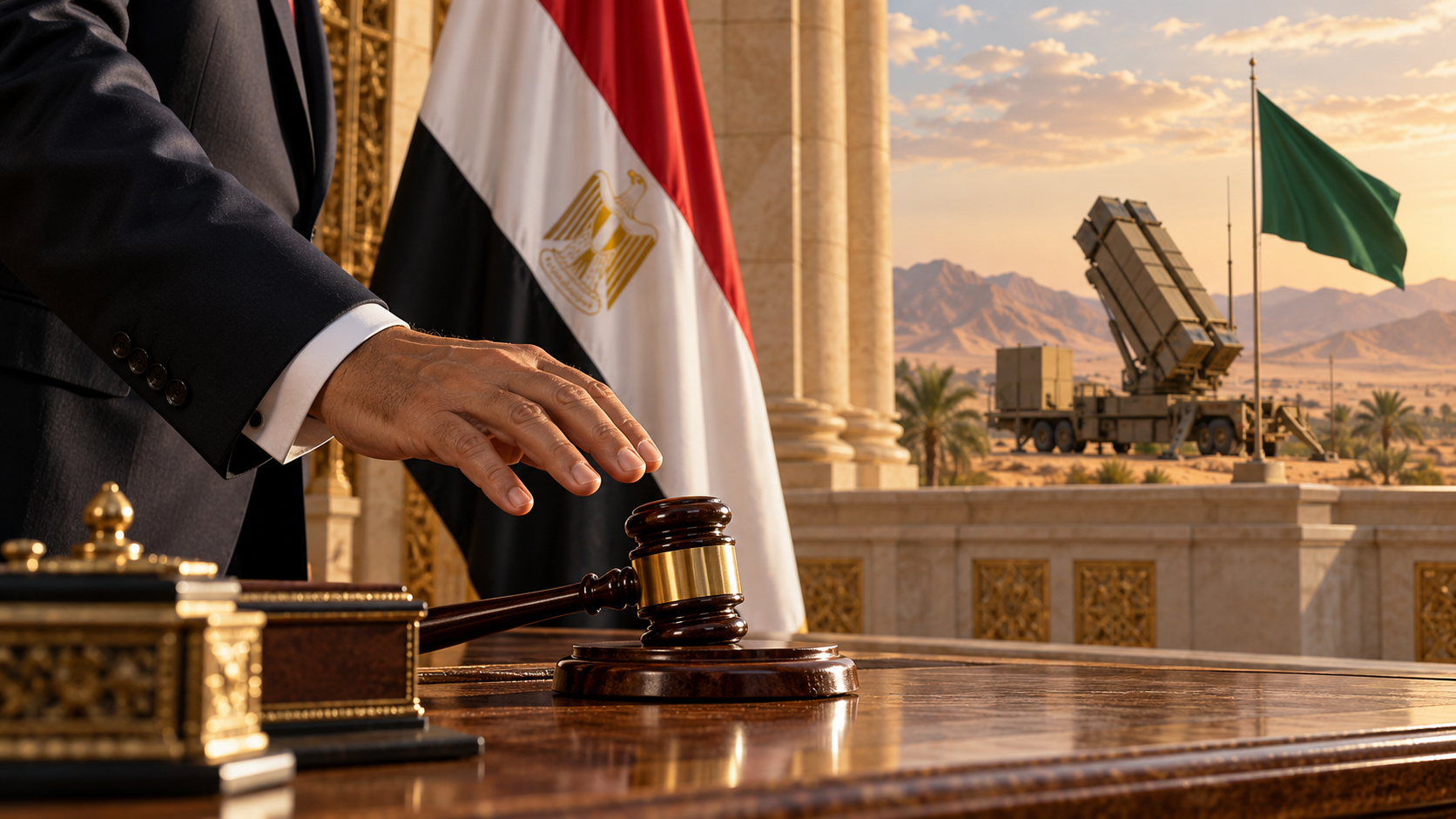
Egypt Weighs Its Next Step
Sisi Seeks Emergency Mandate to Defend Saudi Arabia if Asked
Egypt’s parliament is due to meet on Sunday after Sisi requested authority to provide defensive assistance should Saudi Arabia ask for it.
Egyptian President Abdel Fattah al-Sisi has asked parliament for an emergency mandate to help defend Saudi Arabia if the kingdom requests assistance, moving Cairo towards a possible operational role as Houthi attacks intensify.
Speaking at a military academy graduation ceremony on Saturday, 17 October 2026, Sisi said Egyptian action would require parliamentary approval. The House of Representatives subsequently announced a session for Sunday, 18 October.
The development is a conditional offer of support. It does not, by itself, establish that Egyptian forces have received orders to deploy or that Cairo has begun a new combat operation.
What Sisi Asked Parliament to Approve
Sisi called for authority to take measures to protect Saudi Arabia should its leadership seek Egypt’s help. He framed the proposed assistance as defensive and rejected the idea that Cairo was seeking to attack another country.
His appeal referred to Saudi King Salman and Crown Prince Mohammed bin Salman, placing a Saudi request at the centre of the proposed arrangement. Parliamentary permission would give Egypt the domestic approval Sisi said it needed before acting.
The distinction between permission and implementation will matter as the crisis develops. A mandate can create room for decisions without settling which forces, equipment or missions would be involved. Saturday’s remarks did not provide a detailed operational plan.
The announcement therefore leaves several practical questions open: the geographical reach of any assistance, its duration and the circumstances in which Egyptian personnel could use force.
Houthi Attacks Have Increased the Pressure on Riyadh
The appeal comes amid renewed fighting involving Yemen’s Houthis, Saudi Arabia and the internationally recognised Yemeni government. Saudi-led forces launched a major military campaign this month, while Houthi attacks have threatened Saudi aviation and other infrastructure.
The exchange of Saudi strikes and Houthi threats against airports and oil facilities has made civilian transport and energy installations central to the confrontation.
For Riyadh, defending those sites is a different task from supporting advances inside Yemen. Territorial gains by Saudi-backed forces would not necessarily stop missiles or drones being launched towards the kingdom.
That helps explain the significance of potential assistance from an ally. Additional defensive support could address an immediate vulnerability even while the underlying conflict remains unresolved. Whether Egypt would provide that kind of assistance, and in what form, still requires confirmation.
Why Egypt Sees Saudi Security as Its Own Concern
Sisi linked his offer to the security of Egypt’s Gulf partners. He also acknowledged the economic assistance Gulf states have provided to Egypt, underlining the relationship behind his commitment.
That history helps explain Cairo’s public solidarity. It does not establish that the proposed military role is payment for financial support, or that Saudi Arabia has dictated Egypt’s next decision.
Egypt also has a direct geographical interest in stability around Yemen. The Red Sea connects with the Suez Canal, while the Bab el-Mandeb Strait forms its southern maritime gateway. Threats along that corridor can affect shipping using the canal even when Egyptian territory is not under attack.
The fighting around Yemen’s Red Sea gateway therefore has consequences beyond the immediate battlefield. For Cairo, support for Saudi security and concern about maritime access overlap.
This is a strategic interpretation of Egypt’s interests, rather than confirmation of a particular naval mission. Sisi’s remarks did not announce a new Egyptian operation to escort ships or secure the strait.
Defensive Assistance Still Requires Clear Limits
The purpose of a mission and the risks it carries are separate questions. Protecting an ally can involve military personnel operating in places already exposed to attack, even when those personnel are not tasked with launching an offensive campaign.
In principle, defensive assistance could include surveillance, technical support, protection of infrastructure or help against incoming weapons. These are possible categories of support, not an announced list of Egyptian commitments.
The distinction matters because each option creates different demands. Advisers require protection. Equipment requires operators, maintenance and supplies. Interception missions require decisions about which threats to engage and how participating forces communicate.
The Houthis’ development into a regional missile and drone force also complicates any assumption that a limited deployment would face only local threats. However, possible exposure should not be presented as proof that Egypt is entering an inevitable wider war.
Sunday’s Session Will Define the Next Step
Parliament is scheduled to convene at 1pm Cairo time on Sunday, according to its announced timetable. The wording of any authorisation will be more revealing than a general expression of solidarity.
A narrowly defined mandate could specify the assistance permitted. Broader language could leave more decisions to the executive. Until the text and outcome are known, neither interpretation should be treated as settled.
The immediate test is whether parliament approves the requested authority and what limits it attaches. Any subsequent announcement from Cairo and Riyadh would then need to establish the actual mission, its command arrangements and when it would end.
