

Europe Has Just Made One Of Its Biggest Financial Decisions In Decades—The €90bn Ukraine Gamble Europe Cannot Undo
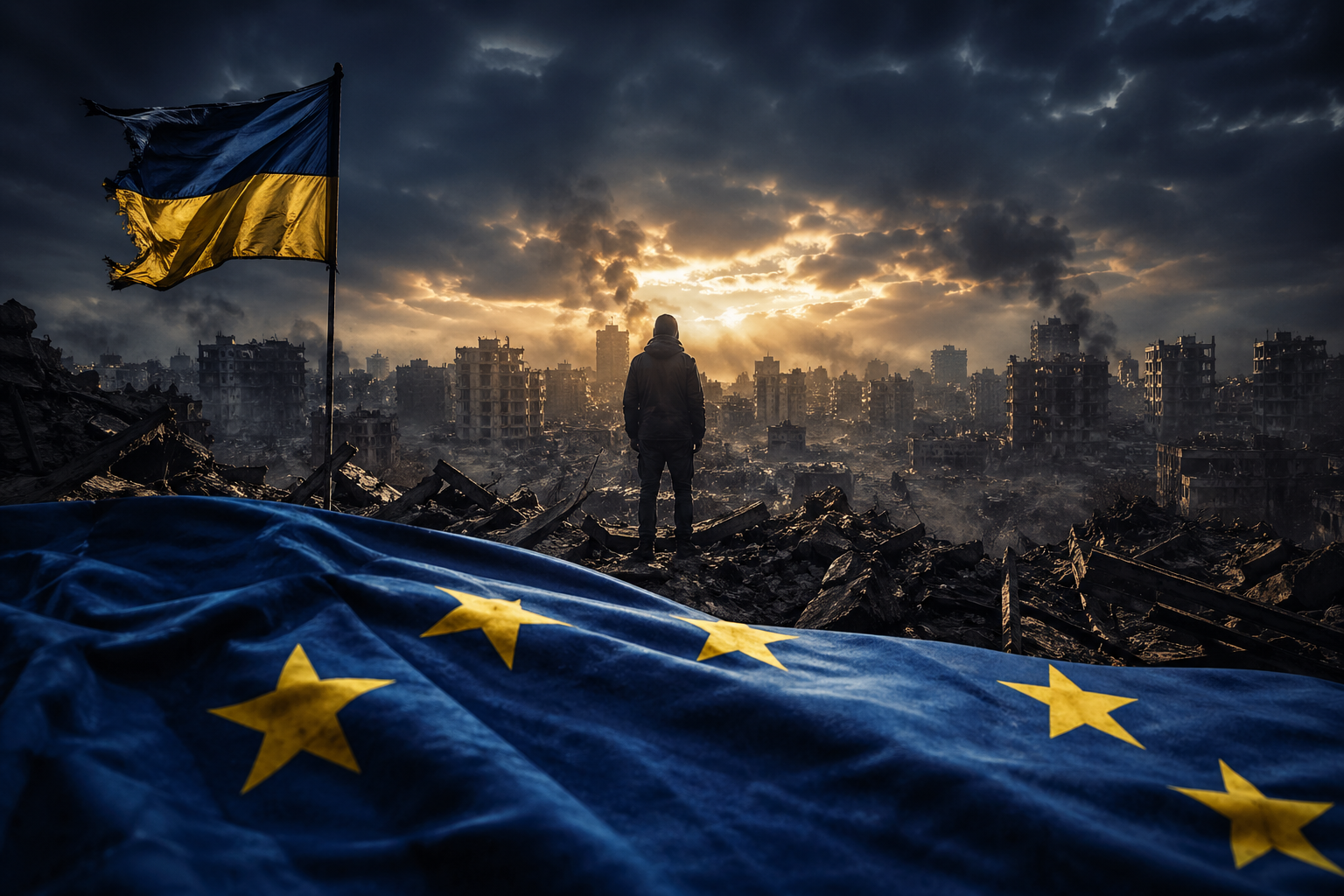
Europe Funds War: What €90 Billion Really Means For Your Future
The Hidden Cost Of Europe’s Ukraine Commitment
Europe has crossed a line that cannot easily be walked back.
A €90 billion financial commitment to Ukraine is not just another aid package. It is a structural decision—economic, political, and strategic—that will shape Europe’s finances, priorities, and internal tensions for years.
The framing is simple: support Ukraine, resist Russia, and stabilize the region.
The reality is more complex.
Because while the money flows east, the impact spreads across Europe.
What The €90 Billion? Actually Is
The European Union has formally approved a €90 billion loan to Ukraine, designed to cover roughly two-thirds of the country’s financial needs across 2026 and 2027.
This is not a grant. It is jointly borrowed money—raised on capital markets and backed by EU budgets.
The breakdown is stark:
Around €60 billion aimed at defence and military capacity
Around €30 billion for core state functions—healthcare, education, and basic government operations
The structure matters.
Ukraine is not expected to repay the loan in the traditional sense. The expectation—at least politically—is that repayment will come from future Russian reparations, potentially using frozen assets.
That assumption carries risk.
Because it depends on a future that does not yet exist.
Why Europe Did This Now
The decision was not purely economic. It was strategic.
Ukraine is facing a war economy deficit so severe that without external funding, basic state functions could collapse.
That includes:
Paying public sector workers
Maintaining healthcare systems
Keeping infrastructure running
Without support, the consequences would spill beyond Ukraine.
European leaders are effectively making a calculation:
It is cheaper—and safer—to fund Ukraine now than to deal with the fallout of failure later.
That fallout could include:
Mass migration
Regional instability
A strengthened Russia
The €90bn package is as much about European self-preservation as it is about Ukraine.
Will This Actually Make A Difference?
In the short term—yes.
The funding is widely seen as a financial lifeline, preventing immediate collapse and allowing Ukraine to continue operating as a state.
It also enables:
Continued military resistance
Domestic weapons production
Basic economic stability
But the longer-term picture is less certain.
Even with this funding, Ukraine still faces additional gaps—billions more in defense and infrastructure needs.
This is not a solution.
It is a stabilization measure.
And stabilization requires continuation.
Which means more funding, more decisions, more pressure.
How This Impacts European Citizens
This is where the story becomes real.
Because while the EU borrows collectively, the burden ultimately sits with member states—and therefore their citizens.
The immediate effects are indirect but real:
1. Pressure On Public Finances
EU borrowing increases overall financial exposure.
That does not instantly translate into higher taxes—but it constrains future spending.
Governments will face tighter trade-offs between:
Domestic investment
Public services
Defence spending
2. Opportunity Cost
€90 billion is not neutral money.
It is money that cannot be used elsewhere.
That matters at a time when Europe is already dealing with the following:
Ageing populations
Healthcare pressures
Infrastructure demands
3. Inflation And Debt Sensitivity
Large-scale borrowing can influence financial markets.
Even if indirect, it contributes to the following:
Higher debt levels
Greater sensitivity to interest rates
That feeds into mortgage costs, business lending, and economic growth.
4. Political Tension
Perhaps the most immediate impact is psychological.
Citizens in different countries will ask:
Why this level of funding abroad when pressures exist at home?
That question is already forming.
Europe Is Not Financially Comfortable
This decision does not come at a time of strength.
Several European economies are already under strain:
High public debt in countries like Italy and France
Sluggish growth across much of the eurozone
Ongoing cost-of-living pressures following inflation shocks
Energy costs, although stabilized compared to 2022 peaks, remain a structural concern.
At the same time, governments are balancing the following:
Defence spending increases
Welfare systems
Economic stagnation
The €90bn commitment lands on top of that—not in isolation.
The Slightly Uncomfortable Truth About EU Strategy
Officially, this is framed as unity.
And to a large extent, it is.
But the process revealed underlying fractures.
The funding was delayed for months due to political resistance—most notably from Hungary.
Only after political shifts and negotiations was the veto lifted.
That matters.
Because it shows that consensus exists—but it is fragile.
And fragile consensus tends to break under pressure.
Is the UK involved?
The UK is not part of this €90 billion EU loan.
Since leaving the EU, it does not participate in EU-level borrowing mechanisms.
However, that does not mean it is uninvolved.
The UK has been one of Ukraine’s largest bilateral supporters, providing:
Military aid
Financial support
Training and equipment
The difference is structural.
The EU is acting collectively.
The UK is acting independently.
Both contribute—but through different systems.
What Most People Miss
This is not just about Ukraine.
It is about the future shape of Europe itself.
The €90bn decision signals a shift toward the following:
Collective financial action
Strategic autonomy
Long-term geopolitical commitment
It pushes the EU closer to acting like a unified financial and defense bloc.
That is a significant evolution.
But it also raises questions:
How far will this model go?
Will citizens accept it?
Can it be sustained politically?
The Real Risk
The biggest risk is not that the funding fails.
It is that it becomes permanent.
If Ukraine requires continued support beyond 2027—and current projections suggest that is possible—Europe faces a rolling commitment.
That changes the equation entirely.
Because temporary support can be justified.
Permanent obligation reshapes budgets, politics, and priorities.
Summary
The EU has approved a €90 billion loan to Ukraine to cover major financial and military needs
The funding stabilises Ukraine but does not fully solve its long-term challenges
European citizens will feel indirect impacts through budgets, spending trade-offs, and economic pressure
The decision comes at a time when several European economies are already strained
The UK is not part of the EU package but remains a major independent supporter
The deeper implication is a shift toward long-term collective European financial and strategic action
Final Thought
This is not just Europe supporting a war effort.
It is Europe redefining what it is willing to fund, protect, and prioritize.
And once that line is crossed, it rarely moves back.
