

Iran Suddenly Halts Attacks on Neighbours — But With One Major Condition
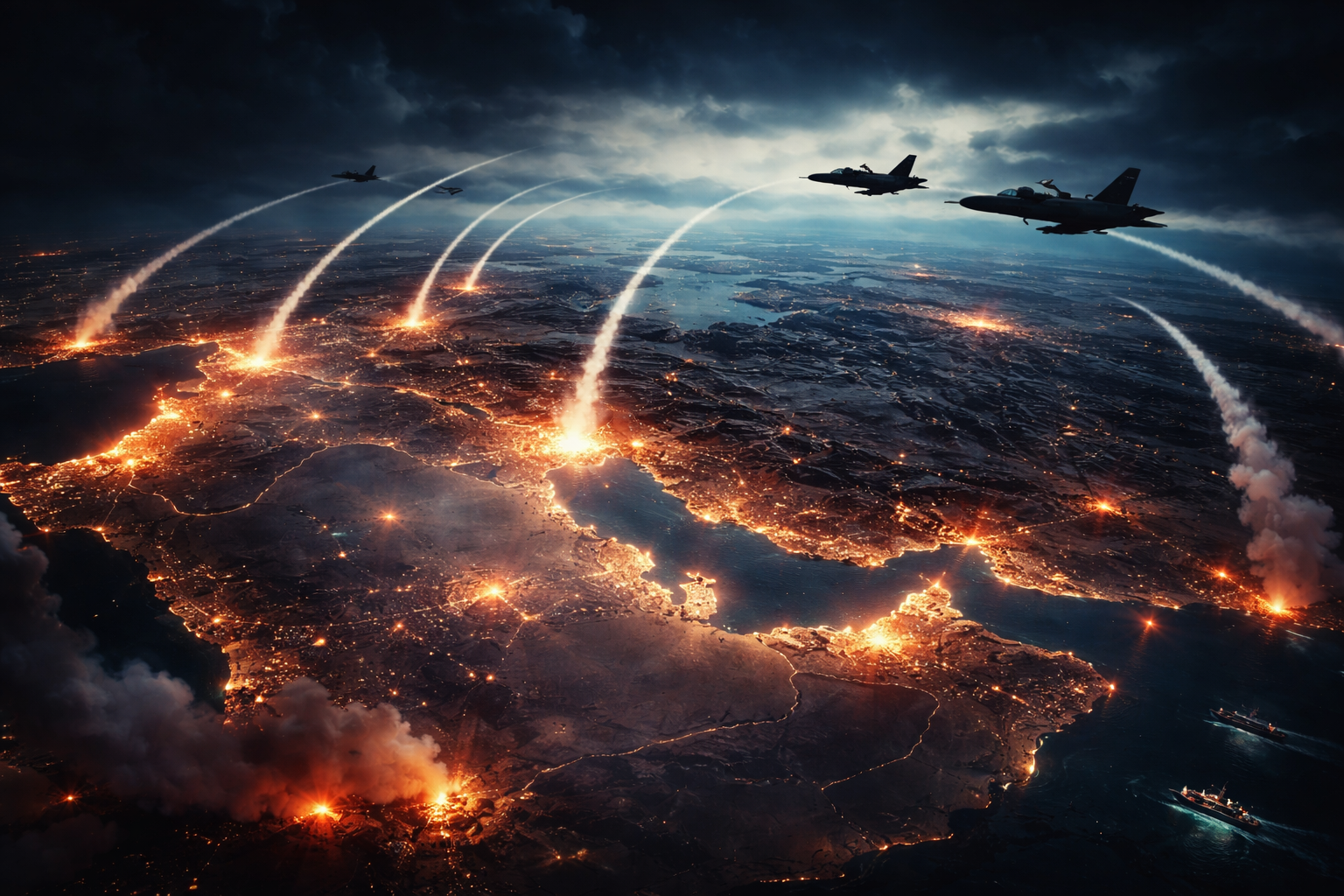
Iran Tries to Contain a Spreading Middle East War
Iran Signals It Will Halt Attacks on Neighbors—Strategic De-Escalation or Tactical Pause in a Widening War?
Iran’s president has announced that Tehran will stop attacking neighboring countries unless attacks on Iran originate from their territory, a rare public attempt to contain the regional fallout of the rapidly expanding Middle East war.
The statement, delivered in a televised address, also included an apology to Gulf states that had been hit by Iranian missiles and drones recently as the conflict with the United States and Israel intensified.
The announcement arrives as the war enters its second week, with airstrikes continuing across Iran and its regional network of allies. The declaration appears designed to reassure neighboring states such as Saudi Arabia, the United Arab Emirates, Bahrain, and Oman that they will not be targeted unless they become launch platforms for attacks against Iran.
But the pledge raises a deeper question: whether Iran is genuinely seeking to contain the war—or simply reframing how it justifies future strikes.
The story turns on whether Iran is trying to limit escalation or merely redefining the conditions under which escalation will continue.
Key Points
Iran’s president said Tehran will stop attacking neighboring states unless attacks against Iran originate from their territory.
The statement included a rare apology to Gulf countries after Iranian missiles and drones struck regional targets.
The war, triggered by U.S. and Israeli strikes on Iran, has already spread across several countries and strategic waterways.
Iranian attacks previously hit sites in Gulf states hosting U.S. forces, as well as infrastructure and shipping routes.
Tehran’s leadership structure remains unstable following the killing of Supreme Leader Ali Khamenei in an earlier strike, which has led to increased internal power struggles and uncertainty about the future direction of the Iranian government.
The new policy may aim to prevent Gulf states from joining the conflict directly, thereby reducing the risk of escalating tensions and further destabilizing the region.
A War Already Spreading Across the Region
The current conflict erupted after joint U.S. and Israeli strikes targeted Iranian military and leadership sites in late February 2026. The attacks killed Iran’s longtime Supreme Leader and triggered an immediate regional escalation.
Iran responded with missile and drone attacks across a wide arc of countries hosting American forces or logistical support. Bahrain, Saudi Arabia, and the United Arab Emirates were the targets of those strikes, with additional explosions and disruptions reported in Qatar and other locations.
Some of the attacks were aimed at military facilities used by the United States, including naval bases and airfields. But the wider regional fallout was unavoidable. Civilian infrastructure, airports, and shipping routes were disrupted, pushing oil markets higher and raising fears of a broader regional war centered on the Strait of Hormuz.
Drone and missile strikes also reached countries that historically tried to maintain neutral diplomatic positions between Iran and Western powers.
The result was a rapidly widening battlefield.
Tehran’s Message to the Gulf
Iran’s new position is not a ceasefire.
Instead, it is a conditional doctrine: Iran says it will treat neighboring territory as hostile only if attacks on Iran originate from there.
This framing is important because many Gulf states host U.S. bases, logistics hubs, or intelligence facilities that could be used in operations against Iran.
From Tehran’s perspective, those facilities create a distinction between neutral territory and active participants in the war.
Iran is effectively communicating to regional governments by announcing this conditional halt:
Stay out of the war
Prevent your territory from being used as a launch platform
Or risk becoming a target again
It is a diplomatic signal wrapped in military language.
The Power Balance Behind the Statement
The timing of Iran’s announcement is not accidental.
The country is currently under intense pressure from sustained airstrikes targeting military infrastructure and command centers. Reports suggest thousands of casualties inside Iran since the conflict began.
At the same time, Tehran is dealing with a leadership transition following the death of its supreme leader—the central figure who historically controlled both the military and political direction of the state.
In such moments, states often attempt to reduce the number of active fronts in a conflict.
Iran’s leadership may calculate that widening the war to every Gulf country would be strategically unsustainable while facing simultaneous strikes from major military powers.
Limiting targets—even rhetorically—buys time.
What Most Coverage Misses
The key strategic hinge is not the apology.
It is the conditional wording of Iran’s new policy.
Iran did not promise to stop attacks on neighbors outright. Instead, it introduced a new standard: strikes will resume if attacks on Iran originate from those countries.
That distinction matters enormously.
Many of the countries Iran is addressing host American or allied military infrastructure. Even if those governments do not actively participate in the war, operations launched from their territory could still meet Iran’s stated threshold.
In practice, such an approach creates a legal and strategic justification for future strikes while appearing to pursue de-escalation.
It is both a diplomatic signal and a deterrence framework.
The Regional Stakes
For Gulf states, the announcement creates a narrow but critical diplomatic path.
Most of them do not want to become direct participants in a war between Iran, Israel, and the United States.
Their priorities are stability, energy exports, and protecting shipping routes through the Persian Gulf.
But many also host key Western military assets.
That means governments across the region may now face a difficult balancing act:
Maintaining defense cooperation with Western allies
While ensuring their territory is not seen as launching attacks on Iran
If they fail to manage that balance, they risk becoming targets again, potentially facing military retaliation or increased tensions in the region.
The Paths Ahead
Three possible trajectories now define the next phase of the conflict.
One scenario is regional containment. Gulf states keep their distance from active operations against Iran, allowing the war to remain largely between Iran, Israel, and the United States.
A second scenario is gradual escalation. If Iranian leaders conclude that attacks are originating from neighboring territory, the conflict could again spread across the Gulf.
The most dangerous path is systemic regional war—a cascade in which multiple states are drawn into direct military exchanges.
The signals to watch are straightforward:
Whether new Iranian strikes hit Gulf states again
Whether U.S. operations expand from bases in the region
Whether Iran’s leadership transition stabilizes or fragments
The current announcement may look like de-escalation.
But in a conflict this fluid, it may also be the first step in redefining how escalation will unfold.
