North Korea Threatens More Border Weapons as Mine Dispute Deepens
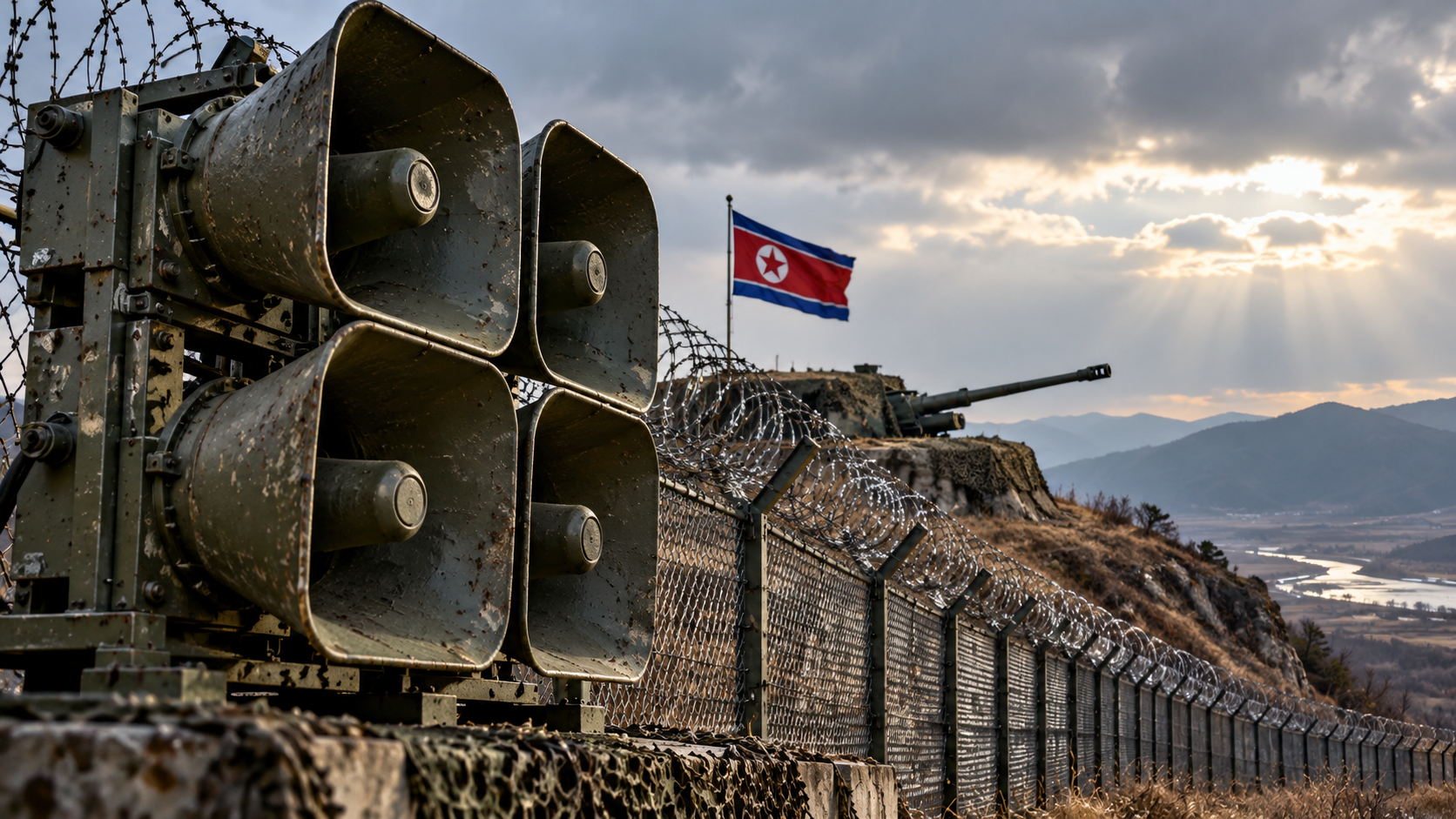
Mines, Warning Shots and Loudspeakers: Inside Korea’s Latest Border Crisis
The Warning Across Korea’s Frontier
Kim Yo Jong says Pyongyang is considering additional strike weapons and renewed propaganda broadcasts as tensions over mines and border crossings persist.
North Korea threatened on Monday, 19 October 2026, to deploy more weapons along its border with South Korea and restart propaganda loudspeaker broadcasts, adding pressure to a confrontation over warning shots and a disputed mine blast.
Kim Yo Jong, the influential sister of leader Kim Jong Un, said the frontier was “very unstable”. She accused South Korean troops of endangering North Korean personnel and said military leaders were considering further measures.
The announcement describes options under review. It does not establish that additional weapons have arrived or that broadcasts have resumed. What it does show is Pyongyang’s willingness to threaten another reversal of efforts to quiet the border.
What North Korea Is Threatening
Kim’s statement referred to additional tactical strike weapons near the southern frontier, renewed loudspeaker broadcasts and other unspecified measures. It gave no clear deployment timetable or inventory of the weapons being considered.
That leaves important questions unanswered. The statement does not identify the units involved, where equipment would go or what circumstances would trigger its use.
Nor does the word tactical establish that nuclear weapons are involved. Without a specified system or warhead, describing this as a confirmed nuclear deployment would go beyond the evidence.
The wording nevertheless puts military force behind the political warning. Pyongyang is presenting the safety of its border troops as a justification for potentially increasing its ability to strike across the frontier.
Kim’s prominence also matters. Her established role in North Korea’s external messaging makes the intervention a significant political signal, though her statement alone cannot reveal the military’s operational orders.
The Border Work Behind the Warning Shots
The immediate friction concerns North Korean construction near the Military Demarcation Line, the dividing line within the Demilitarised Zone. South Korea’s military says Northern troops have crossed that line while carrying out fortification work, prompting warning broadcasts and shots.
Pyongyang portrays those responses as intimidation and obstruction. The competing accounts turn the same sequence into two different security arguments: Seoul says it is enforcing the boundary; the North says its personnel are being threatened.
Kim also supplied detailed counts of South Korean warnings. Those figures are North Korean allegations, rather than a jointly established record, and should not be treated as independently verified measurements of the confrontation.
Construction creates repeated opportunities for contact between troops. Even when a crossing is brief, soldiers on the other side must decide whether it is accidental, part of the work or deliberate. A warning intended to force a withdrawal can itself be interpreted as preparation to attack.
That is the practical risk behind the rhetoric. A disputed boundary incident can become a confrontation before either government has explained it publicly.
The September Mine Blast Remains Disputed
The latest threat follows an explosion on 21 September that injured three South Korean soldiers, two seriously. Seoul has blamed deliberately planted North Korean mines. Pyongyang denies responsibility and has accused the South of staging the incident.
Those positions cannot be reconciled by presenting both as established fact. South Korea’s attribution and North Korea’s denial remain opposing claims about responsibility; the denial does not itself disprove Seoul’s findings.
The injuries have given the dispute a consequence beyond competing statements. Decisions about patrols, warning procedures and construction now sit alongside demands for accountability for wounded personnel.
The relevant historical comparison is 2015, when mine explosions that maimed two South Korean soldiers were followed by a dangerous confrontation involving renewed propaganda broadcasts. That episode shows how mines and loudspeakers can become linked in an escalation. It does not prove the present crisis will follow the same course.
Why Loudspeakers Matter
Border broadcasting is a form of psychological pressure. Its importance lies partly in its persistence: a government can maintain a hostile presence across the frontier without launching an attack.
South Korean President Lee Jae Myung’s administration halted propaganda broadcasts after taking office last year, and North Korea subsequently stopped its own. Restarting them would undo one visible reduction in hostility.
Warning announcements directed at troops approaching or crossing the dividing line serve a different immediate purpose from sustained propaganda broadcasts. Treating every use of a loudspeaker as the same activity would obscure the dispute.
For border communities, a renewed broadcasting campaign could also mean the return of disruptive noise. Civilians can bear the daily cost of a confrontation even while the military measures remain below the threshold of an armed clash.
Could This Become a Wider Conflict?
A local exchange of fire is a more direct concern arising from this statement than a prediction of general war. The danger would increase if warning shots caused casualties, if troops answered them with aimed fire or if additional weapons were positioned to support retaliation.
That is an assessment of a possible escalation path, rather than evidence that either government has chosen it.
The broader weapons competition makes restraint more consequential. North Korea’s recent ballistic missile launches and its development of shorter-range rocket systems form part of a military environment in which a frontier incident could carry wider implications.
Yet capability does not establish intent. Monday’s statement supplies no basis for declaring an invasion imminent or assigning a credible numerical probability to war.
What Would Show the Threat Is Becoming Action?
The next useful evidence would be a confirmed resumption of Northern broadcasts, identifiable weapons movements or a South Korean announcement changing its border posture. Each would clarify whether Pyongyang is implementing the options Kim described.
Evidence about warning-shot incidents would matter too. Verified locations, casualties and the sequence of any exchange would tell readers more than another count of alleged provocations.
For now, the unresolved operational question is whether soldiers working near the dividing line will withdraw when challenged, or whether the next encounter will bring return fire.
Sources
Yonhap News Agency — N.K. Leader’s Sister Calls Situation at Southern Border ‘Very Unstable’ — 19 October 2026; Kim’s statement, disputed mine-blast responsibility, casualty severity and the previous broadcast halt.
Associated Press — North Korea Threatens to Restart Propaganda Broadcasts and Deploy More Weapons at Border With South — 19 October 2026; South Korean account of crossings and warning responses, plus the 2015 precedent.
The Asia Business Daily — Kim Yo Jong: Considering Resuming Broadcasts Toward South Korea, Deploying More Strike Assets Along Southern Border — 19 October 2026; unspecified weapons and timing, construction dispute and effects of previous noise broadcasts.
Next Reads
North Korea Fires Barrage Of Ballistic Missiles As Kim Jong Un Raises Military Tensions With South Korea And Japan — The recent missile activity behind the wider confrontation.
North Korea’s Upgraded Rocket System Can Now Reach Deep Into South Korea — And Kim’s Real Target Is Becoming Clear — Why weapons with shorter ranges matter on the Korean Peninsula.
North Korea’s Elite Reshuffle Tests the Regime’s Control — Context on Kim Yo Jong’s political role and the limits of interpreting regime signals.
