
The King, The President And The Nuclear Line
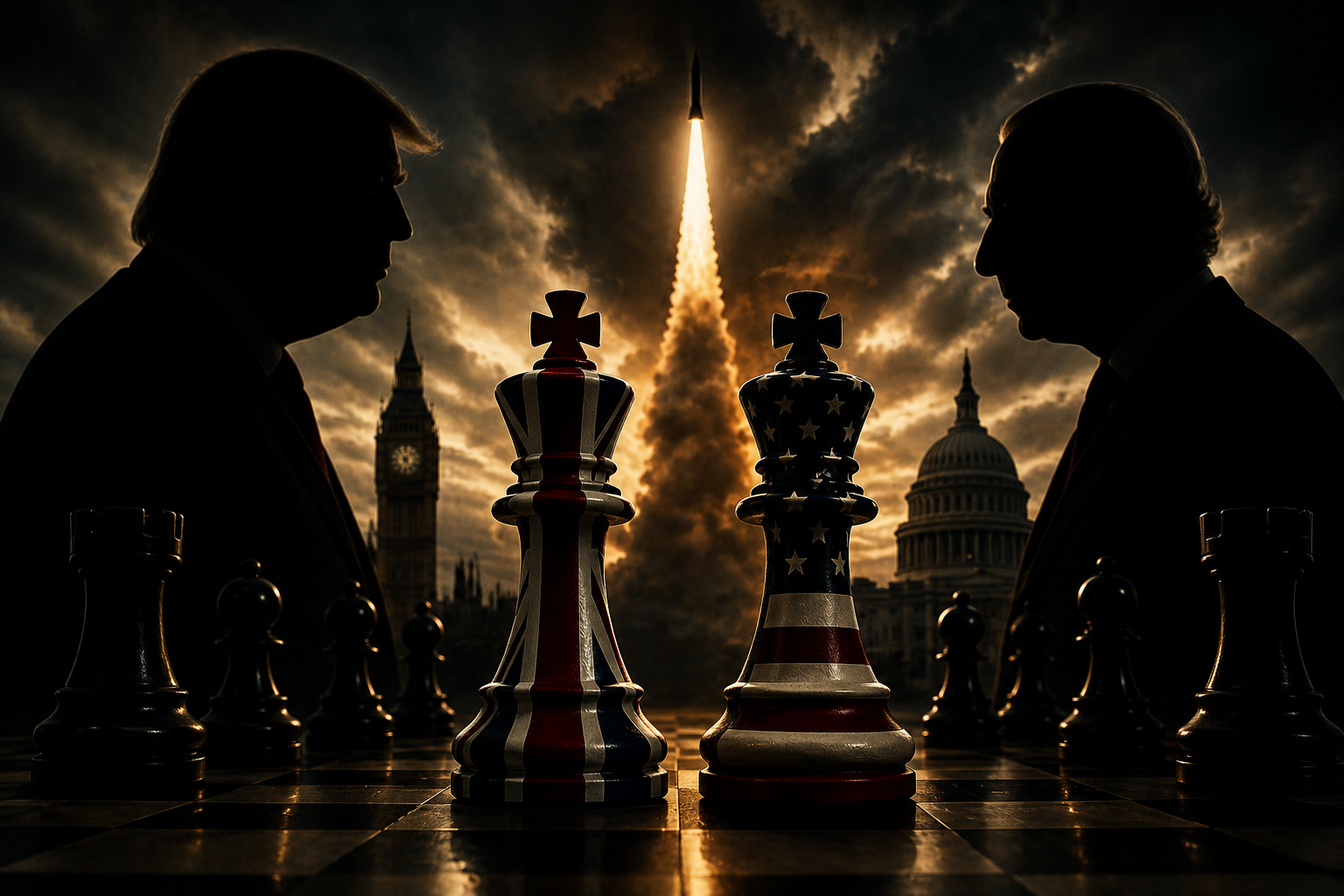
Trump’s King Charles Claim Has Sparked A Royal Crisis Over Iran
Trump Tried To Turn Royal Presence Into Political Loyalty
A single sentence at a White House state dinner has done what British diplomacy spends decades trying to avoid.
It pulled the Crown into a live geopolitical conflict.
Donald Trump claimed that King Charles agreed with him that Iran must never be allowed to obtain a nuclear weapon, reportedly saying the King agreed with him “even more than I do.” The problem was not the broad policy direction. The UK government has repeatedly said Iran must never acquire a nuclear weapon. The problem was ownership. Trump did not simply say Britain agreed. He personalized the claim. He attached it to the King.
That is where this story becomes bigger than one dinner.
King Charles did not publicly make that Iran statement in his remarks. During the visit, he avoided direct reference to Iran while stressing transatlantic unity, NATO, Ukraine, democratic values, and the deeper architecture of the UK–US alliance.
Buckingham Palace then responded with a line that looked mild but carried constitutional force: the King was “naturally mindful of his Government’s long-standing and well-known position on the prevention of nuclear proliferation.”
That sentence did not create a public war with Trump.
It did something more precise.
It moved the king away from Trump’s personal framing and back into the constitutional lane: the elected government has a policy, the monarch is mindful of it, the king is not a freelance political actor, and royal presence is not presidential endorsement.
That is the hidden tension behind the whole episode.
Why The Palace Line Matters
Buckingham Palace was conceding that Britain opposes Iran acquiring nuclear weapons.
The UK Government’s position is explicit. In February 2026, Prime Minister Keir Starmer said Iran “must never be allowed to develop a nuclear weapon,” describing that as the primary aim of the United Kingdom and its allies. The UK also told the UN Security Council in March 2026 that it remained committed to a lasting solution ensuring Iran never acquires a nuclear weapon.
So the constitutional problem is not substance.
It is attribution.
In the British system, the monarch represents the state but does not set policy. The official Royal Family guidance is blunt: the monarch remains politically neutral while retaining the private right to advise and warn ministers. Those audiences with the Prime Minister are private for a reason.
That makes Trump’s wording unusually sensitive.
Had he said “the United Kingdom agrees,” the sentence would have been politically ordinary. Had he said “the British Government agrees,” it would have been routine. By saying Charles agreed with him, Trump shifted the frame from government policy to personal royal alignment.
That is not cosmetic.
A monarch can host, welcome, symbolize, soothe, and dignify. He cannot be seen to endorse a foreign president’s contested war narrative without weakening the very neutrality that makes royal diplomacy useful.
The palace's response, therefore, did three things at once.
It acknowledged Britain’s anti-proliferation position.
It avoided contradicting Trump aggressively.
It refused to let the King become Trump’s political property.
That is why the statement matters. It was not a roar. It was a constitutional correction.
Trump’s Claim Was Politically Useful
Trump’s version of the moment had obvious value.
A prime minister can offer an alliance. A foreign secretary can offer policy. A monarch offers something rarer: ceremony, continuity, historical theater, and symbolic legitimacy. Standing beside King Charles lets a president wrap a policy position in something older than party politics.
That is relevant especially for Trump.
Trump’s political style has always been personal. He does not merely seek agreement; he seeks visible alignment. He likes the image of loyalty, strength, deference, and historic validation. His political story often turns institutions into characters in a drama: friend or enemy, loyal or disloyal, strong or weak, with him or against him.
That loyalty theme is not new. Former FBI director James Comey testified that Trump told him, “I need loyalty,” during a private dinner in 2017; reporting around Trump’s later personnel choices also repeatedly highlighted his preference for loyalists in key roles.
That history helps explain why the King Charles line landed so sharply.
Trump is unlikely to view royal silence in the British constitutional way. He is more likely to view proximity, courtesy, and private conversation as usable evidence of personal rapport. If Charles listened politely, Trump could frame that as agreement. If the palace corrects without attacking, Trump can still tell his own supporters the king was broadly behind him.
That is the Trump method: turn the room into evidence.
How Trump Is Likely To React
The most likely Trump reaction is not a careful retreat.
It is a controlled double-down.
He may not pick a direct fight with Buckingham Palace, because Trump values royal pageantry and enjoys being seen alongside historic institutions. He has frequently praised the monarchy and clearly understands the prestige value of a royal visit. But he is unlikely to apologize for the framing either.
Expect three possible moves.
First, he may soften the wording while keeping the impression. Something like: “The King knows the UK position, and we had a great conversation.” That preserves his claim without openly challenging the Palace.
Second, he may redirect the issue toward Starmer. Trump has already used Iran to pressure the UK government and criticize British positioning. If he senses distance from the palace, he can turn the story back into a loyalty test for the elected government: are they with America, or are they hesitating?
Third, he may simply move on while leaving the image behind. In modern politics, the first clip often matters more than the correction. Trump does not need Buckingham Palace to endorse his wording forever. He only needed the world to hear the King’s name in the same sentence as his Iran red line.
That is why this episode is dangerous for the Palace.
The correction can be constitutionally perfect and still lose the viral battle.
Is There Historical Precedent?
There is precedent for the monarchy being used as diplomatic soft power.
There is precedent for royal comments being interpreted politically.
There is far less precedent for a US president publicly attributing a live war-adjacent foreign policy position to the British monarch in such personal terms.
The closest historical examples are not identical, but they explain the risk.
Queen Elizabeth II’s 1957 US state visit came after the Suez Crisis, one of the deepest ruptures in modern UK–US relations. The visit helped repair the atmosphere after a strategic humiliation that exposed Britain’s reduced global power and dependence on Washington. Royal diplomacy became a way to restore warmth where government policy had produced fracture. The Royal Family’s own history of UK–US ties records Elizabeth II’s state visits to America in 1957, 1976, 1991, and 2007.
That is relevant because Charles’s visit sits in a similar category: a royal deployment to soften political strain.
Another precedent is the 2014 Scottish independence referendum, when Queen Elizabeth said she hoped people would “think cautiously about the future.” Palace sources insisted she was constitutionally impartial, but the remark was widely read through a political lens because the referendum concerned the future of the United Kingdom itself.
That moment shows the monarchy’s permanent vulnerability: even careful language can become political when the national stakes are high.
But Trump’s Iran claim goes further in one important way.
In Scotland, the Queen used her own words, however cautious. In this case, Trump supplied the words and attached them to Charles.
That is the escalation.
The monarchy was not merely interpreted. It was spoken The context in Iran makes the claim more significant.avier.
Iran poses diplomatic challenges.
The UK, US, and allies have long opposed Iran acquiring nuclear weapons. Iran, meanwhile, has maintained that its nuclear program is peaceful, a position recorded in parliamentary research on the issue.
The current context is even more volatile because Iran sits inside a wider Middle East security crisis involving military pressure, sanctions, regional attacks, nuclear inspections, the Strait of Hormuz, and the question of whether Western action prevents escalation or accelerates it.
That is why language matters.
When a US president says the King agrees with him, the statement does not simply describe a view. It performs alignment. It tells audiences in Washington, London, Tehran, and beyond that the symbolic head of the British state stands with the red American line.
Even if Buckingham Palace later narrows the meaning, it has already created the original political image.
Charles got dragged into it without needing to mention Iran.
Trump did it for him.
What Most People May Miss
The obvious story is Trump versus Buckingham Palace.
The deeper story is monarchy versus political capture.
A royal state visit is built from images: military ceremony, polished rooms, formal speeches, toasts, gifts, handshakes, shared history, and carefully choreographed warmth. Those images are designed to project continuity between nations.
But images can be seized.
A monarch does not need to endorse a policy speech to become useful to a politician. Occasionally it is enough to be in the room. A smile, a toast, a photograph, and a sentence from the host can turn ceremonial neutrality into implied agreement.
That is why palace language often sounds bland.
The blandness is a shield.
When Buckingham Palace says the King is mindful of his Government’s position, it is not trying to thrill the public. It is trying to preserve a constitutional boundary. It is saying the monarch is connected to the British state but not available for personal political use.
That difference is everything.
The Special Relationship Is Strong — But Not Equal
This episode also exposes a harder truth about the “special relationship.”
The UK and US remain deeply linked by defense, intelligence, trade, history, culture, and institutions. Charles’s visit was designed to reinforce that bond at a tense moment, with the king invoking transatlantic cooperation and the long memory of alliance.
But special does not mean frictionless.
The relationship has survived Suez, Vietnam-era tensions, Grenada, Iraq, Afghanistan, trade disputes, NATO arguments, and disagreements over Europe. It often works because both sides know how to disagree while preserving the larger architecture.
Trump’s style tests that architecture.
He likes visible loyalty. Britain prefers managed ambiguity. Trump wants tough public lines. The UK often wants room for diplomatic maneuvering. Trump personalizes alliances. Britain constitutionalizes them.
Those differences become especially awkward when the bridge uses the monarch.
For the UK government, the risk is that Trump’s claim limits British options. If the King personally backs Trump’s Iran position, Starmer faces extra pressure not to appear softer than the Crown. That is constitutionally reversed. The monarch should not be used to box in the elected government.
For Washington, the risk is subtler. If US presidents overuse royal symbolism for partisan or military messaging, British officials may become more cautious about offering it. Royal diplomacy works because it feels above politics. If it starts looking like a prop in US domestic theater, its usefulness declines.
For Buckingham Palace, the danger is reputational. The monarchy’s soft power depends on restraint. If Charles is repeatedly pulled into active disputes, the institution starts to look less like a stabilizing symbol and more like a contested political asset.
The palace chose the only safe route.
Buckingham Palace had no perfect option.
A direct denial could have created a diplomatic incident with the president of the United States during a state visit.
A warm confirmation could have damaged royal neutrality.
Silence could have allowed Trump’s personal framing to harden into the accepted version.
So the Palace chose the narrowest possible correction.
It did not say Trump was lying.
It implied the King agreed.
It did not say the King personally endorsed Trump.
It pointed to the government.
That is the constitutional map: elected ministers own policy; the monarch remains informed, symbolic, and neutral; and foreign leaders do not get to convert royal courtesy into political loyalty.
The line was careful because it had to be.
But careful does not mean weak.
Occasionally the most powerful sentence in diplomacy is the one that refuses to provide more than it should.
The Real Meaning Of The Moment
Trump’s claim about King Charles matters because it shows how modern power works.
Not only through armies.
Not only through treaties.
Not only through formal statements.
But through narrative capture.
Who appears aligned? Who appears isolated? Who looks strong? Who looks loyal? Who can be placed inside whose story?
Trump tried to place King Charles inside his Iran story.
Buckingham Palace pulled him back into the British constitution.
That is the article.
Not whether Britain opposes Iranian nuclear weapons. It does. Not whether the UK and US remain allies. They do. It is not whether Charles privately understands the stakes. He almost certainly does.
The issue is whether a monarch can be publicly converted into a presidential endorsement machine.
The answer from Buckingham Palace was no.
Quietly, carefully, unmistakably: no.
Final Summary
Trump claimed King Charles agreed with him that Iran must never obtain a nuclear weapon.
King Charles did not publicly make that statement in his remarks.
Buckingham Palace responded by placing the King inside the UK Government’s long-standing nuclear non-proliferation position, not Trump’s personal framing.
There is historical precedent for royal diplomacy being used to repair UK–US strain, especially after Suez, and for royal comments being interpreted politically, as in the Scottish independence referendum. But a US president publicly attributing a live foreign policy red line to the monarch in such personal terms is rare.
Trump is likely to treat the moment as useful evidence of alignment rather than apologize for the constitutional awkwardness. His long-standing emphasis on loyalty makes the claim politically revealing.
The UK impact is not an immediate rupture. It is pressure: on Starmer, on Palace neutrality, and on the special relationship’s ability to absorb Trump’s direct, personalized style.
The Palace did not shout.
It did not need to.
It simply reminded the world that King Charles follows the constitutional line—not the Trump narrative.
