Trump Draws a Hard Line: Iran Blockade Stays Until Tehran Bends
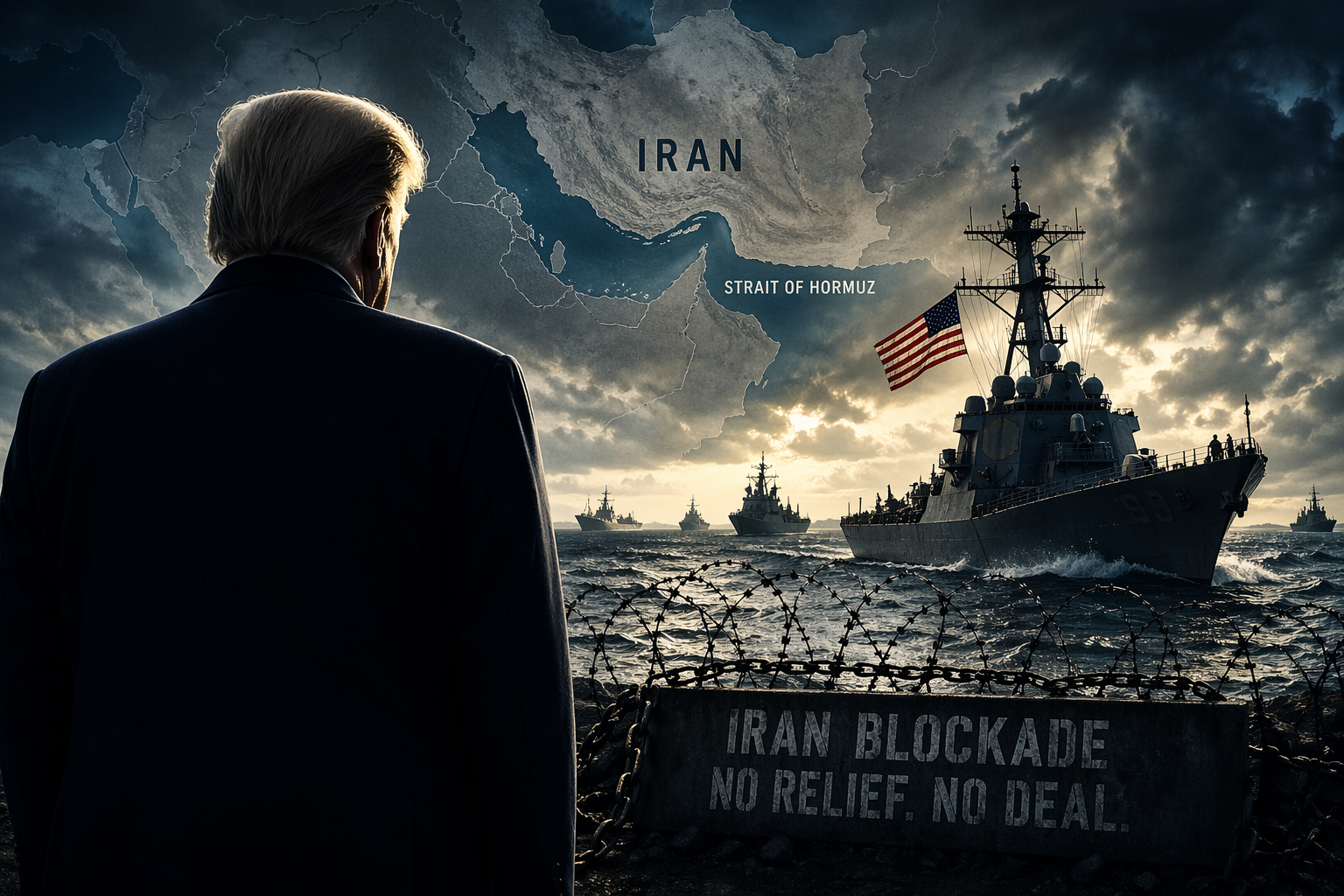
Trump Escalates: Blockade Becomes America’s Core Leverage on Iran
The Strait Squeeze: Why Trump Won’t Back Down on Iran
The blockade is not just a military move—it’s the central pressure point in a high-risk gamble over war, oil, and geopolitical power
The United States has made its position unmistakably clear: the blockade on Iran is not being lifted. Not now. Not until a deal is done.
That single decision has become the hinge point of an escalating crisis—one that now stretches far beyond diplomacy and into the arteries of the global economy.
At the centre of it all is a simple but brutal equation: pressure first, negotiation second.
What’s Actually Happening
The U.S. naval blockade, launched after failed negotiations, is designed to stop ships entering or leaving Iranian ports. It is being actively enforced—with vessels intercepted, turned around, and, in at least one case, seized outright.
Trump has made clear the condition for lifting it: a comprehensive agreement with Iran. Until then, the blockade remains “in full force".
This is not symbolic pressure. It is physical, economic, and immediate.
And it is already reshaping the battlefield.
Why This Matters More Than It Looks
Most people see a blockade as a military tactic. That’s only part of it.
This is economic warfare at scale.
Iran depends heavily on oil exports
A blockade restricts its ability to sell that oil
That cuts off revenue—fast
Analysts estimate the pressure could cost Iran hundreds of millions per day and force difficult internal decisions.
But the real story is bigger: this is leverage designed to force a political outcome.
The message is simple—negotiate under pressure, or absorb the consequences.
The Global Shockwave: Oil, Shipping, and Risk
The Strait of Hormuz is one of the most critical chokepoints in the world. Around a fifth of global oil flows through it.
That makes this blockade a global issue instantly.
We’re already seeing the effects:
Oil prices rising amid disruption fears
Shipping routes destabilised
Insurance and freight costs increasing
Even limited disruption in this corridor sends ripples through global markets.
This is why governments far beyond the region are watching closely.
Because what happens here doesn’t stay here.
The Escalation Loop
Here’s the dangerous dynamic now in play:
The U.S. tightens the blockade
Iran responds—sometimes by restricting shipping or threatening retaliation
Markets react
Pressure increases on both sides
At times, Iran has even moved to close the Strait in response, raising the stakes further.
Each move increases the cost of backing down.
Each step makes the next one harder to reverse.
What Media Misses
The blockade is not just about Iran.
It’s about control.
Control over:
Energy flows
Trade routes
Negotiation timelines
Strategic tempo
This is a classic pressure strategy—compress time for your opponent while stretching your own.
Trump’s refusal to lift the blockade is not stubbornness. It is the strategy.
The Negotiation Reality
Despite the hardline stance, talks are still hovering in the background.
Signals suggest:
Potential negotiations in Pakistan
Uncertainty over whether Iran will engage
Deep mistrust on both sides
Iran has rejected talks under pressure, framing the blockade as coercion rather than diplomacy.
That creates a paradox:
The pressure is meant to force talks—but it may also prevent them.
What Happens Next
Three paths now dominate the outlook:
Most Likely
A prolonged standoff.
The blockade continues. Talks stall. Markets remain volatile.
Most Dangerous
Escalation at sea.
A single miscalculation—another seizure, a military clash—pushes the conflict wider.
Most Underestimated
A sudden deal.
If pressure bites hard enough, negotiations could move quickly, ending the blockade almost as abruptly as it began.
The Real Endgame
This is not just about Iran’s ports.
It’s about who dictates terms in the region—and how far economic pressure can go before it turns into something else.
The blockade is the lever.
The deal—if it comes—is the outcome.
But the longer this holds, the more one thing becomes clear:
This isn’t just a negotiation.
It’s a test of endurance.
And neither side looks ready to blink.
