US Forces Are Leaving Iraq After Two Decades — And Iran Stands To Gain Influence
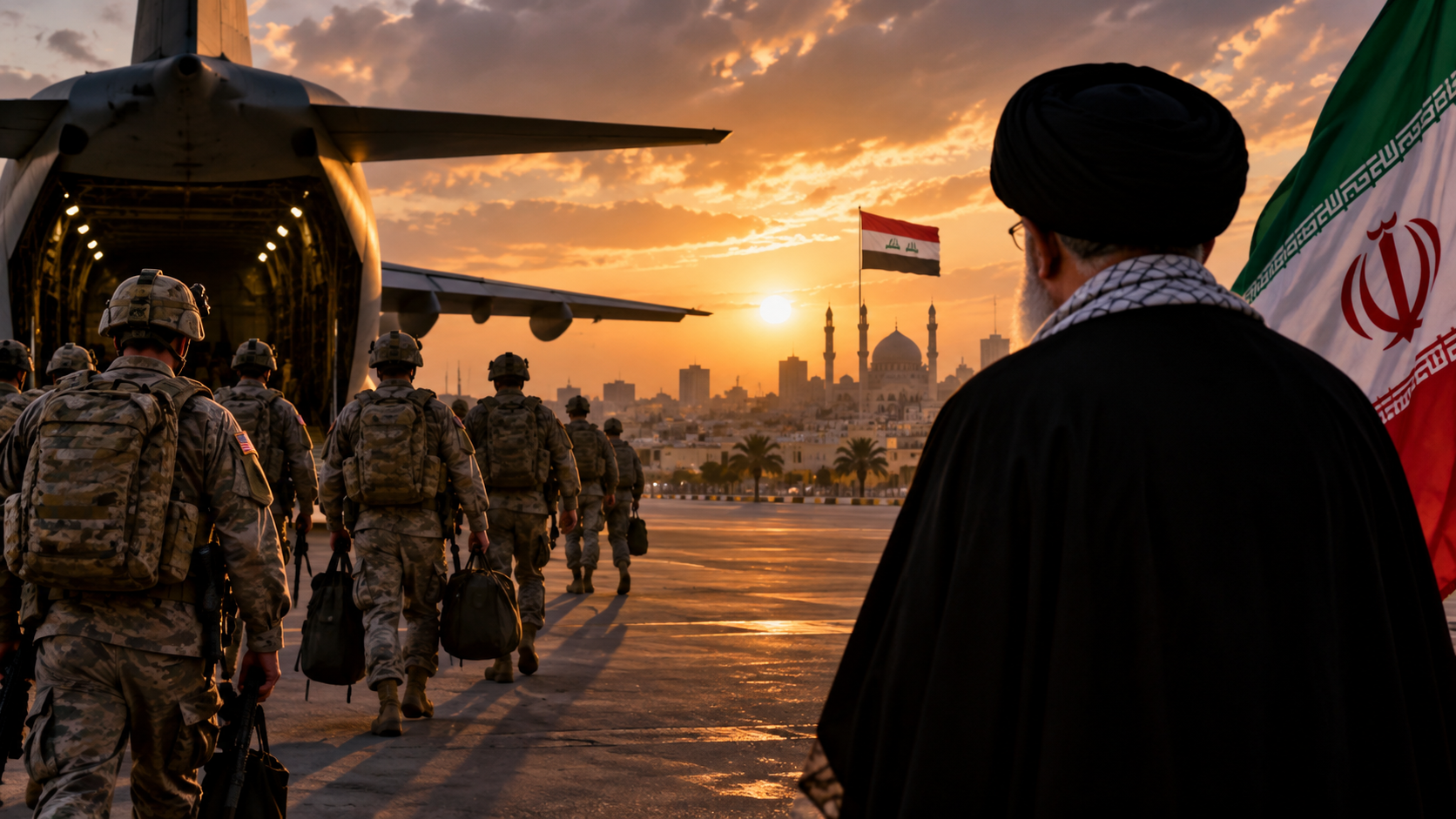
America Steps Back From Iraq As Iran-Linked Militias Test Baghdad’s Control
Who Fills The Vacuum?
The coalition mission is ending on schedule, but Iraq’s security ties with Washington will continue as Baghdad confronts Iran-linked militias, ISIS remnants and a more independent future.
The United States is completing the final stage of its military withdrawal from Iraq, closing one of the longest and most consequential chapters in modern American foreign policy.
The deadline is 30 September 2026. It comes more than twenty-three years after US-led forces invaded Iraq in 2003 and more than a decade after American troops returned in large numbers to help fight Islamic State.
This does not mean Washington is severing its relationship with Baghdad. The two countries are shifting towards a bilateral security partnership built around training, military cooperation, intelligence and other forms of support.
But the physical reduction of the American military presence changes the balance inside Iraq. It removes a visible counterweight to armed groups aligned with Tehran and gives the Iraqi government a larger test of whether it can enforce its authority over every armed force operating on its territory.
That is why the withdrawal matters far beyond troop numbers.
The Withdrawal Has Been Years In The Making
The current drawdown was not announced suddenly.
Washington and Baghdad agreed in 2024 on a phased transition from the international coalition mission against Islamic State towards a more conventional bilateral security relationship. The timetable was tied to the strength of Iraqi forces, the operational environment and the remaining threat from ISIS.
The first phase brought the coalition mission inside Iraq towards an end. The second allowed operations supporting the fight against ISIS in Syria to continue from Iraqi territory through September 2026.
By early 2026, coalition advisers had already left military bases and command headquarters in Iraq’s federal areas. The final stage now brings the remaining mission to its agreed conclusion.
For Baghdad, the symbolism is substantial. The Iraqi state has spent years trying to move beyond the image of a country whose security depends on foreign forces.
Iraqi officials say national forces now control the country and that there are no longer foreign military bases operating as they once did.
The withdrawal therefore serves two narratives at once.
For Washington, it is the completion of a planned transition after the territorial defeat of Islamic State.
For Baghdad, it is an assertion that Iraq can increasingly manage its own security while maintaining external partnerships on Iraqi terms.
Iran’s Opportunity Is Political As Much As Military
The most important question is not simply whether Iran gains territory or deploys more forces. Iran already has deep political, economic, religious and security ties inside Iraq.
The larger issue is whether the reduced American military footprint gives Tehran and Iran-aligned Iraqi groups more freedom to shape decisions inside the country.
Several powerful Shiite militias have longstanding links to Iran. Some also operate within or alongside structures connected to Iraq’s Popular Mobilisation Forces.
The Iraqi government has repeatedly said that weapons must come under state authority. That principle is easy to state and much harder to enforce.
Some armed groups have resisted pressure to disarm. Their influence reaches beyond the battlefield into politics, patronage networks and parts of the economy.
That means the post-withdrawal contest will not necessarily look like a conventional struggle between two foreign powers. It may instead be decided through Iraqi institutions, militia influence, parliamentary alliances, economic ties and control over security structures.
The wider US-Iran confrontation makes that balance even more sensitive. American installations across the region have already become part of the conflict, while Tehran has repeatedly treated the US military presence in the Middle East as a strategic target.
Removing troops from Iraq therefore reduces one potential flashpoint. It also removes part of the deterrent presence that had limited how freely Iran-linked groups could operate.
Both effects can be true at the same time.
Baghdad Wants Sovereignty Without Isolation
Iraq’s leaders do not want the country reduced to a choice between Washington and Tehran.
Baghdad has economic, military and diplomatic reasons to maintain strong ties with the United States. It also shares a long border with Iran and has deep religious, commercial and political connections across that frontier.
The result is a constant balancing act.
Iraqi governments have often tried to avoid becoming the battlefield for somebody else’s confrontation. That has become harder as the Iran conflict has spread across countries hosting American forces.
The withdrawal may make that balancing act easier in one respect. Fewer American forces inside Iraq means fewer obvious military targets for groups seeking to pressure Washington.
But it also increases the importance of Baghdad’s own ability to prevent militias from conducting independent military operations.
Sovereignty is not only about removing foreign troops. It is also about whether the elected government can decide who carries weapons, who launches attacks and who controls the use of force.
That may become the central measure of what the withdrawal ultimately means.
ISIS Has Been Defeated As A Caliphate, Not Erased
The second major risk is Islamic State.
ISIS no longer holds the vast territory it once controlled across Iraq and Syria. Iraqi forces are stronger, better organised and more experienced than they were when Mosul fell in 2014.
But the group has not disappeared.
Sleeper cells and insurgent networks remain capable of operating in remote areas, exploiting local grievances and taking advantage of security gaps.
The US and Iraq built the withdrawal timetable partly around the assessment that Iraqi forces could handle a much larger share of the threat themselves.
That judgement will now face a real-world test.
The danger is not necessarily a sudden return to the conditions of 2014. Iraq’s security institutions are different today.
The more realistic concern is gradual erosion: small attacks, weaker intelligence coverage, gaps between federal and regional forces, or instability that gives militant networks room to rebuild.
That is why Washington’s future relationship with Iraq still matters even after the coalition mission ends.
Training, intelligence, arms sales, liaison officers and bilateral military cooperation can continue without recreating the old coalition footprint.
The Kurdish Region Faces A Different Calculation
The withdrawal is also viewed differently in Iraqi Kurdistan.
Kurdish leaders have depended heavily on Western security relationships for decades. The Peshmerga played a major role in fighting Islamic State, while the autonomous region has frequently faced pressure from neighbouring states and armed groups.
A reduced US military presence therefore carries a different strategic meaning in Erbil than it does in Baghdad.
The question is not only whether Iraqi forces can suppress ISIS. It is whether the broader balance among Baghdad, the Kurdish regional authorities, Iran, Turkey and armed factions shifts in ways that leave the Kurdish region more exposed.
That concern has become sharper during the wider US-Iran conflict, in which military sites and territory across the region have repeatedly been drawn into retaliation.
The end of the American military mission will not resolve those disputes. It may force Iraqi actors to manage more of them without the same external military backstop.
This Is Not Another 2011
There is an obvious historical comparison.
US forces formally ended their previous combat mission in Iraq in 2011. Within three years, Islamic State had captured Mosul and declared a caliphate across large parts of Iraq and Syria.
That history explains why every American withdrawal from Iraq is measured against what followed last time.
But the comparison has limits.
Iraqi security forces are more experienced today. ISIS is weaker. The Popular Mobilisation Forces are more deeply embedded in the Iraqi security system. The Kurdish Peshmerga remain a major force. Washington is also not abandoning every security connection with Baghdad.
The strategic environment is therefore different.
The more important lesson from 2011 is that removing troops does not remove the forces that created instability in the first place.
Political exclusion, weak institutions, militia power, sectarian pressure, regional rivalry and insurgent networks can survive long after foreign soldiers leave.
Washington Is Leaving A Smaller Footprint, Not The Region
The withdrawal from Iraq should also be seen within a wider American military map.
The United States still has forces, bases and partnerships across the Middle East. Its confrontation with Iran has demonstrated that Washington retains overwhelming conventional military power and the ability to strike across the region.
The current US-Iran war has also shown the limits of military superiority. Iran can still impose costs through missiles, drones, allied groups and pressure on strategic waterways.
Iraq sits directly inside that competition.
The American departure reduces the number of US troops physically based there, but Washington will still influence Iraq through diplomacy, trade, military assistance, financial power and regional alliances.
Iran will continue to exert influence through geography, commerce, political relationships and aligned armed groups.
Baghdad’s challenge is to keep both relationships from becoming control.
The Real Test Begins After The Last Troops Leave
The cleanest way to judge the withdrawal will not be through ceremonies or declarations.
It will be through what happens afterwards.
Can the Iraqi government prevent armed factions from making independent decisions on war and peace?
Can Iraqi forces keep ISIS contained without relying on a large foreign military presence?
Can Baghdad preserve strong relations with Washington without being treated as an American platform against Iran?
And can it maintain relations with Tehran without allowing Iran-aligned groups to become stronger than the institutions of the Iraqi state?
Those are questions of Iraqi sovereignty more than American withdrawal.
The departure of US forces closes one era. It does not settle who will shape the next one.
Sources
US Department of Defense — Operation Inherent Resolve Report To Congress, July–December 2025 — Documents the drawdown of coalition forces, transfer of bases and planned support for counter-ISIS operations through September 2026.
Iraqi News Agency — International Coalition Mission In Iraq To End By End Of September — Confirms the 30 September timetable and Iraq’s transition towards a bilateral security relationship with the United States.
Reuters — US Forces Exit Iraq After Two Decades, Leaving Opening For Iran — Current reporting on the completion of the withdrawal, Iran-linked militias, Iraqi security concerns and the shifting regional balance.
Next Reads
US Pounds Iran as Tehran Unleashes Biggest Assault on American Bases Since July — Explains how the wider US-Iran confrontation has placed American bases across the Middle East under pressure.
The Iran Conflict’s Real Pressure Point: Host Countries That Don’t Want to Be Battlefields — Examines the pressure on governments whose territory hosts American military assets.
Iran War Explained: What Led To It, What Has Happened And Why Hormuz Could Decide What Comes Next — Sets Iraq’s changing position inside the broader US-Iran conflict.
