

Canada’s Darkest Days: History of The Most Tragic Mass Shootings
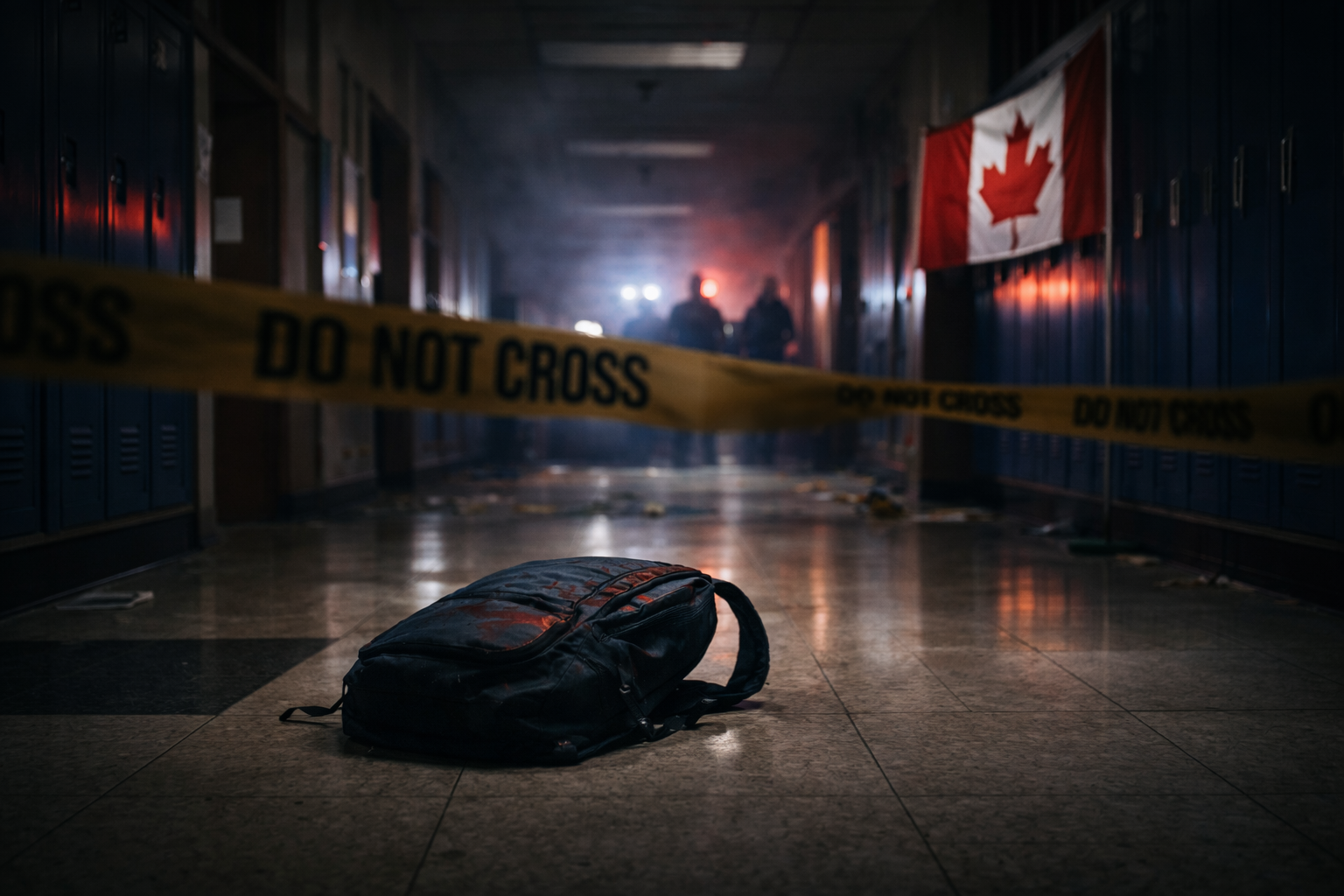
The Deadliest Mass Shootings in Canadian History Explained
The Tragedies, That Sadly Redefined Canadian Safety
Tumbler Ridge Secondary School and nearby residence, British Columbia: Eleventh of February twenty twenty-six—nine victims killed (reported)
This is being treated as a rare, modern Canadian mass-casualty event: a shooting at Tumbler Ridge Secondary School and a related nearby residence.
Early official briefings and wire reporting describe six victims found inside the school, two at the residence, and one who later died on the way to the hospital. The suspected shooter, reported as a woman, also died from an apparent self-inflicted injury. Police have indicated they do not believe there are additional suspects.
The scale matters as much as the setting: a remote town of only a few thousand people, a secondary school serving a small student population, and dozens of families instantly connected to the same trauma.
Authorities report that approximately twenty-five individuals sustained injuries, with early updates describing at least two as life-threatening. Schools were closed, and counseling supports were announced almost immediately—now a standard first response, but still an admission of how long the aftermath lasts.
History: Canada’s Most Notorious Shootings
Nova Scotia attacks: Eighteenth to Nineteenth of April two thousand twenty—twenty-two victims killed
Canada’s deadliest modern shooting was not one single scene but a rolling catastrophe across multiple communities.
Over roughly thirteen hours, a gunman moved across Nova Scotia, attacking people in different locations. Twenty-two were killed before he was stopped.
What made this uniquely destabilizing was not just the number but the multi-site nature of the violence—and the public sense that warnings did not arrive quickly or clearly enough as events unfolded.
The legacy includes more than just the death toll. A joint federal-provincial inquiry, the Mass Casualty Commission, later issued a major final report with recommendations spanning policing coordination, emergency alerting systems, firearms regulation, and violence prevention.
Politically, the attacks accelerated debate around tighter firearm restrictions, including measures aimed at so-called “assault-style” firearms—debates that continue over effectiveness, enforceability, and unintended consequences.
École Polytechnique massacre, Montréal Sixth December nineteen eighty-nine—fourteen women killed
One of the most defining events in modern Canadian public life.
A gunman killed fourteen women at École Polytechnique in Montréal. It is widely remembered not simply as a shooting, but as an act of misogynistic violence that forced Canada into a prolonged and uncomfortable conversation about gender-based hatred, public safety, and firearms.
Its national imprint is formalized. Parliament designated six December as the National Day of Remembrance and Action on Violence Against Women.
That annual commemoration keeps the event embedded in policy discussions, classrooms, and public memory in a way few tragedies do. It remains a reference point whenever firearm legislation or gender-based violence is debated.
Vernon massacre, British Columbia: Fifth of April nineteen ninety-six—nine victims killed
Vernon remains one of Canada’s most notorious incidents because it sits at the intersection of domestic violence and mass casualty.
A man killed nine members of his estranged wife’s family at a pre-wedding gathering before taking his own life. The victims included multiple close relatives.
It was not random public violence but a family wiped out in a single morning. That fact intensified the national shock.
The case is frequently cited in discussions about the escalation patterns of intimate-partner and family violence—particularly the challenge institutions face in identifying risk when warning signs appear in private rather than in public view.
Quebec City mosque shooting: Twenty-ninth January two thousand seventeen—six victims killed
A gunman opened fire during evening prayers at the Islamic Cultural Centre in Quebec City, killing six worshippers and wounding others.
The moral shock was not only the deaths but also the setting: a place of worship, during prayer, targeting a minority community.
The federal government later proclaimed twenty-nine January as a National Day of Remembrance of the Québec City Mosque Attack and Action against Islamophobia.
The framing matters. It positioned the event not as an isolated act, but as part of a wider national conversation about hate, belonging, and the protection of religious communities.
Dawson College shooting, Montréal: Thirteenth September two thousand six—one victim killed, nineteen injured
Dawson College is one of the best-known Canadian school shootings because it unfolded in a dense urban environment and produced a high number of wounded.
A gunman attacked outside and then inside the college. One student was killed, nineteen people were injured, and the shooter died at the scene.
In Canada, school shootings are rare enough that each one becomes a national reference point. Dawson fed into long-running debates about campus security, mental health warning signs, and how online communities can amplify grievance narratives without offering meaningful intervention.
Toronto Danforth shooting: Twenty-second of July, two thousand eighteen—two victims killed, thirteen injured
On a busy summer evening in Toronto’s Greektown, a gunman shot pedestrians along Danforth Avenue.
Two people were killed, and thirteen were wounded. The shooter died shortly after.
What made it notorious was the “anywhere” factor: restaurants, pavements, families out for the night—scenes of everyday normality that Canadians often assume are insulated from mass-shooting risk.
The Toronto Police Service later released a detailed public report, reflecting how intensely the city examined both response and prevention afterward.
La Loche shootings, Saskatchewan: Twenty-second of January two thousand sixteen—four victims killed
This incident began with killings at a home and then moved to a school.
Early reporting and later case records describe four deaths and multiple injuries. The perpetrator was later sentenced to life imprisonment.
La Loche is often referenced in broader discussions about how remote and Indigenous communities experience compounded pressures, including trauma, limited services, and gaps in youth supports—and how prevention must be structural, not merely reactive.
Fredericton shooting, New Brunswick: Tenth of August two thousand eighteen—four victims killed
In Fredericton, four people were killed, including two police officers responding to the incident.
The event struck at the public assumption of routine safety—a morning call-out in a residential area turning lethal.
The case remained in headlines because the accused was later found not criminally responsible. It became a reminder that public safety debates often intersect with mental health law, treatment capacity, and the limits of punishment alone.
Mayerthorpe tragedy, Alberta: Third of March two thousand five—four RCMP officers killed
An ambush-style killing of police officers in rural Alberta left four RCMP officers dead while they were executing a search warrant.
The perpetrator later died by suicide.
This remains a defining moment in Canadian policing history. It is frequently cited in discussions about officer safety, rural operations, and high-risk warrant planning.
Because the victims were officers on duty, the aftermath was highly institutional: nationally televised funerals, reviews of equipment and tactics, and a lasting cultural scar within the RCMP.
Concordia University massacre, Montréal: Twenty-fourth of August nineteen ninety-two—four victims killed
A faculty member shot and killed four colleagues at Concordia University and wounded another person.
The university continues to maintain memorial materials, reflecting how workplace and campus violence becomes embedded in institutional memory long after headlines fade.
The case is often cited in discussions about workplace conflict escalation and the dangers of dismissing severe professional breakdowns as merely interpersonal disputes.
OC Transpo workplace shooting, Ottawa: Sixth of April nineteen ninety-nine—four victims killed
A transit employee shot and killed four co-workers in Ottawa.
It is frequently remembered as the moment many Canadians realized that workplace shootings—often associated with the United States in popular culture—could occur in ordinary Canadian settings as well.
Its legacy surfaces in conversations about threat assessment, workplace harassment, and the limits of informal conflict management when serious warning signs are present.
Moncton shootings, New Brunswick: Fourth to the sixth of June two thousand fourteen—three RCMP officers killed
A gunman shot five RCMP officers in Moncton, killing three and injuring two.
The extended manhunt and citywide lockdown created a prolonged atmosphere of tension and uncertainty.
Moncton is frequently referenced as a turning point for the RCMP in discussions about patrol equipment, deployment strategy, and readiness for rifle-level threats—debates that sit uneasily within Canada’s broader self-image as a comparatively low-violence country.
Why Tumbler Ridge hits differently
Because it combines three high-impact factors at once:
A school setting—maximum psychological shock, especially in smaller communities.
A death toll that ranks nationally, not just locally.
A country with a strong “this is rare here” self-image—an image that collapses the moment a list like this needs updating.
