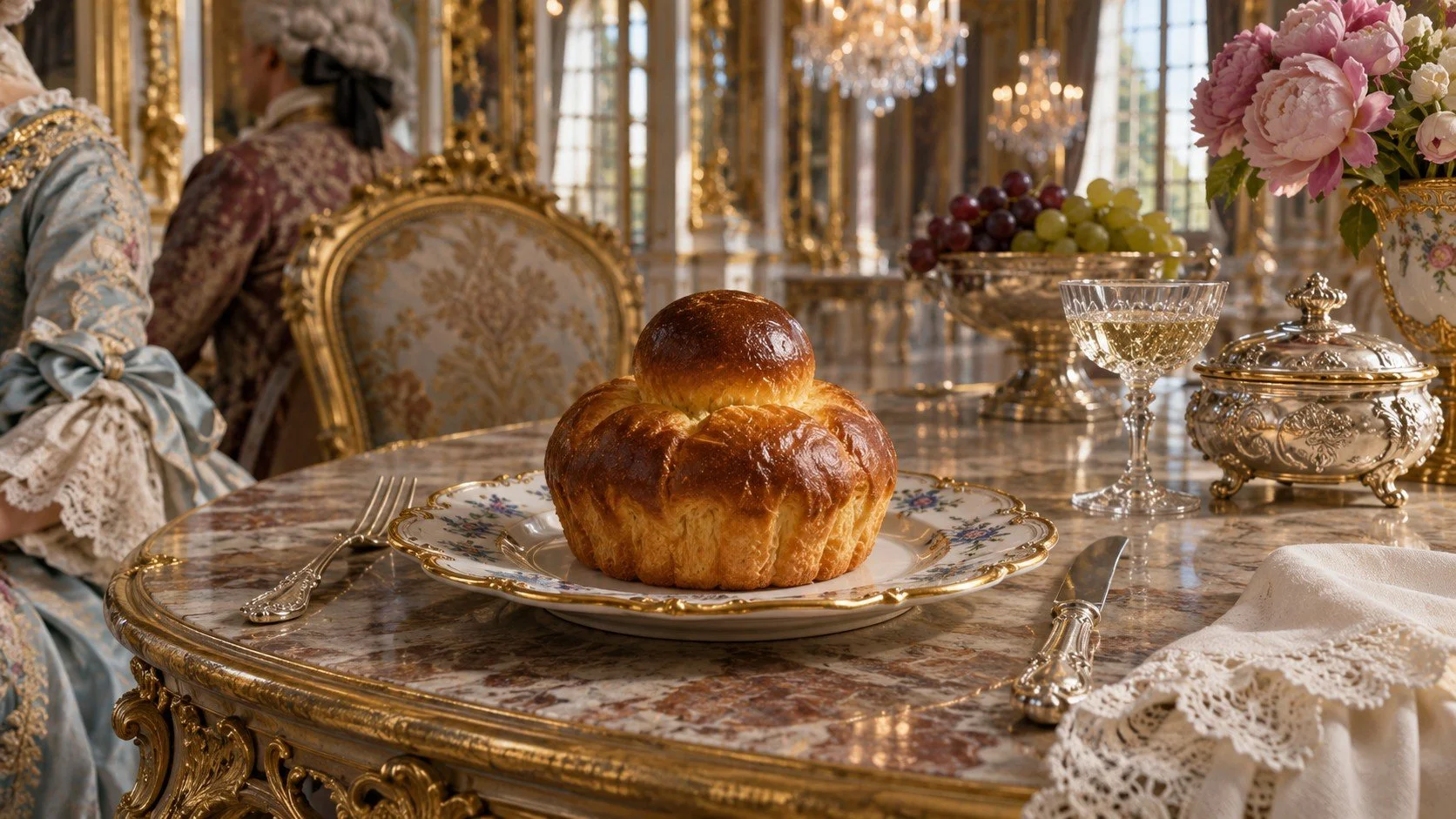
Trace the famous brioche remark to Rousseau and discover why a story about an unnamed princess attached itself to Marie Antoinette.
The Famous Sentence With the Wrong Speaker
The best clue to the origin of “Let them eat cake” is a man looking for something to eat with his wine. In his Confessions, Jean-Jacques Rousseau remembers a remark attributed to a great princess. Told that peasants had no bread, she supposedly suggested brioche. Remembering the story gives Rousseau an idea for his own meal. He supplies neither the princess’s name nor evidence that he witnessed the exchange.
That modest literary setting is a long way from the scene many people picture today. There is no Versailles balcony, no crowd addressing Marie Antoinette and no recorded reply from the queen. The timing creates an even greater difficulty. Rousseau was writing this part of his memoir when Marie Antoinette was still a child, before she became queen of France.
What Is Brioche, and Why Call It Cake?
Brioche is a rich bread made with ingredients such as eggs and butter. English speakers inherited a version of the story in which the substitute is cake. Something is lost in the translation. Brioche belongs close enough to ordinary bread for an ignorant listener to imagine it might serve as an alternative. The ingredients that make it richer also make the advice absurd for someone who cannot afford a staple.
The cruelty depends on what the speaker fails to understand. A shortage of affordable food does not disappear because a more expensive product also exists. The anecdote delivers that political argument in a sentence short enough to remember after hearing it once.
Why Did People Believe It of This Queen?
Marie Antoinette arrived from Austria to marry the future Louis XVI. At court, dress, spending and favour were intensely visible forms of power. Outside court they supplied material for a flourishing trade in hostile stories about the royal family. A charge against a foreign-born queen could blend suspicion of Austrian influence with resentment about luxury and hostility towards a woman exercising influence.
Bread already carried extraordinary political weight. Its price could determine how much of a household’s earnings remained for fuel, rent and everything else. In October 1789 women marched to Versailles amid anger over bread shortages. A story that placed a callous remark in the queen’s mouth offered a memorable explanation for suffering that had complicated economic and political causes.
What Can Historians Actually Conclude?
Rousseau proves that a version of the story circulated independently of the adult Marie Antoinette. He cannot tell us who first invented it. An unnamed princess in a memoir is thin evidence for assigning the quotation to any other royal woman either. Replacing one confident attribution with another would repeat the original mistake.
The quotation survives because it seems to tell us exactly what a privileged person might say. That makes it revealing evidence about the queen’s reputation. To learn what she actually said takes a different kind of source. More than two centuries of repetition have yet to supply it.
