Why Did Owls Leave Thousands of Frog Bones in a Cambridgeshire Ditch?
The Ditch Was Iron Age, But The Frogs Died In Roman Britain.
Some of the best evidence for where owls spent a winter in Roman Britain comes from a frog’s upper arm. At Bar Hill in Cambridgeshire, archaeologists found thousands of tiny bones concentrated in a shallow ditch. The arm bones helped answer two questions. Their size gave away how young many of the frogs had been. Damage at the joints showed what had happened to them after they were swallowed.
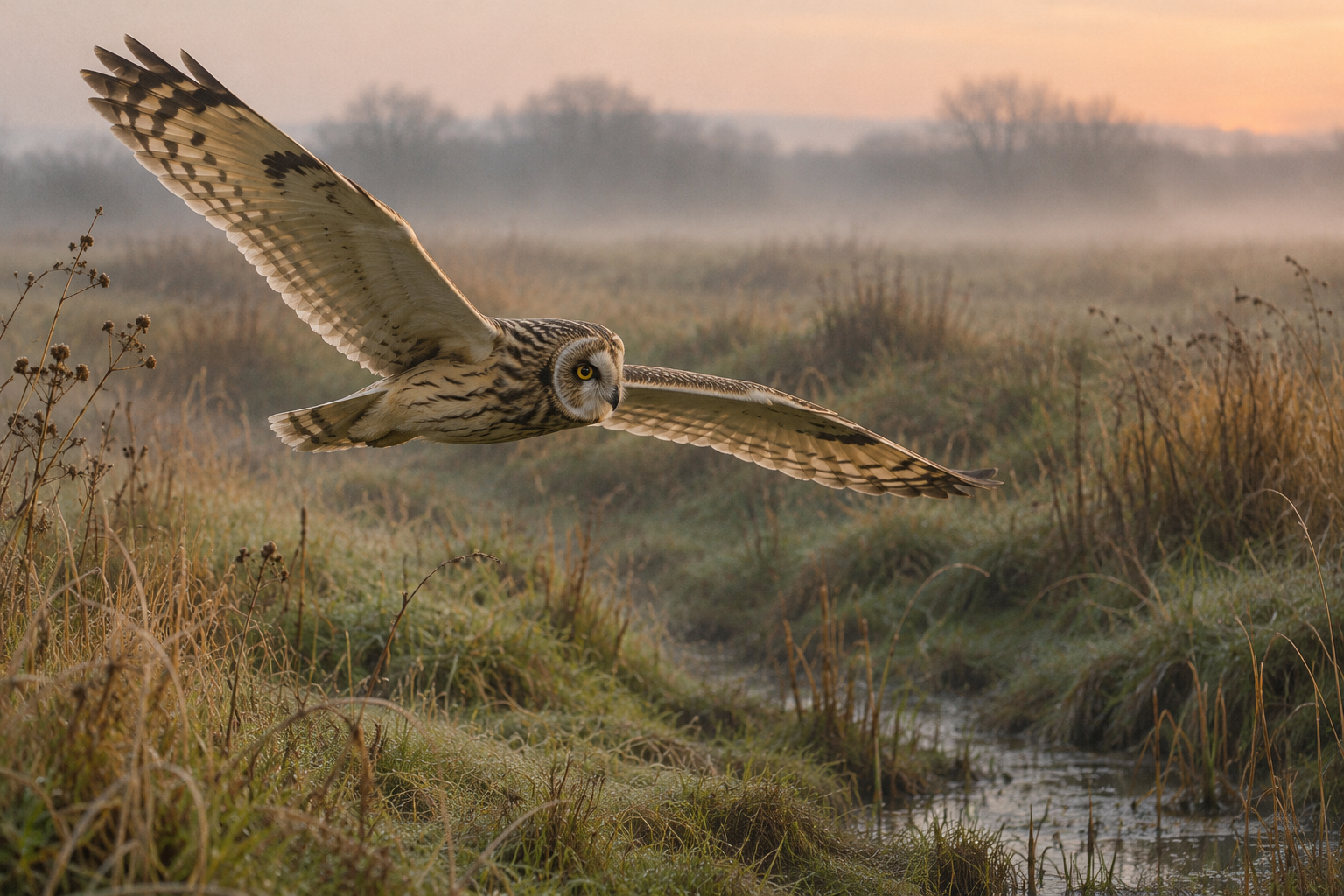
The likeliest explanation is that short-eared owls hunted an unusually abundant generation of young frogs on the edge of the Fens about 1,700 years ago. The birds appear to have roosted in or near the ditch, bringing up pellets containing the bones of their prey. Hen harriers may have contributed too. Over one autumn and winter, a good feeding ground could have produced an extraordinary archaeological deposit.
One detail made that explanation particularly surprising. When archaeologists first announced the discovery in 2022, birds of prey were among the suspects they had provisionally ruled out.
What Archaeologists Found at Bar Hill
The discovery came during excavations ahead of improvements to the A14 between Cambridge and Huntingdon. Archaeologists working there between 2016 and 2018 found the remains of ancient farmsteads. Much of the animal bone made sense in that setting. There were cattle, sheep and goats, along with evidence of horses, dogs and fish. Then there were the frogs.
Their distribution was peculiar. Elsewhere along the excavated route, even at sites closer to rivers, archaeologists had found few amphibian bones. Yet a single gully inside an Iron Age enclosure at Bar Hill held nearly three-quarters of the small-animal bones recovered from that settlement. Something had repeatedly brought animals, or their remains, to a particular strip of ground.
The familiar figure of 8,000 counts bones. In the later study, researchers recorded 9,135 small-animal bones in the gully altogether, representing at least 469 individual animals across several species. Common frogs predominated. There were also voles, shrews and snakes. That mixed company would prove almost as revealing as the frogs themselves.
Early accounts placed the find beside an Iron Age roundhouse. The published study describes a shallow gully about 20 metres long and treats the roundhouse identification as an early interpretation. Its original purpose remains uncertain. Radiocarbon tests on bones from three parts of the gully supplied a firmer answer about the animals themselves. All three results fell within the Roman period, and their date ranges overlapped in the third century AD. The people who first dug the feature and the creatures whose bones eventually filled it belonged to different chapters of the valley’s history.
The Marks the First Investigation Missed
Several early explanations were perfectly reasonable. Frogs sometimes travel in large numbers to reach breeding water. A ditch across their route might catch them. Others shelter in mud through winter, where severe cold can kill them. Archaeologists had also recovered charred grain nearby. Crop processing could have attracted insects, and the insects in turn could have drawn hungry frogs.
An initial examination found no obvious signs of cooking or butchery. It also failed to identify the damage expected from a predator. After hearing about the find, Dr Paul Clarkson of Bournemouth University contacted Dr Vicki Ewens, the animal-bone specialist at the Museum of London Archaeology who had been investigating the remains. A closer look changed the balance of evidence.
Consider one of the upper arm bones illustrated in the study. Its shaft had been crushed, some broken edges were rounded, and digestion had affected the joint surface. A buried bone can also be damaged by roots or chemical changes in the soil, so an odd-looking fragment alone would count for little. Across the amphibian long bones examined, however, 85.9% showed evidence of digestion. The researchers identified digestion damage on rodent teeth as well.
A frost might account for hundreds of dead frogs. It struggles to explain why so many of their bones had passed through a digestive system, or why voles in the same gully bore similar traces. A predator offered an explanation for both.
Why Short-Eared Owls Fit the Evidence
Several animals eat frogs, but they leave their meals in different states. Clarkson compared the Bar Hill specimens with known patterns of breakage and digestion. Barn owls generally leave prey bones in better condition than these. At the other extreme, the researchers would have expected heavier damage from otters, snakes or herons. Short-eared owls were a close fit. Hen harriers, which can share winter roosting areas with them, were another plausible contributor.
An owl pellet explains how frogs caught across a stretch of grassland could end up in one narrow ditch. An owl can swallow small prey and later bring up the indigestible parts together. Where it catches a frog and where it deposits the bones can therefore be two different places. If several birds return to the same roost, the remains of meals gathered across many hunting trips accumulate in a remarkably small area.
That changes what the excavation plan tells us. The densest patch of bones may mark where birds rested. The frogs themselves could have come from pools and grassland some distance around it. Archaeologists can identify the feeding pattern with more confidence than they can name the particular bird responsible for any one bone.
How Could So Many Bones Accumulate in One Winter?
Evidence from the excavation indicated that the ditch filled within a year. That left a practical difficulty. Even with owls returning to the same roost, why were there so many frogs available in such a short time?
The researchers measured 179 amphibian upper arm bones. Many belonged to animals that appear to have died during the autumn or winter of their first year. The age profile makes sense if the birds had found a particularly successful generation of young frogs. It also gives the deposit a season, something radiocarbon dating alone could never do. A radiocarbon result can place a bone in Roman Britain. The size of a young animal’s limb can help place its death within the turning year.
The valley itself offered the conditions for that abundance. Fen waters were retreating during the Roman period. As the waterline moved, it could leave shallow pools suitable for common frogs to breed in. A good breeding season would produce a crop of young frogs within reach of the same hunting birds. As the water retreated farther, the best pools could shift elsewhere. The exceptional concentration at Bar Hill may preserve the brief interval when a breeding ground and a winter roost happened to be neighbours.
The Farmers Who Helped Make an Owl’s Hunting Ground
There was one further puzzle. Short-eared owls hunt over open ground, yet the valley had once been wooded. Evidence from pollen, charcoal and snails helped researchers reconstruct how it had changed. People had gradually cleared woodland in the late Iron Age to create grazing land. By Roman times there was enough open country for birds to hunt low over the grass.
The owls may even offer a clue to when people used that pasture. A winter roost would be easier to maintain in a place with little disturbance from people or dogs. The researchers suggest livestock might have passed through chiefly during the warmer months. The seasonal grazing route is a possibility, while the evidence for animals being eaten is much firmer.
At nearby Fenstanton, a nail still lodged in a Roman heel bone preserved evidence of something one person endured. The little bones at Bar Hill preserve a different kind of history. Someone cut trees and made pasture. Water withdrew and left pools. Frogs bred there, and birds found them. For one winter, we can glimpse what happened in a field after the people who shaped it had gone.
Sources
Environmental Archaeology — An Owl’s Eye View: Human–Animal Entanglement at the Roman Fen Edge
Bournemouth University — The Roman dating, winter deaths and evidence for birds of prey
Museum of London Archaeology — How the team reconstructed the changing Fen landscape
Phys.org — The bone damage that helped distinguish owls from other predators
Next Reads
What a Crucifixion Nail Found in Britain Reveals About Roman Executions — Another Cambridgeshire excavation where the precise position of a find changed its meaning.
Ancient DNA Britain Is Rewriting Early Britain—But Not the Way People Think — What survives in ancient bones, and how far the evidence can take us.
Which Parts of the Bible Has Archaeology Confirmed? The Kings, Sieges and Relics Behind the Stories — How excavated objects can settle one historical question while leaving another open.
