

Ranking the Closest We Have Ever Come to Nuclear War
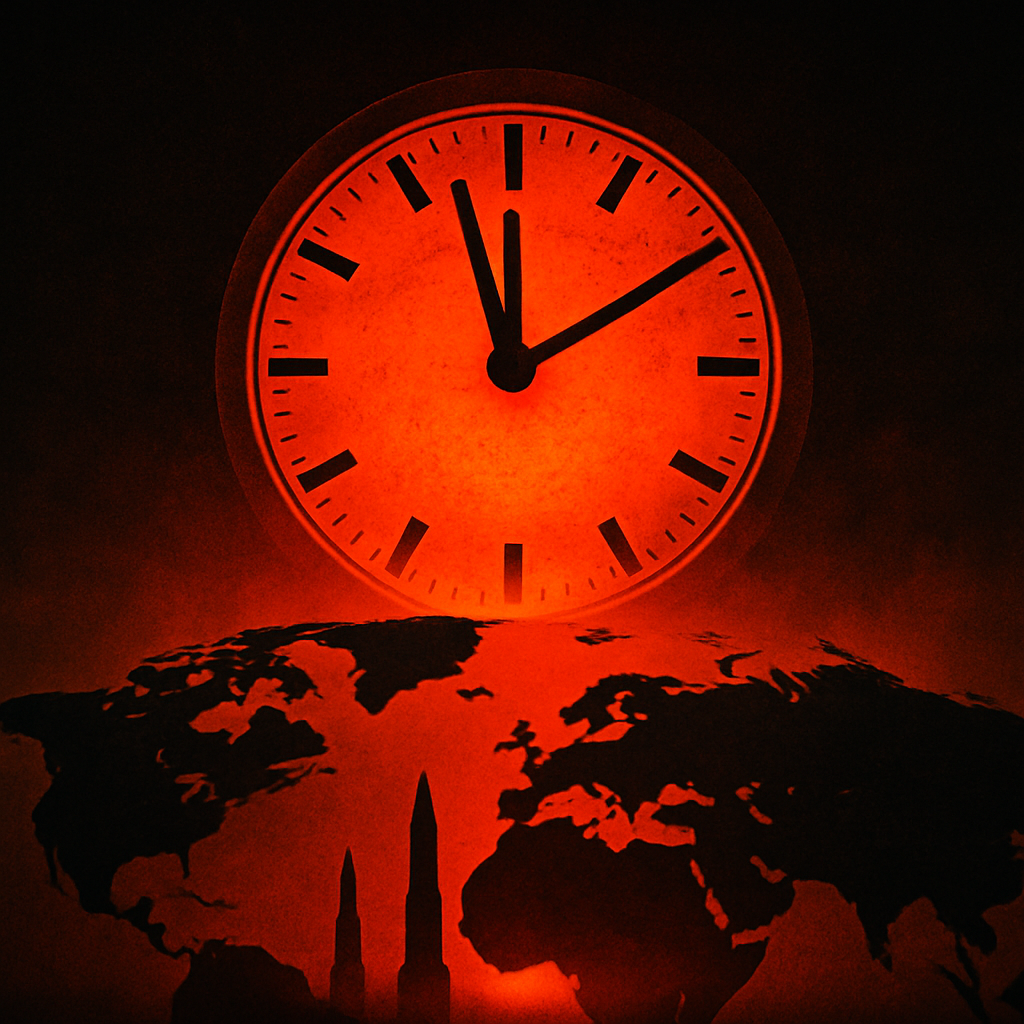
Nuclear war has never happened. Yet more than once, it has come close enough that a single different decision, a misread radar screen, or a nervous politician could have changed the story of the modern world.
This article ranks some of the closest moments humanity has come to nuclear war. It moves from the familiar drama of the Cuban Missile Crisis to lesser-known incidents involving computer glitches, misidentified rockets, and regional rivalries in South Asia. Each episode is grounded in what is known from declassified documents, memoirs, and later research, while acknowledging that any ranking of “how close” remains a matter of informed judgment.
By the end, the reader will see not just a list of nuclear near-misses, but a pattern. Technology fails. People make mistakes. Political crises intensify those errors. And again and again, individual choices have quietly pulled the world back from the brink.
Key Points
“Closest to nuclear war” is an interpretive judgment, but several crises clearly stand out for the level of alert and the potential for rapid escalation.
The Cuban Missile Crisis of 1962 remains the benchmark, combining massive arsenals, global stakes, and genuine preparations for nuclear use.
The war scare around the NATO exercise Able Archer 83 and the same year’s Soviet early-warning false alarm show how misperception and technical failure can mimic a real attack.
Incidents like the 1995 Norwegian rocket launch and nuclear crises between India and Pakistan reveal that danger did not end with the Cold War.
Across these cases, what prevented disaster was not technology alone, but human judgment: officers who hesitated, leaders who doubted, and advisers who urged restraint.
Background
The nuclear age began in 1945 with the bombings of Hiroshima and Nagasaki. In the decades that followed, the United States and the Soviet Union built vast arsenals of nuclear weapons, joined later by other states. Deterrence theory held that the threat of mutual destruction would prevent full-scale war. In practice, it meant that every major crisis carried a risk of escalation that could, in principle, end organized human life.
During the Cold War, each superpower created early-warning systems, command centers, and protocols for launching nuclear forces under attack. These systems had to work in minutes, often with incomplete information. At the same time, regional conflicts, ideological competition, and alliance obligations produced repeated flashpoints: Berlin, Korea, the Taiwan Strait, the Middle East, South Asia.
The world has also changed since the Cold War. The United States and Russia still possess the largest arsenals, but other nuclear-armed states now include China, India, Pakistan, North Korea, and possibly others in the future. New technologies—cyber operations, anti-satellite weapons, hypersonic missiles—add complexity and speed.
Against this backdrop, historians and security analysts have tried to identify the closest calls: moments when nuclear weapons might realistically have been used. Their rankings differ, but certain episodes recur. This article uses those recurring cases to build a structured list, while making clear where the line between documented fact and interpretive judgment lies.
Analysis
How to Rank Nuclear Close Calls
Ranking nuclear near-misses is not an exact science. There is no universal metric that says “this incident was 80 percent of the way to war; that one only 40 percent.” Instead, analysts typically weigh several factors:
How high were nuclear forces raised in alert status?
Were concrete preparations for nuclear use under way?
How much authority did local commanders have to use nuclear weapons?
Were political leaders convinced an attack might already be happening?
How quickly could events have escalated beyond human control?
Using these criteria, a rough hierarchy emerges. At the top sit crises where nuclear forces were on hair-trigger alert and leaders seriously contemplated use. Below them are cases where technical failures or misunderstandings could have triggered escalation, even if no attack was actually under way.
With that framework in mind, the following ranking focuses on five major episodes. The order reflects mainstream interpretations but is ultimately an informed judgment rather than a mechanical scorecard.
1. The Cuban Missile Crisis, 1962
The Cuban Missile Crisis is widely regarded as the closest the world has yet come to full-scale nuclear war. For thirteen days in October 1962, the United States and the Soviet Union confronted each other over Soviet nuclear missiles secretly deployed to Cuba. U.S. leaders imposed a naval “quarantine,” prepared for air strikes and invasion, and raised nuclear forces to DEFCON 2 for the Strategic Air Command, one step below general war.
Several elements pushed this crisis to the top of any ranking. Both sides deployed large numbers of nuclear weapons and conventional forces in close proximity. Soviet troops in Cuba had tactical nuclear weapons ready to use against a U.S. invasion, with some authority delegated to local commanders. U.S. bombers, missiles, and submarines stood at high alert. Communication channels were slow and often confused.
Most strikingly, there were multiple near-misses inside the crisis itself: a U-2 spy plane shot down over Cuba, another U-2 drifting into Soviet airspace over the Arctic, and a Soviet submarine whose captain considered launching a nuclear torpedo while under pressure from U.S. depth charges. In each case, restraint by individuals helped keep the crisis from tipping over the edge.
The eventual resolution—withdrawal of Soviet missiles from Cuba in exchange for a U.S. pledge not to invade and a later removal of U.S. missiles from Turkey and Italy—was fragile and improvised. Had even a single key decision gone differently, nuclear weapons might well have been used.
2. Able Archer 83, the NATO War Scare
More than twenty years later, the world again came uncomfortably close to nuclear disaster, this time through misperception rather than a direct confrontation. In November 1983, NATO conducted a command post exercise called Able Archer 83. It simulated the transition from conventional war to nuclear release, including the movement through all nuclear alert levels up to a mock DEFCON 1.
At the same time, the Soviet leadership was deeply anxious about a possible surprise attack. Intelligence operations had been tasked with detecting signs of a Western first strike. Against this backdrop, some in Moscow appear to have believed that Able Archer could be a cover for a real nuclear attack. Soviet forces in Eastern Europe reportedly increased readiness, and nuclear-capable aircraft and missiles were placed on higher alert.
What makes Able Archer particularly dangerous in hindsight is the asymmetry of information. NATO decision-makers saw it as an exercise. Soviet leaders viewed it through a lens of fear and suspicion. The risk was that Moscow might decide to preempt what it thought was a genuine attack, turning a simulation into a trigger for war.
The crisis faded once the exercise ended and no attack materialized. But later assessments have treated Able Archer as one of the most serious Cold War war scares, not far below the Cuban Missile Crisis in its potential for catastrophe.
3. The 1983 Soviet Early-Warning False Alarm
In September 1983, only weeks before Able Archer, another incident brought the world close to accidental nuclear war. At a Soviet early-warning center near Moscow, officer Stanislav Petrov was on duty when the satellite monitoring system suddenly reported incoming U.S. intercontinental ballistic missiles. First one missile, then several more, appeared on his screen.
Doctrine at the time envisioned a “launch on warning” response: if an attack was detected, Soviet forces were to launch a retaliatory strike before enemy warheads landed. Petrov’s job was to pass on the alarm to his superiors, who would have only minutes to decide whether to unleash nuclear forces.
Instead, he hesitated. The pattern of the attack—a small number of missiles rather than a massive strike—seemed inconsistent with a real first strike. Ground-based radar had not yet confirmed the launches. Petrov judged it a false alarm and chose not to report it as a genuine attack.
Later investigation showed that sunlight reflecting off clouds had tricked the satellite system. Petrov’s decision broke protocol but likely prevented a chain of events that could have led to a retaliatory launch based on false data. The episode highlights the vulnerability of early-warning systems and the importance of human skepticism under pressure.
4. The Norwegian Rocket Incident, 1995
After the Cold War, many assumed the risk of sudden nuclear war had faded. The 1995 Norwegian rocket incident showed that technical misinterpretation could still bring nuclear powers to the brink.
On a January morning, Norwegian and American scientists launched a Black Brant research rocket to study the northern lights. They had notified neighboring states in advance, but the message did not reach all relevant Russian military channels. Russian radar operators detected the rocket’s trajectory and judged that it resembled that of a U.S. submarine-launched ballistic missile.
For a short period, Russian authorities treated the situation as a possible nuclear attack. The nuclear briefcase carried by the Russian president was activated, and senior officials discussed whether a response might be needed. Only when the rocket fell safely into the sea and further data came in did the alarm subside.
Unlike the Cuban Missile Crisis, there were no massed armies or global standoffs. Yet the incident is extraordinary in one respect: it appears to be the only time a post-Soviet Russian leader has opened a nuclear briefcase in response to what was perceived as a potential attack. It shows how, even in peacetime, misinterpreted scientific or military activity can intersect with nuclear command systems.
5. South Asian Nuclear Crises
While the first four episodes involve U.S.–Soviet or U.S.–Russian relations, nuclear risk has also loomed over regional conflicts. The rivalry between India and Pakistan is especially important. Both states tested nuclear weapons in 1998. Since then, they have fought limited wars and endured several severe crises.
Two moments stand out. The Kargil conflict of 1999 saw Pakistani forces infiltrate high-altitude positions on the Indian side of the Line of Control in Kashmir. India responded with conventional military operations, including air strikes. The presence of nuclear weapons on both sides led to international concern that the conflict might escalate.
The second major crisis came in 2001–2002, after an attack on the Indian parliament by militants based in Pakistan. India mobilized large numbers of troops; Pakistan did the same. For months, both sides kept forces on high alert, with artillery exchanges and militant attacks continuing along the border. Diplomatic pressure and signaling eventually helped defuse the crisis, but analysts have since argued that miscalculation or a sudden escalation could have brought the first use of nuclear weapons since 1945, even if on a regional scale.
Unlike the Cuban Missile Crisis or Able Archer, these South Asian crises did not involve nuclear forces being prepared for immediate launch in the same way. Nonetheless, they brought two nuclear-armed rivals into direct confrontation under conditions of mistrust and ongoing violence. That combination earns them a place in any ranking of close calls.
Patterns Across the Near-Misses
Looking across these five ranked cases, several patterns emerge.
First, nuclear danger often arises not only from deliberate brinkmanship but from errors and misunderstandings. The Soviet early-warning false alarm and the Norwegian rocket launch were both technical glitches amplified by tense political environments.
Second, delegation and decentralization matter. Tactical nuclear weapons in Cuba, regional commanders in South Asia, and operators in early-warning centers all had the power to shape events in ways political leaders never fully controlled.
Third, time pressure is a recurring theme. In most of these incidents, decision-makers had minutes, not hours, to assess incomplete information. Systems built for rapid retaliation leave little space for doubt, second opinions, or cooling off.
Finally, luck and individual judgment play an uncomfortable role. The world today is in part the product of specific people choosing to wait, question, or compromise, often in defiance of standard procedures.
Why This Matters
Revisiting and ranking nuclear near-misses is not just a historical exercise. It speaks directly to present debates about nuclear deterrence, disarmament, and crisis management.
Short-term, it challenges complacency. The absence of nuclear war so far can tempt policymakers and publics to assume that deterrence “works” automatically. The incidents described here suggest a more fragile reality, in which peace has depended on fallible systems and the character of a few individuals.
Longer-term, it highlights structural dangers that persist or have even intensified. Early-warning systems still rely on sensors and algorithms that can fail. New technologies may compress decision times further. Regional rivalries in South Asia and elsewhere continue under the nuclear shadow. Major powers are modernizing arsenals and, in some cases, loosening constraints on nuclear use.
By looking back at concrete episodes, rather than abstract doctrines, the history of nuclear close calls can inform discussions about arms control, de-escalation mechanisms, and the design of command systems that allow for doubt. It also raises difficult questions about whether any system that requires near-instant retaliation can ever be made safe.
Real-World Impact
The legacy of these near-misses is visible in several ways.
In one scenario, a classroom discussion of the Cuban Missile Crisis or Able Archer introduces students to the idea that individual decisions can shape global history. That awareness can shape how future officials think about risk and responsibility.
In another, communities near missile fields, submarine bases, or early-warning radar sites live with infrastructure whose purpose is to deter attacks that never came. Local economies depend on jobs linked to weapons that, in theory, should never be used.
In diplomatic circles, references to “another Cuban Missile Crisis” or “another Kargil” function as shorthand signals. When leaders invoke these episodes, they are not simply making historical analogies. They are drawing on shared memory of how close things once came to disaster.
Finally, civil society campaigns for nuclear restraint often cite these near-misses to argue that the real danger lies not in grand strategy alone but in the messy, error-prone details of human and technical systems. For many citizens, that knowledge becomes one more factor in how they evaluate leaders, policies, and international agreements.
Conclusion
Ranking the closest we have come to nuclear war is, by its nature, an interpretive act. Reasonable people can disagree about whether the Cuban Missile Crisis, Able Archer 83, the Soviet false alarm, the Norwegian rocket incident, or South Asian crises posed the greatest danger. What matters most is the pattern they reveal.
Across decades and continents, nuclear weapons have repeatedly brought humanity to the edge of catastrophe through a mix of deliberate confrontation, technical failure, and misperception. In each case, disaster was avoided not because the system was foolproof, but because particular individuals exercised caution at critical moments.
Looking ahead, the question is whether political leaders and societies will treat these episodes as warnings or as forgotten footnotes. Upcoming decisions about arms control treaties, modernization programs, crisis communication channels, and regional disputes will shape the next chapter of the nuclear age. Signals to watch include renewed or abandoned agreements, new deployment patterns, and the ways leaders talk about nuclear weapons in moments of tension.
The past close calls do not guarantee future disaster. But they show how thin the margin can be between a world in which nuclear war remains hypothetical and one in which it becomes history’s next chapter.
These reflections are interpretive and speculative, offering a modern lens on historical ideas rather than asserting definitive claims
