Was Verica a Queen? The Iron Age Ruler Who Helped Bring Rome to Britain
Every account of the Roman conquest of Britain contains the same brief scene. In about AD 40 a British ruler named Verica, driven from power at home, crosses the Channel and asks the Emperor Claudius for help. Three years later Roman legions land in Kent, and Britain becomes part of the empire for nearly four centuries.
For almost 200 years historians have called Verica a king. In November 2026, the Bournemouth University archaeologist Miles Russell argued that this is wrong, and that Verica was a woman. If he is right, Iron Age Britain had not two famous female rulers, Boudica and Cartimandua, but three, and the woman who opened the door to Rome has been hiding in plain sight on her own coins.
This article explains who Verica was, sets out Russell's evidence, looks at the points still open to debate and considers what a female Verica would change about the story of Roman Britain.
Who Was Verica?
Verica ruled the Atrebates, a people whose territory covered much of what is now Hampshire and West Sussex, in the decades before the Roman invasion of AD 43. The region had close ties to the Roman world. Its elite traded with Gaul, wore Roman-made jewellery and minted coins that borrowed Roman designs and Latin titles.
The Atrebates sat on one side of a long power struggle in southern Britain. To the north and east, the Catuvellauni, led by Cunobelinus and later his sons Caratacus and Togodumnus, were expanding aggressively. Around AD 40 Verica lost power, apparently after unrest at home combined with pressure from these neighbours, and fled to Rome.
Why Verica matters
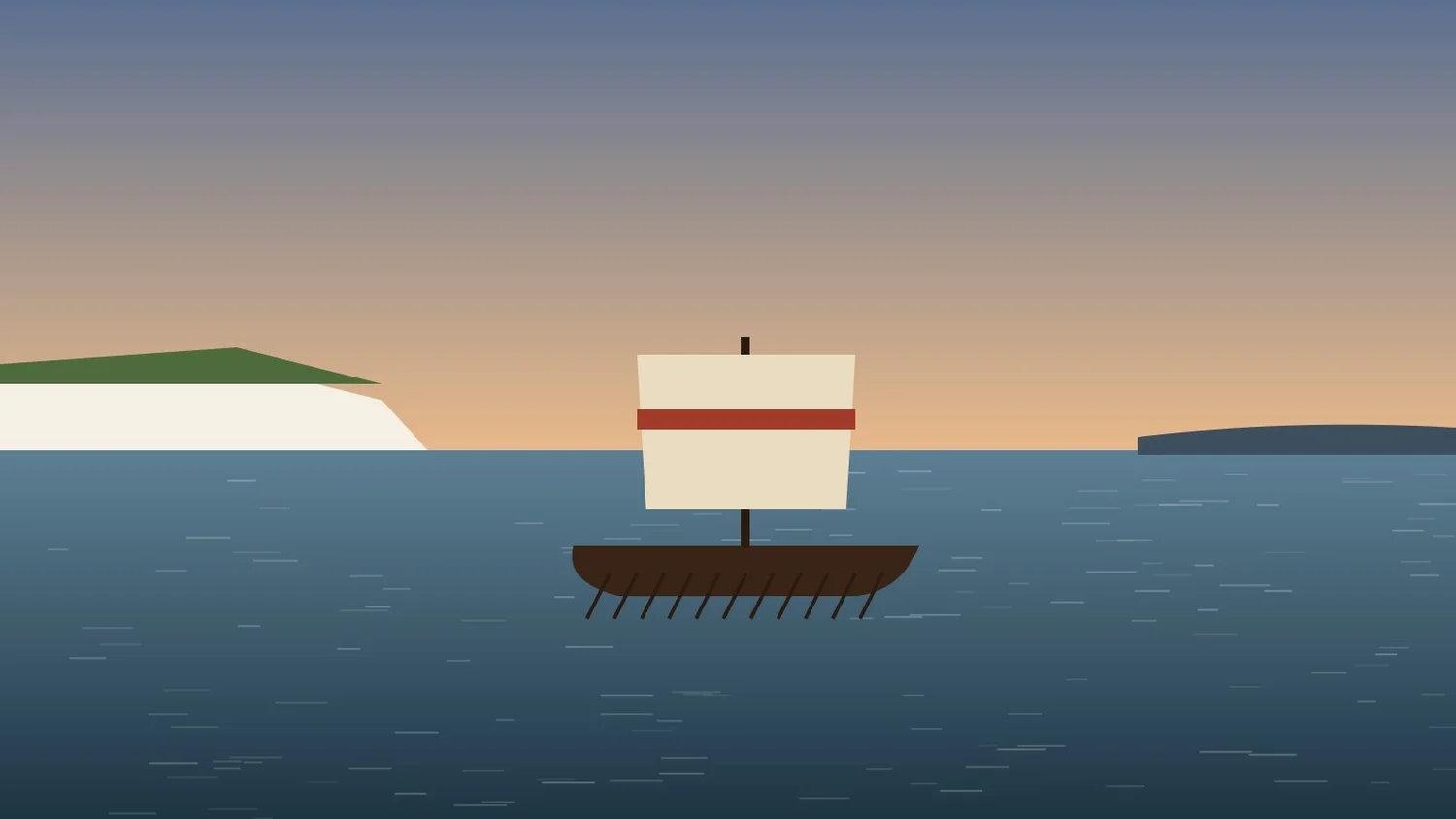
The Roman historian Cassius Dio, writing in the third century, says that a Briton he calls Berikos had been driven out of the island by an uprising and persuaded Claudius to send an army. For a new emperor with little military reputation, a request for help from an ally was the perfect excuse for a war of conquest. Claudius's invasion in AD 43 brought him a triumph in Rome and began nearly four centuries of Roman rule.
That makes Verica one of the most consequential people in early British history. Without that appeal, the invasion might have come later, differently or not at all.
The Case for Verica as a Woman
Russell set out his argument in a feature in Current Archaeology and in his book Caratacus: Great King of Britain, published by Bloomsbury. Bournemouth University announced the research on 4 November 2026. His case rests on four strands of evidence.
1. The name
Verica's name ends in "-a". Russell points out that this ending was common in the names of women of the period, including the two best-known female rulers of Roman-era Britain, Boudica and Cartimandua. A name alone proves nothing, but it removes one reason to assume the ruler was male.
2. The title "rex"
Verica's coins carry the Latin word rex, usually translated as "king". Historians have long treated that as proof of a male ruler. Russell argues that, in this context, rex was a title of office rather than a statement of sex. Rome recognised female client rulers, Cleopatra being the most famous, and the use of a Latin title on British coins signalled that Rome had approved Verica's rule, not that the ruler was a man.
3. The coin imagery
This is the most striking part of the argument. Other British rulers who issued coins in this period depicted clearly male warriors. Some of Verica's coins instead show a slender, bare-breasted rider on horseback, carrying a spear. Russell reads this as a deliberately female image: a ruler presenting herself, or her authority, as a woman warrior.
4. The ancient sources
Cassius Dio does not say directly whether Verica was male or female. Russell suggests that Roman writers had their own reasons to blur the picture. Claudius was often portrayed as a weak emperor manipulated by his wives and freedmen, and a story in which a foreign woman talked him into invading Britain would fit that hostile portrait. Equally, later scholars may simply have assumed a male ruler because they expected one.
Russell also places Verica in a wider pattern. Genetic research on Iron Age burials in Dorset, published in 2025 by a team including Bournemouth archaeologists, found evidence that communities were organised around female lines of descent, with men moving to join their partners' families. If land and status passed through women, a female ruler of the Atrebates would be less surprising than nineteenth-century historians imagined.
Why Historians Assumed Verica Was a Man
Russell lays much of the blame on the classical scholars of the nineteenth century, who reconstructed Iron Age Britain from Roman texts and coins and brought their own assumptions about who held power. Once Verica was described as a king in standard works, the label was repeated for generations.
There were real reasons, too. Roman writers usually describe British leaders as men; the coins say rex; and the coin legends name Verica as the child of an earlier ruler, Commius, in a form that scholars have conventionally read as "son of". Each of those details looked like confirmation, even though none of them, on Russell's reading, settles the question.
The "son of Commius" problem
Verica's coins, like those of the Atrebatic rulers Tincomarus and Eppillus, carry a legend usually expanded as "Commi F", the F standing for the Latin word for a child of Commius. It has normally been read as filius, son. But the abbreviation is the same for filia, daughter. The legend shows that Verica claimed descent from Commius; it does not by itself reveal the ruler's sex. This is an editorial observation rather than part of Russell's published summary, but it illustrates how much of the traditional picture rested on expectation rather than evidence.
The Questions Still Open
Russell's argument is a serious scholarly case, but it is still an argument, not a settled fact. The press coverage so far has largely relayed Bournemouth University's announcement, and other specialists have yet to respond in print. Several points are likely to be debated.
- Coin imagery was often borrowed. British coin designs copied Greek and Roman models, and a female figure on a coin could represent a goddess, a personification or an allegory rather than the ruler.
- Not all of Verica's coins show the female rider. The ruler issued many coin types over a long reign, with a range of designs.
- Name endings are suggestive, not decisive. A Latinised spelling on a coin is a thin basis on which to determine anyone's sex.
- Dio's silence cuts both ways. If Verica were a woman, a Roman writer keen to mock Claudius might have been expected to say so plainly.
None of these points disproves Russell's case. They show why the question will now be argued over by numismatists and historians, and why the most accurate description today is that Verica may have been a woman, and that the evidence for assuming a man was always thinner than textbooks suggested.
Boudica, Cartimandua and Verica
If Russell is right, Verica joins two women whose power in first-century Britain is firmly documented.
| Ruler | People | Relationship with Rome |
|---|---|---|
| Verica | Atrebates (Hampshire and West Sussex) | Ally who appealed to Claudius, opening the way to invasion in AD 43 |
| Cartimandua | Brigantes (northern England) | Client queen who handed the resistance leader Caratacus to the Romans |
| Boudica | Iceni (East Anglia) | Led the great revolt of around AD 60–61 against Roman rule |
The three women represent the full range of British responses to Rome: invitation, collaboration and rebellion. Russell goes further, arguing that Verica was more influential than Boudica, because the revolt Boudica led was eventually crushed, while Verica's appeal changed the course of British history.
What a Female Verica Would Change
The invasion story
The conventional narrative of AD 43 is a story of men: Claudius, his general Aulus Plautius, Caratacus and Togodumnus. A female Verica would put a woman at the centre of the decision that brought Rome to Britain, as the ruler whose request made the invasion politically possible and who may have offered the Romans local knowledge and support.
Women and power in Iron Age Britain
Roman writers repeatedly expressed surprise that British women could inherit, own property, lead armies and rule. Boudica and Cartimandua have often been treated as exceptions. A third female ruler, in a different region and a generation earlier, would make it harder to see them as unusual and easier to see female leadership as an ordinary part of British political life.
How history gets written
The Verica debate is also a reminder of how fragile the record is. Iron Age Britons left no histories of their own. Everything we know comes from coins, archaeology and Roman authors writing from a distance, often with an agenda. Small assumptions made by scholars two centuries ago can harden into facts if nobody goes back to test them.
The Verdict
Miles Russell has not proved beyond doubt that Verica was a woman; the evidence for this period is too fragmentary for certainty either way. But he has shown that the case for a male Verica was never as strong as its confident repetition suggested. The name, the title, the coin imagery and what we now know about Iron Age kinship all leave room for a queen. Whatever the final verdict, the ruler who invited Rome into Britain deserves a second look, and the debate is likely to change how the story of AD 43 is told.
Sources
- EurekAlert!: New research reveals Iron Age king was female (Bournemouth University release)
- Current Archaeology 441: Verica Rex, searching for a lost queen of the British Iron Age
- Archaeology Magazine: Researcher argues famous British Iron Age king was really a queen
- Gizmodo: The Iron Age king who lured Rome into Britain was actually a woman, archaeologists say
- Popular Science: Famed Iron Age king was actually a woman
- SciTechDaily: Ancient Iron Age king may have been a woman
