What a Hillary Clinton Win in 2016 Would Have Changed, and What It Wouldn’t
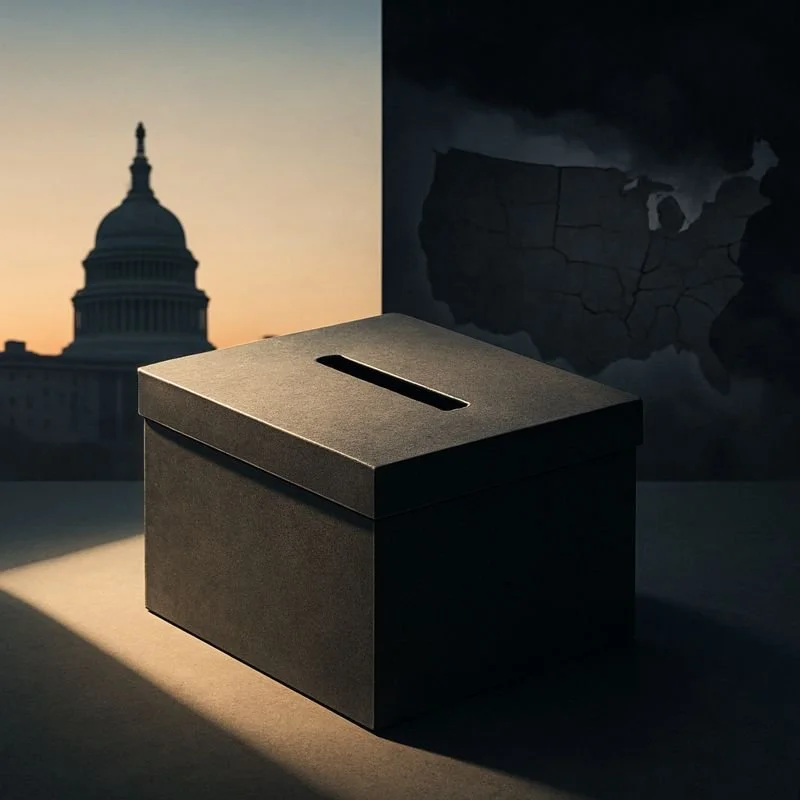
If Hillary Clinton had won against Donald Trump in 2016, the most important changes would not be the day-to-day headlines. They would be the slow, structural shifts that compound over time: court rulings, regulatory power, alliances, and the boundaries of political speech.
This counterfactual matters because the United States has spent the last decade fighting over the same core questions: who counts, who decides, and what the rules are when institutions collide with popular anger. A Clinton victory would not have erased those forces. It likely would have changed how they expressed themselves, and where the pressure landed.
This piece lays out the most plausible “butterfly effects” of a Hillary Clinton win in 2016, grounded in how US institutions actually work. It also names what probably stays the same, because some trends were already baked in.
The story turns on whether institutional continuity would have cooled the conflict, or simply moved it to different battlegrounds.
Key Points
A Hillary Clinton win in 2016 most likely reshapes the Supreme Court and lower federal courts, changing outcomes on abortion, voting rules, and agency power for decades.
Domestic policy would probably be incremental, not revolutionary, because Congress would still be divided and polarized.
US alliances likely look steadier, with fewer abrupt shifts in tone toward NATO and traditional partners.
Immigration policy would almost certainly be less theatrical and less restrictive in form, while still facing strong political constraints and border pressure.
The US-China rivalry still intensifies, but the tools may lean more toward coalitions and targeted restrictions than broad tariff politics.
Political anger does not disappear; it likely reorganizes, with a faster, more disciplined opposition ecosystem and different flashpoints.
Background
The 2016 election was not only a contest of candidates. It was a contest of governing styles and institutional trust. Clinton represented continuity with the late Obama-era approach: technocratic administration, alliance-first foreign policy, and incremental reform. Trump represented disruption: anti-establishment messaging, aggressive use of the bully pulpit, and a willingness to stress-test norms.
A president can do three big things even with a hostile Congress. First, appoint judges who interpret the Constitution and federal law for a generation. Second, direct the executive branch through appointments and rulemaking, shaping how regulations are written and enforced. Third, set the tone of foreign policy through priorities, diplomacy, and signals to allies and adversaries.
That is why the “what if Hillary won” debate keeps returning. It is less about one alternate speech and more about a different operating system for American power.
Analysis of a Hillary Clinton Win in 2016
Political and Geopolitical Dimensions
A Clinton White House likely brings fewer public shocks in foreign policy and more predictable alliance management. The most immediate difference is tone, which sounds cosmetic until it isn’t. Allies and adversaries react not only to actions, but also to signals about consistency, credibility, and red lines.
NATO relations, in particular, probably feel steadier. That does not mean burden-sharing fights vanish. Those arguments predate Trump. But the public leverage tactics would likely be quieter, and the baseline assumption of US commitment would be less frequently questioned.
Russia is harder. A Clinton administration probably maintains or increases sanctions pressure and pushes tighter coordination with European partners. That may change the cost of certain Russian actions at the margins. It does not guarantee deterrence. Moscow’s willingness to take risks has its own drivers: domestic legitimacy, military planning, and perceived Western cohesion.
The Middle East likely looks less erratic and more “process-driven.” That can be a virtue, but it can also produce slow-motion drift. A steadier posture does not automatically solve structural problems like regional rivalry, proxy conflicts, and the limits of US leverage.
Economic and Market Impact
The clearest economic difference is the likely absence of a sharp, tariff-led trade escalation as a signature political brand. A Clinton administration could still be hawkish on trade, especially on enforcement and intellectual property, but would probably lean more on coalitions, targeted actions, and multilateral coordination.
On taxes and spending, the constraints are brutal. If Republicans hold at least one chamber of Congress, large-scale progressive domestic plans face gridlock. That tends to push presidents toward incremental expansions of existing systems rather than sweeping new ones.
Health care is the obvious example. A Clinton presidency probably focuses on strengthening the Affordable Care Act through subsidies, enrollment policies, and regulatory tweaks. A “public option” might remain a talking point and a bargaining chip, but passing it would require political conditions that may not exist.
Markets tend to like predictability. That does not mean a Clinton era is smooth. The US still faces inequality, regional economic divergence, and growing distrust of elites. Those pressures can produce volatility even when policy looks conventional.
Social and Cultural Fallout
The most tempting mistake is to imagine that a Clinton win means a calmer America. It might mean fewer presidential-level provocations. It does not mean fewer cultural conflicts.
In this timeline, the opposition energy does not vanish. It likely concentrates faster and becomes more disciplined, because it can define itself against a president who embodies establishment continuity. Claims of illegitimacy, bias, and institutional capture could still flourish, just framed differently.
At the same time, progressive movements still push hard. They may focus more on policy wins through agencies and courts, and less on direct resistance to presidential conduct. That could change the texture of protest politics, not the underlying forces driving it.
A key social difference is the way national attention is directed. A president’s language can amplify or dampen a story. It can normalize conflict or isolate it. Even if the country remains polarized, the feeling of constant emergency may be less intense if the White House is not actively feeding it.
Technological and Security Implications
Cybersecurity and influence operations remain central in either timeline. The difference is likely in prioritization and execution. A Clinton administration probably invests more political capital in public-private coordination, agency staffing, and allied information-sharing. It may be more willing to frame disinformation as a national security issue early.
Technology regulation could also evolve differently. The late 2010s brought rising scrutiny of platforms, privacy, and data power. That trend is bipartisan, but enforcement posture matters. A Clinton-era Department of Justice and regulatory environment might pursue different cases, timelines, and standards, shaping how Big Tech adapts.
On China, the strategic contest likely sharpens regardless. The question is whether the US emphasizes unilateral pressure or coalition-driven constraint. Either way, the result is a more securitized technology economy, with semiconductors, supply chains, and research access increasingly treated as strategic assets.
What Most Coverage Misses
Most “what if Hillary won” arguments fixate on personalities. The bigger story is institutional capacity. A less chaotic administration can keep senior posts filled, maintain consistent rulemaking, and sustain interagency work. That sounds boring. It is also how a state actually governs.
That capacity shapes everything from disaster response to financial oversight to the speed of sanctions enforcement. The US federal government is a machine. If it is run with fewer vacancies, fewer abrupt reversals, and more predictable internal direction, outcomes shift even without dramatic new laws.
The second overlooked factor is backlash timing. In a Clinton timeline, the populist right does not disappear. It may modernize faster, professionalize its messaging, and consolidate earlier around a successor. That can produce a political environment that feels less chaotic in the short term, but more strategically organized in the medium term.
Why This Matters
The groups most affected are not only voters. They include industries tied to regulation, communities shaped by immigration policy, and countries that calibrate their security planning around US credibility.
In the short term, a Clinton win in 2016 likely means fewer sudden policy shocks and a more conventional approach to alliances and rulemaking. That can stabilize business planning and foreign policy expectations, even as cultural conflict continues.
In the long term, the courts are the game-changer. Different Supreme Court appointments can alter abortion rights, voting rules, agency authority, and the legal limits of executive power. Those decisions shape daily life quietly: how elections are run, what health coverage looks like, what environmental rules apply, and how much discretion regulators have.
The concrete events to watch in this alternate timeline would be judicial confirmations, major agency rules, and the midterm elections that determine whether incremental governance becomes legislative change. The calendar would still revolve around those pressure points, because US politics ultimately runs through institutions.
Real-World Impact
A small manufacturer in Michigan selling parts into global supply chains sees fewer abrupt tariff swings. Planning is still hard, but the risk feels more like “slow policy drift” than sudden cliff edges.
A nurse in Phoenix benefits if health coverage expansion is nudged forward through subsidies and enrollment rules. The hospital still faces staffing strain and uneven state policy, but the coverage baseline is a bit wider.
A tech compliance lead in California deals with rising pressure on privacy, competition, and platform harms. The change is less about one law and more about a steady accumulation of enforcement expectations.
A farmer in Iowa watches global markets and export demand. A less confrontational trade posture can reduce certain shocks, but China competition and price volatility remain, because those are structural features of the modern food economy.
Conclusion
A Hillary Clinton win in 2016 likely produces a United States that looks more orderly on the surface and more consequential in the legal foundations underneath. The biggest shifts show up in courts, agencies, and alliances, not in daily spectacle.
The real fork in the road is whether a calmer governing style reduces political temperature, or whether it simply shifts conflict into more durable forms: court battles, regulatory warfare, and a faster-organizing opposition.
The signs that would reveal which path is taking hold are not viral moments. They are quieter: the shape of the judiciary, the durability of alliance commitments, the consistency of rulemaking, and whether political movements turn their energy into institutional control rather than constant outrage.
SEO Meta Description
Meta description: A clear, grounded look at a Hillary Clinton win in 2016—how courts, alliances, trade, and culture likely change, and what stays the same.
Social Media – X (Twitter)
Tweet 1:
If Hillary Clinton had won in 2016, the biggest change wouldn’t be the headlines. It’d be the courts, the rules, and the alliances that shape everything else. 🗳️⚖️🌍
Full breakdown: [ARTICLE_URL]
@NateSilver538 @ezraklein @ianbremmer
#USPolitics #Election2016 #HillaryClinton #DonaldTrump #SupremeCourt #NATO #China #Ukraine #Healthcare #ClimatePolicy
Tweet 2:
The “what if Hillary won” question isn’t nostalgia. It’s a stress test: how much of the last decade was one man… and how much was baked in? 🔥🧠🗳️
Read it: [ARTICLE_URL]
@NateSilver538 @ezraklein @ianbremmer
#Politics #USNews #WhatIfHistory #Election2016 #SupremeCourt #Geopolitics #Trade #Immigration #TechPolicy #Democracy
Social Media – Instagram
Instagram caption:
What if Hillary won in 2016?
Most people imagine different speeches and calmer days.
The bigger changes are quieter: courts, rules, alliances, and the slow machinery of government.
This is the part that’s easy to miss. A president can struggle to pass big laws and still reshape the country for decades through judges and regulation. That’s where the long tail lives.
And the anger doesn’t vanish in this timeline. It shifts. It reorganises. It picks new battlegrounds.
Save this to revisit later. Share it with someone who argues about politics but never talks about institutions.
Full breakdown here: [ARTICLE_URL]
Do you think the temperature would’ve dropped, or just moved elsewhere?
#USPolitics #Election2016 #HillaryClinton #DonaldTrump #SupremeCourt #Geopolitics #WhatIfHistory #Democracy #PoliticalAnalysis #ClimatePolicy #Healthcare #TaylorTailored
Thumbnail Image Brief (Legal, Unique, Psychology-Based)
Thumbnail brief: A sealed ballot box on a stark table, split by a clean diagonal beam of light into two worlds: one side shows a calm Capitol silhouette at dawn, the other shows storm clouds over a fractured map outline of the US. High contrast, cinematic lighting, one clear focal point on the ballot slot.
