What If Afghanistan Was Never Invaded?
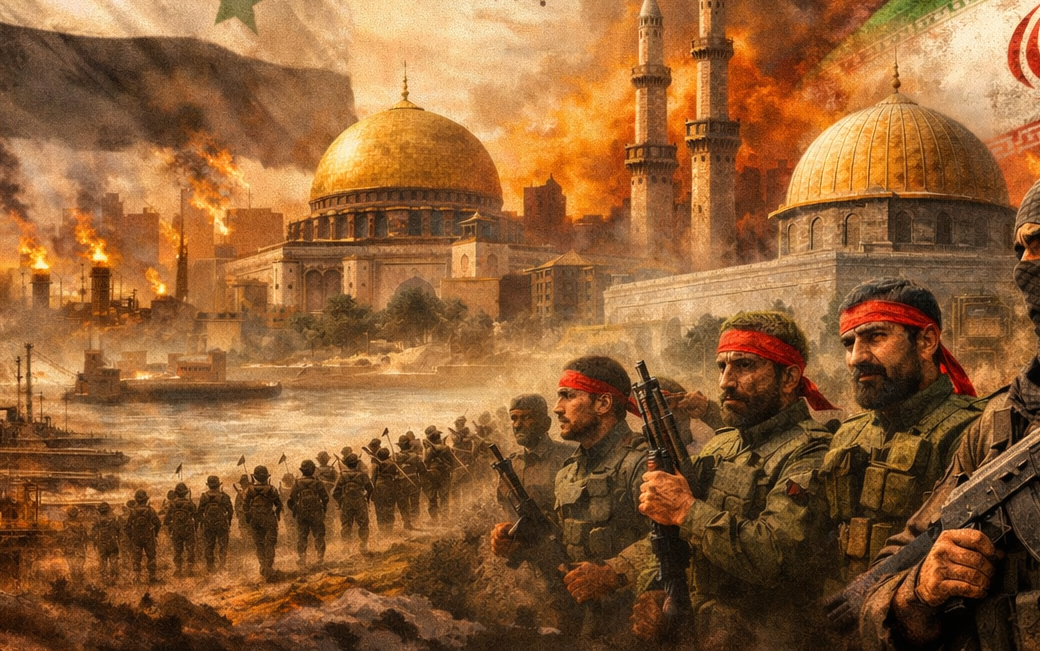
How the War on Terror Might Have Unfolded After 2001
On October 7, 2001, the United States and the United Kingdom launched airstrikes in Afghanistan in real history. In this scenario, that attack never happens. Washington decides it will not invade Afghanistan at all and will instead pursue al-Qaeda through intelligence cooperation, covert action, financial pressure, and demands on Pakistan and the Taliban.
That single restraint reshapes everything that follows. There is no rapid collapse of Taliban rule, no Bonn conference-built interim state under foreign protection, and no two-decade occupation that becomes a global symbol. But there is also no clean “end” to 9/11. The target continues to be in a hostile sanctuary, and the United States is faced with a decision between patience and escalation, without the option to use the blunt weapon of regime change.
The tension is immediate: skipping invasion avoids one catastrophe but risks another. If the Taliban keep sheltering al-Qaeda, deterrence becomes a living test. If the Taliban wobble under pressure, Afghanistan can still fracture—just without an external stabiliser.
By the end, the reader will understand how a non-invasion changes counterterrorism, regional leverage, migration, and domestic politics, and why the hardest problem is not tactics but credibility.
This is not prophecy. It is a constraint-based fork. There is only one divergence, no stacked miracles, and no assumption that history "wants" a neat outcome.
The story turns on whether the Taliban can be coerced without being replaced.
Key Points
The divergence is a US decision in early October 2001 not to launch the Afghanistan invasion or the opening air campaign.
The first-order consequence is Taliban continuity: the regime remains in Kabul, and the Northern Alliance does not gain rapid, US-backed momentum.
The biggest constraint is sanctuary: in the absence of ground forces, the United States relies on intelligence, Pakistan's cooperation, and limited access to long-range strike options.
One likely branch is a “pressure cage” where the Taliban rule on, while al-Qaeda disperses, adapts, and survives in the seams of the region.
A second branch is a negotiated handover or exile deal over time, driven by Taliban fear of regime-ending strikes and Pakistan’s leverage.
A third branch is internal Afghan fragmentation: warlord resurgence, factional conflict, and a rolling civil war that the outside world watches but does not occupy.
The key signal is Pakistan’s posture: arrests, border enforcement, and intelligence sharing reveal whether sanctuary is shrinking or simply relocating.
Baseline History
The week before the real opening strikes, the Taliban ruled most of Afghanistan after years of civil war. Al-Qaeda leadership operated from Afghan territory with Taliban protection. The United States demanded the Taliban hand over Osama bin Laden and dismantle terrorist infrastructure. The Taliban signalled conditional offers tied to evidence and an end to bombing once strikes began, but the US position hardened quickly into a non-negotiation.
American power was already mobilised. Carrier groups, regional bases, and allied support were being assembled. NATO had invoked collective defence for the first time in its history after 9/11. Pakistan was central, both as a logistics corridor and as an intelligence hinge, while also carrying its own strategic interests and domestic constraints.
Real history moved toward invasion because leaders wanted a decisive response, and because regime change promised a visible outcome: remove the host, then hunt the guest.
The Point of Divergence
October 3–6, 2001. The White House decides that invading Afghanistan will not reliably capture al-Qaeda leadership, will produce an open-ended nation-building burden, and will fracture allied unity. It opts for a non-invasion strategy: covert raids where possible, expanded global intelligence authorities, financial warfare, and maximal pressure on Pakistan to squeeze Taliban and al-Qaeda networks.
This is plausible because it changes only the decision threshold, not the underlying rage or risk. The United States still pursues al-Qaeda. It simply refuses to attach that pursuit to occupying Afghanistan.
What changes immediately is the absence of the opening air campaign and the rapid military cascade that followed. What does not change is the fundamental problem: a hostile regime and a transnational network sharing space.
The First Ripples
The First 24 Hours
The first effect is political signalling. Washington announces it will hold those responsible accountable but will not “own” Afghanistan. Allies who feared a long occupation feel relief, while others doubt the resolve. The Taliban claims vindication and frames the US as hesitant, not restrained. That matters because perceptions shape recruitment, fundraising, and regional hedging.
Within US agencies, the focus shifts towards intelligence services, special operations planning, and financial targeting. The military still prepares contingencies, but the public promise becomes capture and disruption, not liberation and rebuilding.
In Pakistan, the decision creates both opportunity and danger. Islamabad remains essential, but now the bargain is harder to hide. Cooperation becomes a quiet, daily grind rather than a visible wartime alliance, and that increases mistrust on all sides.
The First Month
Without invasion, the Taliban face pressure without collapse. They tighten internal security, purge suspected leak points, and harden the border economy that keeps the regime afloat. Al-Qaeda adapts fast. Leaders move more often, rely more on couriers, and spread into Pakistan’s borderlands and urban safe houses where the state’s reach is contested.
Washington leans on Pakistan to arrest facilitators and disrupt transit routes. Some arrests happen. Some networks go dormant. Some simply rename, re-route, and embed deeper into local patronage systems.
The constraint is access. Without friendly territory in Afghanistan, the United States has fewer eyes, fewer reliable human sources, and fewer ways to validate targets. Every strike becomes a high-stakes gamble: miss and look weak; hit civilians and create a new wave of enemies.
The First Year
By late 2002, the “non-invasion” had created a war without a front line. Counterterrorism operations expand across borders. Intelligence sharing becomes a major diplomatic currency. Financial pressure hits charities, hawala networks, and suspicious trade flows, but also collides with legal systems and civil liberties debates at home.
Afghanistan itself remains brutal and closed. The Taliban continue enforcing their social order. Opponents are suppressed, exiled, or pushed into remote strongholds. The Northern Alliance survives as an armed coalition but lacks the decisive external air support that, in real history, helped it roll into key cities.
The Taliban’s core incentive is survival. If they hold the belief that the United States won't launch an invasion, they might feel more comfortable maintaining a distance from al-Qaeda instead of completely expelling it. If they believe invasion remains possible, they may seek a controlled off-ramp that protects the regime.
Analysis
Power and Strategy
Not invading denies al-Qaeda and its sympathisers a single, dominant propaganda image: a foreign army occupying Muslim land for years. That likely reduces one pathway of global mobilisation. But it also denies Washington a coercive lever that changes facts on the ground. Without regime change, the Taliban remains a governing authority, not a fugitive movement.
This shifts the contest toward bargaining and pressure. The United States must influence Taliban behaviour indirectly—through Pakistan, targeted strikes, sanctions, and the threat of escalation that it is refusing to enact. That is a credibility puzzle: coercion relies on a threat you are publicly reluctant to use.
Regional states hedge differently. Russia, China, Iran, India, and the Gulf monarchies see a United States that will pursue terrorists globally but may avoid occupying territory. Some view that as prudence; others view it as a limit to be exploited.
Economics, Industry, and Supply
A non-invasion eliminates the significant financial burden of occupation, which includes bases, reconstruction contracts, aid pipelines, and the extensive costs associated with veterans' care. Some of that spending shifts into intelligence, homeland security, and global operations, but it is less visible and more dispersed.
Isolation, the risk of sanctions, and internal controls by the Taliban continue to constrain Afghanistan's economy. The post-2001 aid surge that poured into Kabul and provincial capitals increased cash flow, NGOs, jobs tied to foreign presence, and modernised services. The country remains poorer and more cut off but also less reshaped by a foreign-funded urban boom.
Opium economics are uncertain in direction. The Taliban’s relationship with narcotics has varied across time and factional needs, and this scenario does not grant a magical policy change. What is more reliable is the incentive: a sanctioned, isolated regime seeks revenue streams that are extremely difficult for outsiders to choke.
Society, Belief, and Culture
Avoiding invasion avoids one kind of trauma—occupation war, night raids, mass displacement from major offensives—but it does not spare Afghans from violence. The Taliban’s rule is coercive. Opposition remains armed in pockets. Political life stays narrow. Women and girls face severe constraints under Taliban ideology and enforcement.
The cultural story in the West also changes. There is no long war to debate for twenty years, but there is a persistent sense of unfinished justice. That can harden domestic politics in a different way: more surveillance, more fear of attacks, more appetite for punitive measures that do not require a battlefield.
Technology and Logistics of the Era
In 2001–2002, long-range surveillance and precision strikes exist, but they are not omniscient. Drone warfare grows, but it still depends on basing, overflight permissions, intelligence fusion, and human confirmation. Without ground partners inside Afghanistan, the kill chain is slower and the error rate riskier.
Communications constraints matter. Al-Qaeda adapts to interception by reducing electronic footprint and using couriers. That pushes the contest toward patient intelligence work rather than rapid military sweeps. It also means the United States can go years between high-confidence opportunities, and those gaps become politically corrosive.
What Most Coverage Misses
The overlooked limiter is not firepower. It is jurisdiction. Counterterrorism without invasion depends on other states acting against networks inside their own borders. That creates a permanent bargaining problem: cooperation is never free, never unconditional, and never perfectly verified.
The second-order effect is that “no invasion” can increase Pakistan’s leverage over US policy. When access and intelligence run through one gate, the gatekeeper gains bargaining power. That does not mean conspiracy. It means incentives, bureaucracy, and plausible deniability.
Scenario Paths
1) The Pressure Cage
The Taliban remain in power through the 2000s under sanctions, diplomatic isolation, and periodic covert disruption. Al-Qaeda disperses more widely into Pakistan and other regions, becoming less concentrated but harder to uproot. The United States runs a global campaign of arrests, financial disruption, and targeted strikes when windows open.
Why this happens: it fits the constraints. The Taliban can endure isolation, and the United States can punish and disrupt without owning Afghan governance.
Breakpoint: a successful mass-casualty attack traced back to Taliban-protected networks triggers a domestic US demand for a decisive act, reopening the invasion option.
Plausibility: Most likely. It requires no sudden internal Afghan transformation, only continued adaptation by both sides.
2) The Coerced Deal
Over time, Pakistan and Gulf intermediaries push the Taliban toward a bargain: expel or hand over specific al-Qaeda leaders in exchange for partial recognition, sanctions relief, and security guarantees that the United States will not invade. The Taliban comply selectively, keeping internal unity by framing it as statecraft, not surrender.
Why this happens: regimes trade assets for survival when pressure is steady and the off-ramp is credible. A negotiated outcome becomes more attractive when invasion is off the table but punishment persists.
Breakpoint: a Taliban faction refuses compliance and splits the movement, either sabotaging the deal or pulling the regime into renewed internal conflict.
Plausibility: Plausible. The constraint is trust: verification is hard, and each side fears being tricked.
3) The Rolling Civil War
Without foreign invasion, Afghanistan does not unify around a new central government. Instead, power remains contested at the margins. Warlords re-arm. The Northern Alliance holds pockets. The Taliban suppress and bargain by turn, while regional powers fund proxies to prevent rivals from gaining dominance.
Why this happens: Afghanistan’s fragmentation predates 2001, and removing the external shock of invasion does not remove internal rivalries or foreign meddling.
Breakpoint: a leadership crisis in Kabul—death, coup, or major split—creates a vacuum that armed factions rush to fill.
Plausibility: Less likely. The constraint is the Taliban’s demonstrated capacity to impose order through coercion, which can prevent full fragmentation—until it cannot.
Least likely outcomes are clean victory stories: a swift capture of top leaders without wider blowback, or a stable, rights-respecting Afghan state emerging without a major political settlement. The constraints are information, trust, and the brutal logic of armed rule.
Why This Matters
In the short term, a non-invasion shifts costs away from occupation and toward global counterterrorism: intelligence expansion, diplomacy, sanctions enforcement, and covert action. It likely changes the pace of insurgent recruitment and removes a central theatre for anti-occupation mobilisation.
Long term, it changes the shape of the War on Terror. The United States becomes less a nation-builder and more a network hunter. That may reduce certain forms of anti-American rage, but it risks entrenching a security state at home and a permanent shadow war abroad. Afghanistan remains under Taliban rule longer, with deep human consequences, while the global threat picture becomes more dispersed and less legible.
Real-World Impact
A taxi driver in Manchester sees tighter airport screening, more police presence around major events, and a steady drip of terror-related arrests that keep fear alive without the clear narrative of a distant war.
A farmer near Peshawar lives closer to the friction line. Border enforcement intensifies, suspicion deepens, and the local economy shifts as networks go quiet, re-route, or get bought by different patrons.
A civil servant in Brussels spends years negotiating intelligence-sharing rules, data retention laws, and sanctions regimes that try to keep democracies secure without hollowing out their rights culture.
A shop owner in Istanbul feels the difference between a war with a front line and a war without one: less dramatic headlines, but more uncertainty about where the next plot might be incubated.
What If?
A world where Afghanistan was never invaded is not one without war. It is a world where war moves into paperwork, prisons, bank transfers, back-channel diplomacy, and occasional explosions.
The trade-offs stay sharp. Avoid invasion, and you avoid owning Afghanistan. But you also accept that the Taliban remain a governing power and that coercion will depend on other states whose interests do not match Washington’s.
Markers that reveal which branch is winning are concrete: Pakistani arrest campaigns that are sustained rather than symbolic, Taliban actions against foreign fighters that are verifiable rather than theatrical, shifts in courier networks, border closure enforcement that persists beyond news cycles, and any credible negotiated framework that includes enforcement mechanisms.
