What If Iraq Was Never Invaded?
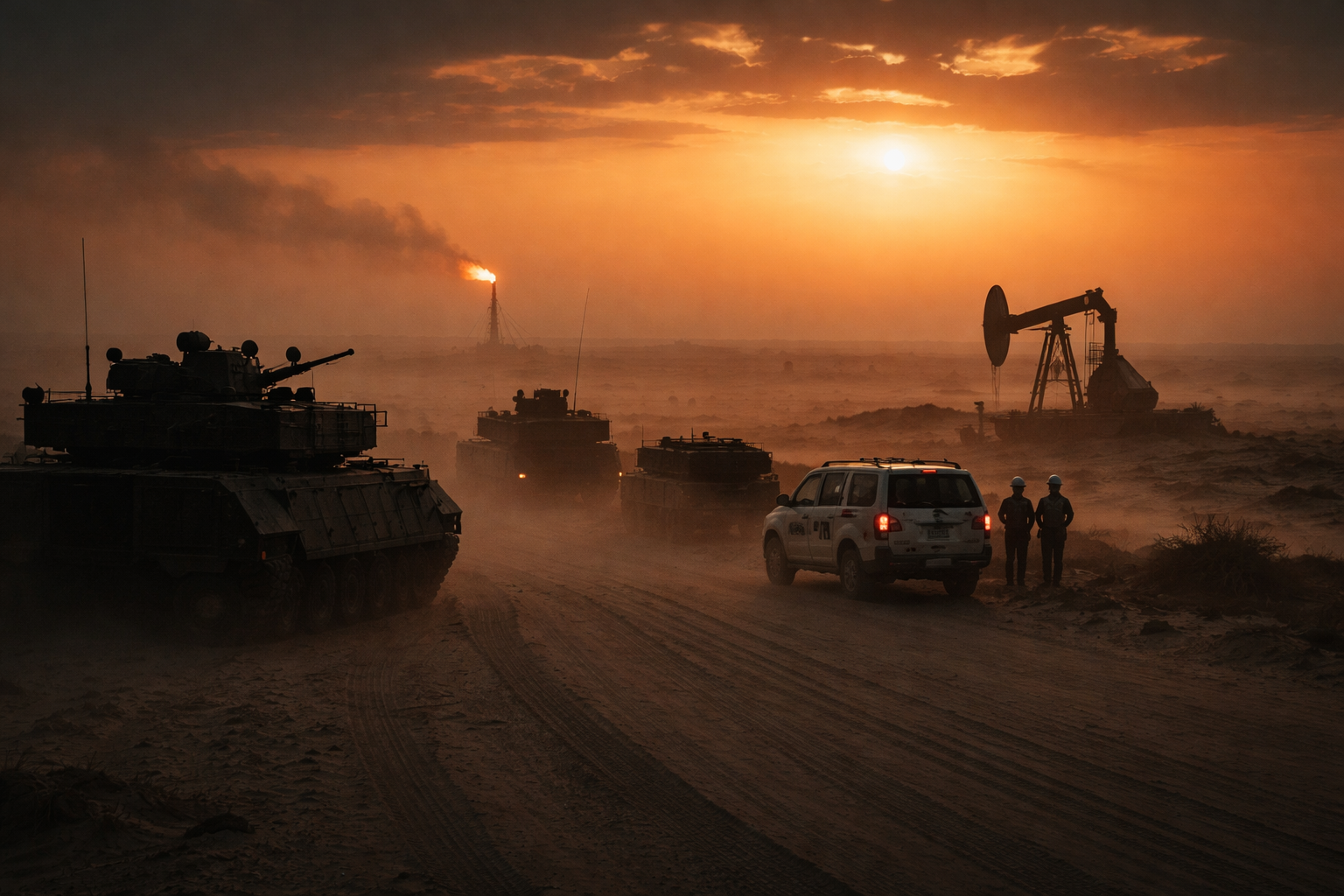
How the Middle East Might Have Shifted After 2003
In this scenario, Iraq is never invaded because the United States cancelled the planned March 2003 ground assault after deciding it would not use force without explicit UN authorisation.
That one choice keeps Saddam Hussein in power, keeps the Iraqi state intact, and keeps the region’s balance of fear in place. It also locks Washington into the slow grind of containment: inspections, sanctions, air patrols, and periodic strikes.
The tension is immediate. Avoiding invasion prevents a sudden collapse, but it also means living with a regime that has survived wars, uprisings, and isolation—and will now claim a propaganda victory for driving the world’s superpower back.
By the end, the reader will see how this single non-war reshapes leverage, insurgency, oil risk, and Iran’s room for manoeuvre—without pretending history becomes tidy.
The rules stay strict. One divergence. Same technology. Same bureaucracies. There is no guarantee of a "better" outcome, only a range of costs borne by different individuals.
The story turns on whether containment can outlast a dictatorship’s succession crisis.
Key Points
The divergence is a US decision in March 2003 to stand down rather than launch the invasion that began in real history later that month.
The first-order effect is continuity: Iraq’s army, police, ministries, and borders remain under Baghdad’s control instead of collapsing into occupation and insurgency.
The biggest constraint is legitimacy: containment depends on allies, basing rights, inspections access, and sanction enforcement that are politically brittle.
One branch is a “frozen” Iraq: repression at home, limited openings abroad, and periodic crises managed by air power and inspections.
Another branch is an internal rupture: elite coup or succession struggle that ends the regime without a foreign army—but risks a civil split anyway.
A third branch runs through 2011: regional unrest reaches Iraq, and the state either crushes it or fractures along security and sect lines.
The key signal is succession: health rumours, purges, and who controls the security services matter more than speeches at the UN.
Baseline History
In the week before the real invasion, Iraq sat inside a long containment regime built after 1991: sanctions, restricted trade, and foreign-enforced air zones that limited Baghdad’s reach in parts of the country. The UN inspection system had been restarted, with inspectors moving around Iraq under intense global attention. US forces were already positioned in the Gulf, and domestic authorisations and coalition planning were in place.
Key players were fixed. Saddam’s inner circle ran a security state designed to survive coups. Washington’s civilian and military leadership had publicly committed to disarmament and regime change as overlapping goals. European governments were split. Regional governments were cautious, balancing public anger against private security dependence.
Real history went to war because decision momentum became institutional momentum: troops deployed, credibility wagered, political capital spent, and “delay” began to look like “defeat.”
The Point of Divergence
March 10, 2003. After a final round of diplomacy fails to produce explicit UN authorisation, the US president announces the invasion will not proceed and that pressure will continue through inspections, sanctions enforcement, and air power.
This is plausible because it requires only one thing to change: the threshold for action. Instead of treating deployment as irreversible, the White House treats the absence of UN backing as a strategic limit, not a public-relations problem.
What changes immediately is the war plan. What does not change is the underlying confrontation. Saddam remains a hostile regime. The US remains committed to preventing rearmament and preserving Gulf deterrence.
The First Ripples
The First 24 Hours
The first reaction is logistical, not rhetorical. Tens of thousands of troops and their supply chains are sitting in heat, sand, and political limbo. Commanders pivot from assault preparation to an orderly drawdown timetable. Kuwait becomes the centre of a quiet, expensive reverse flow: fuel, ammunition, vehicles, contracts, and medical support.
Baghdad declares victory. State television frames the stand-down as proof Iraq has resisted foreign domination. Inside the regime, the message is also internal: loyalty is rewarded, doubt is punished. Security units tighten around potential rivals who might mistake “no invasion” for “weakness.”
Inspectors become the sudden hinge. Their access, their reporting cadence, and their ability to keep moving determine whether this new posture looks like discipline or drift.
The First Month
Coalition politics harden. Governments that feared the invasion exhale, then press for stricter inspections and clearer benchmarks. Governments that backed the invasion demand proof the stand-down is not surrender. Washington tries to hold both, which means more meetings, more compliance tests, and more pressure on Iraq to document, explain, and submit.
Sanctions enforcement becomes louder and uglier. Smuggling networks that lived in the shadows become a battlefield of seizures, bribes, and regional embarrassment. Every intercepted shipment creates another argument about whether containment is humane, workable, or merely theatrical.
In Iraq, the regime runs a familiar play: cooperate just enough to split opponents, then stall. The aim is not to convince inspectors. The aim is to exhaust the coalition that empowers them.
The First Year
By early 2004, the United States is still fighting in Afghanistan without the drain of a second full-scale occupation. That shifts attention, budgets, and elite time. It does not end terrorism, but it alters the geography of outrage. There is no Baghdad occupation to serve as a daily global recruitment poster, yet there is still an Iraq standoff that can be portrayed as Western punishment.
Inside Iraq, the regime is older, more paranoid, and more brittle than it looks. The state functions, but it functions through fear and patronage. The biggest unknown becomes succession: whether Saddam can manage it, and whether the men around him believe he can.
Analysis
Power and Strategy
Not invading changes the map of leverage. Iran loses a sudden opening into a shattered Iraq, but it does not lose interest. It keeps building influence where it can: exile networks, clerical ties, border trade, and intelligence relationships. The difference is tempo. Influence grows as ivy, not as a flood.
The United States keeps a deterrence posture rather than an occupation posture. That means fewer boots in Iraqi streets and more reliance on airfields, carriers, and regional partners. It also means every crisis becomes a credibility test: if Iraq obstructs, does Washington strike, tighten sanctions, or swallow it?
Regional rulers face a different kind of pressure. In real history, the invasion removed a major Arab counterweight to Iran and sent shockwaves through every palace. Here, Saddam remains a brutal counterweight—one that frightens neighbours, but also pins Iran’s western flank in place.
Economics, Industry, and Supply
Oil risk changes shape. A full invasion creates acute supply fear, reconstruction contracts, and sabotage cycles. No invasion reduces the immediate war premium, but it keeps chronic uncertainty alive: sanctions policy, smuggling, periodic air strikes, and the constant question of whether a crisis will reignite war planning.
For Iraq’s economy, containment is a slow suffocation with vents. Smuggling and sanctioned trade do not “fix” the economy; they distort it. They reward loyal intermediaries, punish the middle class, and make corruption a survival skill. That produces a regime that can endure, but rarely reform.
For the US and its allies, the money doesn’t vanish. It moves. Funds that would have paid for occupation bases and reconstruction shift into air operations, intelligence, regional basing agreements, and Afghanistan’s longer war. The political argument changes from “Why are we there?” to “Why are we still paying for this?”
Society, Belief, and Culture
Avoiding invasion avoids a specific wound: the daily humiliation of occupation, raids, prisons, and collaboration politics. That matters because it changes the moral fuel available to extremists.
But containment has its own cultural poison. Years of sanction logic make ordinary Iraqis feel trapped in someone else’s punishment scheme. The regime exploits that cynically, presenting itself as both jailer and shield.
Across the region, the symbolic lesson shifts. Instead of “the US can topple you,” it becomes “the US can be deterred by legitimacy constraints.” That may reduce some rulers’ panic, but it can also encourage brinkmanship by leaders who think they can play the same game.
Technology and Logistics of the Era
In 2003, containment is not a click-and-control project. It is aircraft hours, maintenance cycles, overflight permissions, human sources, inspections access, and diplomats managing constant friction.
Air power can punish, disrupt, and degrade. It cannot search warehouses, police borders, or rebuild a state. Inspections can verify some things and deter others. They cannot produce political legitimacy inside Iraq. The regime’s security apparatus remains the core fact on the ground, and it is designed to survive pressure.
What Most Coverage Misses
The overlooked limiter is basing politics. Containment depends on neighbours quietly hosting the machinery of pressure: airfields, logistics hubs, and intelligence cooperation. Those governments face street-level anger and elite-level fear at the same time. A strategy that requires them forever becomes fragile precisely when it seems “stable.”
The second-order effect is that containment freezes Iraq’s internal evolution. Without the shock of invasion, there is no forced re-ordering of parties, militias, and constitutions. That avoids chaos, but it also delays any chance of organic transition. The regime’s cracks are still there. They just widen behind closed doors.
Scenario Paths for a World Where Iraq Was Never Invaded
1) The Frozen State
Iraq remains a sanctioned, heavily policed dictatorship through the 2000s. Inspectors return, leave, return again. Iraq makes partial concessions that are real enough to split coalitions but not real enough to close the file. Periodic air strikes flare when obstruction peaks.
Why this happens: it matches incentives. Saddam survives by never giving opponents a clean justification for war while never giving up real control.
Break point: a major inspection crisis—expulsions, a shootdown, or a dramatic concealment discovery—forces Washington to choose between war and humiliation.
Plausibility: Most likely. It requires no extra shocks, only the endurance of institutions that already existed.
2) The Palace Knife
The regime ends from within: a coup, an arranged succession that collapses, or a security split that removes Saddam and reshuffles the elite. The state does not dissolve, but it lurches. A new strongman promises compliance to buy sanction relief, then rules with the same tools under a new face.
Why this happens: personalised dictatorships age badly. The more survival depends on one man, the more dangerous the transition becomes for everyone around him.
Break point: the moment sanctions relief becomes credible. If outsiders offer a clear off-ramp, insiders have a reason to change leadership. If outsiders offer only permanent punishment, insiders cling to the old order.
Plausibility: Plausible. The constraint is information: outsiders rarely know which faction is truly winning until after the shooting starts.
3) The 2011 Fault Line
Regional unrest reaches Iraq. Protests begin in cities where repression and economic stagnation have hollowed out trust. Security forces respond with force. The state either crushes the challenge quickly or fractures along unit loyalties, clan ties, and sect fears.
Why this happens: Iraq does not escape regional pressures. Youth bulges, corruption, and police violence do not vanish because war is avoided.
Break point: whether key security formations fire on crowds uniformly. If they do, the regime survives at the price of mass fear. If they split, the state’s coherence shatters fast.
Plausibility: Less likely. The constraint is the regime’s proven capacity for repression, which may prevent escalation—but at a high human cost.
The least likely outcome is a smooth liberal transition. A security state rarely retires politely, and containment does not teach it compromise. It teaches it survival.
Why This Matters
Short term, the most visible change is the absence of a massive occupation and the cascade that followed: the collapse of Iraqi institutions, the insurgency ecosystem, and the regional aftershocks that fed extremist branding.
Long term, the change is subtler: Iran’s influence grows more slowly, jihadist narratives lose a central theatre, and US war-making credibility takes a different shape—less about shock and awe, more about alliances and thresholds. The world still faces terrorism, authoritarianism, and regional rivalry. The difference is where the fires burn, and how many people are forced to live inside a failed state.
Real-World Impact
A dockworker in Liverpool sees steadier fuel prices in the mid-2000s, with fewer sudden spikes tied to invasion headlines, but still feels chronic uncertainty as Middle East tensions never really leave the market.
A farmer near Kyiv hears less talk of a second major US war and watches Washington’s attention stay more fixed on Afghanistan and Europe’s eastern edge, but also sees global politics remain volatile as legitimacy fights replace battlefield fights.
A civil servant in Delhi watches UN diplomacy take a larger role in security debates. The lesson absorbed is procedural power: votes, inspections, and veto threats can redirect superpowers, even when armies are already deployed.
A textile mill owner in New England hires through a different cycle. Instead of a long, visible occupation boom-and-bust, the spending shows up as quieter defence procurement, air operations, and intelligence budgets—less dramatic, still expensive.
What If?
A world where Iraq was never invaded is not a peaceful world. It is a world with one less earthquake and one more slow pressure plate.
The live choices are grim. Containment avoids a sudden collapse but keeps millions inside a sealed system. Regime change without invasion becomes possible, but it is never clean, and it is never guaranteed to be kinder.
Markers that would show which branch is winning are concrete: inspection access expanding or shrinking, basing agreements renewed or denied, sanction enforcement tightening or fraying, elite purges in Baghdad, and any credible succession announcement that moves power without gunfire.
