$12.5bn Lakers Takeover Changes Everything As The Post-LeBron Era Begins
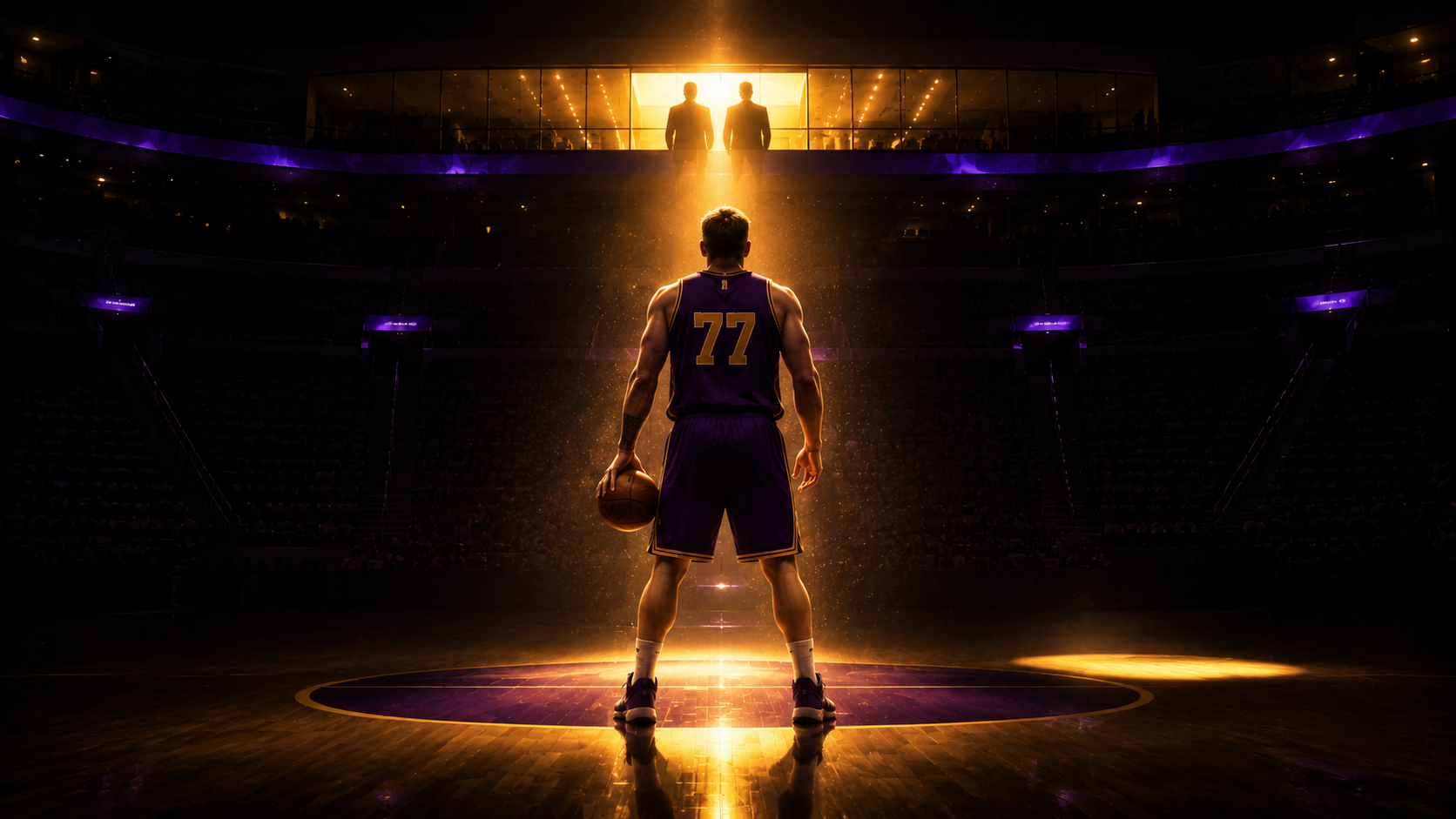
Bob Iger And Josh Kushner Buy Into The Lakers’ Most Important Rebuild In Years
The $12.5bn Lakers Gamble: Can Luka Dončić Lead A New Dynasty?
The Los Angeles Lakers are entering one of the biggest transitions in their history. Josh Kushner and former Disney chief Bob Iger have agreed to purchase the franchise in a deal valued at $12.5 billion, just as LeBron James’ departure leaves Luka Dončić as the undisputed centre of the team.
The agreement would establish a record valuation for an American professional sports franchise, eclipsing the approximately $10 billion valuation attached to Mark Walter’s purchase of control only last year. It still requires due diligence and approval from the NBA’s Board of Governors, but its significance already extends beyond an extraordinary purchase price.
Why Kushner And Iger Want The Lakers
Kushner and Iger had been exploring the possibility of joining an NBA expansion project in Las Vegas. When the opportunity to acquire the Lakers appeared, however, Iger said they changed course immediately and assembled the deal in only three days.
That decision is understandable. An expansion team might offer a blank canvas, but the Lakers offer something almost impossible to recreate: 17 championships, worldwide recognition, a vast commercial audience and an identity shaped by figures including Jerry West, Kareem Abdul-Jabbar, Magic Johnson, Shaquille O’Neal, Kobe Bryant and LeBron James.
The buyers have described themselves as lifelong NBA fans and promised to build upon the work of Jerry and Jeanie Buss, compete at the highest level and serve Los Angeles. Those are reassuring ambitions, although they remain broad promises rather than a detailed sporting plan.
Kushner brings investment expertise through Thrive Capital and Thrive Eternal. Iger brings decades of experience managing one of the world’s most powerful entertainment businesses, negotiating major media deals and controlling global intellectual property. He also has direct sports ownership experience through Angel City FC.
That combination could make the Lakers even more commercially ambitious. International partnerships, digital content, premium experiences and the development of the Lakers as a year-round entertainment property are all logical possibilities, although no specific expansion programme has been announced.
What The Purchase Really Changes
The simplest assumption is that richer owners will automatically produce a better basketball team. The reality is more complicated.
NBA rules limit what teams can spend and restrict the flexibility of clubs operating above salary thresholds. Kushner and Iger cannot simply offer every available star an unlimited contract. The Lakers will still have to match salaries in trades, manage the luxury tax and comply with the league’s increasingly severe apron rules.
Ownership wealth nevertheless matters. Owners decide whether to accept major tax bills, invest in scouting and analytics, expand player-development operations and support a large basketball staff. They also set the level of patience given to coaches and executives.
The most important immediate question is therefore not whether the new group can afford the Lakers. A $12.5 billion commitment answers that. It is whether the owners will construct a modern, disciplined organisation capable of resisting the franchise’s historic temptation to pursue famous names regardless of fit.
The Lakers already have basketball leadership in place under general manager Rob Pelinka and head coach JJ Redick. There has been no confirmed announcement of a front-office overhaul, and Jeanie Buss remains an important figure during the ownership transition. Continuity may help prevent a dramatic sale from disrupting preparations for the new season.
The Lakers Now Belong To Luka Dončić
LeBron’s move to Philadelphia formally ends the dual-star phase of the Lakers’ recent history. The franchise is now being designed around Dončić, one of basketball’s most productive offensive players and the obvious foundation of the post-LeBron era.
Dončić averaged 33.5 points, 8.3 assists and 7.7 rebounds across 64 regular-season appearances in 2025–26. A hamstring injury ended his season before the play-offs, but he has since said he is healthy and ready to return.
His three-year, $165 million extension includes a player option in its final season. That gives the Lakers security in the short term without allowing complacency: the organisation must demonstrate by 2028 that it can provide the structure, supporting talent and championship opportunities needed to keep him for the heart of his career.
Dončić has already responded positively to the prospective owners, saying there is no limit to the Lakers’ potential and expressing his desire to bring a championship back to Los Angeles. It was an enthusiastic welcome, but also an implicit statement of expectations.
The new owners are not inheriting a patient rebuilding project. They are acquiring a team led by a superstar in his prime, with a championship clock already running.
Are The Lakers Actually Promising?
Yes—but they are not yet a complete championship team.
Los Angeles finished the last regular season 53–29, won the Pacific Division and reached the Western Conference semi-finals despite entering the play-offs without Dončić and beginning them without Austin Reaves. That record suggests the foundation is considerably stronger than the uncertainty surrounding the ownership change might imply.
Reaves has become more than a complementary success story. He averaged career highs of 23.3 points, 5.5 assists and 4.7 rebounds before agreeing a new four-year contract. Alongside Dončić, he gives the Lakers a second high-level creator who can score, handle the ball and punish defensive attention.
Walker Kessler addresses another longstanding need. At 7ft 2in, he gives Dončić a genuine pick-and-roll target, protects the rim and adds rebounding to a team that ranked only 27th in rebounds last season. The Lakers paid heavily—two future first-round selections and two first-round swaps—to acquire him, demonstrating that the franchise intends to compete now rather than preserve every distant asset.
Quentin Grimes adds shooting, perimeter size and defensive value. Matisse Thybulle, Jarred Vanderbilt, Kevon Looney and Jake LaRavia offer different defensive and frontcourt options, while Dalton Knecht and Cameron Carr provide developmental upside.
There is enough here for a dangerous team. Dončić can control a play-off series, Reaves can punish overloaded defences and Kessler can give the attack a vertical dimension it previously lacked. Los Angeles should expect to return to the play-offs and has a credible path into the upper tier of the Western Conference.
The Weakness That Could Stop Them
The concern is balance. Dončić and Reaves form an outstanding offensive backcourt, but opponents will repeatedly test them at the point of attack. Kessler can erase some mistakes near the basket, yet asking a centre to repair every perimeter breakdown is not a championship-level defensive plan.
The Lakers also lack an obvious two-way power forward who combines size, reliable shooting and switchable defence. Vanderbilt and Thybulle can strengthen the defence but reduce spacing. More offensive options can open the floor while leaving the same defensive questions unresolved.
That makes the fifth starter more important than it appears. Los Angeles does not necessarily need another 25-point scorer. It needs a forward capable of guarding elite wings, making open three-pointers, rebounding and functioning without demanding the ball.
The roster is also expensive and the Kessler trade substantially reduced its future draft capital. New ownership may be willing to spend, but it cannot manufacture trade assets that have already been moved.
What Future Trades Could Look Like
No imminent Lakers trade has been confirmed. The most realistic future move would target a starting-calibre forward rather than another ball-dominant superstar.
Jonathan Kuminga would offer youth, strength and athleticism, although his inconsistent outside shooting could make him an awkward fit beside Kessler. Acquiring him would probably require a complicated sign-and-trade structure and further roster movement.
P.J. Washington represents a cleaner basketball fit. He has experience playing beside Dončić, can defend larger forwards, set screens and take open shots without controlling possessions. His long contract and the difficulty of constructing an acceptable package would complicate any approach.
De’Andre Hunter is another logical profile because he offers size and credible shooting on the wing. His injury history, contract and likely acquisition cost would require caution, while there is no public confirmation that the Lakers are negotiating for him.
Los Angeles could instead begin the season with its present group. That would allow Redick to test different frontcourts, evaluate the younger players and identify a precise weakness before the February trade deadline. Given the shortage of remaining draft assets, waiting for evidence may be wiser than making another expensive move simply to create excitement.
Any proposed trade involving Vanderbilt, Knecht, Jaden Hardy or other rotation contracts would need to improve the team without destroying its depth. Reaves should be treated as part of the core unless a genuine superstar becomes available; moving him merely to rebalance the roster would create a new offensive weakness while solving a defensive one.
The Post-LeBron Lakers Will Feel Different
For years, Lakers basketball revolved around LeBron’s power to control the game, pressure the organisation and attract veteran talent. The franchise benefited from his extraordinary durability and intelligence, but it also organised each season around the diminishing timeline of an ageing superstar.
The Dončić era creates a different kind of urgency. Luka is only 27, meaning the Lakers can build across several seasons rather than chase one final campaign. Yet his contractual position and the heavy investment in Kessler mean they cannot spend years experimenting.
The attack should now run through Dončić without ambiguity. Reaves becomes the secondary creator, Kessler becomes the primary interior partner and the remaining players must defend, shoot and move intelligently around them.
LeBron’s departure also creates a leadership test. Dončić must become more than the best player on the roster; he must set the standards of the franchise. Redick must prove he can turn an explosive offence into a resilient play-off team, while Pelinka must show that the roster can evolve without relying upon the arrival of another globally famous name.
A Championship Window With No Guarantees
The Lakers are promising because they possess the hardest asset to find: a genuine franchise player in his prime. They also have a second creator under contract, a starting centre suited to Dončić’s game and an ownership group apparently prepared to make one of the largest investments in sporting history.
They are not obvious favourites because the Western Conference remains brutal, Dončić is returning from a significant hamstring injury, the defensive fit is imperfect and the supply of tradable first-round assets has narrowed. The difference between a contender and a champion may be one starting forward, one healthy postseason and one disciplined decision at the trade deadline.
Kushner and Iger are buying the Lakers at a moment when commercial success is almost guaranteed but sporting success is not. Their ownership will ultimately be judged less by the $12.5 billion headline than by whether they can turn the first true post-LeBron roster into a sustainable championship machine built around Luka Dončić.
