

America Says The Iran War Is Over — But Nothing On The Ground Has Changed
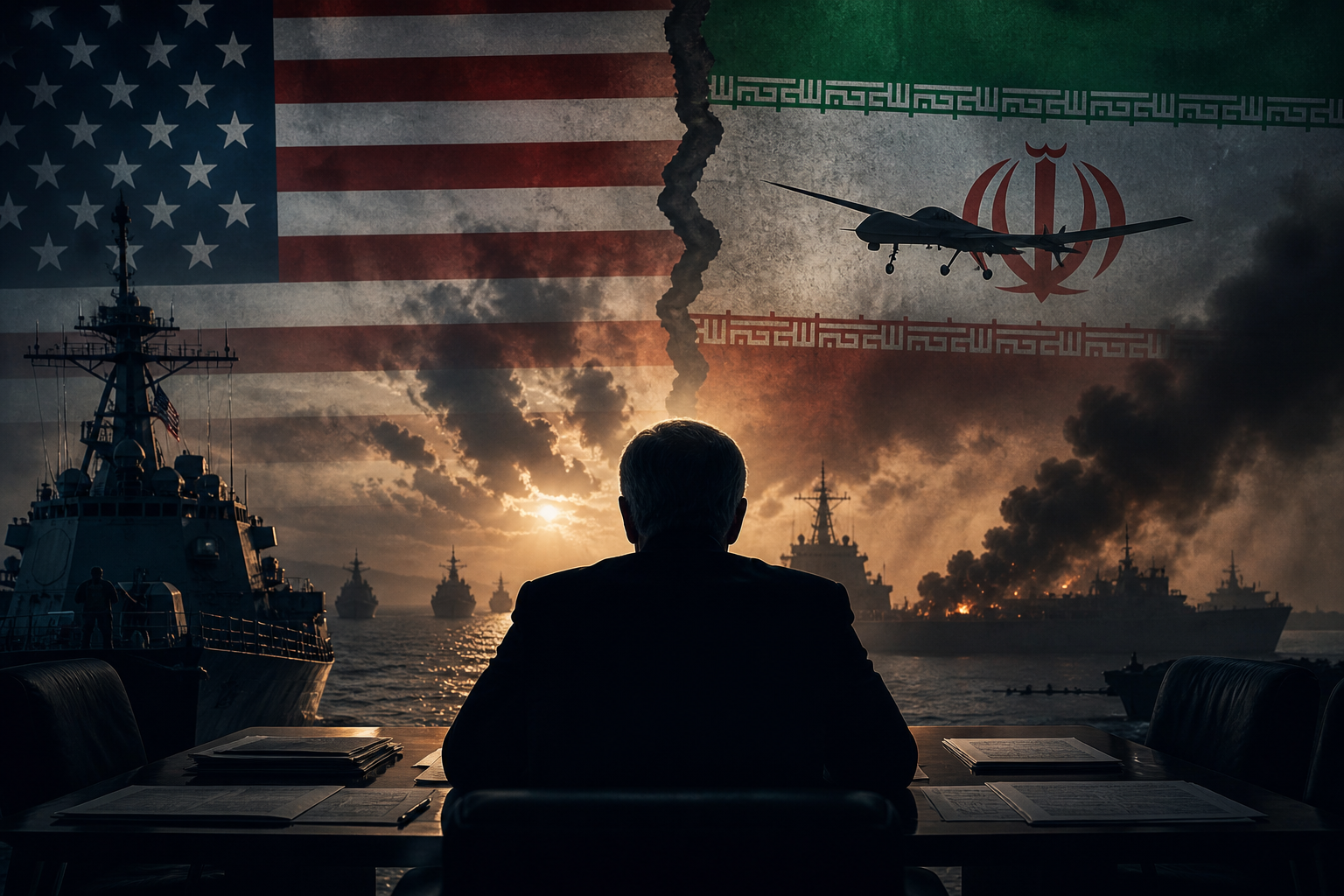
The War That Ended On Paper Only
The Legal Fiction That Ended A War: How The US “Terminated” Iran Hostilities Without Ending The Conflict
The United States has effectively declared that its war with Iran is over.
Not because peace has been secured.
Not because tensions have disappeared.
But because, legally, the clock ran out—and the definition of “war” changed just in time.
A senior U.S. official has stated that hostilities with Iran have been “terminated” for the purposes of the War Powers Resolution, the 1973 law that limits how long a president can wage military action without congressional approval.
On paper, the war is finished.
In reality, almost nothing fundamental has changed.
The Legal Move That Changed Everything
At the center of this moment is a technical but powerful mechanism: the War Powers Resolution.
Under that law, a U.S. president can engage in military operations for 60 days without explicit congressional approval, followed by a short extension. After that, they must either withdraw forces or secure authorization.
That deadline has now been reached.
Instead of seeking approval, the administration’s position is simple:
A ceasefire began in early April
No direct exchanges of fire have occurred since
Therefore, “hostilities” are no longer ongoing
And if there are no hostilities, the legal clock no longer applies.
This is not a declaration of peace.
It is a declaration of legal status.
Why Critics Say This Is A Loophole
Opponents — particularly in Congress — argue that this interpretation stretches the law beyond recognition.
Their core argument is straightforward:
The War Powers Resolution does not explicitly allow the clock to pause during a ceasefire
Military posture, blockade operations, and strategic pressure remain in place
Therefore, the conflict has not meaningfully ended
Some lawmakers have openly challenged the idea that a ceasefire can reset or suspend the legal requirement for authorization.
The disagreement is not about the actual situation
It is about definitions.
And in law, definitions decide everything.
The Reality On The Ground
Despite the “termination” of hostilities in legal terms, the broader situation remains volatile:
A fragile ceasefire has been in place since early April
Naval operations and strategic pressure—including control of key shipping routes—continue
Regional tensions remain high, with threats of escalation still active
The wider conflict that began with U.S.-Israeli strikes in late February triggered retaliation, disrupted global trade routes, and destabilized the region.
That underlying reality has not disappeared.
It has been reclassified.
The Strategic Incentive Behind The Move
This legal interpretation is not random. It serves a clear strategic purpose.
By declaring hostilities “terminated”:
The administration avoids a politically risky congressional vote
Military flexibility is preserved without formal escalation
Responsibility is shifted from legal compliance to interpretation
In simple terms:
The war continues as a posture — but not as a legal obligation.
This creates a powerful asymmetry.
The executive branch retains operational freedom, while Congress loses its leverage point.
What Most People Miss
The real significance is not whether the war has ended.
It is that the definition of war has been quietly rewritten in real time.
A ceasefire—traditionally seen as a pause in fighting—is being used here as:
A legal endpoint
A procedural escape
A strategic reset
That distinction matters.
Because if this interpretation holds, it sets a precedent:
Future conflicts could be managed through cycles of escalation and ceasefire, never formally requiring authorization.
War becomes modular.
Legal oversight becomes optional.
The Global Implication
This matter is not just a U.S. constitutional issue.
It affects how other nations interpret American intent.
From a geopolitical perspective, the signal is mixed:
The U.S. says the war is over
But maintains pressure, positioning, and readiness
While negotiations remain uncertain
For adversaries, that creates ambiguity.
For allies, it creates uncertainty.
And in geopolitics, ambiguity is rarely neutral.
It can deter—or it can provoke.
The Risk Ahead
The most dangerous phase of a conflict is not always active war.
It is the moment when:
The legal framework says it is over
But the strategic reality says it is not
That gap creates space for miscalculation.
Iran still retains leverage—including influence over key energy routes and regional proxies.
The United States retains military presence and pressure tools.
Neither side has fully disengaged.
This means that the conflict remains unresolved.
It is suspended.
A War That Ends Without Ending
What has happened is not peace.
It is a redefinition.
The United States has not declared victory.
It has declared compliance.
The difference is subtle but critical.
Because wars do not end when the paperwork says they do.
They end when incentives change, tensions collapse, and both sides step back.
None of that has fully happened here.
Instead, the war has been moved into a different category:
Not active.
Not authorized.
Not over.
Just… reclassified.
And that may prove to be the most unstable position of all.
