

Could Hezbollah Trigger a Full Israel–Lebanon War
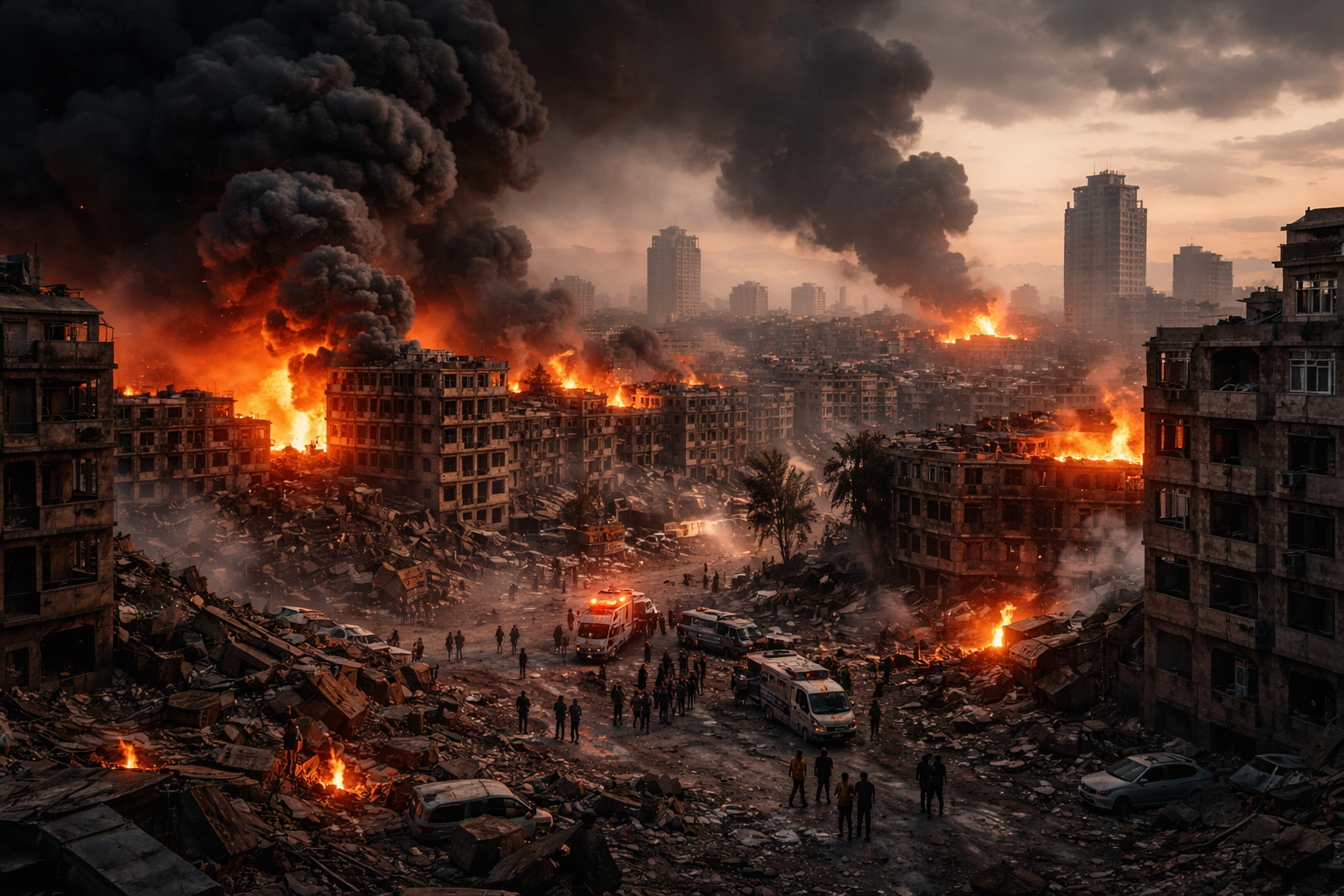
Humanitarian Crisis Fears Grow in Middle East War
Civilian Toll Surges as Middle East War Enters Day 10—The Humanitarian Narrative Now Shapes the Conflict
The war between the United States, Israel, and Iran has entered its tenth day with the civilian toll rising sharply across the region. Airstrikes in Iran and Israeli operations in Lebanon have pushed the conflict beyond military targets and into densely populated areas, intensifying fears of a humanitarian crisis.
Reported deaths include more than 1,200 people in Iran, over 300 in Lebanon, and about a dozen in Israel since the war began on February 28. Seven U.S. service members have also been killed.
Displacement is accelerating. In Lebanon alone, hundreds of thousands of civilians have fled bombardment in the south and in Beirut’s suburbs, while hospitals in Iran are struggling to cope with casualties and infrastructure damage from repeated strikes.
Yet the battlefield narrative is beginning to shift. What began as a strategic military campaign against Iran’s leadership and military infrastructure is increasingly being framed globally through the lens of civilian suffering and humanitarian risk.
The outcome hinges on the ability to pursue the war's strategic objectives without sacrificing the global legitimacy battle over civilian harm.
Key Points
The Middle East war between the United States, Israel, and Iran has reached Day 10, with civilian casualties rising sharply in Iran and Lebanon.
Iranian officials report over 1,200 deaths from airstrikes, many described as civilians.
Lebanese authorities say nearly 400 people have been killed and more than half a million displaced by Israeli strikes tied to the Hezbollah front.
Hospitals, schools, and residential districts have been hit during the bombardment, including a deadly school strike in southern Iran.
Global markets and diplomacy are reacting as the humanitarian narrative begins to dominate international coverage, leading to increased calls for ceasefires and humanitarian aid efforts from various countries and organizations.
The conflict is spreading regionally, with Hezbollah fighting Israel from Lebanon and Iranian strikes targeting U.S. allies in the Gulf.
How the War Expanded Beyond Iran
The war began on February 28 with coordinated U.S. and Israeli strikes on Iran, aimed at degrading the country’s military infrastructure and leadership network.
The operation quickly escalated into a regional confrontation.
Iran retaliated with missile and drone attacks against Israel and U.S.-linked targets across the Middle East. Hezbollah, Iran’s most powerful regional ally, opened a northern front from Lebanon by launching rockets into Israel, prompting Israeli airstrikes and ground operations along the border.
Within days, the conflict stretched across multiple theaters:
Iran itself, where hundreds of strikes targeted military sites and energy infrastructure
Lebanon, where Israel began attacking Hezbollah positions in populated areas
Gulf states hosting U.S. forces, which became targets for Iranian retaliation
The result is a war that now spans several countries simultaneously.
That geographic spread has dramatically increased the likelihood of civilian casualties.
The Civilian Toll in Iran
The most severe casualties have been reported inside Iran.
Government officials say at least 1,255 people have been killed and around 12,000 wounded since the bombing campaign began, with hundreds of strikes hitting cities and industrial zones.
Many of the strikes targeted oil facilities, military bases, and command centers. However, the high urban density has also impacted nearby residential neighborhoods.
One of the most controversial incidents involved a strike near the southern city of Minab that destroyed a school adjacent to an Iranian Revolutionary Guard compound. Reports indicate that dozens of students were killed in the blast.
Iranian officials say dozens of hospitals and healthcare facilities have also been damaged during the bombardment.
These incidents are now shaping how the war is perceived internationally, as they highlight the severe humanitarian impact and the growing concern over civilian casualties and infrastructure damage.
Lebanon: The Second Front With Heavy Civilian Impact
The conflict in Lebanon is producing its own humanitarian crisis.
Since Hezbollah opened a front against Israel in early March, Israeli airstrikes have targeted Hezbollah infrastructure across southern Lebanon and Beirut’s southern suburbs.
Lebanese authorities report nearly 400 deaths so far, including women and children, while more than half a million people have been displaced.
Entire neighborhoods in southern Lebanon have emptied as civilians move north to escape the fighting.
Israeli forces say their objective is to destroy Hezbollah’s missile infrastructure and prevent cross-border attacks into northern Israel.
But Hezbollah’s military assets are often embedded within urban areas, creating a difficult operational environment where strikes risk hitting civilian infrastructure, which complicates the Israeli forces' ability to achieve their objectives without causing civilian casualties.
This dynamic has become a defining feature of the conflict.
The War’s Global Stakes
The humanitarian toll is now intersecting with broader geopolitical consequences.
Oil prices have surged above $100 per barrel for the first time in several years as attacks on Iranian energy infrastructure disrupt supply.
Global stock markets have reacted nervously, while several governments have begun evacuating personnel from the region due to the escalating conflict and its potential to destabilize the global economy.
Diplomatic pressure for de-escalation is rising as well. China, European governments, and international organizations are calling for a ceasefire or humanitarian corridors to protect civilians.
But military operations show little sign of slowing.
Israeli and U.S. leaders have signaled their intention to persist with the campaign until they significantly weaken Iran's military capabilities.
What Most Coverage Misses
Much of the global coverage now focuses on the humanitarian dimension of the war—rising civilian deaths, displacement, and damaged infrastructure.
That framing matters.
But the deeper strategic hinge is how the civilian narrative influences the war’s political sustainability.
Modern conflicts are not fought only on the battlefield. They are fought in the arena of global legitimacy.
If civilian casualties continue to rise, the political cost for the coalition fighting Iran could increase dramatically.
That shift could reshape diplomatic alliances, weaken international support, and increase pressure for a ceasefire before the military campaign achieves its objectives.
In other words, the humanitarian narrative is not just a moral issue.
It is a strategic variable that could change how long the war lasts.
The War’s Next Phase
Three opposing pressures will likely define the next stage of the conflict.
First is military momentum. U.S. and Israeli forces appear determined to continue striking Iranian infrastructure and leadership networks.
Second is regional escalation. Hezbollah’s involvement in Lebanon means the war now has an active northern front with Israel.
Third is humanitarian pressure. As civilian casualties mount, diplomatic calls for restraint are likely to intensify, leading to increased international pressure on both sides to seek a ceasefire and address humanitarian needs.
Which of these forces dominates will shape the trajectory of the war.
If civilian suffering continues to rise at the current pace, the battle for global legitimacy may become just as decisive as the fighting itself.
And that could ultimately determine how—and when—this war ends.
